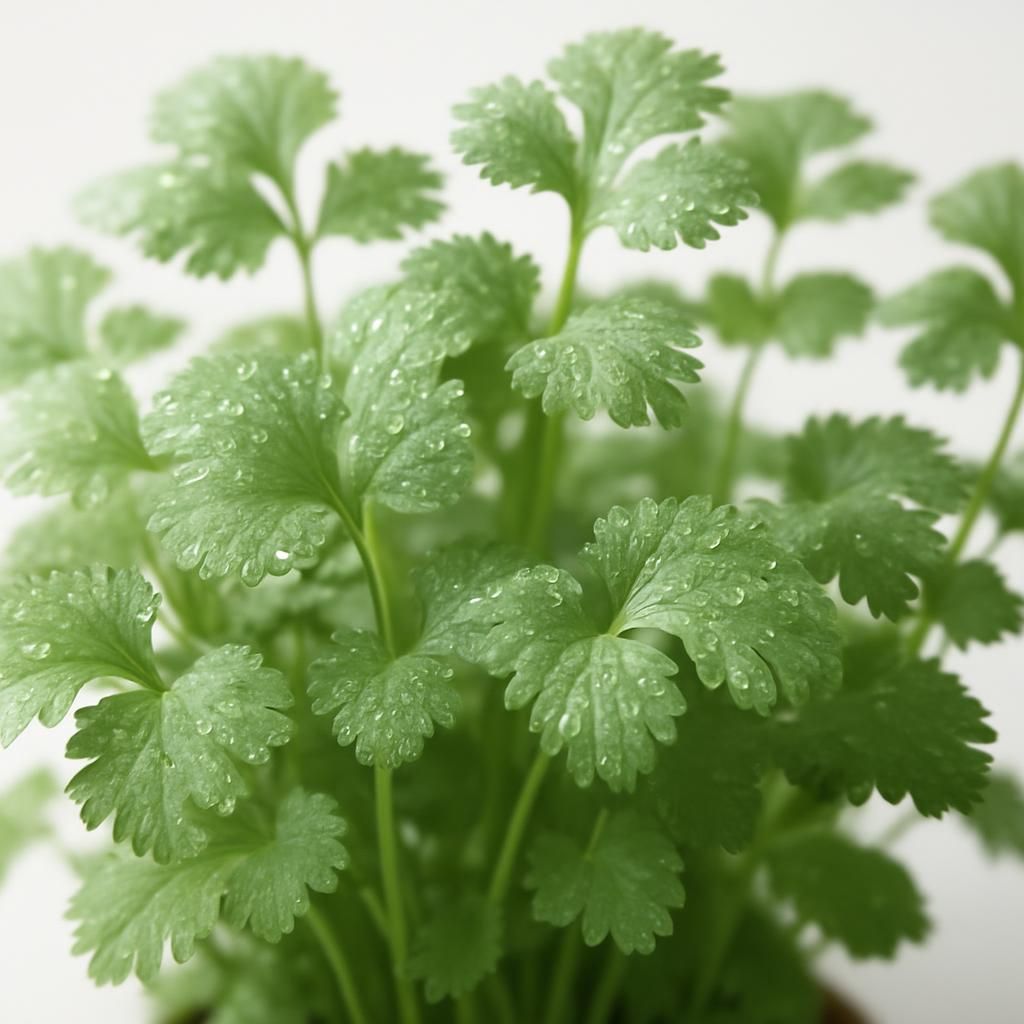
Introduction to Cilantro
Cilantro (Coriandrum sativum) is one of the most widely used culinary herbs worldwide, valued for its bright, citrusy leaves and its dried seeds known as coriander. As a cool-season crop, it performs best when daytime temperatures remain between 50–75°F (10–24°C). Commercial growers and home gardeners alike appreciate its rapid 45–55 day cycle from seed to first harvest, making it ideal for intensive succession planting. The plant’s dual purpose—fresh foliage and spice seed—offers multiple revenue streams on small farms.
Botanical Profile of Cilantro
Cilantro belongs to the Apiaceae family, sharing lineage with carrot and parsley. It produces slender, hollow stems reaching 12–24 inches (30–60 cm) and finely divided, aromatic leaves. Small white or pale-pink umbels appear after 4–6 weeks under warm conditions, quickly setting round, ribbed seeds. The herb exhibits a distinct genetic variation: some cultivars produce slower-bolting foliage while others prioritize seed yield.
Soil, pH, and Climate Requirements for Cilantro
Cilantro demands fertile, well-drained loam or sandy loam with high organic matter. Heavy clay soils restrict root development and increase risk of root rot. The crop is moderately salt-sensitive and performs poorly in waterlogged conditions.
| Parameter | Ideal Range | Notes |
|---|---|---|
| Soil Type | Loam to sandy loam | High organic matter improves moisture retention |
| Soil pH | 6.2–6.8 | Slightly acidic to neutral; avoid below 5.8 |
| Temperature (Day) | 50–75°F (10–24°C) | Bolting accelerates above 80°F (27°C) |
| Temperature (Night) | 45–55°F (7–13°C) | Cool nights extend vegetative growth |
| Sunlight | 4–6 hours full sun | Afternoon shade beneficial in warm climates |
| Soil Moisture | Evenly moist, never waterlogged | Consistent moisture prevents premature bolting |
Step-by-Step Planting & Propagation
Direct seeding is preferred because cilantro develops a taproot sensitive to transplant shock. Prepare beds by incorporating 2–3 inches of well-rotted compost. Sow seeds ¼–½ inch deep, spacing rows 12 inches apart and thinning seedlings to 2–4 inches within the row. For continuous leaf supply, plant new blocks every 2–3 weeks until daytime highs exceed 80°F. In regions with mild winters, fall plantings can overwinter for early spring harvests.
Care & Maintenance regimes for Cilantro
Consistent moisture and cool temperatures are the two pillars of successful cilantro production. Mulching with straw or shredded leaves suppresses weeds and stabilizes soil temperature. Nitrogen applications should be moderate; excessive vegetative growth can reduce flavor intensity.
| Task | Schedule | Rate / Method |
|---|---|---|
| Watering | Every 2–3 days or when top inch dries | 1 inch per week; drip irrigation preferred |
| Fertilizer | At planting and 3 weeks later | ½ cup balanced 10-10-10 per 10 ft row or fish emulsion at 1:10 dilution |
| Pruning / Harvest | Begin at 4–6 inches height | Cut outer leaves 1–2 inches above crown; never remove more than ⅓ of foliage at once |
Pests, Diseases & Organic Management
Cilantro is relatively pest-resistant but can suffer from aphids, cutworms, and slugs. Fungal issues such as powdery mildew and downy mildew appear during humid periods. Scout weekly and apply insecticidal soap or neem oil at first sign of aphids. Improve airflow and avoid overhead watering to reduce foliar diseases. Crop rotation with non-Apiaceae crops every two seasons helps break soil-borne pathogen cycles.
Harvesting, Curing & Optimal Storage
Harvest cilantro leaves in the cool morning hours when essential oils are most concentrated. Cut stems at soil level or pinch outer leaves for continued production. For coriander seed, allow umbels to turn brown and dry on the plant before cutting entire stalks. Hang upside down in paper bags in a shaded, well-ventilated area for 7–10 days. Store dried seeds in airtight glass jars away from light; they retain viability for up to two years. Fresh leaves keep 7–10 days refrigerated in a perforated bag or upright in a jar of water.
Companion Planting for Cilantro
Cilantro repels aphids and attracts beneficial insects such as parasitic wasps and hoverflies, making it an excellent border plant. Pair with tomato, cucumber, and spinach to improve overall garden biodiversity. Avoid planting near fennel or dill, as cross-pollination can reduce seed purity. In hot climates, interplant with taller okra to provide afternoon shade and extend the harvest window.