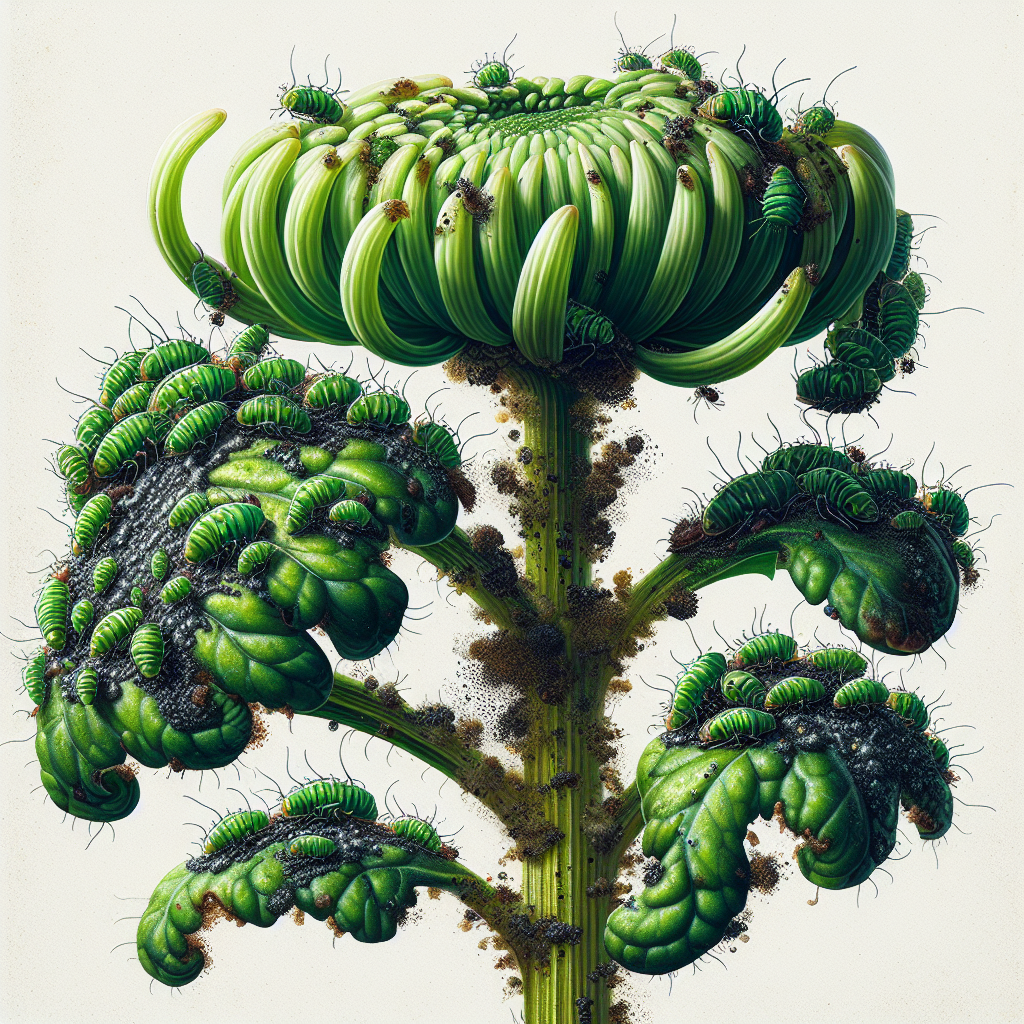
Introduction to chrysanthemum
Chrysanthemum aphids, scientifically known as Macrosiphoniella sanborni, represent one of the most persistent pests affecting chrysanthemum cultivation worldwide. These small, pear-shaped insects (1-2 mm long) cluster on new growth, tender shoots, and flower buds, extracting plant sap and secreting honeydew that fosters sooty mold. Native to North America but now global due to ornamental trade, they thrive in greenhouse and field settings, potentially reducing plant vigor by 30-50% in heavy infestations. This guide provides professional-grade diagnostics, lifecycle insights, and organic management strategies to protect your tomato and other ornamental crops from crossover damage. Understanding their behavior is essential for sustainable IPM (Integrated Pest Management) programs, minimizing chemical reliance while preserving beneficial insects.
Growers report yield losses up to 40% from distorted flowers unfit for market, underscoring the need for proactive scouting. Unlike generalist aphids like Aphids, chrysanthemum aphids show host specificity, rarely affecting unrelated species but devastating chrysanthemum varieties. Early intervention prevents colony explosions, as females produce 50-100 offspring parthenogenetically without mating. For small farms, read our Spring Pest Patrol blog for AI-enhanced monitoring tips.
Identifying Symptoms & Damage
Diagnostic signs start subtly: curled or distorted young leaves, stunted shoots, and shiny honeydew droplets on foliage. Heavy infestations reveal dense green-black aphid clusters (nymphs pale green, adults darker with black leg joints) on undersides, often with white cast skins from molting. Yellowing chlorosis follows sap depletion, progressing to leaf drop and bud abortion. Sooty mold (black fungal growth on honeydew) discolors stems, reducing photosynthesis by 20-30%.
Differentiate from mites by visible insects and sticky residue; unlike whiteflies, aphids leave no webbing. Probe stems gently—aphids scatter sluggishly. Use a 10x hand lens for confirmation: cornicles (tail pipes) are short and dark. Damage peaks on apical meristems, causing witches'-broom effect (excessive axillary shoots). Flower quality suffers most: malformed petals, delayed blooming, and reduced vase life. Economic thresholds: 5-10 aphids per shoot triggers action. Photograph suspect plants for lab ID if unsure, comparing to thrips (thrips cause silvery scarring without honeydew).
Secondary effects include virus transmission (e.g., chrysanthemum virus B), amplifying losses. Scout weekly, focusing on crowded benches or stressed plants near entry points.
Lifecycle and Progression of chrysanthemum
Chrysanthemum aphids complete 10-20 generations yearly in greenhouses (faster at 70-80°F/21-27°C), with lifecycle spanning 7-10 days. Wingless females (viviparous) birth live nymphs every 1-2 days after 4-day maturation, peaking spring-fall. Nymphs pass 4 instars in 5-7 days, feeding continuously.
Cold cues (<50°F/10°C) induce winged alates for dispersal, each carrying 5-10 nymphs. Overwinter as eggs on hardy chrysanthemums or alternate hosts, hatching at bud break. Progression: eggs (winter), nymphs (rapid colony buildup), alates (spread), sexual forms (rare, fall). Monitor with yellow sticky traps (10-20/trap/week signals infestation). Peak damage aligns with flush growth; colonies explode from 10 to 1000+ in 2 weeks under optimal humidity (60-80%).
Understanding stages aids timing: target nymphs with soaps, adults with predators. Lifecycle adapts to cuttings propagation, hitchhiking asymptomatically until stress reveals them.
Environmental Triggers & Risk Factors
Warm temperatures (68-86°F/20-30°C) and high nitrogen fertility accelerate reproduction, doubling populations weekly. Crowded spacing (>6"/15cm) and poor airflow foster outbreaks, as does overhead watering splashing aphids. Imported cuttings from infested nurseries introduce alates; quarantine 2 weeks. Stressed plants (drought, root-bound pots) emit volatiles attracting females.
Risk spikes in greenhouses with >70% humidity, poor sanitation (weedy borders harbor reservoirs), and nearby leafhoppers indicating sap-sucker pressure. Avoid late-summer propagation; opt for fall pinching to disrupt timing. Soil drenches with excess N increase succulent growth, prime targets. Climate change extends seasons, per recent studies showing 15% range expansion northward.
Organic Control & Treatment Plans
Immediate Actions: Blast clusters with strong water jets (early AM, repeat 3x/week) to dislodge 70-90% without residue. Apply insecticidal soap (1-2% potassium salts) or neem oil (0.5%) weekly, covering undersides—efficacious at 80-95% knockdown on nymphs. Rotate to prevent resistance.
Biological Controls: Release ladybugs (Hippodamia convergens, 1000/1000 sq ft) or lacewings (Chrysoperla carnea, 1-2/10 sq ft)—predators consume 50 aphids/day. Aphidius matricariae parasitoids mummify 30-50% in 7-10 days; inoculative releases (500/acre) sustain suppression. Fungal biopesticides like Beauveria bassiana work in humidity >60%.
Treatment Plan: Week 1: Scout/hose/soap. Week 2: Predators + hort oil. Week 3: Monitor/traps. Threshold: <5 aphids/shoot. Companion plant marigold (repels via thiophenes) or nasturtium as traps. Reflective mulches deter alates by 40%. Prune/destroy tips. Avoid broad-spectrum sprays killing predators.
Preventing chrysanthemum in the Future
Select resistant cultivars (e.g., 'Iceberg', 'Dark Bronze') and certified clean stock. Enforce 4-week quarantine for propagules under isolation. Sanitize: remove weeds, rogue infested plants, sterilize tools (10% bleach). Use 200-mesh screens on vents; yellow traps at entries (change weekly). Space 12-18" apart for airflow; bottom-water only.
Crop rotation (non-Asteraceae 1 year), yellow sticky cards (1/100 sq ft), and reflective mulch pre-infestation. Beneficial habitat: sow yarrow or thyme borders for predators. Monitor with apps; scout undersides biweekly. Fall cleanup destroys overwintering sites. IPM checklist: sanitation (daily), monitoring (weekly), thresholds (actionable), rotation (ongoing).
Crops Most Affected by chrysanthemum
Primarily chrysanthemums (cut flowers, pots), with spillover to related Asteraceae: asters, zinnias, sunflowers (sunflower). Rare on lettuce or cabbage under overlap. Ornamental growers lose $millions yearly; field crops less impacted due to host specificity. Monitor peppers nearby for aphid complexes.