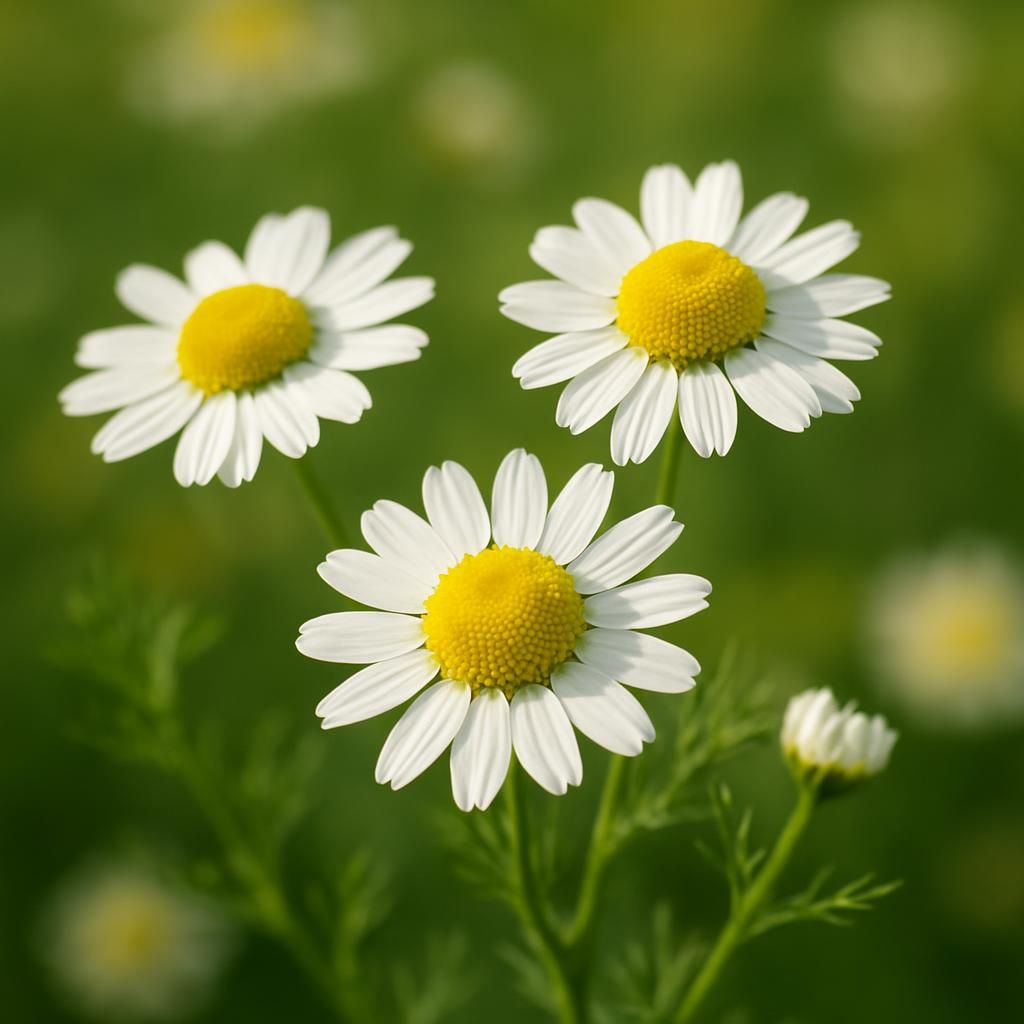
Introduction to Chamomile Flower
Chamomile (Matricaria chamomilla) is a fast-growing annual herb belonging to the Asteraceae family. It produces small, white-petaled flowers with bright yellow centers that are harvested for their calming essential oils and mild apple-like flavor. Widely cultivated for both medicinal and culinary markets, chamomile offers high-value returns per square meter when grown with proper spacing and timely harvest.
Farmers and home gardeners appreciate its short 60–90 day cycle and tolerance of marginal soils, making it suitable for small plots or intercropping systems. Demand remains strong for certified organic dried flowers used in teas, tinctures, and skincare formulations.
Botanical Profile of Chamomile Flower
Matricaria chamomilla features finely divided, feathery leaves and slender, branching stems reaching 30–60 cm in height. Each composite flower head measures 1.5–2.5 cm across and consists of 12–20 white ray florets surrounding a conical yellow disc. The plant develops a shallow but dense fibrous root system that efficiently exploits surface moisture and nutrients.
Two main botanical types exist: German chamomile (Matricaria chamomilla), an annual with hollow stems, and Roman chamomile (Chamaemelum nobile), a perennial often used as a low ground cover. Most commercial essential-oil production relies on the German type because of its higher chamazulene content.
Soil, pH, and Climate Requirements for Chamomile Flower
Chamomile performs best on light to medium loams with excellent drainage. Heavy clay soils should be amended with coarse sand or well-rotted compost to prevent waterlogging, which quickly leads to root rot. The crop tolerates a wide fertility range but responds positively to moderate organic matter levels of 2–3 %.
| Parameter | Ideal Range | Notes |
|---|---|---|
| Soil Type | Sandy loam to loam | Avoid compacted or waterlogged soils |
| Soil pH | 6.0–7.5 | Slightly acidic to neutral |
| Temperature (day) | 18–24 °C | Optimal flowering occurs within this band |
| Temperature (night) | 10–15 °C | Cooler nights improve essential-oil quality |
| Annual Rainfall | 400–600 mm | Supplemental irrigation needed below 400 mm |
| Frost Tolerance | Light frost (−2 °C) | Seedlings tolerate light frost; flowers damaged by hard freezes |
Step-by-Step Planting & Propagation
- Site Selection: Choose a sunny, open location with at least six hours of direct light. Raised beds or ridges improve drainage in high-rainfall regions.
- Soil Preparation: Incorporate 3–5 cm of well-aged compost or aged manure two weeks before sowing. Perform a soil test and adjust pH with agricultural lime if below 5.8.
- Sowing Time: Direct seed in early spring after the last frost or in late summer for autumn harvest in mild climates. Soil temperature should be at least 10 °C.
- Seeding Rate & Depth: Broadcast or drill at 1.5–2.0 kg/ha at a depth of 3–5 mm. Lightly rake and firm the seedbed to ensure good seed-to-soil contact.
- Spacing: Thin seedlings to 15–20 cm between plants in rows 30–45 cm apart once they reach 5 cm in height.
- Irrigation at Establishment: Maintain even moisture until seedlings are 10 cm tall; thereafter reduce frequency to encourage deep rooting.
Care & Maintenance regimes for Chamomile Flower
Consistent but moderate irrigation and minimal fertilization keep plants compact and maximize flower production. Over-fertilization leads to lush foliage at the expense of blooms.
| Growth Stage | Water Schedule | Fertilizer Schedule | Pruning / Maintenance |
|---|---|---|---|
| Seedling (0–3 wks) | Light daily misting or 5 mm/day | None; rely on pre-plant compost | None |
| Vegetative (3–6 wks) | 15–20 mm every 4–5 days | Side-dress 20 kg N/ha at week 4 | Weed by hand or shallow hoe |
| Flowering (6–10 wks) | 15 mm every 7 days; reduce before harvest | No additional N; 10 kg K₂O/ha at bud stage | Remove spent flowers to prolong bloom |
| Post-harvest | 10 mm every 10 days if regrowth desired | None | Cut back to 10 cm to encourage second flush |
Mulch with 3–5 cm of straw or shredded leaves after thinning to suppress weeds and conserve moisture. Avoid overhead irrigation during flowering to reduce disease pressure.
Pests, Diseases & Organic Management
Chamomile is relatively pest-resistant but can be affected by Aphids, Spider Mites, and occasional Thrips. Early detection and strong plant vigor are the best defenses.
Common diseases include Powdery Mildew and Botrytis during cool, humid periods. Cultural practices such as proper spacing, morning irrigation, and removal of infected debris keep incidence low.
Organic control options:
- Spray insecticidal soap or neem oil at first sign of aphids or mites.
- Apply Bacillus subtilis or potassium bicarbonate sprays for powdery mildew.
- Encourage beneficial insects by planting flowering strips of Yarrow and Nasturtium.
Harvesting, Curing & Optimal Storage
Harvest begins 60–75 days after sowing when 50–75 % of flowers are fully open. Pick in the morning after dew has dried to preserve volatile oils. Use clean scissors or a comb harvester to avoid stem damage.
Spread flowers in a single layer on drying racks in a shaded, well-ventilated area at 25–30 °C. Turn daily; drying is complete when petals are crisp and centers are firm (usually 3–5 days). Target moisture content of 8–10 %.
Store dried flowers in airtight glass or food-grade plastic containers away from light and heat. Properly cured chamomile retains aroma and potency for 12–18 months.
Companion Planting for Chamomile Flower
Chamomile repels many common garden pests and improves flavor and growth of neighboring crops. Plant near Tomato, Cucumber, and Onion to reduce aphid and fungal pressure. It also pairs well with Lettuce and Cabbage, providing living mulch that conserves soil moisture.
Avoid planting next to Mint or other aggressive spreaders that may outcompete young chamomile seedlings. Rotate with legumes such as Peas every two seasons to maintain soil nitrogen and break disease cycles.