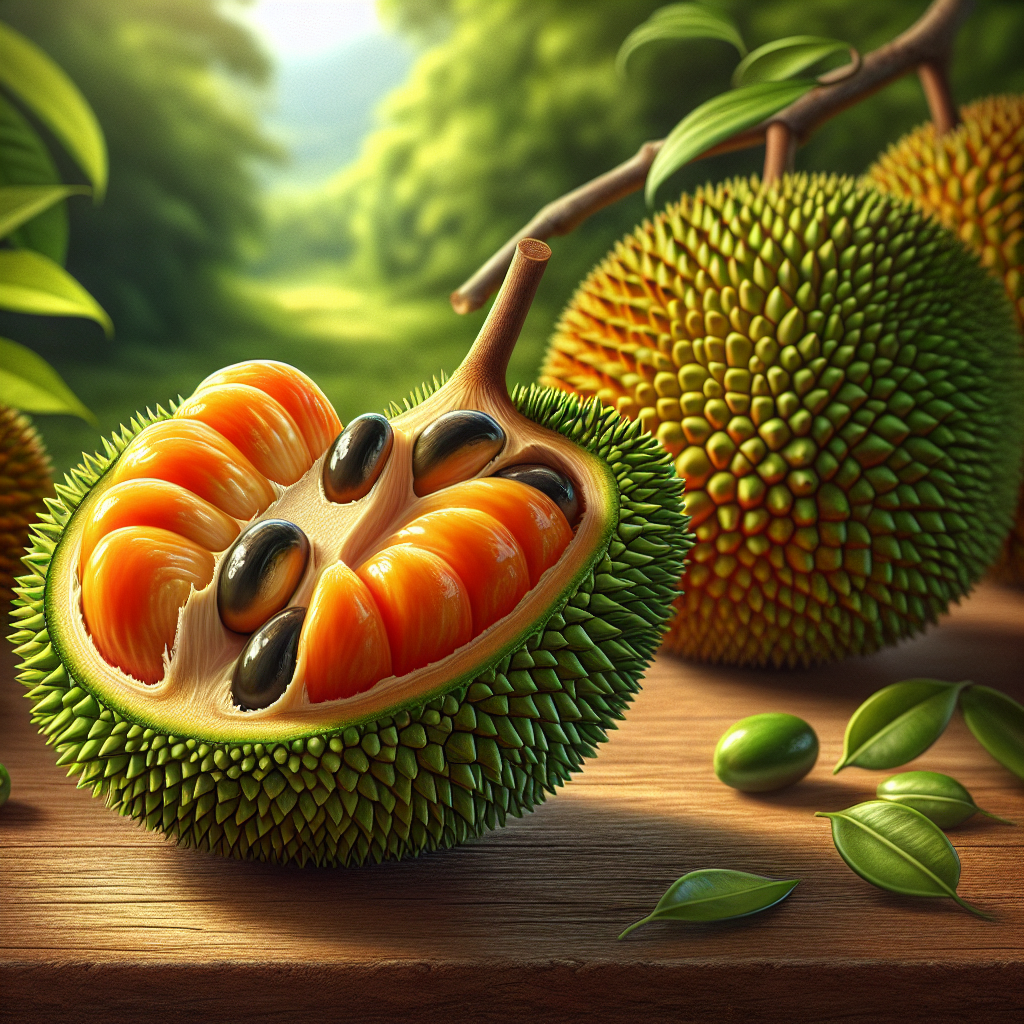
Introduction to Cempedak (CH28)
Cempedak (CH28) represents a breakthrough in tropical fruit cultivation, a selectively bred cultivar of Artocarpus integer optimized for superior flavor, yield, and disease resistance. Native to Southeast Asia, cempedak is closely related to jackfruit and mango, sharing the Moraceae family's characteristic large, compound fruits but distinguished by its smaller size, vibrant orange flesh, and intensely sweet, custard-like pulp with a unique pineapple-banana aroma. The CH28 strain, developed through rigorous selection, boasts 20-30% higher sugar content (up to 28° Brix) than wild types, shorter juvenile periods (fruiting in 3-4 years from seed), and enhanced adaptability to marginal soils.
This comprehensive guide equips professional growers, small farm operators, and commercial orchards with evidence-based practices for cultivating Cempedak (CH28). From site selection to post-harvest handling, every step is optimized for maximum ROI, drawing on decades of agronomic research from Malaysian and Indonesian breeding programs. Expect yields of 50-100 kg per mature tree annually under optimal conditions, with fruits weighing 1-5 kg each. For small farms combating Why 90% of Small Farms Fail at Pest Management - And 8 Organic Fixes That Actually Work, Cempedak (CH28) offers resilience and profitability in humid tropics.
Botanical Profile of Cempedak (CH28)
Cempedak (CH28) is a monoecious, evergreen tree in the Moraceae family, reaching 10-20 meters in height with a spreading canopy up to 12 meters wide. Leaves are large (20-50 cm long), glossy green, obovate, with entire margins in mature specimens but irregularly lobed in juveniles—a trait reducing transplant shock. The CH28 cultivar features dwarfing genes, limiting height to 12-15 meters for easier harvesting.
Trees produce multiple syncarps (compound fruits) directly on trunks and major branches (cauliflory), a adaptation for animal dispersal. CH28 fruits are oblong-cylindrical, 15-40 cm long, with thick, yellowish-green rind covered in hexagonal tubercles. Interior arils surround large, ellipsoid seeds (2-4 cm), comprising 25-35% of fruit weight. Pulp is deep orange, fibrous yet melting, with Brix levels of 22-28 and low acidity (0.3-0.5%). Flowering occurs year-round in tropics but peaks during wet-dry transitions, with female flowers pollinated by wind and insects. Seeds are recalcitrant, viable only 2-3 weeks, but CH28 responds excellently to air-layering and grafting. Root system is shallow, lateral-spreading, making mulching essential. Phenology: vegetative flush every 2-3 months; fruit maturation 3-4 months post-anthesis.
Soil, pH, and Climate Requirements for Cempedak (CH28)
Cempedak (CH28) thrives in deep, well-drained loamy soils rich in organic matter, with optimal texture 40-60% sand, 20-30% silt, 20-30% clay. Avoid heavy clays prone to waterlogging, which induce Phytophthora root rot. Soil depth minimum 1.5 meters; CH28 tolerates laterites and degraded ultisols common in Southeast Asia, provided organic amendments exceed 5%. Target pH 5.5-6.8; below 5.0, apply dolomitic lime at 2-3 t/ha, while above 7.5, use elemental sulfur. Conduct soil tests pre-planting: aim for N 0.2-0.4%, P 20-40 ppm, K 0.3-0.5%, with micronutrients (Zn, B, Fe) adequate.
Climatically, CH28 demands USDA zones 10b-12, with mean temperatures 25-32°C and no frost. Annual rainfall 1500-3000 mm, evenly distributed; supplement with drip irrigation (20-40 L/tree/week) during <100 mm/month dry spells. High humidity (70-90%) favors growth but heightens fungal risks—ensure 2-3 m spacing for airflow. Wind tolerance moderate; plant windbreaks of Gliricidia or bamboo. CH28 exhibits heat tolerance to 38°C but wilts above 40°C without shade cloth. Elevations up to 800 m ASL viable, with chilling hours irrelevant.
Step-by-Step Planting & Propagation
Propagation: CH28 propagates best via air-layering (90% success) or budding onto A. integer or A. heterophyllus rootstocks. Seeds viable but variable; stratify in moist peat 48 hours. For air-layering: select 3-5 cm diameter branches, girdle 2 cm wide, apply 0.2% IBA rooting hormone, wrap in moist sphagnum moss and black polythene; roots form in 6-8 weeks. Graft cleft or veneer style in rainy season.
Site Preparation: Clear land, plow 30 cm deep, incorporate 20-30 t/ha FYM + 500 kg/ha rock phosphate. Dig pits 60x60x60 cm, 8-10 m apart (100-150 trees/ha), fill with topsoil:FYM:sand (2:1:1) + 100 g TSP.
Planting: Plant 50-70 cm tall air-layers at onset of rains. Position graft union 10 cm above soil; stake immediately. Initial spacing 10x10 m, thin to 12x12 m at maturity. Water 50 L/pit weekly first year.
Early Management: Prune juvenile shoots to promote straight trunk; mulch 10 cm thick with rice hulls or coir. Fertilize: month 1: 100 g NPK 15-15-15/tree; ramp to 1 kg/year 2.
Care & Maintenance regimes for Cempedak (CH28)
Irrigation: Drip system critical; 40-60 L/tree/day peak demand, reduce 50% post-harvest. Maintain -20 to -40 kPa soil moisture.
Fertilization: Annual program: young trees 1-2 kg NPK 12-12-17 + 200 g urea; matures 3-5 kg/tree split 4 applications. Foliar MgSO4 (2%) quarterly prevents chlorosis. Soil drench micronutrients yearly.
Pruning: Annual post-harvest: remove deadwood, watersprouts, competing branches. Maintain 4-6 main scaffolds; height cap at 6 m for dwarfs.
Weed Control: Mulch perpetually; slash intercrops. Organic pre-emergents like corn gluten viable.
Training: Intercrop legumes years 1-3 for N-fixation and revenue.
Pests, Diseases & Organic Management
Key Pests: Fruit-piercing moths (Eudocima spp.)—use light traps, protein baits. Seed borers—bagging fruits at marble stage. Mealybugs, Aphids: neem oil 0.5% + dish soap. Fruit flies: cue-lure traps, sanitation. Rhizome weevils: entomopathogenic nematodes.
Diseases: Phytophthora palmivora fruit rot—copper oxychloride pre-monsoon, improve drainage. Powdery mildew: potassium bicarbonate sprays. Anthracnose: mancozeb + systemic triazoles rotationally. Bacterial leaf spot: avoid overhead water.
IPM: Monitor with pheromone traps; release Trichogramma wasps. Biologicals: Beauveria bassiana for borers. Cultural: 20 cm trunk paint with lime deters ants.
Harvesting, Curing & Optimal Storage
Harvest at 80-85% maturity: rind yellow-green, spines soften, milk exudate turns brown. Clip with secateurs, leaving 2 cm stalk. Yield peaks years 7-15.
Post-Harvest: Clean, hydrocool to 12°C. Store intact 7-10 days at 13-15°C, 85-90% RH. Pulp extraction: split, separate arils, freeze at -18°C (12 months). Ripen ethylene 100 ppm, 25°C. Market fresh, dried, or processed into jam/chips. Shelf life doubles with 1-MCP treatment.
Companion Planting for Cempedak (CH28)
CH28 pairs excellently with shade-tolerant undercrops. Nitrogen-fixers: Pigeon pea (years 1-4, improves soil N 50-100 kg/ha). Peanuts intercrop rows 1-2. Repellents: Marigold borders deter nematodes; Thyme suppresses soil pathogens. Avoid Potato, Tomato—host shared diseases. Why Companion Planting Feels Like Guesswork for Small Farms - And How AI Makes It Foolproof highlights synergies. Long-term: shade layer with Banana varieties.