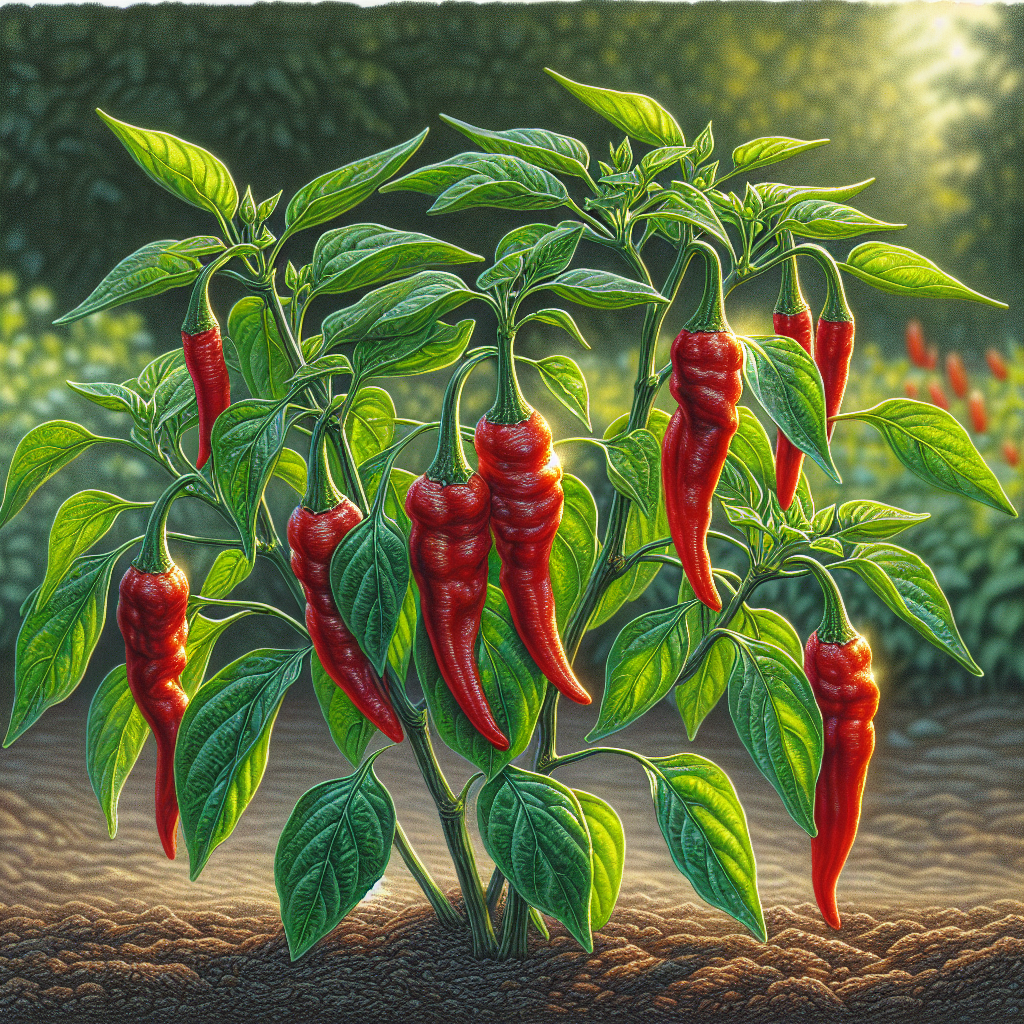
Introduction to Cayenne Pepper
Cayenne pepper (Capsicum annuum 'Cayenne') stands as one of the most iconic hot peppers, originating from French Guiana and named after the Cayenne River. Its slender, 4-6 inch pods pack a punch with 30,000-50,000 Scoville Heat Units (SHU), making it a staple in hot sauces, powders, and global cuisines like Cajun, Indian, and Mexican. Beyond heat, cayenne offers rich vitamin C, capsaicin for pain relief, and antioxidants, positioning it as both a culinary powerhouse and medicinal herb.
Farmers and gardeners prize cayenne for its reliability: compact plants (18-24 inches tall) yield 20-50 pods per plant over a 70-90 day season. It's ideal for small farms, containers, or greenhouses, with potential for overwintering as perennials in zones 9-11. Success hinges on heat-loving nature—optimal growth occurs above 70°F (21°C)—and its role in companion planting to deter pests. For small-scale profitability, dried cayennes fetch premium prices at markets. Learn more about Ghost Pepper (crop) for extreme heat comparisons.
Botanical Profile of Cayenne Pepper
Cayenne belongs to the Solanaceae family, specifically Capsicum annuum, a diverse species encompassing bell peppers, jalapeños, and poblanos. Plants exhibit an upright, bushy habit with bright green, lance-shaped leaves and small white flowers that self-pollinate efficiently. Fruits emerge green, ripening to vivid red (occasionally yellow or orange in variants), with thin walls perfect for drying.
Roots form a fibrous network extending 12-18 inches deep, demanding loose soil. Stems are woody at the base, supporting multiple branches laden with pendulous pods. Capsaicin glands concentrate heat in placental tissue, intensifying with stress like drought. Varieties include 'Long Slim', 'Cayenne Long Red', and hybrids like 'Joe's Long' for extended fruits up to 10 inches. Pollen viability peaks at 75-85°F (24-29°C); high humidity (>60%) boosts fruit set but risks fungal issues. As a C3 plant, it excels in full sun (6-8 hours daily), photosynthesizing efficiently for high yields—up to 1-2 lbs per plant.
Soil, pH, and Climate Requirements for Cayenne Pepper
Cayenne thrives in fertile, well-drained loamy or sandy soils enriched with 2-4% organic matter. Avoid heavy clays prone to waterlogging, which invite root rot. Optimal pH is 6.0-6.8; test soil annually and amend with lime (for acidity below 6.0) or sulfur (above 7.0). Incorporate 2-4 inches of compost pre-planting to enhance microbial activity and nutrient retention.
Climate-wise, cayenne demands 75-95°F (24-35°C) days and no lower than 55°F (13°C) nights. Frost kills plants outright (hardiness zone 9-11 perennial, annual elsewhere). It tolerates light drought once established but yields best with consistent moisture (1-1.5 inches/week). Full sun is non-negotiable; shaded plants produce leggy growth and few fruits. Mulch with straw or black plastic to retain heat and suppress weeds. In cooler zones, use row covers or black mulch to boost soil temps by 5-10°F. Hyper-local forecasts can prevent weather pitfalls—check Why 80% of Small Farms Battle Weather Disasters - And How Hyper-Local AI Forecasts Can Save Your Harvest.
Step-by-Step Planting & Propagation
Seed Starting (8-10 weeks pre-last frost): Sow 1/4-inch deep in 72-cell trays at 80-90°F (use heat mats). Germination takes 7-14 days; thin to strongest seedlings. Harden off over 7-10 days.
Transplanting: Plant after soil warms to 65°F (18°C), spacing 18-24 inches apart in rows 24-36 inches. Bury stems to first leaves for robust roots. Use 5-10-10 starter fertilizer.
Direct Sowing: In zones 9+, sow post-frost, 1/4-inch deep, 2-3 seeds/hole, thinning to 12 inches.
Propagation Alternatives: Stem cuttings (4-6 inches) root in perlite under mist; ideal for overwintering. Grafting onto disease-resistant bell pepper rootstocks combats soil pathogens.
Density Guidelines: 1-2 plants/10 sq ft for gardens; 5,000-10,000 plants/acre commercially. Water deeply post-transplant; expect flowering in 50-60 days.
Care & Maintenance regimes for Cayenne Pepper
Watering: Consistent moisture without sogginess—drip irrigation ideal (1 inch/week). Mulch 2-3 inches to conserve water and moderate soil temps.
Fertilization: Side-dress with balanced 5-10-10 at bloom, then high-potassium (0-10-10) at fruit set. Foliar calcium prevents blossom-end rot. Avoid excess nitrogen to prevent leafy overgrowth.
Pruning: Pinch tips at 12 inches for bushiness; remove suckers below first flower cluster. Stake tall varieties against wind.
Training: Cages or trellises for heavy fruit loads. Weekly scouting maintains vigor.
Soil Health Mastery offers strategies for sustained fertility—see Soil Health Mastery: 5 Proven Strategies for Small Farms to Build Fertile Ground Without Breaking the Bank. Rotate with legumes to replenish nitrogen.
Pests, Diseases & Organic Management
Common Pests: Aphids cluster on new growth—blast with water or use neem oil. Spider mites cause stippling; release predatory mites. Hornworms devour leaves—handpick or apply Bt (Bacillus thuringiensis). Flea beetles chew holes—row covers or diatomaceous earth.
Diseases: Powdery mildew forms white coatings—improve air circulation, apply potassium bicarbonate. Bacterial spot causes lesions—copper sprays, resistant varieties. Verticillium wilt yellows leaves—solarize soil, crop rotation.
Organic IPM: Companion plant with basil or marigolds. Neem oil weekly prevents outbreaks. Beneficial nematodes target root pests. Destroy debris to break cycles. Spring Pest Patrol details AI strategies—Spring Pest Patrol: Organic AI Strategies to Shield Your Crops from Common Invaders.
Harvesting, Curing & Optimal Storage
Harvest green at 70 days for milder flavor or red at 90+ days for peak heat. Clip with shears, leaving 1-inch stem. Yields peak mid-summer to fall; pick regularly to encourage production.
Curing: String pods or use dehydrator at 125°F (52°C) for 8-12 hours. Oven-dry at lowest setting. Store whole dried pods in airtight jars (6-12 months).
Powder Making: Grind deseeded pods in spice grinder; sift for fineness. Freeze fresh peppers in bags (up to 1 year). Humidity <60%, temps 50-70°F for storage. Market dried cayennes at $10-20/lb.
Companion Planting for Cayenne Pepper
Cayenne repels aphids, nematodes, and spider mites via capsaicin. Pair with tomato for pest deterrence and trellis sharing. Basil enhances flavor, deters thrips. Onions and garlic confuse pests. Avoid fennel or potato—they attract shared foes.
Beneficials: Marigolds suppress root-knot nematodes; nasturtiums trap aphids. Interplant with carrots for weed suppression. Discover foolproof strategies in Why Companion Planting Feels Like Guesswork for Small Farms - And How AI Makes It Foolproof. Fall guide: Fall Companion Planting Guide: Boost Yields and Soil Health for Small Farms and Gardens.