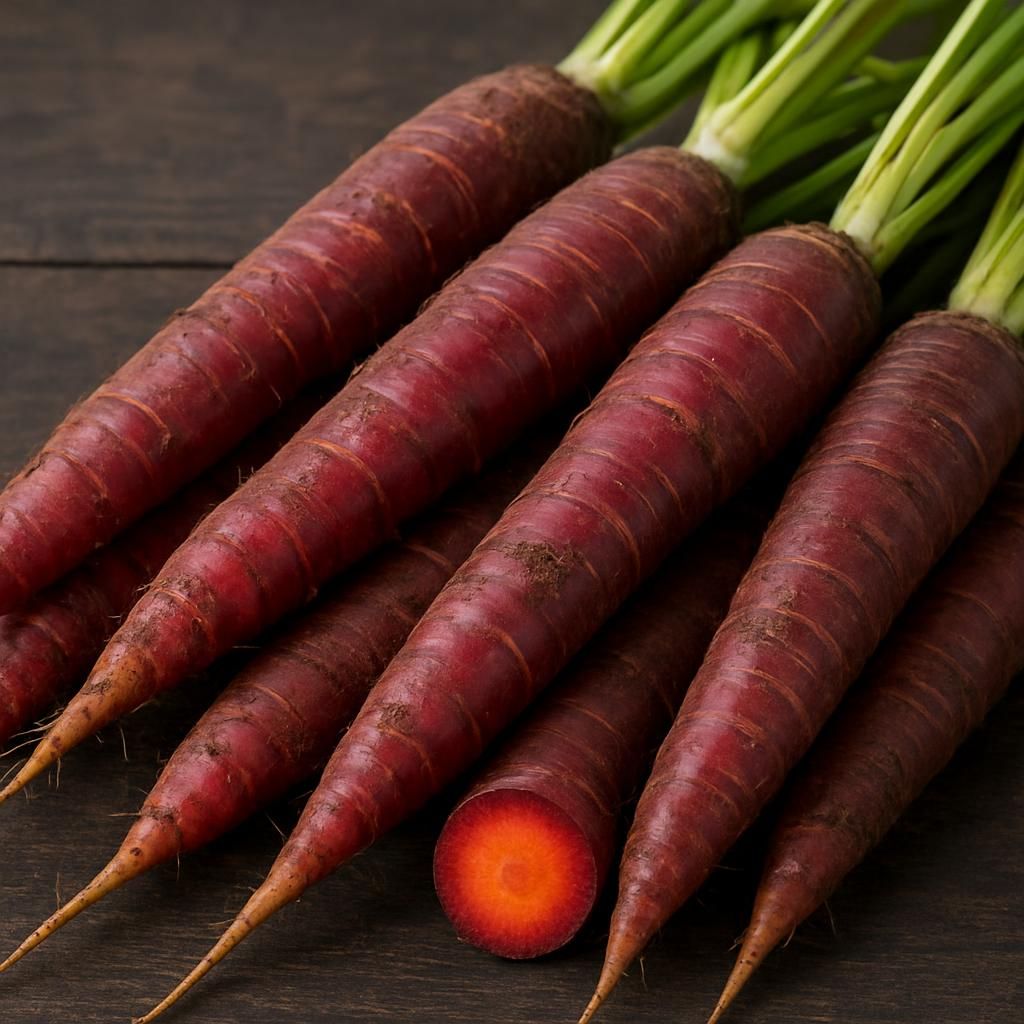
Introduction to Carrot (Kyoto Red)
Kyoto Red is a striking Japanese heirloom carrot variety known for its vibrant red-purple exterior and sweet, crisp interior. Developed for performance in dense, clay-heavy soils common in Japan, it offers superior flavor and storage qualities compared to standard orange cultivars. Farmers and home gardeners value its resistance to cracking and its ability to maintain tenderness even at larger sizes.
This guide provides comprehensive, research-backed growing instructions tailored specifically to Kyoto Red. It covers botanical characteristics, optimal environmental conditions, step-by-step planting protocols, integrated care regimes, organic pest and disease management, harvesting techniques, and strategic companion planting. Whether you manage a small market garden or a larger commercial plot, the methods presented here are designed to deliver consistent, high-quality harvests.
Botanical Profile of Carrot (Kyoto Red)
Kyoto Red belongs to the Apiaceae family and exhibits the classic taproot morphology of Daucus carota. The cultivar develops a tapered root 18–25 cm long with a distinctive reddish-purple skin that retains anthocyanin pigments even after cooking. The flesh is bright orange-red and notably sweeter than many Western varieties due to higher natural sugar content.
The plant produces a rosette of deeply dissected, feathery leaves reaching 30–40 cm in height. Flowering occurs in the second year under vernalization, producing compound umbels of small white flowers that attract beneficial pollinators. Seeds are small, ribbed, and light brown, requiring careful handling during sowing.
Soil, pH, and Climate Requirements for Carrot (Kyoto Red)
Kyoto Red performs best in deep, friable, well-drained loam or sandy loam soils free of stones and compaction. Heavy clay soils can be amended with coarse sand and well-rotted compost to improve structure. Avoid fresh manure, which causes forking and hairy roots.
| Parameter | Ideal Range/Value | Notes |
|---|---|---|
| Soil Type | Sandy loam to loam | Deep, stone-free, well-drained |
| Soil pH | 6.0–6.8 | Slightly acidic to neutral |
| Soil Temperature | 10–24 °C (50–75 °F) | Optimal germination at 15–20 °C |
| Air Temperature | 15–24 °C (59–75 °F) day | Tolerates light frost; avoid >30 °C |
| Spacing | 5–8 cm between plants; 30–40 cm rows | Thin seedlings to prevent crowding |
| Planting Depth | 0.6–1.3 cm (¼–½ inch) | Cover lightly; keep consistently moist |
| Days to Germination | 7–14 days | Faster in warmer, moist soil |
| Full Maturity | 70–85 days | Depends on season and soil temperature |
Step-by-Step Planting & Propagation
Site Selection & Preparation: Choose a location with full sun and at least 30 cm of loose topsoil. Remove rocks and debris. Incorporate 5–8 cm of mature compost and a balanced organic fertilizer (NPK 5-5-5) two weeks before sowing.
Seed Treatment: Kyoto Red seeds have natural dormancy. Soak in room-temperature water for 12–24 hours or stratify in moist sand at 4 °C for 5–7 days to improve germination uniformity.
Sowing Method: Direct sow in rows 30–40 cm apart. Broadcast or drill seeds 0.6–1.3 cm deep. Lightly firm soil and water gently to ensure good seed-to-soil contact.
Thinning: When seedlings reach 5 cm, thin to 5–8 cm spacing. Use scissors to avoid disturbing neighboring roots.
Succession Planting: Sow new rows every 2–3 weeks from early spring through late summer for continuous harvest. In mild climates, a final sowing in early fall can overwinter for spring harvest.
Care & Maintenance regimes for Carrot (Kyoto Red)
Consistent moisture and weed control are critical. Mulch with 5 cm of straw or shredded leaves after thinning to retain moisture and suppress weeds. Avoid overhead watering once foliage is established to reduce disease pressure.
| Growth Stage | Watering Schedule | Fertilizer Application | Pruning/Thinning Notes |
|---|---|---|---|
| Germination (0–14 days) | Keep top 2 cm moist daily | None; pre-plant compost sufficient | No thinning required |
| Seedling (2–4 weeks) | 2–3 cm per week; light daily mist | Side-dress with compost tea at week 3 | Thin to 5 cm spacing |
| Vegetative (4–8 weeks) | 2.5–3.5 cm per week | Apply fish emulsion (2-4-2) every 3 weeks | Remove any yellowing leaves |
| Root Bulking (8+ weeks) | 3–4 cm per week; deep infrequent | Light potassium-rich organic feed at week 8 | Maintain weed-free zone 10 cm radius |
Pests, Diseases & Organic Management
Common pests include carrot rust fly, wireworms, and aphids. Use floating row covers immediately after sowing to exclude carrot rust fly. Beneficial nematodes and diatomaceous earth provide effective control for soil-dwelling larvae.
Diseases such as alternaria leaf spot and powdery mildew can be managed with neem oil sprays and improved airflow. Practice strict crop rotation—avoid planting carrots in the same bed more than once every three years. Remove and destroy infected foliage promptly.
Harvesting, Curing & Optimal Storage
Harvest when roots reach 1.5–2 cm diameter at the shoulder, typically 70–85 days after sowing. Loosen soil with a fork and pull gently to avoid breakage. Trim tops to 1 cm and remove soil without washing.
Cure roots in a shaded, well-ventilated area at 10–15 °C for 24–48 hours. Store in perforated plastic bags or damp sand at 0–4 °C with 95 % humidity. Properly stored Kyoto Red roots maintain quality for 4–6 months.
Companion Planting for Carrot (Kyoto Red)
Kyoto Red benefits from interplanting with onion, leeks, and radish. Alliums mask the carrot scent, deterring carrot rust fly, while fast-maturing radishes help break soil crust. Avoid planting near dill and parsley, which can attract similar pests.
Tomato and lettuce also make excellent neighbors, providing light shade during hot spells. For more companion planting strategies, see Summer Companion Planting: 10 Organic Pairings to Boost Small Farm Resilience.