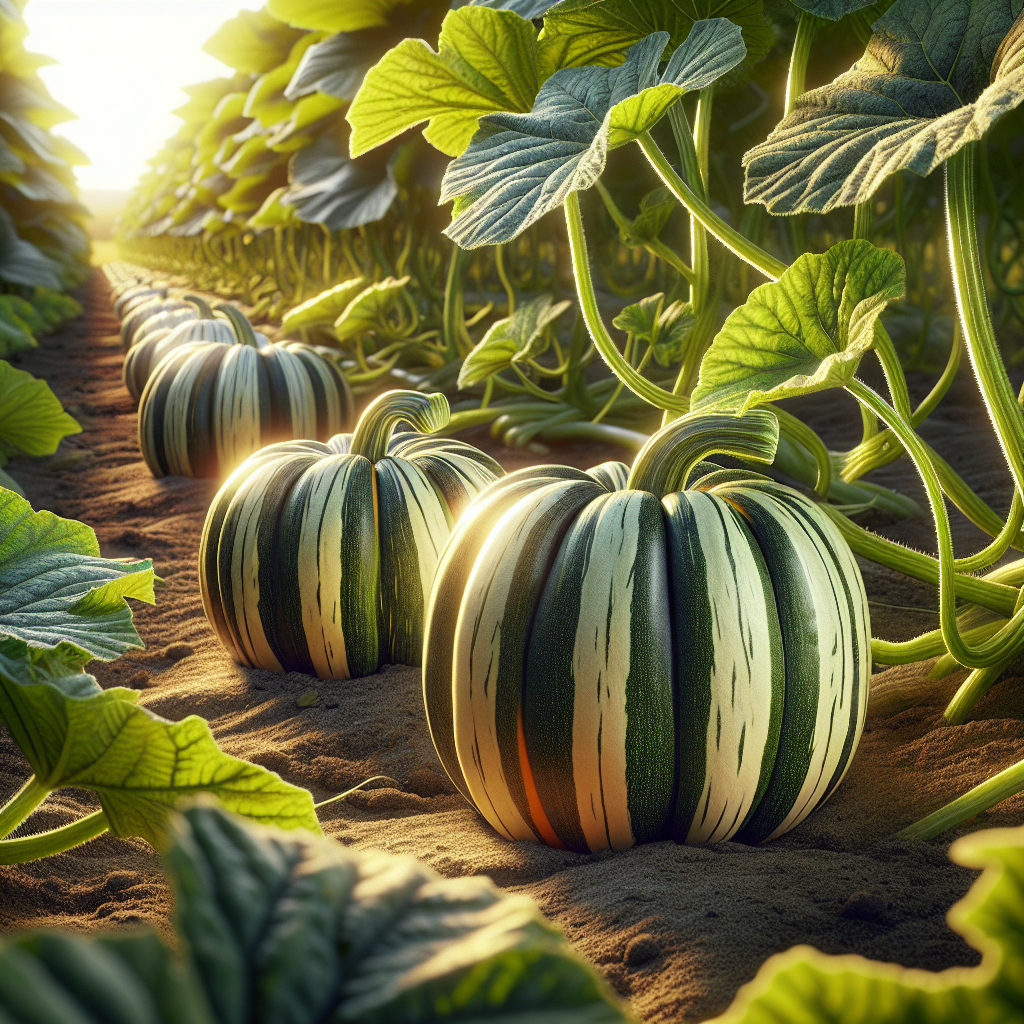
Introduction to Carnival Squash
A distinctive winter squash known for its mottled cream, green, and orange rind, this cultivar combines ornamental appeal with reliable kitchen quality. It is generally considered an acorn-type squash selection within the species Cucurbita pepo, producing medium-sized ribbed fruits with dense yellow-orange flesh and a sweet, slightly chestnut-like flavor that intensifies after curing.
Carnival squash is often grown by home gardeners, market growers, and diversified farms because it fills multiple roles: fresh-market sales, autumn displays, roasting, stuffing, and medium-term storage. Compared with many standard acorn squash types, its rind coloration is more complex and variable, making it highly desirable at farm stands. Growers familiar with Acorn Squash will recognize a similar plant habit and harvest window, but Carnival typically stands out for appearance and, when grown well, excellent eating quality.
Historically, winter squash breeding in Cucurbita pepo has emphasized shape, sweetness, storage life, and visual market appeal. Carnival emerged from that tradition as a decorative yet productive type that performs especially well in temperate summer gardens. Like other winter squash, it is harvested mature rather than immature, meaning success depends on supporting the crop through a full season of vine growth, pollination, fruit fill, and rind hardening.
For growers seeking strong yields, the key is to treat it less like a casual garden vine and more like a nutrient-demanding fruiting crop. Adequate warmth, room to run, disciplined irrigation, and sound pest prevention make the difference between undersized fruit and richly colored, fully matured squash with long shelf life.
Botanical Profile of Carnival Squash
This squash belongs to the family Cucurbitaceae, a group that includes cucumbers, melons, pumpkins, and gourds. As a member of Cucurbita pepo, it shares the species with zucchini, many pumpkins, delicata types, and acorn squashes. That species-level relationship matters because it affects cross-pollination, pest susceptibility, and general crop management.
Carnival is botanically a warm-season annual with a trailing to semi-bushy vine habit depending on strain and growing conditions. Most plants produce coarse, lobed leaves with a prickly texture, stout stems, and tendrils that help sprawl over the soil surface. Flowers are monoecious, meaning separate male and female blossoms are borne on the same plant. Male flowers usually appear first in greater numbers, while female flowers can be identified by the miniature swollen ovary behind the petals.
Fruit characteristics typically include:
- Acorn-like shape with pronounced ribs
- Multicolored rind, often cream or buff overlaid with dark green striping and orange mottling
- Average fruit weight around 1 to 2 pounds, though larger fruits are possible under ideal fertility and spacing
- Thick flesh relative to cavity size
- Hard rind at maturity suitable for storage after curing
Because it is a winter squash, maturity is reached when the fruit rind toughens and seeds become fully developed. Unlike summer squash, immature harvest is not the goal. The plant invests heavily in sugars and starches late in the season, so patience is essential.
From a reproductive standpoint, insect pollination is critical. Bees transfer pollen from male to female flowers, and inadequate pollination often results in misshapen fruit, fruit abortion, or partial development. Cross-pollination with other Cucurbita pepo crops can occur if seed saving is intended, but it will not change the appearance of the current season's fruit; it only affects seed genetics for the next generation.
Days to maturity generally fall in the 85 to 100 day range from seeding, depending on climate, fertility, and cultivar strain. In cooler regions, black plastic mulch, row cover, and transplants can significantly improve early vigor and timely ripening.
Soil, pH, and Climate Requirements for Carnival Squash
This crop performs best in deep, fertile, moisture-retentive but well-drained loam. Ideal soil texture is sandy loam to loam with enough organic matter to hold steady moisture, but not so much compaction or clay that roots sit in water after rain. Poor drainage is one of the most common hidden causes of weak vines, sudden wilting, and root disease.
A target soil pH of 6.0 to 6.8 is ideal. It can tolerate slightly broader conditions, roughly 5.8 to 7.2, but nutrient uptake is most balanced in the low-to-mid 6s. If pH is below 5.8, phosphorus availability can decline and growth may become uneven. If pH rises much above 7.2, micronutrient issues such as iron or manganese deficiency may show as pale interveinal chlorosis on newer leaves.
Before planting, incorporate 2 to 4 inches of finished compost or well-rotted manure into the top 8 to 12 inches of soil. For professional-grade preparation, conduct a soil test and adjust nutrients before sowing. Winter squash are moderate to heavy feeders, especially in nitrogen early on and potassium during fruit development. Excess nitrogen late in the season, however, can produce lush vines with delayed fruit maturity and poorer storage quality.
Temperature is decisive. Seeds germinate best when soil temperatures are 70 to 95°F (21 to 35°C), with fastest and most uniform emergence near 85 to 90°F (29 to 32°C). Below 60°F (16°C), germination slows markedly and seed rot risk rises. Plants are frost-sensitive at every stage, and even cool nights below 50°F (10°C) can stall growth.
Optimal growing conditions include:
- Day temperatures of 70 to 85°F (21 to 29°C)
- Night temperatures above 55°F (13°C)
- Full sun, minimum 8 hours daily, preferably 10+
- Moderate humidity with strong airflow
In very hot climates, prolonged temperatures above 95°F (35°C) can reduce pollen viability and fruit set, especially if moisture is inconsistent. In humid climates, foliage disease pressure increases, so wider spacing and morning irrigation become more important.
The crop prefers consistent soil moisture equivalent to roughly 1 to 1.5 inches of water per week, though actively fruiting vines in hot weather may need more. A useful field standard is to keep soil evenly moist at 3 to 6 inches deep without prolonged saturation. If you squeeze a handful of soil from root depth, it should feel cool and hold together lightly, not drip water and not crumble into dust.
Signs of under-watering include midday wilting that persists into evening, dull leaf color, aborted female flowers, and fruit that stops sizing. Signs of overwatering include yellowing lower leaves, soft or corky stems near the crown, persistent morning wilt despite wet soil, fungus gnat activity in covered production, and a sour anaerobic smell in the root zone.
If you want a broader foundation in bed-building and fertility management, see soil health strategies.
Step-by-Step Planting & Propagation
Propagation is almost always by seed. Direct sowing is preferred in climates with a long warm season, while transplants can help in short-season or cool-spring regions.
Choose the site carefully. Select a bed in full sun with excellent drainage and enough room for vines. Avoid planting after other cucurbits if disease or squash vine borer pressure has been severe in the last 2 to 3 years.
Prepare the bed. Loosen soil to at least 8 inches deep. Mix in compost and any soil-test-based amendments. Raised beds or mounded hills are especially useful in heavy soil because they warm earlier and shed excess water.
Time planting correctly. Direct sow only after all frost danger has passed and soil is reliably above 65°F (18°C), preferably warmer. For transplants, sow indoors 2 to 3 weeks before transplanting; do not start too early because squash resent root disturbance and become stunted in containers if held too long.
Sow seed at the proper depth. Plant seeds 1 to 1.5 inches deep. In hills, sow 3 to 4 seeds per hill and thin to the strongest 1 or 2 plants. In rows, space plants 24 to 36 inches apart with 6 to 8 feet between rows, depending on vine length and equipment access.
Use hills or mounds strategically. Traditional hills are not random piles; they should be broad, gently raised mounds 12 to 18 inches across. They improve warmth, drainage, and early root establishment. On commercial-scale or intensive beds, black mulch with drip irrigation often outperforms open-ground hills.
Thin aggressively. Once seedlings have 1 to 2 true leaves, remove weaker plants rather than allowing overcrowding. Dense stands reduce airflow, increase powdery mildew, and produce smaller fruit.
Transplant carefully if needed. Use biodegradable pots or large cell trays to minimize root disruption. Harden off plants over 5 to 7 days. Transplant when seedlings have 1 to 2 true leaves, setting them at the same depth they grew in the container. Water in immediately.
Protect early growth. Floating row cover can accelerate establishment, conserve heat, and exclude cucumber beetles in the first weeks. Remove covers at flowering unless hand pollination or managed pollinator access is provided.
For hand pollination in small plantings, collect pollen from a freshly opened male flower and brush it onto the stigma in a female blossom early in the morning. This is especially useful during rainy weather or low bee activity.
Care & Maintenance regimes for Carnival Squash
Strong vine growth in the first half of the season determines final yield potential. The management goal is to build a healthy canopy early, then support flowering, pollination, and even fruit maturation.
Irrigation should be deep and infrequent rather than shallow and daily. Apply enough water to moisten the root zone to about 6 to 8 inches deep. In most soils this means 1 to 2 substantial waterings per week, adjusted for temperature, rainfall, and mulch. Drip irrigation is ideal because it reduces leaf wetness and directs water to roots. Overhead watering is acceptable early in the day, but repeated evening irrigation can intensify foliar disease.
Mulch is highly beneficial. Straw, chopped leaves, or clean hay applied after soil has warmed helps stabilize moisture, suppress weeds, and keep fruit cleaner. Keep mulch a few inches away from the crown to reduce rot. Plastic mulch is even more effective for heat and weed control in cooler regions.
Fertilization should follow plant stage:
- Pre-plant: balanced fertility with strong organic matter base
- Early vine stage: moderate nitrogen to encourage leaf area and runners
- Pre-bloom to fruiting: shift emphasis toward phosphorus and potassium
- Late season: avoid pushing excessive nitrogen
A practical organic approach is compost plus a balanced granular fertilizer at planting, followed by a side-dress of composted poultry manure, fish-based feed, or another moderate-N source when vines begin to run. Once fruit set begins, use kelp, sulfate of potash, or other potassium-supportive inputs if soil tests indicate need.
Weed control is most important in the first 4 to 6 weeks. After vines spread, crop canopy does much of the work. Avoid deep cultivation once plants are established because squash have shallow feeder roots that are easily damaged.
Pruning is usually unnecessary, but in small gardens you can redirect vines to prevent crowding. Avoid severe trimming because leaf area drives sugar production and fruit fill. In humid regions, selective removal of a few old, diseased lower leaves can improve airflow, but never strip the plant heavily.
Pollination support is essential. Encourage native bees and other pollinators by avoiding insecticide sprays during bloom and by planting flowering borders. Poor pollination often looks like tiny fruits yellowing and shriveling soon after the flower closes.
To improve fruit quality, limit the number of fruits per plant if vines are weak or the season is short. A vigorous plant may mature several fruits, but thinning to 2 to 4 fruits can produce better size and more uniform ripening in marginal climates.
Pests, Diseases & Organic Management
Like most cucurbits, this squash can suffer significant pressure from insects and foliar diseases. Prevention is more effective than rescue treatment.
Major insect pests include squash vine borer, squash bugs, cucumber beetles, aphids, and sometimes spider mites in hot dry weather.
squash vine borer larvae tunnel into stems, causing sudden wilt even when soil moisture is adequate. Look for sawdust-like frass near the stem base. Preventive strategies include row covers before flowering, crop rotation, stem wrapping near the crown, and succession timing to avoid peak moth activity. In small plantings, stems can sometimes be slit carefully, larvae removed, and the wounded section buried to encourage rerooting.
squash bugs feed on leaves and stems, causing stippling, yellowing, and plant decline. Check leaf undersides for bronze or copper-colored egg clusters and crush them early. Hand removal, board traps, and habitat cleanup after harvest help reduce carryover populations.
cucumber beetles chew leaves and blossoms and can transmit bacterial wilt. Use row covers early, maintain sanitation, and deploy yellow sticky traps only as monitoring tools rather than primary control. Kaolin clay can deter feeding in some systems.
aphids often build on succulent growth and excrete honeydew, leading to sooty mold. Strong water sprays, insecticidal soap, and preserving beneficial insects usually keep them below economic threshold.
Disease concerns include powdery mildew, downy mildew, bacterial wilt, anthracnose, and various crown or root rots.
powdery mildew is the most common late-season issue, appearing as white powdery colonies on leaves. It reduces photosynthesis and can shorten the ripening window. Control relies on spacing, morning irrigation, resistant genetics where available, and early intervention with organic fungicides such as sulfur, potassium bicarbonate, or biofungicides. Start sprays at first detection, not after widespread coverage.
downy mildew causes angular yellow lesions and gray-purple sporulation under leaves in humid weather. It spreads quickly under prolonged leaf wetness. Improve airflow, avoid overhead irrigation late in the day, and remove heavily affected vines after harvest.
bacterial wilt, vectored by cucumber beetles, causes irreversible vine collapse. Preventing beetle feeding early is the main defense.
Root and crown rots flourish in compacted or saturated soils. If plants repeatedly wilt despite wet ground, inspect the crown for discoloration and softening. Improve drainage and avoid replanting cucurbits in the same spot too frequently.
Organic management principles:
- Rotate away from cucurbits for 2 to 4 years when possible
- Keep weeds controlled, especially around bed edges
- Remove crop residue promptly after harvest
- Use row cover early in the season
- Scout twice weekly from emergence through fruit set
- Protect pollinators by spraying only at dusk and never on open flowers
Harvesting, Curing & Optimal Storage
Harvest only when fruits are fully mature. The rind should be hard enough that a fingernail cannot easily puncture it, and the ground spot typically shifts from bright green to a duller cream, tan, or orange-toned shade depending on maturity. Stems begin to dry and cork slightly, though they should not be completely brittle at harvest.
Cut fruit from the vine with 2 to 4 inches of stem attached. Never pull or twist aggressively, because stem breakage opens a major route for storage rot. Handle gently; even small bruises can shorten storage life.
If frost threatens and fruit is nearly mature, harvest immediately. Light frost can damage rind tissue and reduce keeping quality even if the fruit looks sound at first.
Curing is what turns a harvested squash into a good storage squash. Place fruits in a warm, dry, well-ventilated area for 10 to 14 days at about 80 to 85°F (27 to 29°C) if possible, with relative humidity around 75 to 80%. This process hardens the rind, heals small surface injuries, and stabilizes the stem.
After curing, move fruit to storage conditions around 50 to 55°F (10 to 13°C) with 50 to 70% relative humidity. Do not refrigerate; temperatures that are too cold can cause chilling injury, pitting, and poor flavor. Also avoid overly damp storage rooms, which encourage mold.
Storage best practices:
- Store in a single layer, not piled deeply
- Maintain airflow around each fruit
- Inspect every 1 to 2 weeks for soft spots or stem-end decay
- Use damaged or stemless fruit first
Carnival squash usually stores for several weeks to a few months, depending on harvest maturity, curing success, and strain. It typically does not store as long as some hard-rinded Cucurbita maxima types, but its flavor often improves after a short rest of 2 to 4 weeks as starches continue converting to sugars.
For best culinary quality, roast, steam, or halve and stuff the fruit when the flesh has deepened in color and the rind remains firm without shriveling.
Companion Planting for Carnival Squash
The most effective companions are those that either support pollination, suppress weeds, confuse pests, or make efficient use of space without heavily competing for root-zone resources.
Corn is a classic structural companion in traditional polycultures, especially where squash is allowed to ramble beneath taller crops. It provides partial ground shading and efficient vertical layering, though spacing must be generous so squash is not crowded.
Peas can function as an early-season nitrogen-contributing companion when grown ahead of or adjacent to the squash planting, especially in rotational beds rather than dense interplanting. Because peas prefer cooler conditions, they are most useful as a transitional companion rather than a simultaneous heavy summer neighbor.
Nasturtium is highly valuable near the bed edge. It attracts pollinators, may distract some pest insects, and creates a low flowering border that does not significantly interfere with vine movement.
Radish works well as a quick, early intercrop before the vines spread. It occupies surface space briefly, can help break crusted soil, and is usually harvested before squash competition becomes intense.
Avoid pairing with crops that demand the same space, light, and feeding zone at the same time, such as sprawling cucumbers or closely planted pumpkins. Also avoid dense nearby brassica blocks if airflow is already limited, because squash foliage benefits from rapid drying after dew or rain.
In practical field design, the best companion strategy is often temporal and spatial rather than romanticized mixing: use quick spring companions before vine expansion, edge flowers for pollinators, and taller support crops only where bed width and fertility are sufficient.