Introduction to Cabbage stem flea beetle
The cabbage stem flea beetle, scientifically known as Psylliodes chrysocephala, stands as one of the most destructive pests targeting brassica crops across Europe and increasingly in other regions. This tiny, metallic blue-green beetle, measuring just 2.5-3.5 mm in length, poses a severe threat primarily to oilseed rape (Rapeseed (crop)) and cabbage family plants during their vulnerable seedling stages. Adults emerge in autumn, overwinter, and resume feeding in early spring, laying eggs on crop residues or nearby plants. Larvae then tunnel into petioles and stems, causing irreversible damage that can wipe out entire fields if unmanaged.
First identified as a significant pest in the mid-20th century, its populations have surged due to neonicotinoid bans, warmer winters, and reliance on fewer crop rotations. Yield losses can exceed 50-100% in severe infestations, making proactive monitoring essential. This definitive guide equips farmers, gardeners, and agronomists with professional-grade diagnostics, lifecycle knowledge, organic treatments, and prevention strategies. By understanding its biology and implementing integrated pest management (IPM), you can safeguard your cabbage harvests and maintain sustainable production. For broader context on similar pests, see our entry on flea beetles (pest).
Identifying Symptoms & Damage
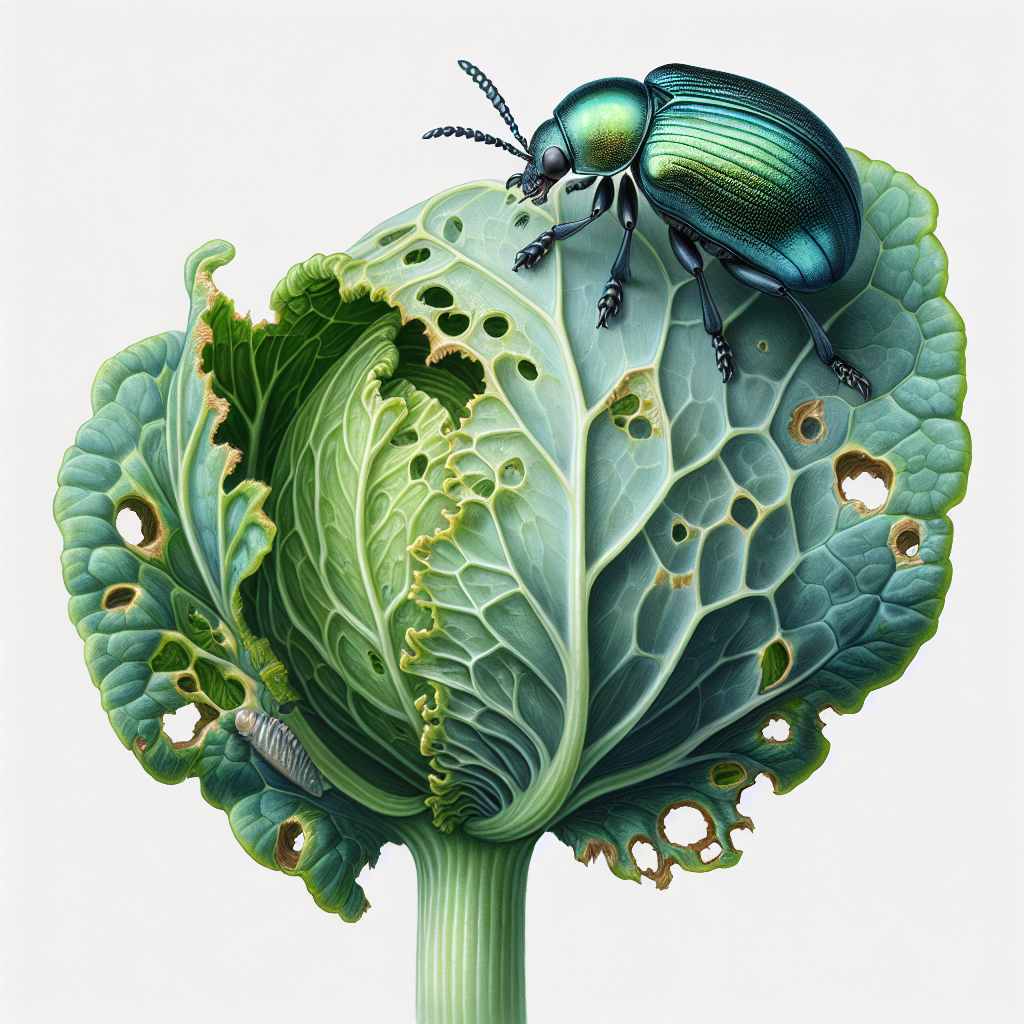
Accurate identification is critical for timely intervention. Adult cabbage stem flea beetles are shiny, blue-black with a brassy head, jumping like fleas when disturbed. Look for them on young leaves, where they create characteristic 'shot-hole' damage—numerous small, round perforations (0.5-1.5 mm) from feeding. This is most evident on cotyledons and first true leaves of emerging seedlings.
The real devastation comes from larvae: creamy-white, legless grubs up to 5-6 mm long with a brown head. They mine internally within leaf petioles and stems, leaving clean, narrow tunnels without external frass. Affected plants show:
- Stunted growth: Seedlings wilt, turn yellow, and fail to develop true leaves.
- Petioles: Translucent 'windowing' or mining scars, often with brownish discoloration.
- Stems: Hollowed-out sections leading to lodging or death.
- Severe cases: Entire row death, patchy establishment, or 80-90% seedling loss.
Differentiate from other pests like cabbage worms (pest) (surface chewing) or aphids (pest) (honeydew and curling). Use a sweep net or yellow sticky traps for adults; dissect petioles under magnification for larvae. Thresholds: >25% plants with >2 larvae per plant warrants action. Early diagnosis prevents escalation, as damage post-4-leaf stage is less lethal. For small farms battling misidentification, check out Why Misidentifying Plants Costs Small Farms Thousands - And How AI Camera Diagnosis Fixes It Fast.
Lifecycle and Progression of Cabbage stem flea beetle
Understanding the lifecycle enables precise timing of controls. Psylliodes chrysocephala completes one generation annually. Key stages:
- Adults (Autumn): Peak flight in September-October. Feed on oilseed rape stubble or weeds, then overwinter in field margins, hedges, or leaf litter.
- Spring Activity (March-April): Adults re-emerge with warm weather (>10°C), migrating to new crops. Females lay 200-400 yellow eggs singly or in clusters on petiole undersides or soil near plants. Eggs hatch in 7-10 days.
- Larvae (April-June): Four instars feed internally for 3-5 weeks, dropping to pupate in soil.
- Pupae (June-July): 2-3 weeks in earthen cells 5-10 cm deep.
- New Adults (Summer): Non-reproductive, disperse to summer hosts like wild brassicas.
Total cycle: 6-8 weeks. Overwintering survival >90% in mild winters. Populations build over years without rotation. Monitor with pitfall traps or stem dissection. For spring pest strategies, see Spring Pest Patrol: Organic AI Strategies to Shield Your Crops from Common Invaders.
Environmental Triggers & Risk Factors
Cabbage stem flea beetle thrives in temperate climates (5-25°C optimal). Key triggers:
- Weather: Mild, wet autumns boost adult survival; dry springs favor larval mining.
- Crop History: Continuous brassicas or oilseed rape (>1 in 3 years) spikes populations.
- Soil: Light, sandy soils aid pupal survival; minimum tillage increases overwintering sites.
- Varieties: Susceptible hybrids without flea beetle resistance.
- Proximity: Fields near last year's stubble or weedy margins.
Risk assessment: High if >10 beetles/m² in traps pre-sowing. Climate change extends active periods, worsening outbreaks. Mitigate with diverse rotations including wheat or potatoes.
Organic Control & Treatment Plans
Organic management emphasizes IPM: prevention first, then biological and mechanical controls.
1. Cultural Controls (Foundation):
- Delay sowing until mid-April to miss peak migration.
- Use resistant varieties (e.g., 'CR Bishop' hybrids).
- Rotate with non-hosts like cereals.
- Destroy volunteers and weeds.
2. Monitoring & Mechanical:
- Yellow water traps or sticky traps at 4-6/m².
- Hand-pick adults on small plots.
- High-pressure hoses to dislodge from seedlings.
3. Biological Controls:
- Parasitic wasps (Tiphodytes rapae) naturally attack larvae; encourage with flowering margins.
- Entomopathogenic nematodes (Heterorhabditis bacteriophora) for soil pupae (apply at 10^9/m²).
- Predatory beetles and birds via habitat diversification.
4. Organic Sprays (Last Resort):
- Pyrethrum or spinosad (OMRI-listed) at early larval stage, evening applications.
- Neem oil disrupts feeding/oviposition.
- Silica sprays strengthen plant tissues.
Treatment Plan:
- Week 1 (Emergence): Scout daily; remove >4 adults/plant.
- Week 2-4 (Egg/Larva): Dissect 25 plants/10 m²; treat if >1 larva/plant.
- Post-Treatment: Re-scout; till soil to expose pupae.
Integrated with companion planting (Nasturtium (crop) as trap crop). Expect 70-90% control with diligence.
Preventing Cabbage stem flea beetle in the Future
Long-term prevention builds resilient systems:
- Crop Rotation: 1:4 years with grasses/legumes.
- Cover Crops: Mustard or clover buries pupae.
- Sanitation: Deep plow post-harvest; flame weeding.
- Borders: Sow wheat/oats around fields.
- Varietal Selection: RR hybrids with petiole wax.
- Soil Health: Healthy soils foster natural enemies (Soil Health Mastery: 5 Proven Strategies for Small Farms to Build Fertile Ground Without Breaking the Bank).
Annual planning reduces risks by 80%. Use weather data for timing.
Crops Most Affected by Cabbage stem flea beetle
Primarily brassicas:
- Oilseed rape (most severe).
- Cabbage, cauliflower, broccoli.
- Turnips, kale (Kale (crop)), radish (Radish (crop)).
- Wild hosts: Shepherd's purse, charlock.
Secondary: Sugar beet seedlings. Global impact: €100M+ annual losses in EU rape.