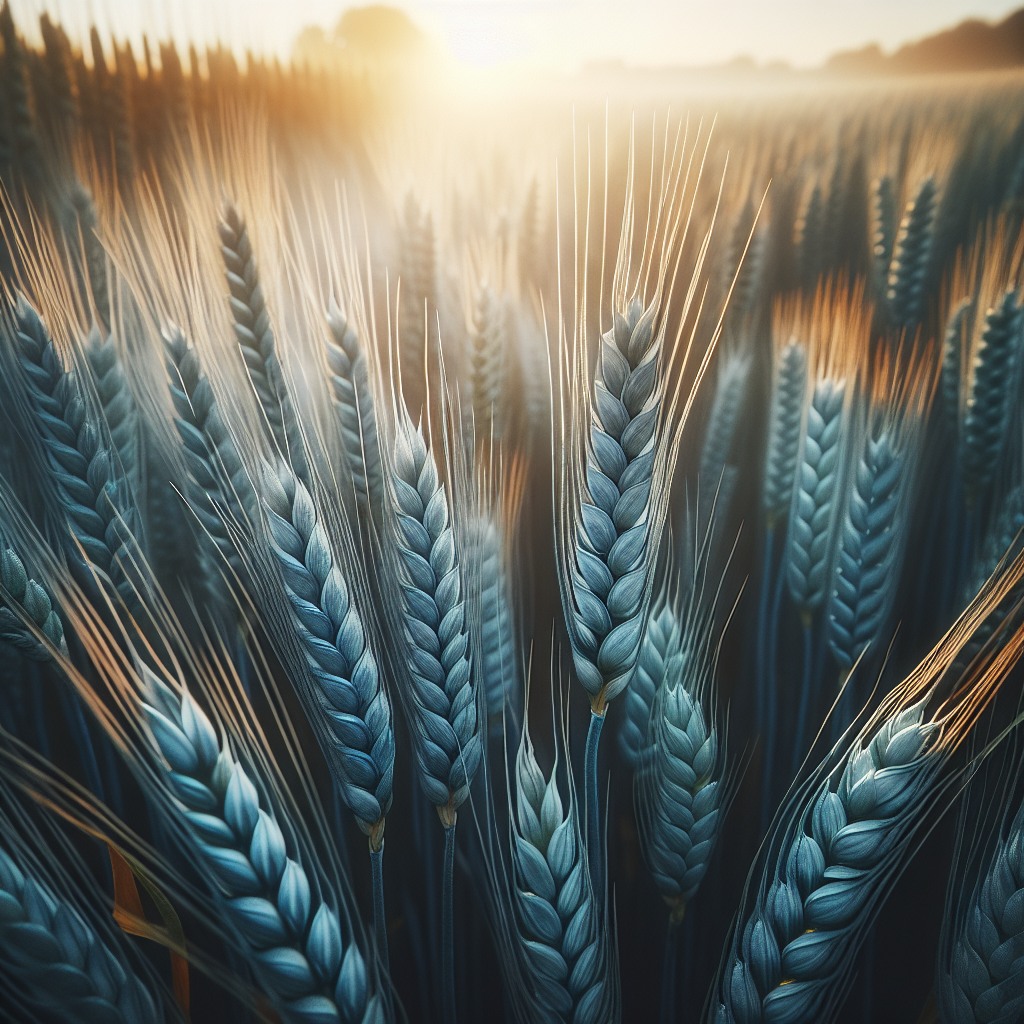
Introduction to Blue Wheat
Blue wheat is a rare and visually distinctive form of common wheat grown primarily for its blue-colored kernels rather than for any radically different growth habit. The blue coloration is usually caused by anthocyanin pigments concentrated in the aleurone layer, and that makes it attractive to specialty grain growers, heritage grain enthusiasts, artisan bakers, and plant breeders interested in nutrient density and grain pigmentation traits. In the field, however, it is still fundamentally a wheat crop, so successful production depends on careful attention to seedbed quality, fertility balance, weed competition, and timely harvest. For a broader agronomic baseline, see our Wheat guide.
Historically, blue-grained wheats trace their unusual color to introgressed traits from related wheat species and wild relatives. In practical farming terms, that means “blue wheat” is not always a single uniform commercial cultivar; it may refer to a group of pigmented wheats with somewhat different maturity dates, straw strength, disease tolerance, and milling quality. Growers should therefore treat variety selection as the first major management decision. Some lines are bred more for novelty and nutrition, others for breadmaking, and still others for adaptation to cool temperate grain systems. Before sowing, confirm whether your seed lot is a winter type needing vernalization or a spring type suited to direct spring planting.
The grain’s value often comes from identity preservation. If you intend to market kernels, flour, or seed, keep blue wheat isolated from other wheat types during planting, harvest, transport, and storage. Mixtures with red or white wheat can reduce its visual distinctiveness and weaken the premium. Blue pigments can also vary with environment and genetics, so the same line may appear darker in one season and lighter in another.
Botanical Profile of Blue Wheat
Blue wheat belongs to the species Triticum aestivum, the same species as most bread wheats. It is an annual cool-season grass in the Poaceae family, producing tillers from a basal crown, erect hollow stems, linear leaves, and a terminal spike composed of spikelets. The plant typically reaches 70 to 130 cm in height depending on genotype, fertility, and moisture conditions. Shorter, modern lines often lodge less under high nitrogen, while taller lines may compete better with weeds but are more vulnerable to wind and rain near maturity.
The defining feature lies in the caryopsis, or grain. Unlike purple wheats, where pigmentation often occurs in the pericarp, blue wheat generally shows pigment in the aleurone layer. This distinction matters for milling and end-use. When bran fractions remain in the flour, the blue coloration is more visible; highly refined flour may lose much of the visual impact. Many blue wheats are best appreciated as whole grain, cracked grain, or stone-milled flour.
Rooting is fibrous and moderately deep when soil structure is good. Most roots occupy the top 15 to 45 cm, but under favorable conditions roots can extend deeper, improving drought resilience. The crop passes through standard wheat stages: germination, seedling establishment, tillering, stem elongation, booting, heading, flowering, grain fill, and physiological maturity. Pollination is predominantly self-fertile. Flowering is usually brief, but this is a critical period because heat stress, severe drought, or head diseases can reduce grain set and final kernel weight.
Blue wheat can vary in grain hardness, protein potential, and baking quality. Some selections resemble hard bread wheats, producing stronger dough and better loaf volume; others are softer and better suited for flatbreads, crackers, or blended flour. Ask suppliers for test weight, thousand-kernel weight, protein range, and disease ratings rather than relying only on the “blue” descriptor.
Soil, pH, and Climate Requirements for Blue Wheat
Blue wheat performs best in fertile, well-drained loam to clay loam soils with strong structure and moderate water-holding capacity. Sandy soils can work, but they demand more precise fertility and moisture management because nitrogen leaches faster and the crop may suffer during tillering and grain fill. Heavy clay soils can also support excellent crops if drainage is adequate; if water remains ponded for more than 48 hours after a rainfall, establishment losses and root stress become much more likely.
A soil pH of 6.0 to 7.5 is ideal, with 6.3 to 7.0 often giving the best combination of nutrient availability and microbial activity. Below pH 5.8, phosphorus availability can tighten, manganese or aluminum issues may emerge, and early vigor may suffer. Above pH 7.8, micronutrient deficiencies, especially zinc and sometimes manganese, are more common. If soil tests show pH problems, correct them before planting rather than trying to compensate mid-season. Wheat responds best when the root zone is already in balance.
For climate, blue wheat generally fits temperate and cool semi-arid to subhumid regions. Winter forms are typically planted in autumn, establish a crown before deep cold, then resume growth in spring. Spring forms are planted as soon as the soil is workable in cool climates. Ideal temperatures are roughly 12 to 25°C during vegetative growth. Prolonged heat above 30°C during flowering and grain fill can reduce kernel set, shrink grain size, and dull quality. Cool nights and moderate daytime temperatures during grain filling usually improve test weight and grain density.
Moisture needs are moderate but stage-specific. Blue wheat does not like saturated soils, yet it also performs poorly if moisture stress hits at crown root initiation, tillering, jointing, heading, or milk stage. As a rule, maintain even soil moisture in the top 15 to 30 cm during establishment so seeds imbibe properly and seedlings root deeply rather than stalling in dry pockets. During active growth, the crop generally performs best when about 50 to 75% of field capacity is maintained in the main root zone. If the soil is powder-dry below 5 to 8 cm and leaves appear dull gray-green or start rolling by midday, the crop is entering stress. If the field smells sour, shows yellowing lower leaves, or roots appear brown and oxygen-starved, you are likely overwatering or dealing with drainage failure.
Wind exposure is another overlooked factor. Blue wheat with taller straw can lodge under high fertility and storm conditions, so sheltered fields or modest nitrogen programs are preferable where seasonal winds are severe. Rotation matters as much as climate. Avoid planting after wheat or other small grains when possible, because residue-borne disease and volunteer cereals increase pest pressure. Rotations with legumes are especially valuable. Clover in a prior or adjacent system can help support soil structure and nitrogen cycling.
For more on building resilient cereal soils, this article on soil health is useful.
Step-by-Step Planting & Propagation
Blue wheat is propagated by seed. Use certified or carefully cleaned seed with high germination, known variety identity, and low contamination from other wheat colors. Seed purity is especially important if the crop is intended for specialty sale.
Start with a full soil test 2 to 4 months before planting. Measure pH, organic matter, phosphorus, potassium, sulfur, and if possible zinc and boron. Correct pH first, then build fertility according to expected yield goals.
Prepare a firm, fine, but not powdery seedbed. In conventional systems, the best seedbed allows a boot heel to sink only lightly. In no-till, residue should be evenly spread and the drill must place seed consistently through mulch. Cloddy seedbeds create erratic emergence, which reduces tiller uniformity and increases weed gaps.
Choose planting season by growth type. Winter blue wheat is commonly sown 2 to 6 weeks before the average hard freeze so seedlings establish 3 to 5 leaves and begin tillering without becoming excessively lush. Spring blue wheat should be seeded as early as possible once soil temperature is above about 4 to 5°C and field conditions permit machinery without smearing or compaction.
Calibrate seeding rate by seed size and target stand. A common goal is 250 to 400 established plants per square meter, adjusted for rainfall zone, planting date, and tillering capacity. In low-rainfall areas, lower rates may reduce competition for moisture. In late planting or heavy weed pressure, higher rates improve canopy closure.
Sow seed 2.5 to 4 cm deep in most mineral soils. In dry topsoil, depth can be increased slightly to reach moisture, but avoid burying deeper than about 5 cm unless conditions demand it and the line has strong emergence vigor. Shallow seeding into drying soil is a common cause of poor stands.
Use row spacing of 15 to 20 cm for drilled grain. Narrow spacing helps suppress weeds, captures light more efficiently, and supports even head distribution.
Consider seed treatment where disease history is present. Organic systems may rely on hot water, biological inoculants, or strict seed selection, while conventional systems often use fungicidal protectants. Untreated seed in cool, wet soil is more vulnerable to damping-off and seedling blights.
Roll or firm the seedbed after sowing if soil is loose. Good seed-soil contact is essential for uniform imbibition.
Emergence usually occurs within 5 to 14 days depending on temperature and moisture. The goal is a dense, even stand with vigorous tiller initiation before weeds gain momentum.
Care & Maintenance regimes for Blue Wheat
The most successful blue wheat crops are managed by growth stage, not by calendar date alone. Early growth should prioritize stand establishment and weed suppression. Mid-season management should focus on balanced nutrition, disease prevention, and lodging control. Late season management should protect grain fill and preserve grain color, test weight, and harvestability.
Nitrogen is the most yield-sensitive nutrient, but also the easiest to misuse. Too little nitrogen leads to pale foliage, weak tillering, and low protein. Too much nitrogen creates lush, dark growth that is more prone to lodging, foliar disease, and delayed maturity. In many field situations, total nitrogen requirements fall around 80 to 160 kg/ha, depending on soil organic matter, previous crop, and yield target. Apply a modest starter portion at or before planting, then top-dress the remainder from early tillering to stem elongation. On soils with high leaching risk, split applications are safer than a single heavy dose. If leaves are pale green by tillering and lower leaves senesce prematurely without drought stress, nitrogen may be limiting. If canopies become excessively dark and succulent, especially with thick stands, reduce late nitrogen.
Phosphorus is crucial for root development and early vigor, particularly in cool soils. Potassium supports water regulation and straw strength. Sulfur deficiency can mimic nitrogen deficiency but often appears first in younger leaves as uniform pale color. Zinc can be important on high-pH soils. Tissue tests at early stem elongation help catch hidden deficiencies before they depress yield.
Irrigation, where used, should be strategic. Blue wheat does not need constantly wet soil. Instead, aim for deep, infrequent watering that moistens the active root zone without leaving it saturated. Critical irrigation windows are crown root initiation, tillering if dry, booting, heading, and early grain fill. Avoid frequent shallow irrigation, which promotes shallow rooting and increases foliar humidity. A well-watered field should dry slightly between events in the top few centimeters while remaining moist below. If footprints remain shiny and sticky for hours, the soil is too wet. If plants show persistent afternoon leaf rolling and do not recover by morning, moisture is too low.
Weed control is most important during establishment through stem elongation. A stale seedbed, strong rotation, narrow rows, competitive seeding rates, and mechanical weeding in organic systems can greatly improve outcomes. Once the canopy closes, wheat is more competitive, but early weed escapes can still rob yield and contaminate harvested grain.
Lodging prevention is especially relevant in blue wheat lines with tall straw or where growers are pushing fertility for protein. To reduce lodging: avoid excess nitrogen, maintain balanced potassium, do not over-irrigate after heading, and avoid overly dense stands in high-rainfall regions. Lodged crops are harder to harvest cleanly and more prone to pre-harvest sprouting and grain discoloration.
Pests, Diseases & Organic Management
Blue wheat faces largely the same pest and disease spectrum as other bread wheats. The most common insect issues include Aphids, Armyworms, Wireworms, Hessian fly in some regions, and Cereal leaf beetle. Aphids are significant not only because they remove sap but because they can vector Barley yellow dwarf virus. Scout weekly from seedling stage through heading. Thresholds vary by region, but rising aphid numbers on stems and flag leaves should be taken seriously, especially if beneficial insect populations are low.
Organic insect management starts with prevention: crop rotation, avoiding volunteer cereals, preserving field borders that support predators, and planting within recommended windows so crops do not remain vulnerable too long. Lady beetles, lacewings, hoverflies, and parasitic wasps often suppress Aphids when broad-spectrum insecticides are avoided. In severe outbreaks, organic-approved soaps or botanical products may help on small acreages, but field-scale success depends more on ecology than rescue spraying.
Major diseases include Rusts, Powdery mildew, Septoria and Tan spot complexes, Root rots, Take-all, Fusarium head blight, and Common bunt in susceptible seed lots. Disease pressure depends strongly on humidity, residue, rotation, and variety resistance. Rusts often appear as orange, yellow, or brown pustules on leaves and stems; Powdery mildew forms white dusty growth in dense, humid canopies; Fusarium head blight can bleach spikelets prematurely and later produce shriveled kernels.
Organic disease management relies on five principles: resistant seed, clean seed, residue management, crop rotation, and canopy moderation. Avoid sowing blue wheat immediately after wheat, barley, or maize where Fusarium is a concern. Promote airflow by not overapplying nitrogen. Ensure balanced nutrition so leaves are robust but not overly succulent. In small-scale systems, rogueing infected patches and reducing overhead irrigation near heading can help.
Watch especially at flowering. Wet, humid conditions during anthesis raise the risk of head infection. If heads bleach in patches while stems remain partly green, inspect closely. Also remember that pigment novelty does not equal disease resistance; many specialty wheats are less thoroughly bred for broad agronomic resilience than commodity lines.
Harvesting, Curing & Optimal Storage
Harvest timing is critical because the value of blue wheat depends on both grain quality and appearance. The crop is ready when spikes and stems have turned golden to straw-colored, kernels are hard, and grain moisture has dropped to about 12 to 14% for direct combining. Physiological maturity occurs earlier, when the kernel reaches maximum dry matter, but waiting for field dry-down usually improves threshing efficiency. In humid climates, however, waiting too long increases the risk of lodging, sprouting, weather staining, and bird damage.
To judge readiness, press a kernel with your thumbnail. At dough stage it will dent easily; at full maturity it should be firm and difficult to mark. Another reliable sign is that peduncles lose green color and heads become brittle. Harvest on the dry side rather than after dew or light rain, because blue wheat intended for identity-preserved sale should remain bright, clean, and free of mold odors.
Combine settings should be adjusted to avoid cracking kernels. Start with moderate cylinder or rotor speed and enough airflow to remove chaff without blowing out lighter kernels. Because blue wheat can be visually distinctive, clean bins and augers thoroughly before harvest to prevent admixture with other grain lots.
If grain comes in above safe storage moisture, dry it promptly. For seed or premium food grain, use gentle air drying when possible. Keep drying temperatures conservative to protect germination and minimize stress cracking. Storage moisture should generally be 12% or lower for medium-term storage, and closer to 10 to 11% in warm climates or for long storage periods. Grain stored too wet may heat internally, develop condensation under bin roofs, and become vulnerable to molds and storage insects.
Store in cool, dry, dark conditions with strong aeration and sanitation. Blue pigment is relatively stable in intact kernels, but long exposure to heat, moisture fluctuations, and sunlight can dull appearance and reduce milling quality. Check bins every 1 to 2 weeks initially for hot spots, crusting, insects, or off odors. If grain temperature rises unexpectedly, move or aerate the lot immediately.
For small-scale growers hand-harvesting seed, cut when heads are fully mature but before shattering. Bundle loosely, allow brief curing in a dry, shaded, airy space, then thresh and clean once stems are crisp. Never bag grain while stems or chaff are still damp.
Companion Planting for Blue Wheat
For field-scale grain production, companion planting is best understood as beneficial rotation partners, intercrop supports, or border species rather than the close mixed beds used in vegetable gardens. The most useful companions are plants that improve nitrogen cycling, suppress weeds, support beneficial insects, or break pest cycles without directly competing too strongly during key wheat growth stages.
Fava Bean (Broad Bean) is one of the best companions in rotation or strip systems because it contributes biologically fixed nitrogen, improves soil tilth, and breaks cereal disease cycles. Peas serve a similar role, especially in cool-season rotations where they leave behind a cleaner, more friable seedbed for wheat than many broadleaf crops. Yarrow is useful on margins and insectary strips because its umbels attract predatory and parasitic insects that help regulate Aphids and other pests. Clover can be used as a frost-seeded understory in some systems or as a preceding cover crop to protect soil, add organic matter, and enhance aggregation.
The best strategy is usually not to intercrop densely into the standing wheat canopy, since that can complicate harvest and reduce grain quality. Instead, use companion species in one of three ways: as a prior-season cover crop, as border habitat, or as a managed understory in low-intensity systems where machinery and moisture allow it. In dryland production, be cautious with living understories because they may compete for moisture during grain fill. In humid regions with fertile soils, a suppressed clover understory can protect soil after harvest and reduce erosion.
Avoid pairing blue wheat with aggressive companions that shade the crop, host similar diseases, or mature at conflicting times. The ideal companion strategy supports the wheat crop indirectly, rather than competing with it directly.