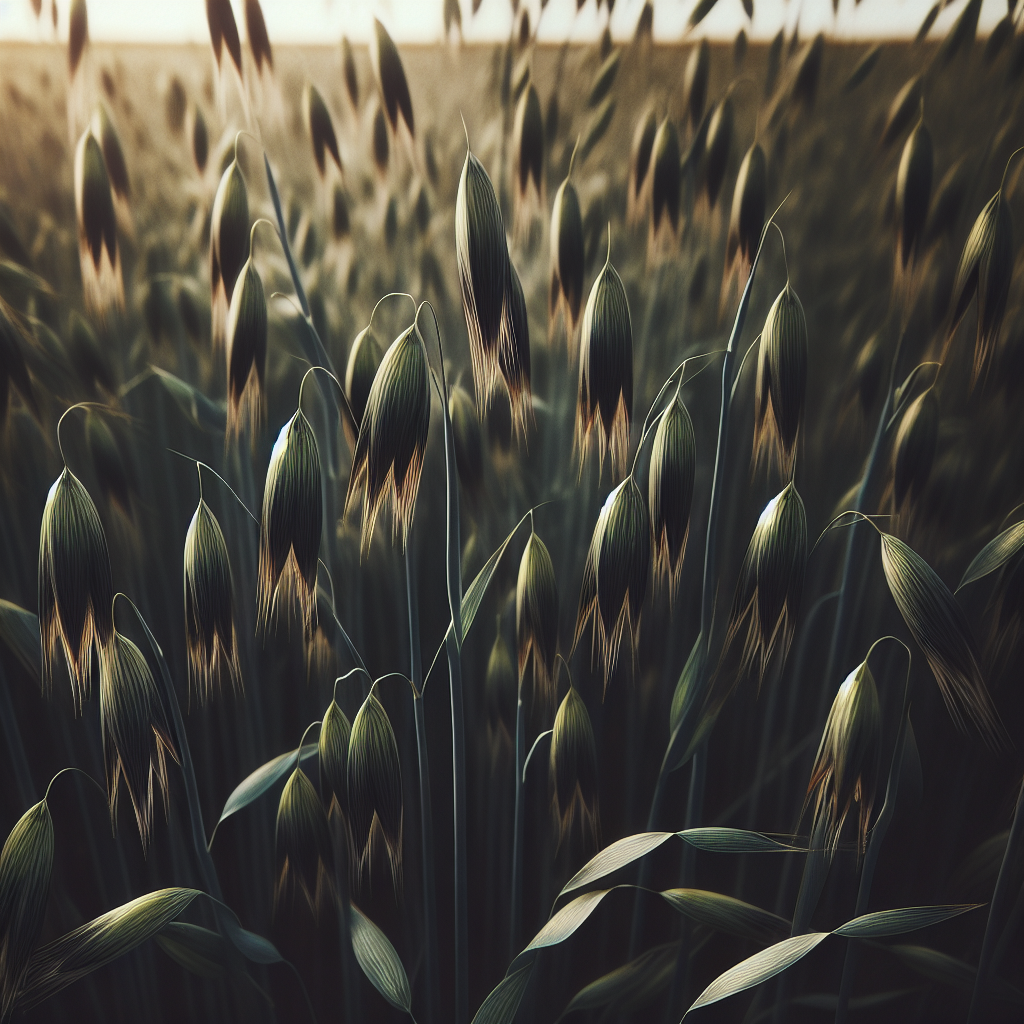
Introduction to Black Oats
A cool-season annual cereal originally associated with the Iberian Peninsula and widely adopted in South America, especially Brazil, this species has earned a reputation as one of the most dependable biomass and soil-building grasses for farms that need rapid establishment, dense ground cover, and aggressive nutrient capture. Although grouped with common oats, black oats differ in habit, seed appearance, stress tolerance, and management value. They are typically slimmer-stemmed, darker-seeded, and more fibrous than common oat types, which makes them particularly useful as a cover crop and forage rather than a premium milling grain.
In practical farming, black oats are often chosen because they germinate quickly in cool soils, produce a heavy root mass, help suppress winter and early spring weeds, and leave behind substantial residue that protects the soil surface. They are also widely used in no-till systems ahead of summer crops, in erosion-prone fields, on slopes, and in integrated grazing programs. In many regions they are mixed with legumes such as Clover, Vetch, or Chickpeas to balance carbon-rich biomass with biologically fixed nitrogen.
Compared with common Oats, black oats generally offer better disease tolerance in some humid subtropical systems, stronger tillering under moderate fertility, and excellent performance as a winter cover. Their grain is usually secondary to their agronomic function, but where harvested, it can serve as feed for livestock. For growers building rotations around soil structure, organic matter accumulation, and low-input performance, black oats deserve serious consideration. For broader rotation planning, see this soil health guide.
Botanical Profile of Black Oats
This species belongs to the Poaceae family and is botanically distinct from common oat, Avena sativa. Avena strigosa is usually recognized by its narrow leaves, relatively fine stems, dark hull-covered seed, and a growth habit that can be more upright and fibrous under dense stands. Mature plant height commonly ranges from 60 to 150 cm depending on fertility, sowing date, moisture, and whether the crop is managed for forage, cover, or grain.
The root system is one of its major agronomic assets. Black oats produce a dense, fibrous root network that penetrates compacted upper horizons and binds topsoil effectively. This is one reason they are frequently used after row crops that leave the soil exposed or structurally degraded. The roots also scavenge residual nitrate efficiently, reducing nutrient leaching over the wet season.
Leaves are linear, rough-textured, and usually darker green than many standard oat cultivars when adequately nourished with nitrogen. Tillering can be abundant when plants are seeded at moderate rates with enough early moisture and light. The inflorescence is a loose panicle, and seeds are elongated, narrow, and often dark brown to black, giving the crop its common name. Hulls remain tightly attached, so threshing and post-harvest handling differ somewhat from naked oats.
Botanically, black oats tend to express strong juvenile vigor. That trait is valuable in cover-crop systems because rapid canopy closure directly improves weed suppression. Their allelopathic effects are often noted by farmers, though these should be understood as one part of a broader suppression package that also includes shading, residue cover, and nutrient competition. Because residues can temporarily immobilize nitrogen as they decompose, termination timing matters if a nitrogen-demanding crop follows.
Soil, pH, and Climate Requirements for Black Oats
This crop is adaptable, but not indifferent. The best stands are produced on well-drained loams, sandy loams, or clay loams with moderate water-holding capacity and good surface tilth. Black oats tolerate lighter, lower-fertility soils better than many small grains, which is part of their appeal, but yield and biomass still improve significantly when soil structure is sound and nutrient imbalances are corrected.
An ideal soil pH is about 5.5 to 6.8. The crop tolerates mildly acidic conditions better than some cereals and can remain productive down to around pH 5.0, but below that point aluminum toxicity, weak rooting, and poor nutrient uptake often limit growth. In alkaline soils above pH 7.5, micronutrient issues such as manganese or zinc deficiency may appear, especially on calcareous ground. If pH correction is needed, apply lime well ahead of planting so it can react in the root zone.
Drainage is critical. Black oats can handle cool, moist conditions but not prolonged waterlogging. Saturated soils for more than 48 to 72 hours during emergence commonly cause patchy stands, weak roots, yellow seedlings, and increased damping-off or root decay. If the field holds standing water after rain, it needs drainage improvement, raised beds in garden-scale systems, or a different crop choice.
Climate preference is cool temperate to mild subtropical. The crop performs best when daytime temperatures are roughly 12 to 24°C and nights are cool. Germination begins in cool soil, often from 7 to 10°C, but faster and more uniform emergence occurs closer to 15 to 20°C. Young plants tolerate light frosts, and established stands can withstand moderate cold better than many warm-season covers. However, severe hard freezes may thin susceptible stands, while prolonged hot weather above 30°C accelerates maturity, reduces tillering, and lowers forage quality.
Moisture needs are moderate. Black oats generally require around 350 to 650 mm of water over the growing cycle depending on soil type, planting season, and production goal. For establishment, the top 5 to 7 cm of soil should remain consistently moist but not sticky or anaerobic. In practical terms, squeezed soil from the seed zone should hold together lightly, then crumble with a touch. If it forms a slick ribbon or smells sour, it is too wet. If it is powdery below 2 to 3 cm depth, emergence may be uneven.
Step-by-Step Planting & Propagation
Propagation is by seed. Use clean, high-germination seed with known purity and, ideally, documented freedom from major seedborne diseases. Because black oat seed size can vary, calibrate drills by weight and field-check actual seed drop rather than relying only on settings.
Choose the planting window based on temperature and system goals. For forage or cover, sow in autumn where winters are mild to moderate, or in early spring in colder regions as soon as the soil can be worked. Fall sowing usually gives the highest biomass and strongest erosion control.
Prepare the seedbed according to the system. In conventional tillage, aim for a firm, fine seedbed with small aggregates and no crusting risk. In no-till, ensure good seed-to-soil contact by planting after residue is evenly distributed. Avoid fluffy tilth; if footprints sink deeply, the seedbed is too loose and planting depth will be inconsistent.
Correct major fertility constraints before sowing. Black oats are efficient scavengers, but establishment improves where phosphorus is adequate and extreme acidity has been corrected. A soil test is preferable to blanket fertilization.
Seed at the correct rate. For cover cropping, common rates are 25 to 40 kg/ha in mixtures and 40 to 80 kg/ha in pure stands, depending on seed size and desired biomass. For forage or dense weed suppression, rates may rise to 80 to 100 kg/ha. In small plots, this translates to roughly 4 to 10 g per square meter depending on purpose.
Place seed 2 to 4 cm deep. On lighter, drier soils, plant toward the deeper end; on heavier or cooler soils, stay shallow. Depths beyond 5 cm often cause weak, delayed emergence. Broadcasting is possible, but the seed should then be lightly incorporated or rolled.
Firm the soil after planting. Rolling improves uniform moisture contact and reduces air gaps around the seed. This step is especially useful in dry autumn sowings.
Irrigate lightly if rainfall is not expected. The objective is to moisten the topsoil thoroughly without sealing the surface. A first irrigation of 10 to 20 mm is usually enough on prepared ground.
Emergence usually occurs within 5 to 12 days under suitable temperatures. If stands are thin, diagnose the cause before replanting: deep sowing, bird feeding, crusted soil, Slugs, waterlogging, or poor seed vigor are more common than seed quantity errors.
Care & Maintenance regimes for Black Oats
Once established, this is a relatively forgiving crop, but professional results depend on active observation rather than neglect. The first 30 days determine stand density, tillering potential, weed suppression, and eventual biomass.
Water management should be based on growth stage and soil texture. During germination and early seedling growth, keep the root zone evenly moist. In sandy soils, this may require frequent light irrigation; in loams, less frequent but deeper watering works better. After establishment, allow the upper few centimeters to dry slightly between irrigations while maintaining moisture lower in the profile. A useful field target is about 60 to 80% of field capacity during active vegetative growth. Below this range, leaves lose gloss, rolling may occur on hot afternoons, and tillering slows. Above it, plants can appear pale, roots become shallow, and lower leaves may yellow from oxygen stress.
Signs of overwatering include persistent wet sheen on the soil, algae on the surface, sulfurous odor, yellowing beginning in lower leaves despite adequate nitrogen, and plants that pull from the ground with short brown roots instead of white fibrous ones. Signs of underwatering include bluish-green dull leaves, reduced tillering, slower canopy closure, and uneven height across ridges or lighter-textured patches.
Nitrogen drives biomass. For cover crop use after a fertile cash crop, residual nitrogen may be sufficient. For forage production, 30 to 80 kg/ha of available nitrogen often boosts growth significantly, usually split between planting and early tillering where leaching risk exists. Excess nitrogen, however, can produce lush, weak tissue that lodges more easily and may accumulate nitrates under stress. Phosphorus supports establishment and rooting; potassium improves stress tolerance and stalk strength.
Weed management is mostly about early competition. A well-seeded black oat stand usually suppresses many annual weeds by canopy closure. Problems arise when the stand is thin, emergence is staggered, or fertility strongly favors weeds. Mechanical intervention is rarely used in dense field stands, so prevention through seedbed prep and correct seeding rate is the main strategy.
If grazing, begin when plants are well anchored and 20 to 30 cm tall. Avoid grazing below 7 to 10 cm stubble if regrowth is desired. Rotational grazing works better than continuous stocking because it preserves crown integrity and root reserves. If cutting for forage, harvest at late vegetative to early boot stage for best quality; later cutting increases fiber and reduces digestibility.
For termination as a cover crop, timing depends on the following crop. Earlier termination gives easier residue breakdown and lower moisture use; later termination gives more biomass and mulch. Crimping is most effective nearer flowering, while mowing or incorporation can occur earlier.
Pests, Diseases & Organic Management
Black oats are comparatively robust, but they are not immune to pest and disease pressure. Most problems are intensified by overly wet soils, dense unmoving canopies, poor rotation, or excessive nitrogen.
Aphids are common in cool-season cereals and can weaken plants directly while transmitting viral diseases. Inspect the undersides of leaves and stems, especially during mild weather. Light infestations are often held in check by beneficial insects if insecticide use is avoided. Excess nitrogen tends to worsen aphid pressure by creating soft, highly attractive growth.
Armyworms, Cutworms, and various Caterpillars may clip seedlings or skeletonize leaves. In mixed systems, slug damage can also be important under heavy residue and wet conditions. Monitor newly emerged fields at dawn or dusk if stand gaps appear suddenly. Bird feeding may also reduce newly sown seed in exposed fields.
Rusts, Leaf blotches, and crown or Root rots are the main disease concerns. Rust infections show as orange to brown pustules on leaves and can spread quickly under humid conditions with moderate temperatures. Leaf spots and Blights begin as elongated lesions that reduce photosynthetic area. Root diseases are most likely in compacted or waterlogged soils and often present first as uneven patches, stunted plants, and yellowing that does not respond to fertilizer.
Organic management starts with rotation. Avoid planting black oats repeatedly after cereals in fields with known foliar disease carryover. Use clean seed, avoid excessive stand density beyond the system goal, and maintain balanced fertility rather than pushing only nitrogen. Improve airflow where possible, especially in smaller plots. Surface drainage and soil structure management are among the strongest disease prevention tools available.
For pests, encourage natural enemies by maintaining flowering borders with Yarrow or Sunflower nearby rather than inside a production stand. Bacillus thuringiensis products may help with certain Caterpillars when applied at the correct larval stage, while iron phosphate baits can reduce Slugs in high-residue systems. For Aphids, insecticidal soaps are of limited utility in broad acre plantings but can help in small-scale production if coverage is thorough.
Harvesting, Curing & Optimal Storage
Harvest method depends entirely on intended use: grazing, green chop, hay, silage, seed, or residue mulch. For forage quality, the best harvest window is usually from late vegetative to early boot stage. At this point, crude protein and digestibility are still relatively high, and stems have not become excessively lignified. Delaying harvest to heading increases dry matter yield but reduces feed quality.
For hay, cut when weather allows rapid curing. Black oats can be slower to dry than finer grasses when heavily fertilized, so mowing after dew dries and conditioning stems helps. Aim to bale at about 15 to 18% moisture for small bales and around 12 to 16% for large bales, depending on storage conditions. Above these levels, heating and mold risk rise sharply.
For silage, harvest around boot to early heading when whole-plant moisture is appropriate for the storage system, often roughly 60 to 70% moisture for bunker or pile silage and somewhat drier for wrapped baleage. Chop length and packing density matter because the fibrous stems trap air if not compacted well.
For grain or seed, wait until panicles and stems turn straw-colored and kernels are firm with moisture declining toward safe harvest levels. Harvest too early and seed is shriveled; too late and shattering, lodging, and weather staining increase. Because black oats are often grown primarily for biomass, seed yield may be modest unless the crop was managed specifically for grain.
After harvest, clean seed thoroughly to remove chaff, weed seeds, and broken kernels. Dry grain to about 12% moisture or lower for medium-term storage; for long-term storage in warm climates, 10 to 11% is safer. Store in cool, dry, rodent-proof bins with good aeration. If grain has a musty odor, clumps, or shows condensation inside containers, it is too wet and should be dried immediately.
Residue handling is also part of harvesting strategy. High-carbon oat residue can be left as surface mulch in no-till systems, lightly incorporated to build soil organic matter, or baled if biomass has off-field value. If a nitrogen-demanding crop follows, consider supplying starter nitrogen to compensate for temporary immobilization during residue breakdown.
Companion Planting for Black Oats
In practical field agriculture, black oats perform best not with vegetable-style close companions but in strategic intercrops and rotations that enhance nitrogen supply, pollinator activity, and soil cover diversity. The most effective partners are usually legumes and beneficial-border species rather than heavy-feeding cereals.
Clover is one of the strongest companions because it fixes nitrogen, improves forage quality in mixed swards, and helps diversify rooting patterns. It is especially effective when black oats are grown for grazing, winter cover, or spring biomass before a summer cash crop. Manage seeding rates carefully so the grass does not completely dominate the legume.
Chickpeas are more commonly rotational rather than simultaneous partners in many climates, but in suitable low-density mixtures or adjacent strip systems they contribute nitrogen economy and broaden the biological base of the field. They also help reduce the dependency on purchased nitrogen in mixed farming systems.
Yarrow is best used on margins, headlands, or insectary strips. It attracts beneficial insects that can help moderate aphid populations in nearby cereals. It is not a bulk intercrop with black oats, but it is a valuable ecological companion around production blocks.
Sunflower can also be used in field edges or wider strip systems to attract pollinators and beneficial insects, create biodiversity, and provide an additional marketable product in diversified farms. Avoid overly competitive mixed drilling at high densities, as sunflower shading can reduce oat uniformity.
The best companion strategy is goal-specific. For forage, black oats plus clover is often the most useful combination. For soil building, black oats with a legume component gives an excellent carbon-to-nitrogen balance. For ecological pest management, add flowering margin species rather than crowding the cereal stand itself.