Introduction to Black Corinth (Champagne Grapes)
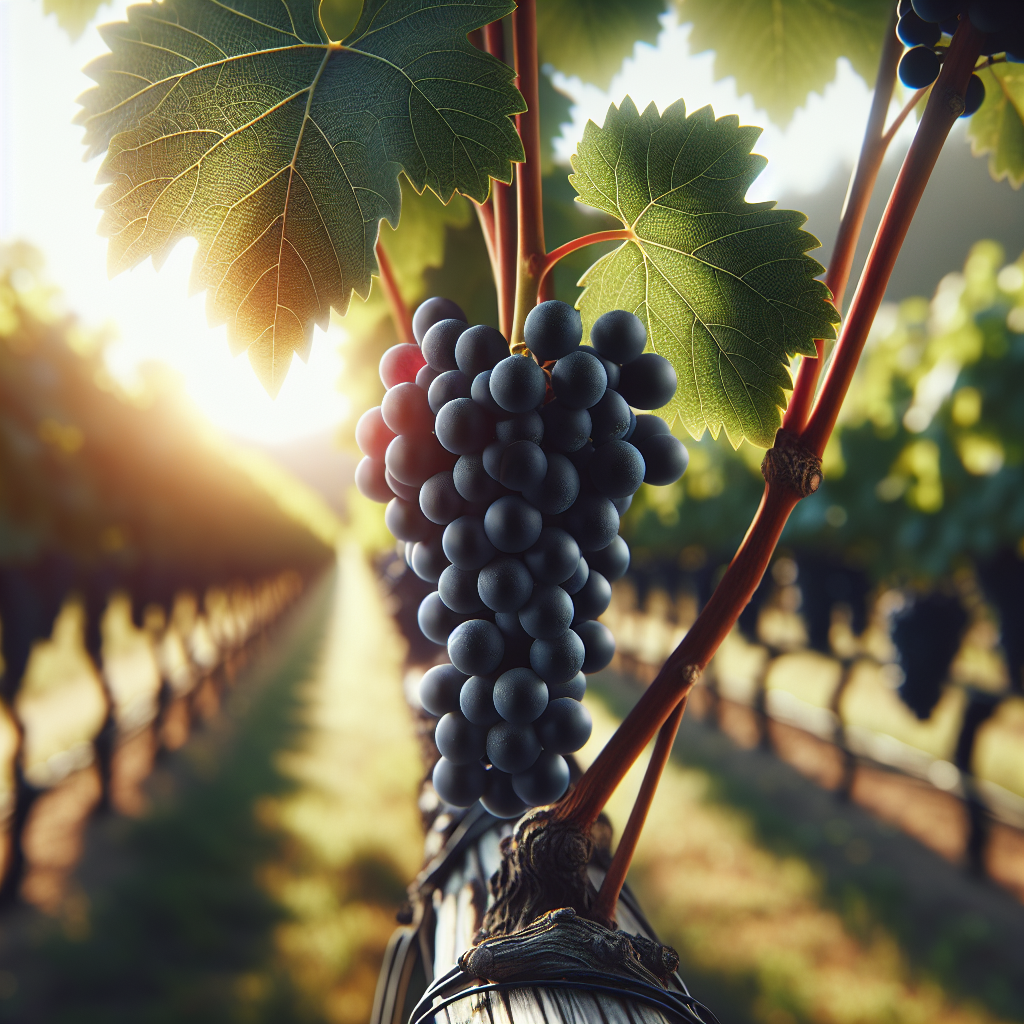
This small-fruited grape has a long and somewhat confusing identity in horticulture and commerce. Botanically, it is a cultivar of the European grape, and historically it is associated with the famous “Zante currant” trade rather than with wine Champagne. The fresh clusters are delicate, compact, and composed of very small, dark purple to black berries with thin skins and a concentrated, candy-like sweetness. In many markets, these miniature grapes are sold as “Champagne grapes,” though they are not a distinct species and are not related to the sparkling wine region beyond the marketing name.
For growers, this is not a forgiving backyard grape if neglected. It is naturally vigorous but bears tiny berries on compact clusters, which means canopy airflow, fungal prevention, and precise crop load management matter more than with looser-clustered table grapes. Black Corinth is especially valued where summers are warm and dry, because fruit quality improves dramatically under high light, low summer humidity, and restrained irrigation after berry set. Compared with larger table grapes, it tends to require more attention to spur positioning, cluster exposure, and disease control, but the payoff is a premium niche fruit with ornamental appeal and strong market recognition.
If you are new to viniculture, it helps to understand the broader biology of grapes before managing this particularly exacting cultivar. Black Corinth is best approached as a specialty vine: high value, high finesse, and strongly shaped by site selection.
Botanical Profile of Black Corinth (Champagne Grapes)
This cultivar belongs to Vitis vinifera, the Eurasian grape species that dominates global table, raisin, and wine production. Black Corinth is believed to be an ancient cultivar with roots in the Mediterranean basin, especially Greece, where the dried fruit trade helped spread its fame. The berries are exceptionally small, often only pea-sized or smaller, and are borne in short to medium clusters that can become very tight. That compactness is one of the defining production issues, because moisture trapped between berries can encourage bunch rots when weather is humid or rainfall occurs near maturity.
The vine itself is deciduous, climbing by tendrils, and capable of substantial annual cane growth once established. Leaves are medium-sized, often orbicular to slightly lobed, with serrated margins and a moderately open petiolar sinus typical of many vinifera types. Shoots lignify well under full sun and proper nutrition, producing brown, mature canes by autumn. Flowering is generally self-fertile in modern plantings, but fruit set can still be affected by cool, wet bloom periods, excessive nitrogen, or strong vegetative competition.
Fruit chemistry is a major strength. Black Corinth tends to accumulate high soluble solids, often reaching 20-24° Brix or more in favorable conditions, while retaining enough acidity to avoid tasting flat. The skin is thin and easily damaged during rough handling, so harvesting technique matters. Because berries are naturally tiny, growers should not expect table-grape size enlargement, and heavy nitrogen fertilization or overwatering will not turn it into a large-fruited cultivar; those practices usually reduce flavor intensity and increase disease pressure instead.
Black Corinth is commonly trained on cordons or head-trained systems depending on climate and management style, but spur-pruned cordon training is especially practical because the cultivar fruits well on basal buds when properly managed. Its habit makes it suitable for small trellised systems, specialty vineyards, and even decorative edible arbors, provided airflow and spray access remain good.
Soil, pH, and Climate Requirements for Black Corinth (Champagne Grapes)
This vine performs best in deep, well-drained soils with moderate fertility and a pH of about 6.0 to 7.5, with an ideal target near 6.5 to 7.0. It tolerates slightly alkaline conditions better than many fruit crops, but persistent pH above 7.8 can induce micronutrient deficiencies, especially iron chlorosis on calcareous soils. In acidic soils below pH 5.8, phosphorus availability and root performance may decline, and liming is often beneficial before planting.
Drainage is non-negotiable. The root system dislikes prolonged saturation, particularly in cool spring soils. A site should drain well enough that standing water disappears within 24 hours after heavy rain. In heavier clay loams, plant on raised berms 20-40 cm high to keep the crown zone aerated. Ideal texture is a gravelly loam, sandy loam, or silt loam with good internal drainage and at least 60-90 cm of penetrable rooting depth. Compacted subsoil, perched water tables, or irrigation seepage will quickly reduce vigor balance and increase root disease risk.
Organic matter should be moderate rather than excessive. Around 2-4% organic matter is usually sufficient. Very rich soils often push rank vegetative growth, which shades fruit and delays cane ripening. Before planting, incorporate well-finished compost only if soil structure is poor; avoid creating a highly amended planting hole surrounded by native soil, which can trap water around roots.
Climate preference is strongly Mediterranean to warm temperate. Black Corinth thrives where winters provide enough chill for normal dormancy and summers are warm, sunny, and relatively dry. It generally suits USDA zones about 7-10, depending on rootstock and microclimate. Winter lows below about -15°C (5°F) can damage canes and buds, while spring frosts after budbreak can destroy the crop. On the other end, extreme heat above 38-40°C (100-104°F), especially with hot wind and inadequate soil moisture, can cause berry shrivel or sunburn if the canopy is too open.
Rainfall patterns matter as much as temperature. Dry weather during ripening is ideal. Frequent late-summer rain increases splitting and botrytis risk in these small, tight clusters. Good air movement on slopes or open exposures is advantageous, but avoid frost pockets where cold air settles.
For irrigation scheduling, think in terms of soil moisture rather than calendar watering. During establishment, maintain the root zone evenly moist but never waterlogged: roughly 60-80% of field capacity in the top 20-30 cm of soil is a useful target. In practical terms, soil should feel cool and slightly damp when squeezed, not glossy, sticky, or anaerobic-smelling. Once vines are established, moderate drying between irrigations is beneficial. During active shoot growth and fruit set, allow only mild depletion; from veraison onward, slightly reduced irrigation can concentrate sugars and reduce excessive berry swelling. Signs of underwatering include tendril collapse, dull leaf color, marginal scorch, and stalled shoot tips. Signs of overwatering include persistent lush soft growth, yellowing lower leaves despite wet soil, sour-smelling root zones, cracking soil surface algae, and higher mildew incidence.
A vineyard floor management plan will improve both soil and vine health. Permanent or seasonal row-middle covers such as Clover can help reduce erosion and improve trafficability, but keep a weed-free strip around the vine row itself so young vines do not compete for water.
For broader fertility and structure-building principles, see soil health strategies.
Step-by-Step Planting & Propagation
Start with certified disease-free planting stock. Because grapevine viruses, trunk pathogens, and nematodes can compromise a vineyard for decades, clean material is worth the expense. In phylloxera-prone regions, use a grafted vine on an appropriate resistant rootstock rather than own-rooted plants. In sandy soils where phylloxera pressure is low, own-rooted Black Corinth may still be grown, but local extension recommendations should guide that choice.
- Select a full-sun site with at least 8 hours of direct light daily. Morning sun is particularly valuable because it dries dew quickly.
- Test the soil 3-6 months before planting. Correct pH, phosphorus, potassium, calcium, and magnesium before vines go in. Post-plant corrections are slower and less efficient.
- Install trellis and irrigation before planting. A simple bilateral cordon on a wire trellis works well for most small plantings. End posts must be strong because mature vines exert considerable tension.
- Plant during dormancy, usually late winter to early spring, after the worst freeze risk but before vigorous growth begins. In mild winter climates, midwinter planting is often ideal.
- Dig a broad hole only as deep as the root system. Spread roots outward naturally. Do not bury the graft union; keep it 5-10 cm above final soil grade.
- Backfill with native soil, firm gently, and water thoroughly to settle air pockets.
- Cut the vine back to 2-3 strong buds at planting if it has not already been headed by the nursery.
- Train one strong shoot upward during the first season, tying it loosely to a stake. Remove competing shoots so the trunk develops straight and strong.
Spacing depends on vigor, soil, and trellis. Home growers often use 1.8-2.4 m between vines and 2.4-3 m between rows. In more vigorous sites, give extra room. Tight spacing on fertile ground leads to dense canopies and disease.
Propagation is usually by hardwood cuttings or bench grafting. Hardwood cuttings 25-40 cm long with 3-4 nodes can root readily in many vinifera cultivars, but commercial propagation should still prioritize sanitation. Take cuttings from mature, pencil-thick dormant wood. Make the basal cut just below a node, the upper cut above a node, and insert the cutting so at least two buds remain above the medium. Rooting success is best in warm media with cool tops, but for most growers, purchasing nursery plants is safer and faster than home propagation.
Care & Maintenance regimes for Black Corinth (Champagne Grapes)
Year-round management determines whether the vine produces premium fruit or a tangled crop of disease-prone clusters. The key principles are balanced vigor, sunlight penetration, and disciplined pruning.
Pruning should be done in dormancy, usually late winter. Black Corinth is commonly spur pruned on permanent cordons. Retain evenly spaced spurs along the cordon, each cut back to 2 buds, typically spaced 10-15 cm apart. Remove weak, crowded, downward, or inward-facing wood. Overcropped vines should be pruned more severely the following year; overly vigorous vines may need slightly more retained buds but usually benefit even more from reduced nitrogen and moderated irrigation.
In spring, shoot thinning is critical. When shoots are 10-20 cm long, remove extras so spacing along the cordon remains open. Aim for one strong shoot per fruitful position. This early step greatly improves airflow and spray penetration later.
Canopy management continues into summer. Tuck or tie shoots so they do not shade clusters excessively. On vigorous vines, hedge only lightly; severe topping can stimulate lateral growth that makes the canopy denser. Selective leaf removal around the fruiting zone on the morning-sun side can improve drying and color development, but avoid stripping too many leaves in very hot climates or berries may sunburn.
Fertilization should be based on leaf analysis and growth observations, not routine heavy feeding. Young vines need enough nitrogen to establish trunks and cordons, but mature vines often require only modest annual inputs. A general target for balanced mature vines is about 30-60 cm of shoot growth beyond the top wire by midsummer, not rampant 2-meter whips. If growth is weak and leaves are pale, a light spring application of composted manure or a measured dose of nitrogen may help. If internodes are long, shoots are floppy, and canopy density is excessive, stop nitrogen additions.
Potassium is important for sugar movement and fruit quality, especially in sandy or low-CEC soils. Magnesium deficiency may show as interveinal chlorosis on older leaves, while iron deficiency appears on young leaves in high-pH soils. Foliar correction can help in-season, but long-term pH and rootstock solutions are better.
Irrigation differs by vine age:
- First year: water deeply enough to moisten the root zone 20-30 cm, often 1-2 times weekly in warm weather depending on soil type.
- Second to third year: deeper, less frequent irrigation to encourage rooting, usually when the top 5-8 cm have dried but subsoil remains slightly moist.
- Mature vines: irrigate before visible stress develops, but allow moderate drying between sets. Drip irrigation is strongly preferred.
Mulch can conserve moisture in young plantings, but keep organic mulch 10-15 cm away from the trunk to prevent crown rot and rodent damage. In established vineyards, many growers prefer a clean undervine strip rather than thick mulch.
Pests, Diseases & Organic Management
Black Corinth is especially vulnerable to problems that exploit dense canopies and tight clusters. Prevention is more effective than rescue.
Powdery mildew is often the most important disease. It appears as a gray-white powder on leaves, shoots, and berries, and can scar or split fruit. The fungus thrives even in relatively dry climates if humidity around the canopy is high. Manage it with dormant sanitation, open pruning, shoot thinning, and sulfur-based organic sprays applied preventively according to label and temperature restrictions. Never apply sulfur during very hot weather if the label warns against it, or phytotoxicity may occur.
Downy mildew is more likely in wetter climates, showing yellow oil spots on leaves and downy growth beneath them. Copper products may provide organic suppression, but canopy drying and site choice are fundamental.
Botrytis bunch rot is a major concern because Black Corinth clusters can be compact. Signs include soft berries, gray fungal growth, and souring fruit near harvest. Avoid overhead irrigation, reduce late nitrogen, thin canopies, and remove damaged clusters promptly.
Anthracnose, Phomopsis cane and leaf spot, and Trunk diseases may occur where sanitation is weak. Always prune in dry weather when possible, remove diseased wood, and protect large cuts if trunk disease pressure is known locally.
Insects include Grape berry moth, Leafhoppers, Mealybugs, Thrips, and Spider mites. Organic control begins with monitoring. Leafhopper feeding causes stippling and reduced photosynthetic efficiency; Mealybugs can vector viruses and produce honeydew that encourages sooty mold. Encourage beneficial insects with flowering borders that do not create excessive humidity around the vines. Horticultural oils can suppress some soft-bodied pests during dormant or delayed-dormant periods, but avoid inappropriate timing near sulfur applications.
Birds can devastate ripening fruit because the berries are small, sweet, and easy to peck. Netting is the most reliable nonlethal method. Wasps may also become a problem near harvest, especially where split berries are present.
For organic success, build an integrated program:
- Start with resistant rootstocks where relevant.
- Keep the canopy open.
- Sanitize mummified fruit and fallen debris.
- Scout weekly from budbreak to harvest.
- Rotate approved organic materials rather than relying on one product.
- Time sprays to disease risk periods, especially pre-bloom through bunch closure.
Harvesting, Curing & Optimal Storage
Harvest timing depends on intended use: fresh eating, drying, or specialty culinary markets. Black Corinth berries should be fully colored, sweet, and aromatic before picking. Because berry size is naturally tiny, flavor is the real maturity indicator. Use a refractometer if possible; 20° Brix is a solid minimum for fresh market quality, while higher sugar is desirable for drying.
Cut clusters with clean shears rather than pulling by hand, which can tear pedicels and bruise berries. Harvest in the cool morning after dew has dried but before afternoon heat softens the fruit. Handle clusters shallowly in field lugs; stacking too deeply crushes the lower fruit.
For fresh storage, pre-cool quickly to 0-1°C (32-34°F) with high relative humidity around 90-95%. Under good conditions, fruit may keep 1-2 weeks, though Black Corinth is generally more delicate than thicker-skinned table grapes. Remove damaged or split clusters before storage because decay spreads quickly.
For drying into currant-style raisins, harvest at peak sweetness and dry on trays or screens in hot, dry, insect-protected conditions with strong airflow. Turn fruit as needed to ensure even dehydration. Final moisture should be low enough that berries are pliable but not sticky-wet inside, generally around 13-18% for stable storage. Once dried, condition the fruit in loosely filled containers for several days, shaking daily so residual moisture equalizes, then pack airtight and store cool and dark.
Do not wash fruit before storage unless it will be consumed immediately. Surface moisture accelerates spoilage. For market presentation, tiny intact clusters with visible bloom and no shatter command the best price.
Companion Planting for Black Corinth (Champagne Grapes)
Companion planting around vineyards works best when it supports pest balance, pollinators, soil structure, and trafficability without competing heavily with the vine root zone. The best companions are usually placed in row middles, border strips, or alternating insectary bands rather than directly at the vine crown.
Thyme is useful in dry vineyards because it remains relatively low, tolerates lean soils, and attracts beneficial insects when flowering. Its compact habit makes it suitable near row edges where you want reduced weed pressure without tall shade.
Yarrow is an excellent insectary plant for attracting parasitoid wasps, hoverflies, and predatory insects. It is especially valuable in ecological vineyard systems, but it should be managed so it does not become overly competitive in very dry sites.
Nasturtium can function as a trap and distraction plant for some soft-bodied pests in diversified gardens, and it also draws pollinators and beneficial insects. Use it more in home-scale plantings than in tightly managed commercial vineyard rows, where excess understory humidity may be undesirable.
Clover is perhaps the most practical functional companion in row middles because it protects soil, fixes some nitrogen, and improves infiltration. However, in vigorous sites, monitor it closely; excessive nitrogen release or strong competition for spring moisture can both be counterproductive. Mow before seed set and before the vine enters critical moisture competition periods.
Avoid aggressive deep-rooted companions immediately under the vine, and avoid tall annual vegetables that increase shade and airflow problems. The best companion strategy for Black Corinth is supportive biodiversity around the system, not crowding at the trunk.