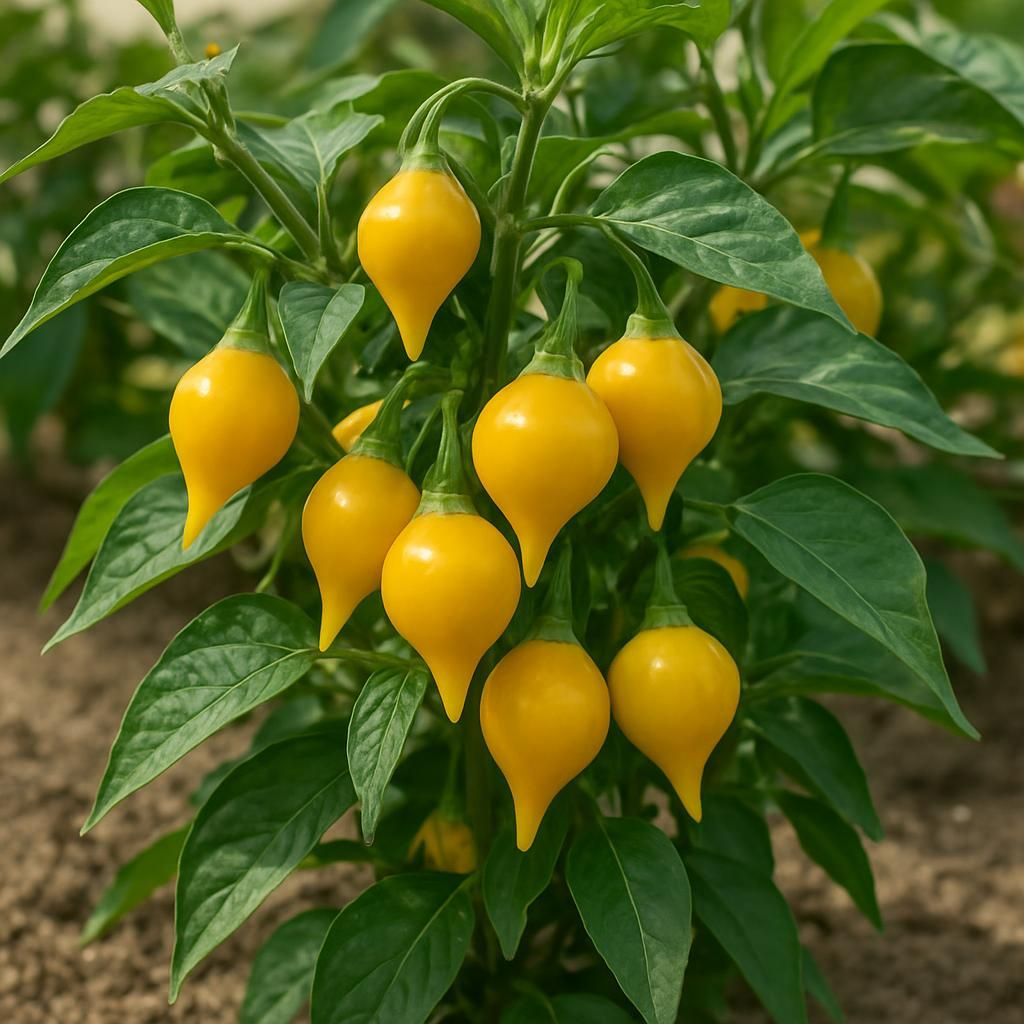
Introduction to Biquinho Pepper (Yellow)
Biquinho Pepper (Yellow), known botanically as Capsicum chinense 'Biquinho Amarelo', originates from the Minas Gerais region of Brazil where it has been cultivated for generations. Unlike many hot chili varieties, this pepper delivers a bright, fruity flavor with only 500–1,000 Scoville Heat Units, making it accessible to a wide range of palates. Its small, teardrop-shaped fruits turn from green to a glossy golden yellow at maturity, adding visual appeal to both garden beds and market displays. Growers appreciate its compact plant habit, high productivity, and versatility in fresh, pickled, and cooked preparations. This comprehensive guide covers every stage of cultivation from soil preparation through post-harvest storage to help producers achieve consistent, high-quality harvests.
Botanical Profile of Biquinho Pepper (Yellow)
Biquinho Pepper belongs to the Solanaceae family and shares many traits with other Capsicum chinense cultivars such as Habanero Pepper. Plants typically reach 60–90 cm in height with a bushy, semi-determinate growth habit and medium-green, ovate leaves. Flowers are small, white, and self-pollinating, though insect visitation improves fruit set. The distinctive fruits measure 2–4 cm long, feature a pointed apex, and contain 2–3 locules with relatively few seeds. Maturation occurs in 75–85 days from transplant. The mild pungency results from low capsaicinoid accumulation compared to hotter relatives like Ghost Pepper.
Soil, pH, and Climate Requirements for Biquinho Pepper (Yellow)
Biquinho Pepper (Yellow) performs best in well-drained, fertile loam or sandy loam soils enriched with organic matter. The crop requires full sun exposure of at least 6–8 hours daily and thrives in warm temperatures typical of USDA zones 9–11, or in protected environments in cooler regions. Consistent warmth accelerates fruit development while avoiding blossom drop associated with temperature fluctuations.
| Parameter | Ideal Range | Notes |
|---|---|---|
| Soil Type | Loam or sandy loam | High organic matter improves structure |
| Soil pH | 6.0–6.8 | Slightly acidic to neutral |
| Temperature (Day) | 24–30 °C | Optimal fruit set and color development |
| Temperature (Night) | 18–22 °C | Below 15 °C slows growth |
| Spacing (In-row) | 45–60 cm | Allows airflow and easy harvest |
| Spacing (Between rows) | 75–90 cm | Facilitates mechanical or hand cultivation |
| Sunlight | Full sun (6–8+ hours) | Essential for maximum yield |
| Frost Tolerance | None | Protect or grow as annual in cooler zones |
Step-by-Step Planting & Propagation
Start seeds indoors 8–10 weeks before the last expected frost. Use a sterile seed-starting mix and maintain soil temperature at 24–28 °C for rapid germination, which occurs in 7–14 days. Transplant seedlings when they have 4–6 true leaves and nighttime temperatures remain above 15 °C. Harden off plants for 7–10 days before moving outdoors. Space transplants 45–60 cm apart in rows 75–90 cm wide. Apply a starter fertilizer solution high in phosphorus at planting to encourage root establishment. In regions with short seasons, consider using black plastic mulch or row covers to raise soil temperature and accelerate early growth.
Care & Maintenance regimes for Biquinho Pepper (Yellow)
Consistent irrigation, balanced nutrition, and timely pruning are essential for maximizing fruit quality and yield. Drip irrigation is preferred to keep foliage dry and reduce disease pressure. Mulch with 5–8 cm of organic material to conserve moisture and suppress weeds. Side-dress with nitrogen at flowering and again at fruit set. Remove lower leaves and suckers below the first fork to improve airflow and reduce soil splash onto fruit.
| Growth Stage | Watering Schedule | Fertilizer Application | Pruning/Maintenance |
|---|---|---|---|
| Transplant–Flowering | 2–3 cm/week; keep soil evenly moist | High-phosphorus starter at transplant; balanced NPK (10-10-10) every 3 weeks | Remove lower leaves; stake if needed |
| Flowering–Fruit Set | 3–4 cm/week; avoid water stress | Side-dress with calcium nitrate or fish emulsion | Pinch first flowers if plants <30 cm tall to promote branching |
| Fruit Development–Harvest | 3 cm/week; reduce slightly near maturity | Potassium-rich fertilizer every 2 weeks | Remove diseased leaves; maintain open canopy |
Pests, Diseases & Organic Management
Common pests include aphids, thrips, and spider mites. Monitor weekly and use insecticidal soap or neem oil for early infestations. Flea beetles may damage young transplants; floating row covers provide effective protection. Major diseases include bacterial spot, phytophthora blight, and powdery mildew. Practice crop rotation, avoid overhead irrigation, and remove infected plant debris at season end. Beneficial insects such as lady beetles and lacewings help control soft-bodied pests when habitat is provided.
Harvesting, Curing & Optimal Storage
Harvest Biquinho Pepper (Yellow) fruits when they reach full yellow color and 2–4 cm in length, typically 75–85 days after transplant. Use clean pruners to cut stems, leaving a short peduncle to prolong shelf life. Fresh peppers store 7–10 days at 7–10 °C and 85–90 % relative humidity. For longer storage, pickle in vinegar brine or freeze after blanching. Air-dry small batches in a well-ventilated area or dehydrator at 50 °C until brittle for spice blends.
Companion Planting for Biquinho Pepper (Yellow)
Pair Biquinho Pepper (Yellow) with Tomato and Basil to improve pollination and deter pests. Marigold and Nasturtium repel nematodes and aphids while attracting beneficial insects. Avoid planting near Fennel or members of the Brassica family that may compete for nutrients or harbor shared pests. Interplanting with Cucumber can provide light shade during peak summer heat while maximizing bed space.