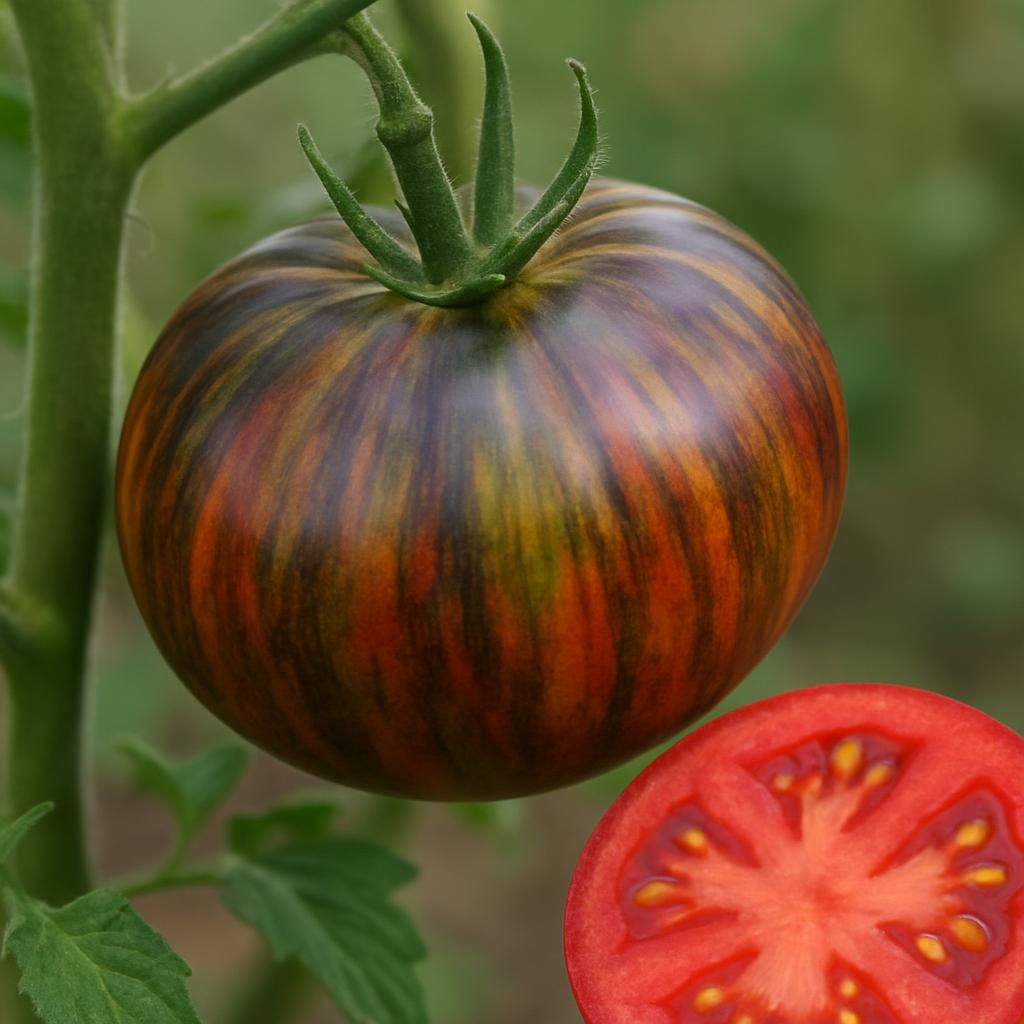
Introduction to Berkeley Tie-Dye Tomato
Berkeley Tie-Dye Tomato is an eye-catching indeterminate beefsteak variety developed by Brad Gates of Wild Boar Farms. Its striking purple, green, and orange marbled skin and rich, sweet-tart flavor have made it a favorite among chefs and home gardeners seeking both visual appeal and culinary quality. The variety performs well in organic production systems and offers moderate disease resistance, making it suitable for both small farms and backyard plots.
This comprehensive guide covers every aspect of successful cultivation, from soil preparation and planting through harvest and storage. Whether you are growing for market or personal use, following these evidence-based practices will maximize both yield and fruit quality.
Botanical Profile of Berkeley Tie-Dye Tomato
Berkeley Tie-Dye belongs to the species Tomato within the Solanaceae family. It is an indeterminate variety, meaning the plant continues to grow and set fruit throughout the season until killed by frost. Plants typically reach 5–7 feet in height and produce large, oblate fruits weighing 8–16 ounces. The fruit exhibits anthocyanin pigmentation that creates the signature tie-dye pattern, while the flesh remains deep red and juicy with a balanced Brix level of 6.5–8.0.
The variety flowers in clusters of 6–10 blossoms and requires pollination by wind or insects. Fruit matures in approximately 80–90 days from transplant. Foliage is dark green with moderate leaf coverage that helps protect fruit from sunscald while still allowing sufficient light penetration.
Soil, pH, and Climate Requirements for Berkeley Tie-Dye Tomato
Berkeley Tie-Dye Tomato performs best in fertile, well-drained loam or sandy loam soils rich in organic matter. Consistent moisture without waterlogging is essential to prevent root rot and physiological disorders.
| Parameter | Ideal Range/Value | Notes |
|---|---|---|
| Soil Type | Loam or sandy loam | High organic matter improves structure |
| Soil pH | 6.2–6.8 | Slightly acidic; test and amend annually |
| Temperature (Day) | 70–85°F (21–29°C) | Optimal fruit set and flavor development |
| Temperature (Night) | 55–65°F (13–18°C) | Below 55°F slows growth and pollination |
| USDA Hardiness Zones | 4–11 | Start indoors in cooler zones |
| Sun Exposure | Full sun (8+ hours) | Morning sun reduces disease pressure |
| Spacing | 24–36 inches between plants | 4–5 feet between rows for airflow |
Step-by-Step Planting & Propagation
Start seeds indoors 6–8 weeks before the last expected frost. Use a sterile seed-starting mix and maintain soil temperature at 75–80°F for rapid germination. Transplant seedlings outdoors once soil has warmed to at least 60°F and all danger of frost has passed.
Harden off plants for 7–10 days by gradually increasing outdoor exposure. Dig planting holes 12–18 inches deep and amend with well-aged compost. Set transplants deep, burying the stem up to the first true leaves to encourage strong root development. Install sturdy cages or trellises at planting time to support the vigorous indeterminate vines.
Care & Maintenance regimes for Berkeley Tie-Dye Tomato
Consistent cultural practices are critical for high-quality fruit. Apply mulch to conserve moisture and suppress weeds. Monitor plants weekly for nutrient deficiencies and adjust fertility based on soil tests.
| Task | Frequency | Details |
|---|---|---|
| Watering | 1–1.5 inches per week | Deep, infrequent watering; avoid foliage |
| Fertilizer | Every 3–4 weeks after fruit set | Balanced organic fertilizer (NPK 4-6-4) |
| Pruning | Weekly | Remove suckers below first flower cluster |
| Mulching | At planting and mid-season | 3–4 inches of straw or shredded leaves |
| Staking/Trellising | At planting and as needed | Use 6–7 ft cages or Florida weave system |
Pests, Diseases & Organic Management
Common pests include aphids, hornworms, and flea beetles. Scout plants twice weekly and use hand-picking, insecticidal soap, or Bacillus thuringiensis (Bt) as needed. Major diseases include early blight, late blight, and septoria leaf spot. Maintain good airflow through proper spacing and pruning, rotate crops every 3–4 years, and apply preventive copper or neem-based sprays during humid periods.
Harvesting, Curing & Optimal Storage
Harvest fruit when it reaches full color with slight give at the blossom end. Use pruning shears to cut the stem rather than pulling to avoid plant damage. For long-term storage, pick mature green fruit and ripen at 55–70°F away from direct sunlight. Fully ripe tomatoes keep 5–7 days at room temperature or up to two weeks in the refrigerator crisper if used promptly.
Companion Planting for Berkeley Tie-Dye Tomato
Plant basil nearby to improve flavor and repel pests. Marigold and nasturtium deter nematodes and aphids. Avoid planting near fennel or walnut trees, which can inhibit tomato growth through allelopathy. Corn and cucumber also make good companions when spaced properly to maintain airflow.