Introduction to bacterial twig dieback
Bacterial twig dieback represents a serious threat to woody crops worldwide, particularly in temperate and subtropical growing regions. Caused primarily by the bacterium Pseudomonas syringae pv. syringae and related pathovars, this disease targets young twigs, buds, and shoots, leading to rapid tissue necrosis and dieback. Farmers and orchard managers often first notice it during spring flushes or after pruning, when moist conditions favor bacterial entry through wounds.
The economic impact is substantial, with yield reductions of 20-50% in severe outbreaks on susceptible varieties. Unlike fungal diseases, bacterial twig dieback progresses quickly, often killing entire branches within weeks. This guide provides professional-grade diagnostic criteria, lifecycle insights, and proven organic management strategies to help growers protect their cherry and peach orchards. Early intervention is key, as once established, the bacteria can overwinter in bark cracks and bud scales, perpetuating annual infections.
Understanding the pathogen's biology is crucial for effective control. Pseudomonas syringae is a ubiquitous, opportunistic bacterium thriving in cool temperatures (10-20°C) and high humidity. It produces ice-nucleating proteins that exacerbate frost damage, creating entry points for infection. In commercial settings, this disease often coincides with late frosts or hail events, amplifying damage across entire blocks.
Identifying Symptoms & Damage
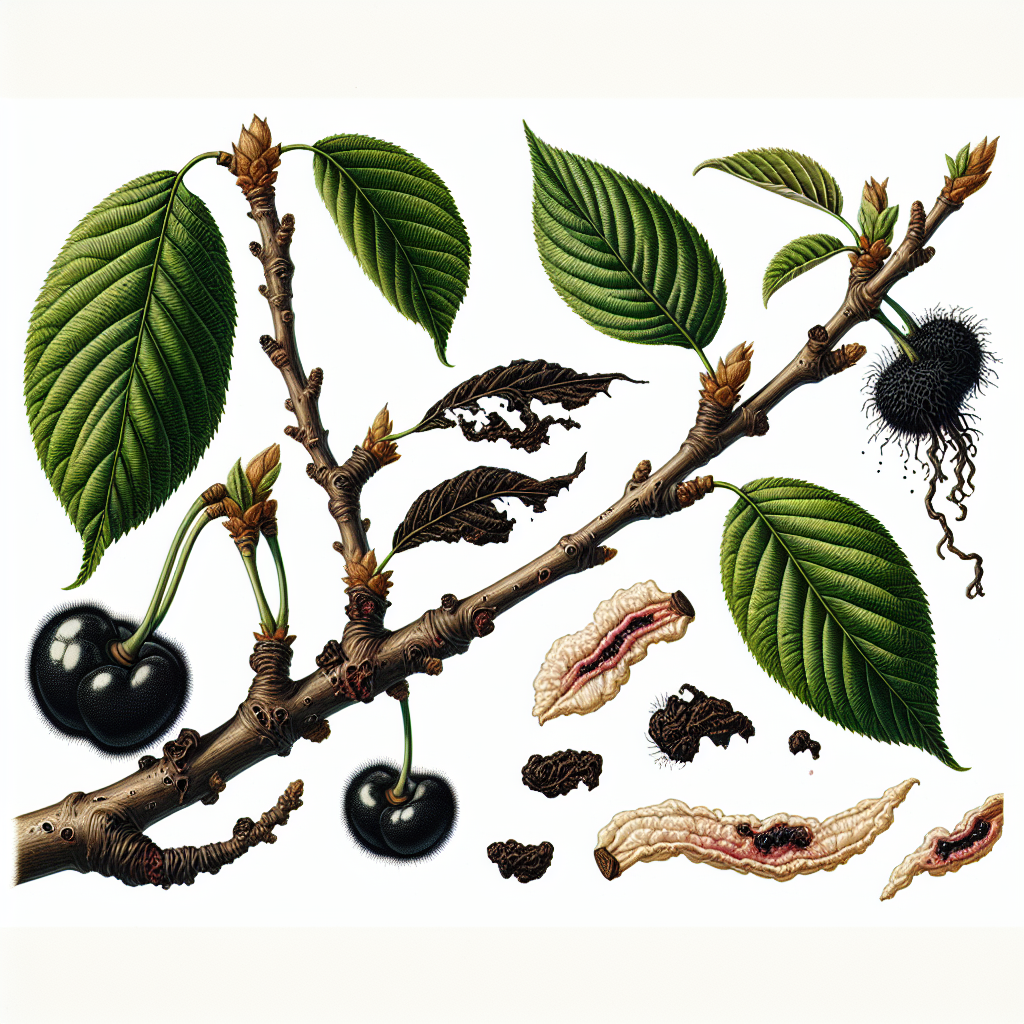
Accurate diagnosis begins with recognizing hallmark symptoms of bacterial twig dieback. Initial signs appear as water-soaked lesions on young twigs, rapidly turning dark brown to black. Affected tissues wilt and shrivel, giving a 'shepherd's crook' appearance—curled, blackened tips that are diagnostic.
Examine buds closely: infected ones ooze creamy bacterial slime under humid conditions, turning black and failing to break dormancy. Cross-sectioning symptomatic twigs reveals brown vascular discoloration, distinguishing it from fungal cankers like those caused by Botrytis. Leaves on dying shoots yellow, scorch at margins, and drop prematurely.
Damage extends to blossoms and fruitlets in advanced cases. Blossoms blacken without petal drop, and small fruits develop sunken, discolored spots. In apple and plum orchards, systemic spread leads to branch dieback, reducing scaffold integrity and long-term productivity.
To confirm, perform a simple field test: cut a symptomatic twig and squeeze; milky ooze indicates bacterial infection. Laboratory confirmation via PCR or ELISA detects Pseudomonas species. Differentiate from environmental damage—bacterial lesions are sunken with sharp margins, unlike frost cracks.
Severity varies by host; young trees suffer most, with up to 70% twig loss. Scouting post-rainfall or pruning is essential for early detection. Use a 10x hand lens to spot bacterial streaming from cut ends in water—a classic diagnostic sign.
Lifecycle and Progression of bacterial twig dieback
The lifecycle of bacterial twig dieback is tightly linked to environmental cycles and plant phenology. Pseudomonas syringae overwinters as dormant cells in bud scales, bark fissures, and leaf scars. Populations multiply in fall leaf debris and pruning wounds, surviving harsh winters.
Spring activation occurs with bud swell, when bacteria multiply epiphytically on surfaces. Rain splash and wind disseminate them to fresh wounds from pruning, frost, or hail. Infection requires moisture; free water on tissues allows entry through stomata or lenticels, with incubation of 7-14 days.
Progression accelerates in cool, wet springs: initial colonization leads to toxin production, blocking xylem and causing wilting. By bloom, secondary spread via guttation droplets infects flowers. Summer sees canker formation on larger branches, with bacteria retreating to protected sites.
A single cycle can produce billions of cells per gram of tissue, enabling explosive epidemics. Latency periods vary—symptoms may appear weeks after infection. In perennials like pear, chronic infections persist, leading to girdling cankers.
Understanding this polycyclic nature underscores the need for sanitation during dormancy breaks. Bacteria exploit plant stress, synergizing with aphids that vector inoculum mechanically.
Environmental Triggers & Risk Factors
Bacterial twig dieback thrives under specific conditions that growers must monitor. Cool temperatures (5-18°C) combined with prolonged leaf wetness (>8 hours) are primary triggers. Spring rains, dew, and fog create ideal microclimates for infection.
Frost injury is a major predisposing factor; ice-nucleating strains of P. syringae induce extracellular freezing, rupturing cells. Hail storms mechanically wound tissues, providing entry portals. High nitrogen fertilization promotes succulent growth, highly susceptible to invasion.
Poor air circulation in dense canopies traps moisture, elevating risk. Overhead irrigation exacerbates spread via splash dispersal. Regions with maritime climates, like the Pacific Northwest or parts of Europe, see annual epidemics.
Susceptible varieties include many stone fruits; avoid planting in low-lying frost pockets. Soil pH extremes (>7.5 or <5.5) stress trees, indirectly favoring disease. Climate change may intensify outbreaks with erratic springs.
Risk assessment tools like disease forecasting models integrate weather data for preemptive sprays. Check Why 80% of Small Farms Battle Weather Disasters - And How Hyper-Local AI Forecasts Can Save Your Harvest for advanced prediction strategies.
Organic Control & Treatment Plans
Organic management of bacterial twig dieback emphasizes cultural, biological, and approved bactericides. Prune infected twigs 10-15 cm below symptoms during dry weather, sterilizing tools with 10% bleach or 70% alcohol between cuts. Remove and destroy debris to break the lifecycle.
Apply copper-based products like fixed copper hydroxide at bud swell, pink bud, and post-rain events. Products such as Bordeaux mixture or Cueva (cupric hydroxide) provide contact protection without residues. Timing is critical—apply before wetness periods, up to 4-6 times per season.
Biological controls include Bacillus subtilis (Serenade) and Streptomyces strains, which colonize surfaces and outcompete pathogens. Integrate with plant resistance inducers like Regalia (extract of Reynoutria sachalinii) to boost systemic defenses.
Nutritional support with micronutrients—zinc, manganese—enhances tolerance. Avoid excess nitrogen; balance with potassium for firmer tissues. Striped bass biofumigation or compost teas suppress soilborne reservoirs.
In severe cases, trunk injections of oxytetracycline are used under organic guidelines in some regions, but prioritize prevention. Monitor with sticky traps for vectors. A integrated plan reduces incidence by 80% in trials.
Preventing bacterial twig dieback in the Future
Long-term prevention hinges on resilient orchard systems. Select resistant rootstocks and scions; for example, Geneva series for apple show tolerance. Space trees for airflow—12-15 ft between trees—to dry canopies quickly.
Delay dormant pruning until after coldest weather, minimizing wounds during high-risk periods. Use summer pruning for maintenance. Improve drainage and avoid low spots prone to frost.
Cover crops like clover suppress weeds without hosting bacteria. Mulch bases to moderate soil moisture. Annual sanitation removes 90% of inoculum.
Resistant varieties and certified disease-free nursery stock are foundational. Scout weekly during bud break, using apps for logging. Rotate copper modes of action to prevent resistance.
For small farms, read Soil Health Mastery: 5 Proven Strategies for Small Farms to Build Fertile Ground Without Breaking the Bank to strengthen plants against stressors like bacterial twig dieback.
Crops Most Affected by bacterial twig dieback
Bacterial twig dieback strikes a wide range of woody crops, with stone fruits most vulnerable. Cherry (Prunus avium) suffers severe losses, with 'shepherd's crook' ubiquitous in young orchards. Peach and nectarine trees show blossom blight cascading to twig death.
Plum, apricot, and almond experience cankers on scaffolds. Pome fruits like apple and pear face fire blight-like symptoms, though distinct. Grapes develop shoot tip necrosis in cool regions.
Poplars, willows, and landscape trees like maple also host, but commercial impacts center on Prunus species. In avocados (Hass Avocado), tip dieback mimics, requiring differentiation from Phytophthora. Tropicals like mango see rare incidences post-hail.
Global hotspots include the US Pacific states, Italy's stone fruit belt, and Chile's export orchards. Yield hits average 15-30% annually without management.