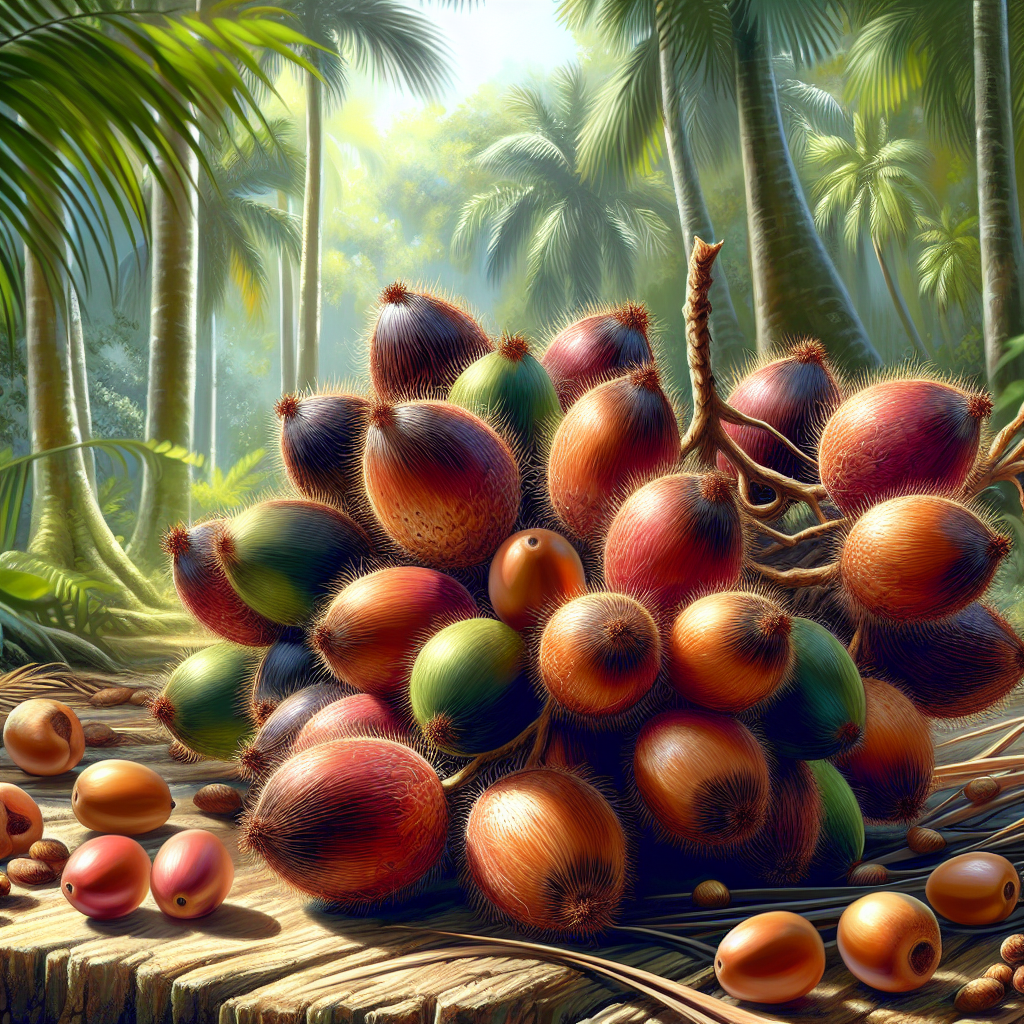
Introduction to Babassu (Attalea speciosa)
Babassu (Attalea speciosa) stands as one of the most economically vital palms in the neotropics, particularly across Brazil's vast Cerrado and Amazon regions. This single-stemmed, monoecious palm can reach heights of 20-30 meters with a diameter of 30-60 cm, crowned by a rosette of 25-30 pinnate leaves spanning 6-12 meters long. Indigenous communities, known as 'quebradeiras de coco babassu,' have harvested its fruits for centuries, extracting oil for cooking, soap, cosmetics, and biofuels, while the fibrous mesocarp serves for animal feed, brooms, and roofing. The kernel yields up to 70% oil, comparable to coconut, making babassu a prime candidate for sustainable agroforestry and smallholder income diversification.
In modern agriculture, babassu cultivation offers resilience in degraded lands, with its deep root system aiding soil stabilization and carbon sequestration. Annual fruit production can exceed 200 kg per mature tree, supporting livelihoods amid climate variability. This guide equips growers with evidence-based practices for propagating, maintaining, and harvesting babassu, emphasizing organic methods for tropical and subtropical farms. Whether integrating into mixed systems or monoculture plantations, mastering babassu unlocks multifaceted yields from nuts to leaves.
Botanical Profile of Babassu (Attalea speciosa)
Attalea speciosa belongs to the Arecaceae family, subfamily Arecoideae, characterized by its robust architecture adapted to fire-prone savannas. The stem is straight, grayish, and ringed from fallen leaf bases, with adventitious roots forming a dense basal plate up to 2 meters wide for anchorage in nutrient-poor soils. Leaves are arching, glabrous, with rigid pinnae inserted in multiple planes, creating a bottlebrush effect; each pinna measures 80-100 cm long and 3-5 cm wide.
Inflorescences emerge from the axils of lower leaves, pendulous, and 1-1.5 meters long, bearing pistillate flowers basally and staminate distally. Fruits are ellipsoid drupes, 10-12 cm long, weighing 100-300 grams, with 1-4 triangular seeds encased in a tough pyrenarium. Endosperm is rich in lauric (45-50%) and myristic (15-20%) fatty acids, ideal for industrial applications. Phenology aligns with dry seasons: flowering October-February, fruit maturation May-September. Genetic diversity is high, with natural populations showing variation in fruit size and oil content, informing breeding programs for higher yields.
Babassu's dioecious-like behavior in some populations necessitates 1:10 male:female ratios in plantations, though most are monoecious. Lifespan exceeds 100 years, with peak productivity from 20-60 years. Pollinators include native bees (e.g., Euglossina), underscoring the palm's role in biodiversity conservation.
Soil, pH, and Climate Requirements for Babassu (Attalea speciosa)
Babassu thrives in well-drained, sandy-loam soils with low fertility, tolerating dystrophic oxisols and ultisols common in the Cerrado (pH 4.5-6.5). It excels on marginal lands unsuitable for annual crops, with deep taproots (up to 5 meters) accessing subsoil moisture and nutrients. Avoid heavy clays or waterlogged sites to prevent root rot. Optimal pH is 5.0-6.5; amend acidic soils with lime (1-2 t/ha) and incorporate organic matter (10-20 t/ha compost) pre-planting for micronutrient balance.
Climatically, babassu demands tropical hot-humid conditions: 24-30°C mean annual temperature, rainfall 1200-2000 mm evenly distributed, with 4-6 dry months triggering fruit set. It withstands droughts via water storage in pseudobulbs and tolerates light frosts (-2°C) briefly. USDA zones 10b-12; in subtropical trials, irrigation (500-800 mm/year) boosts yields 30-50%. For small farms, site selection near water sources is critical. Read more on heatwave resilience in Why Summer Heatwaves Are Silently Killing Small Farm Yields - And 7 Organic Strategies to Fight Back. Soil testing every 2 years ensures phosphorus (10-20 ppm) and potassium (50-100 ppm) adequacy.
Step-by-Step Planting & Propagation
Seed Propagation (Primary Method)
- Seed Collection: Harvest ripe fruits (yellow-brown, fallen naturally) May-September. Depulp manually or mechanically; float-test for viability (sinkers).
- Pretreatment: Soak seeds 3-5 days in water (change daily), achieving 80-90% germination in 30-90 days at 30-35°C.
- Sowing: Plant in 20x30 cm black plastic bags with 1:1:1 sand:soil:compost. Bury 5-10 cm deep; shade 50%. Germination: 60-80%.
- Transplanting: At 6-12 months (30-50 cm tall), outplant at 7x7 m (200 trees/ha) in rainy season, with 20x20x20 cm pits amended with 5 kg manure + 100 g TSP.
Vegetative Propagation (Advanced)
Embryo rescue or somatic embryogenesis from mature seeds yields clones. Offshoots rare; tissue culture protocols achieve 70% rooting in MS medium + 2,4-D.
Establishment Tips: Mulch with husks (10 cm layer) to retain moisture; stake wind-exposed sites. Survival >90% with irrigation first year. Scale for small farms: 0.5-1 ha blocks.
Care & Maintenance regimes for Babassu (Attalea speciosa)
Irrigation: Supplemental 20-40 L/tree/week dry season first 3 years; mature trees drought-tolerant. Fertilization: Year 1-3: 100-300 g NPK 10-30-20/tree annually, split applications. Mature: 1-2 kg/tree organic (compost, guano). Foliar micronutrients (Zn, B) if deficient. Pruning: Remove dead fronds annually; avoid over-pruning to prevent fungal entry. Weeding: Manual or cover crops first 2 years; glyphosate spot-treat sparingly. Thinning: Maintain 150-200 trees/ha post-10 years for light penetration.
Monitor growth: 1-2 m/year initially. Integrate agroforestry with cassava or beans under canopy for shade tolerance. Annual scouting prevents issues; follow Soil Health Mastery: 5 Proven Strategies for Small Farms to Build Fertile Ground Without Breaking the Bank for long-term fertility.
Pests, Diseases & Organic Management
Key Pests:
- Red palm weevil (Rhynchophorus palmarum): Larvae bore trunks. Trap with pheromone + bucket cuts; destroy infested.
- Rhinoceros beetle (Oryctes spp.): Crown damage. Neem oil sprays; beneficial nematodes.
- Scale insects: Sap-sucking. Horticultural oil + ladybugs.
- Leafhoppers: Vector phytoplasma. Reflective mulches; kaolin clay.
Diseases:
- Bud rot (Phytophthora palmivora): Wet rot. Improve drainage; copper oxychloride.
- Leaf spots (Bipolaris spp.): Defoliation. Remove debris; Trichoderma.
- Ganoderma trunk rot: Basal decay. Sanitation; avoid wounds.
Organic IPM: Neem (0.5%) weekly rotations, Bt for caterpillars, release predatory mites. Biodiversity via intercropping reduces outbreaks. Detail in Why 90% of Small Farms Fail at Pest Management - And 8 Organic Fixes That Actually Work.
Harvesting, Curing & Optimal Storage
Fruits drop naturally August-December; rake daily to avoid rodent damage. Yield: 100-400 kg/tree at maturity. Manual collection for small farms; mechanized shakers for plantations.
Processing:
- Depulping: Macerate husks; extract nuts (30-40% weight).
- Drying: Sun-dry nuts 3-5 days (8-12% moisture) or forced-air ovens (40°C).
- Cracking: Manual hammers or roller mills; winnow kernels.
- Oil Extraction: Press kernels (expeller) yielding 40-50% oil.
Storage: Nuts at 10-12% MC in jute bags, cool (15-20°C), ventilated; shelf-life 12-18 months. Kernels refrigerated (10°C). Prevent storage-beetles with diatomaceous earth.
Companion Planting for Babassu (Attalea speciosa)
Babassu's canopy suits shade-tolerant understory: Manioc (cassava), beans, peanuts year 1-5; perennial guarana or cupuassu long-term. Nitrogen-fixers like pigeon pea enhance fertility. Avoid dense grasses competing for light. Benefits: erosion control, microclimate moderation, diversified income. Explore synergies in Why Companion Planting Feels Like Guesswork for Small Farms - And How AI Makes It Foolproof.