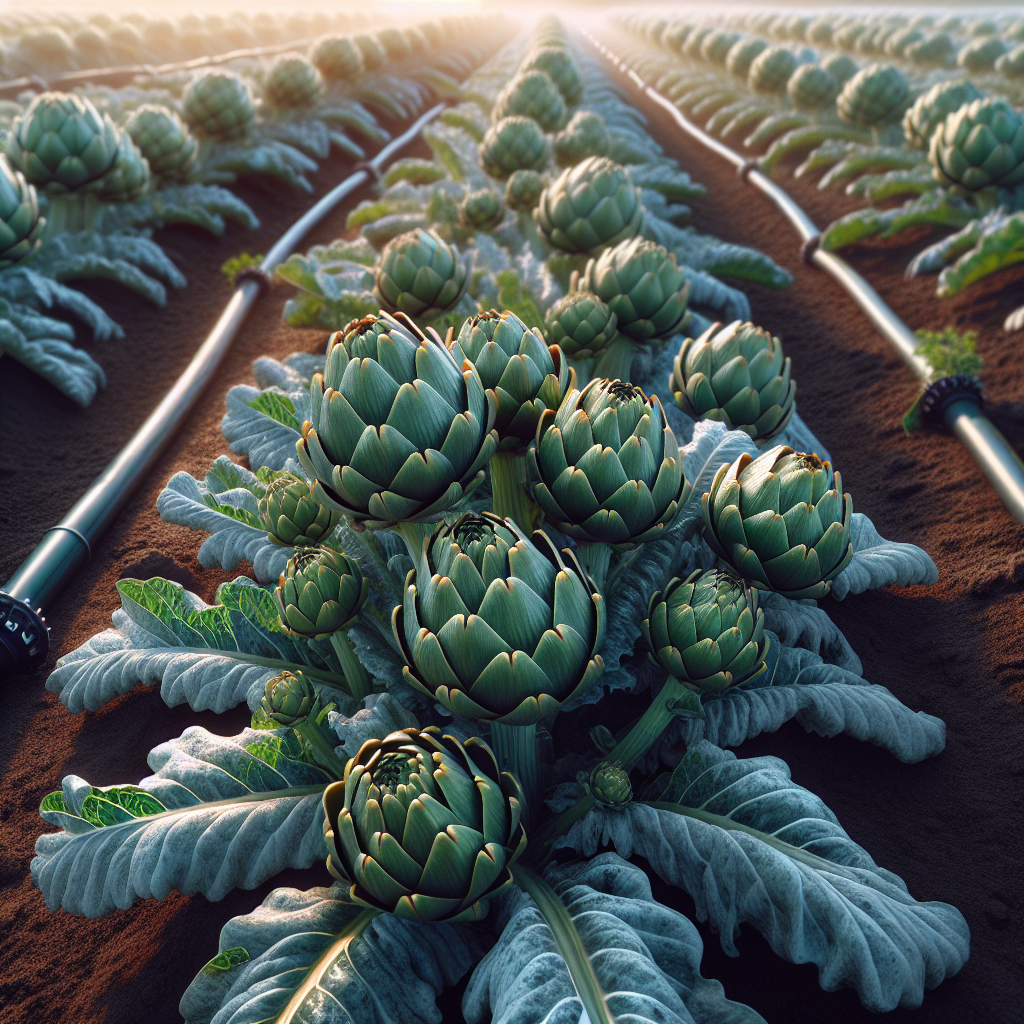
Introduction to Artichoke (Imperial Star)
A standout among globe artichokes, this cultivar was developed to solve one of the classic frustrations of artichoke production: the long wait for reliable bud formation. Traditional artichokes often behave as short-lived perennials and may not produce well from seed in their first season unless they receive the right cold stimulus. Imperial Star changed that equation by offering a relatively dependable, first-year, seed-grown option with attractive green buds, tender hearts, and good field uniformity.
Botanically, artichoke is a thistle relative in the Asteraceae family, closely allied to cardoon. The edible portion is the immature flower bud harvested before the bracts open and reveal the purple-blue bloom. In production systems, Imperial Star is often treated as an annual in colder climates and as a short-lived perennial in mild winter regions. That flexibility is one of its greatest strengths.
For growers, the variety is particularly useful where winters are too severe for dependable overwintering or where transplant-based production is preferred. It can be scheduled for spring planting after indoor seed starting, and under good management it produces large primary buds followed by a flush of smaller secondary buds. Its eating quality is best when harvested at tight-bud stage, with fleshy receptacles and relatively tender inner bracts.
Commercially and historically, artichokes trace their domestication to Mediterranean selection from wild cardoon-like ancestors. The crop has long been associated with Italy, Spain, and southern France, but modern breeding opened the door for broader adaptation. Imperial Star is part of that modern era of artichoke production, making a crop once considered specialized much more accessible to diversified farms.
For general species context, see our Artichoke guide. If you are building long-term fertility before planting, the principles in soil health strategies are especially relevant because artichokes are heavy feeders that reward deep, biologically active soil.
Botanical Profile of Artichoke (Imperial Star)
This cultivar belongs to a herbaceous perennial species usually grown for immature capitula, or composite flower heads. The plant forms a robust basal rosette of deeply lobed, silvery green to gray-green leaves that can reach 2 to 4 feet long under fertile conditions. Mature plants commonly spread 3 to 5 feet across and stand 3 to 4 feet tall, with flowering stalks extending higher if buds are not harvested.
Imperial Star differs from older named artichoke types in several important production traits. It is more amenable to seed propagation, typically more uniform than open-pollinated perennial strains, and notably earlier to bud. Whereas classic perennial varieties may need extended chilling followed by a second-year push, Imperial Star often initiates marketable buds in the first season if seedlings are well grown and exposed to enough cool weather during establishment.
The edible bud is composed of overlapping bracts surrounding the immature inflorescence. The prized “heart” is the enlarged receptacle at the base of the bud, while the lower fleshy portions of the bracts are also edible. If left unharvested, the bud opens into a striking purple thistle-like flower highly attractive to pollinators.
Root structure is substantial. Plants form a dense, deep-feeding root system that performs best in loose, well-drained ground with high organic matter. Because the root zone is extensive, shallow soils or compacted subsoil sharply reduce vigor, bud size, and summer stress tolerance. The crop also has high evapotranspiration once leaf area expands, which is why moisture consistency is central to premium quality.
From a crop physiology standpoint, artichokes are cool-season perennials that dislike extreme heat during bud initiation and expansion. Prolonged temperatures above about 85 to 90°F can reduce bud quality, accelerate opening, toughen bracts, and increase plant stress. Conversely, seedlings exposed to a controlled period of cool temperatures often become more likely to form buds, a process analogous to vernalization.
Soil, pH, and Climate Requirements for Artichoke (Imperial Star)
This crop performs best in deep, friable, moisture-retentive but well-drained loam. A minimum effective rooting depth of 18 to 24 inches is ideal, and 24 inches or more is better for sustained production. Sandy soils can work if heavily amended with compost and irrigated precisely, but they dry too quickly without careful management. Heavy clay can also work if drainage is improved, beds are raised, and compaction is corrected before planting.
Target a soil pH of 6.5 to 7.5. Slightly alkaline conditions are tolerated better than strong acidity. Below pH 6.2, nutrient imbalances become more likely, especially reduced calcium and magnesium availability and greater risk of weak, uneven growth. At high pH above 7.8, micronutrient deficiencies such as iron chlorosis may appear, especially on calcareous soils. A pre-plant soil test is strongly recommended because artichokes have a long field occupancy and high nutrient demand.
Organic matter should ideally be above 4%, and many excellent artichoke fields run considerably higher. Before planting, incorporate 2 to 4 inches of finished compost across the bed area, along with any phosphorus or potassium required by soil test. Artichokes benefit from abundant but not excessive nitrogen. Too little nitrogen gives pale leaves and undersized buds; too much creates lush growth that is more attractive to Aphids and can delay bud maturity.
Climate preference is Mediterranean to cool-temperate. The ideal growing window features mild days, cool nights, full sun, and low to moderate humidity. Imperial Star is especially valuable in regions with cool springs and warm but not scorching summers. It can be grown in hotter climates if planting is timed so the critical bud-forming phase occurs during cooler weather.
Temperature benchmarks matter. Seeds germinate best around 70 to 75°F. Seedlings establish well in 60 to 70°F conditions. For strong bud initiation, young plants often benefit from a period of cool exposure, commonly around 45 to 55°F, after they have reached a sufficient juvenile size. Mature plants tolerate light frost, but hard freezes below about 20°F can damage crowns or kill annual plantings, especially in wet soil.
Wind protection is often overlooked. Large leaves tear easily, and repeated wind stress reduces photosynthetic efficiency and dehydrates the canopy. In exposed sites, windbreaks or strategic placement improve plant symmetry and bud quality.
Step-by-Step Planting & Propagation
Start with seed rather than division if you are growing true Imperial Star. Sow indoors 8 to 12 weeks before the intended transplant date. Use a clean, well-drained propagation mix and cell trays or 3- to 4-inch pots to avoid root distortion. Sow seed about 1/4 inch deep and maintain even moisture, not saturation. Germination usually occurs within 10 to 14 days under warm conditions.
Once seedlings emerge, provide strong light immediately. Leggy seedlings are a major cause of weak field establishment. Day temperatures around 65 to 70°F and nights near 55 to 60°F produce stocky transplants. Pot up if roots fill the starting cells before field conditions are ready.
For first-year production, many growers intentionally cold-treat seedlings after they have developed 4 to 5 true leaves. This can be done by exposing them to cool but nonfreezing conditions, roughly 45 to 50°F, for 10 to 14 days. The goal is to encourage reproductive development without stalling growth completely. Seedlings that are too young during cold exposure may fail to respond well, while overly stressed plants can become weak.
Harden plants off for 7 to 10 days before transplanting. Reduce watering slightly, increase airflow, and gradually expose them to outdoor sun and temperature swings. Transplant when the soil is workable and daytime temperatures are mild. In cold regions, use row cover after planting if late frost threatens.
Prepare beds thoroughly. Remove perennial weeds, loosen soil deeply, and incorporate organic matter and balanced fertility. Space plants 3 to 4 feet apart in rows 4 to 6 feet apart, depending on whether production is annual or perennial and whether mechanical access is needed. Tighter spacing can increase total yield per area in annual systems, but wider spacing usually produces larger plants and larger primary buds.
At transplanting, set the root ball level with the soil surface. Planting too deep invites crown rot; too shallow exposes roots to drying. Water in thoroughly to settle soil around roots. Drip irrigation is preferred because it maintains uniform root-zone moisture without wetting the foliage excessively.
Direct seeding is rarely recommended for professional production of this cultivar because emergence is uneven, weed competition is strong, and first-year bud production is less reliable. Division is used more often with perennial artichokes than with Imperial Star, since seed propagation preserves the cultivar’s intended production habit.
Mulching after the soil has warmed is highly beneficial. A 2- to 3-inch layer of clean straw or composted mulch reduces evaporation, moderates soil temperature, suppresses weeds, and limits soil splash that can spread disease.
Care & Maintenance regimes for Artichoke (Imperial Star)
This is a high-biomass crop with correspondingly high water and nutrient requirements. Consistent irrigation is the difference between tender, heavy buds and fibrous, underdeveloped ones. Aim to keep the top 8 to 12 inches of soil evenly moist, roughly comparable to a wrung-out sponge. In practical field terms, that means the soil should feel cool and cohesive when squeezed but should not release free water or remain sticky for long periods.
During establishment, provide about 1 to 1.5 inches of water per week, adjusted for rainfall and soil type. As the canopy expands and buds begin forming, total demand may rise to 1.5 to 2 inches per week in warm, breezy weather. Sandy soils may need more frequent, shorter irrigation cycles; loams can be watered more deeply and less often.
Signs of underwatering include bluish-gray leaf cast, midday wilting that persists into evening, slowed leaf expansion, tough bud bracts, and reduced secondary bud set. Signs of overwatering include yellowing lower leaves, stagnant growth despite moist soil, sour-smelling root zones, persistent surface algae, and in severe cases crown softening or root rot. If soil remains saturated beyond 24 hours after irrigation, drainage is insufficient for premium production.
Feed steadily rather than all at once. A common professional approach is to provide a strong pre-plant fertility base, then sidedress nitrogen when plants begin rapid vegetative expansion and again after the first major bud harvest to support secondary bud development. Organic systems often use compost, feather meal, fish hydrolysate, or well-managed pelletized fertility inputs. Leaf tissue that becomes pale green before bud set usually indicates nitrogen shortage, but confirm with a test when possible.
Weed control is most critical early. Once artichokes size up, they shade aggressively, but seedlings and young transplants cannot compete well. Hand hoeing, shallow wheel hoeing, mulching, and stale seedbed techniques are effective. Avoid deep cultivation near the crown because feeder roots spread widely just below the surface.
In hotter inland climates, afternoon shade cloth of 20 to 30% can improve bud tenderness during heat waves. In mild winter areas where Imperial Star is carried as a perennial, cut plants back after the main harvest, remove diseased foliage, fertilize lightly, and mulch crowns before winter. In very cold climates, overwintering is risky unless crowns are heavily protected and drainage is excellent.
Remove opened or damaged buds promptly. This redirects energy toward side shoots and reduces habitat for pests and disease. If oversized plants become crowded, improve airflow by removing yellowing basal leaves, but do not over-prune healthy foliage because leaf area fuels bud sizing.
Pests, Diseases & Organic Management
Aphids are among the most common pests, especially in cool, lush spring growth. They cluster inside leaf folds and beneath bracts, excreting honeydew that promotes sooty mold. Heavy infestations distort young leaves and weaken buds. Encourage natural predators such as lady beetles, lacewings, hoverflies, and parasitic wasps by maintaining flowering habitat nearby. Strong water sprays, insecticidal soap, and neem-based products can help, but apply carefully around developing buds.
Artichoke plume moth larvae may tunnel into shoots or buds in some regions, causing frass, deformation, and internal feeding damage. Sanitation is essential: remove infested buds and crop residues promptly. Bacillus thuringiensis products can help when timed to young larval stages.
Slugs and Snails attack tender transplants and lower foliage, especially under mulch in damp conditions. Use iron phosphate baits, nighttime scouting, and habitat reduction around bed edges. Earwigs occasionally hide in bracts and can complicate marketability.
Disease pressure is greatest where foliage stays wet, air movement is poor, or soils remain saturated. Botrytis can develop on damaged tissue and buds in humid weather. Powdery mildew may appear late in the season, particularly under stress. Root and crown rots, often associated with Phytophthora or Pythium complexes, are the most serious because they can collapse whole plants.
Organic disease management begins before planting: rotate away from related and high-residue host crops, avoid low spots, use raised beds if drainage is imperfect, and keep irrigation targeted at the root zone. Space plants generously enough to promote airflow. Remove senescent foliage that lies on wet soil. Copper-based fungicides may suppress some foliar issues, but they are preventatives, not cures, and should be used sparingly and in accordance with local regulations.
Verticillium wilt can be a hidden problem in fields previously planted to susceptible crops. Plants may yellow asymmetrically, wilt despite adequate soil moisture, and decline over time. Rotation and site selection are critical because there is no simple curative treatment once the pathogen is established in soil. Avoid planting artichokes after heavily affected solanaceous crops such as Tomato if wilt history is suspected.
Nutritional disorders can mimic disease. Calcium deficiency under erratic watering may contribute to poor bract development, while boron imbalance can affect growing points. This is another reason that testing, not guesswork, is the professional standard.
Harvesting, Curing & Optimal Storage
Harvest timing is based on bud maturity, not plant age alone. The primary central bud develops first and is usually the largest. Cut when the bud is full-sized, still compact, and the bracts remain tight. If the bracts begin to separate noticeably, tenderness declines and the choke becomes more developed.
Use a sharp knife or pruners to cut the stem 1 to 3 inches below the bud for fresh market presentation, or longer if your market prefers stemmed artichokes. After the main bud is removed, side shoots enlarge and produce secondary buds. These are usually smaller but often excellent in quality and highly marketable.
Harvest frequently, every few days in peak season. Delayed picking reduces overall productivity because the plant continues investing in maturing buds instead of sizing new ones. Morning harvest is best, when tissues are cool and fully hydrated.
Artichokes are not “cured” in the same sense as onions, garlic, or winter squash. Instead, they should be field-handled gently and cooled rapidly. Keep harvested buds shaded immediately. Remove obviously damaged outer bracts but do not trim excessively, as intact bracts protect moisture and appearance.
For storage, hydro-cooling or rapid room cooling to about 32 to 36°F is ideal. Relative humidity should be high, around 90 to 95%, to prevent dehydration and bract browning. Under excellent conditions, buds can hold for 1 to 2 weeks, though top eating quality is best sooner. Store away from ethylene-producing fruits when possible because senescence can accelerate.
Quality indicators at harvest and packing include heavy feel for size, tight bracts, uniform green color, no blackening on cut stems, and absence of insect contamination. Buds that feel light, show spreading bracts, or have desiccated tips are already past premium stage.
If producing for processing or freezing, harvest may be slightly more flexible, but tightness and tenderness still govern value. Any buds that open fully can be left for pollinators or cut as ornamental flowers, though this diverts plant energy from edible production.
Companion Planting for Artichoke (Imperial Star)
Because these plants become large, architectural feeders with broad canopies, companions should either support pest balance, occupy edge space efficiently, or exploit vertical and temporal niches without competing aggressively for root-zone moisture. Low, aromatic, or insectary companions are generally better choices than sprawling heavy feeders.
Thyme is an excellent border companion because it stays low, tolerates similar drainage, and can help create habitat complexity that favors beneficial insects. Yarrow is valuable nearby as a nectar source for predatory and parasitic insects that assist with aphid suppression. Nasturtium can function as a sacrificial aphid trap and pollinator plant around the perimeter, though it should not be allowed to smother young transplants. Clover can be used carefully in pathways or as a managed living mulch in wider systems, contributing soil cover and some nitrogen cycling, but it must be mowed or suppressed so it does not compete during establishment.
Avoid crowding artichokes with equally dominant crops that demand the same space and water at the same time. Keep vigorous vines and tall shading crops at a distance. Companion planting works best here as an ecological support strategy rather than an intercropping system packed tightly into the bed.
A practical layout is to plant artichokes on 4-foot centers in a dedicated block, edge the bed with thyme, place yarrow at interval points for beneficial insect support, and use nasturtium only on the warm, sunny margins where airflow remains good. This preserves the artichoke’s access to sun and root volume while still improving biodiversity around the planting.