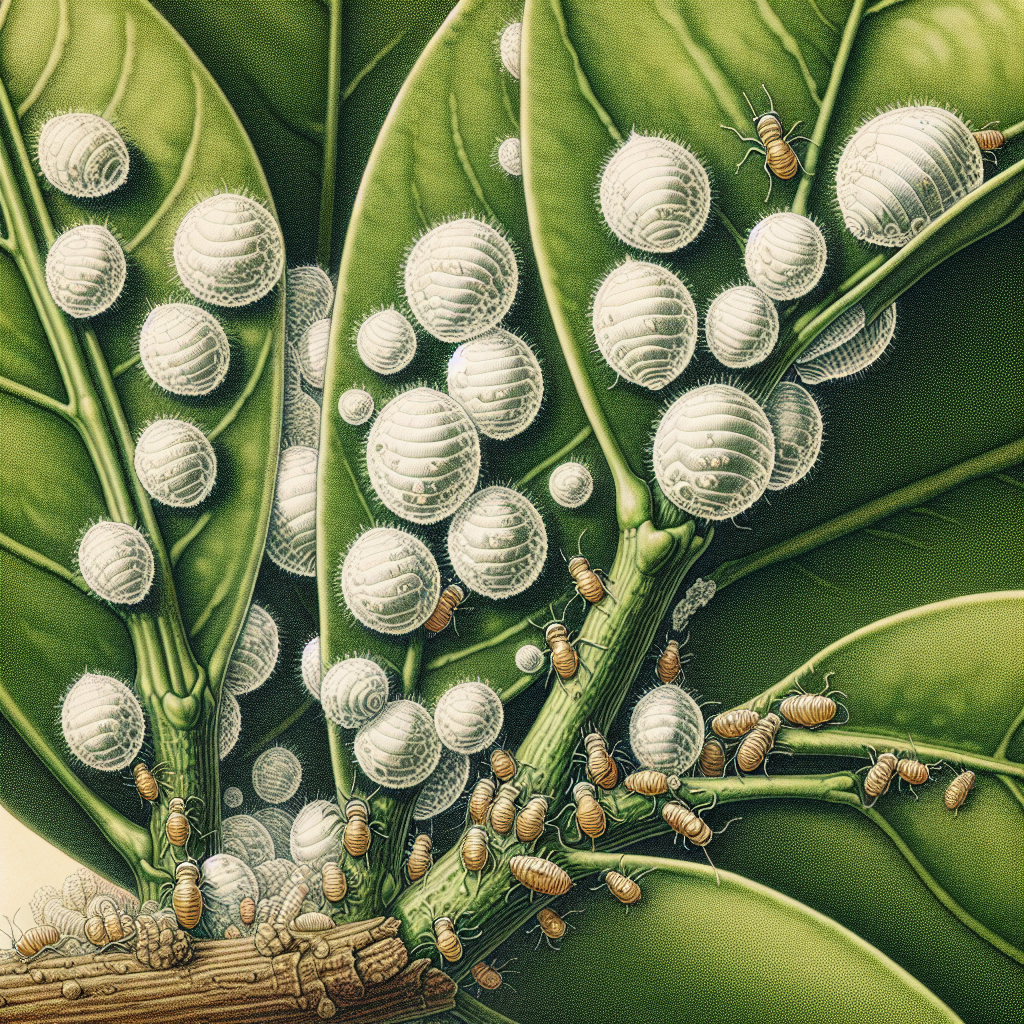
Introduction to Armored scale
Armored scale insects (family Diaspididae) represent one of the most persistent and widespread pests in agriculture and horticulture. These minuscule invaders, often overlooked until damage is severe, attach themselves to stems, leaves, and fruit, forming a hard, protective armor made of wax secretions that shields them from predators and many chemical treatments. Unlike their softer counterparts, soft scales, armored scales do not produce honeydew, reducing sooty mold issues but making them harder to spot early.
Found worldwide, armored scales attack over 100 host plants, with species like San Jose scale (Quadraspidiotus perniciosus), red scale (Aonidiella aurantii), and euonymus scale (Unaspis euonymi) being particularly notorious. They weaken plants by extracting sap, disrupting photosynthesis, and injecting toxins that cause chlorosis and dieback. In commercial settings, infestations can lead to 20-50% yield losses in crops like citrus and ornamentals. This guide provides professional-grade diagnostics, lifecycle insights, organic management strategies, and prevention tactics to help farmers reclaim their fields. For small farms, integrating these methods with tools like those in Spring Pest Patrol: Organic AI Strategies to Shield Your Crops from Common Invaders can optimize control efforts.
Identifying Symptoms & Damage
Detecting armored scale early is crucial, as their cryptic nature allows populations to explode unnoticed. Adult females appear as small (1-2 mm), circular or oval bumps ranging from white, gray, yellow, to brown, often resembling plant blemishes or scars. Males are rare and winged but fleeting. Crawlers—the mobile nymph stage—are the only vulnerable phase, tiny (0.5 mm) yellow specks that wander before settling.
Primary Symptoms:
- Yellowing and stippling: Leaves turn pale or yellow around feeding sites, progressing to necrosis.
- Leaf drop and twig dieback: Heavy infestations cause premature defoliation and blackened branches.
- Honeydew absence: Unlike mealybugs, no sticky residue, but sooty mold may appear if mixed with other pests.
- Fruit damage: Pitted, russeted skin on citrus or apples, reducing market value.
- Plant stress indicators: Stunted growth, sparse foliage, and sooty mold on undersides.
Use a 10x hand lens to confirm: scrape a bump—if white waxy material and a yellow body emerge, it's armored scale. Differentiate from mites by immobility and armor. On Hass Avocado, look for circular yellow spots on fruit; on citrus, purple halos around scales. Severe cases mimic nutrient deficiencies or phytophthora root rot, so scout weekly during warm months.
Lifecycle and Progression of Armored scale
Understanding the lifecycle is essential for timing interventions. Armored scales undergo incomplete metamorphosis with eggs, crawlers (1st instar), settled nymphs, and adults. Females are sessile lifelong; males develop wings.
- Eggs (1-10 days): Laid under female's armor (up to 200 per female).
- Crawlers (1-3 weeks): Active dispersal stage, vulnerable to treatments; settle within days.
- Nymphs (4-8 weeks): Secrete armor, feed covertly; 2-3 instars.
- Adults (weeks to months): Females produce eggs; males mate and die.
Generations vary: 1-2 in temperate zones, up to 10+ in tropics. Total cycle: 6-12 weeks. Crawler emergence peaks in spring/fall, triggered by heat. Monitor with sticky traps or double-sided tape on branches. In orange groves, synchronize sprays with crawler hatch for 90% control.
Environmental Triggers & Risk Factors
Armored scales flourish in specific conditions, exploiting stressed plants.
Key Triggers:
- Warm, dry climates: Optimal 21-32°C; drought stress weakens defenses.
- High nitrogen: Tender growth attracts crawlers.
- Poor airflow: Crowded canopies harbor humidity-loving crawlers.
- Infested stock: Nursery plants spread species like greedy scale.
Risk factors include over-fertilization, dust accumulation (blocks predators), and proximity to ornamentals. In avocado orchards, irrigation deficits spike populations. Ants farming scales (unlike with aphids) exacerbate issues. Climate change extends generations in cooler areas. Scout high-risk zones: branch crotches, leaf veins, fruit calyces.
Organic Control & Treatment Plans
Organic management emphasizes integrated pest management (IPM), targeting crawlers when armor is absent.
Cultural Controls: Prune infested parts; improve airflow. Water deeply to reduce stress.
Biological Controls: Encourage ladybugs, lacewings, parasitic wasps (e.g., Aphytis melinus). Release 1,000-5,000 per acre.
Organic Treatments:
- Horticultural oils/neem: Smother crawlers (1-2% solution, 7-14 day intervals). Dormant oil in winter kills overwintering stages.
- Insecticidal soaps: Potassium salts disrupt crawler membranes (weekly sprays).
- Spinosad: Targets crawlers organically (OMRI-listed).
Step-by-Step Plan:
- Scout: Monitor crawlers with tape.
- Treat: Oil/soap at crawler peak (80% RH efficacy).
- Rotate: Alternate modes to prevent resistance.
- Evaluate: Recheck 2 weeks post-treatment.
For citrus, combine with scale insects predator releases. Avoid broad-spectrum sprays to preserve beneficials.
Preventing Armored scale in the Future
Prevention beats cure: implement long-term strategies.
- Quarantine new plants: Inspect for bumps.
- Resistant varieties: Choose scale-tolerant rootstocks (e.g., trifoliate for citrus).
- Sanitation: Remove debris; destroy infested prunings.
- Monitoring: Use pheromone traps for males.
- Fertigation: Balanced NPK; avoid excess nitrogen.
- Cover crops: Clover boosts predators.
Annual dormant oil applications reduce overwintering scales by 95%. Integrate with crop rotation where possible. Track via farm logs for predictive prevention.
Crops Most Affected by Armored scale
Armored scales plague woody perennials and ornamentals:
| Crop | Common Species | Damage Notes |
|---|---|---|
| Citrus (Orange, Lemon) | Red scale, yellow scale | Fruit pitting, drop; 30% yield loss. |
| Avocado (Hass) | Avocado scale | Leaf yellowing, fruit scarring. |
| Apple, Pear | San Jose scale | Branch cankers, fruit russeting. |
| Mango, Guava | Greedy scale | Sap depletion, sooty mold proxy. |
| Ornamentals (Ivy, Boxwood) | Euonymus scale | Defoliation, plant death. |
| Olive | Black olive scale | Growth stunting. |
Tropical/subtropical crops suffer most; field crops like potato rarely affected. Global economic impact: $100M+ annually in citrus alone.