Introduction to Armillaria root disease
Armillaria root disease, commonly called oak root fungus or shoestring root rot, is caused by several species within the Armillaria genus, most notably Armillaria mellea and related taxa. This aggressive basidiomycete fungus infects the roots and root collar of hundreds of woody plant species, including fruit trees, ornamentals, and forest species. Once established, the pathogen persists in soil for decades via thick, black rhizomorphs that resemble shoestrings, allowing it to spread between adjacent plants through direct root contact. The disease is especially problematic in orchards, vineyards, and managed landscapes where infected stumps or roots remain after previous plantings.
Identifying Symptoms & Damage
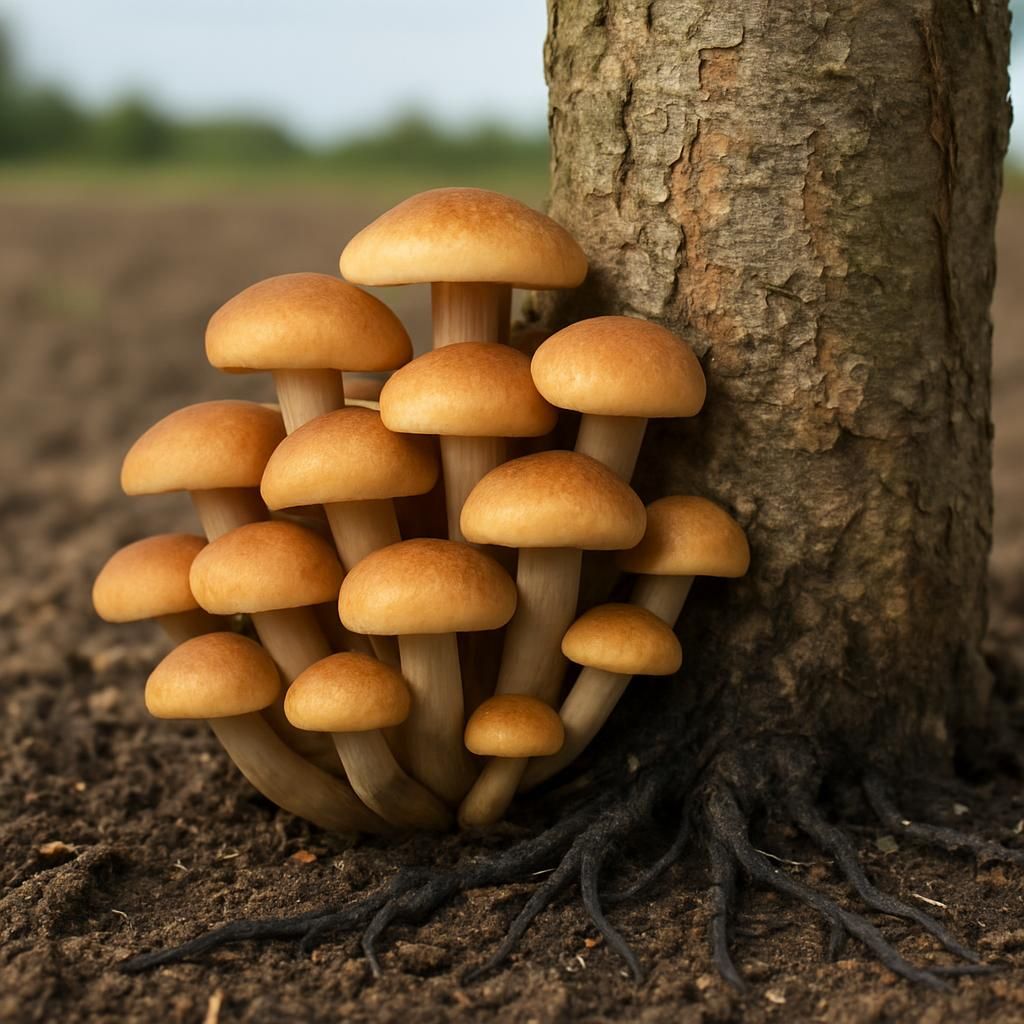
Early detection of Armillaria root disease is challenging because above-ground symptoms often appear only after significant root damage has occurred. Infected plants typically show reduced vigor, smaller leaves, premature leaf drop, and branch dieback that starts in the upper canopy and progresses downward. A characteristic sign is the presence of white, fan-shaped mycelial mats beneath the bark at the root collar or major roots. In autumn, clusters of honey-colored mushrooms may appear at the base of severely infected trees or stumps. On excavation, black, cord-like rhizomorphs are often visible on or in the soil around roots. Bark cracking, resin or gum exudation, and basal cankers are common in advanced stages. Laboratory confirmation through culture or molecular testing of rhizomorphs or mycelial fans is recommended for definitive diagnosis.
Lifecycle and Progression of Armillaria root disease (MUST INCLUDE A MARKDOWN TABLE OF LIFECYCLE STAGES)
The lifecycle of Armillaria involves both sexual and asexual phases, with the fungus surviving primarily as vegetative mycelium and rhizomorphs in woody debris.
| Stage | Description | Duration | Key Activity |
|---|---|---|---|
| Spore Dispersal | Basidiospores released from honey-colored mushrooms in autumn | 2–4 weeks | Infection of fresh stumps or wounds |
| Mycelial Colonization | Spores or rhizomorphs infect woody roots and spread through cambium | Months to years | Formation of white mycelial fans under bark |
| Rhizomorph Production | Thick black shoestring-like structures grow through soil | Ongoing | Root-to-root spread to adjacent hosts |
| Fruiting Body Formation | Clusters of mushrooms emerge at base of dying hosts in fall | 1–3 weeks | Sexual reproduction and spore release |
| Dormancy in Debris | Mycelium survives in infected roots and stumps for decades | 10–50+ years | Reservoir for new infections |
Environmental Triggers & Risk Factors
Armillaria root disease is favored by cool, moist soil conditions and the presence of woody debris. The pathogen thrives in soils with pH between 4.5 and 7.0 and temperatures of 15–25 °C. Poor drainage, compacted soils, and sites with a history of oak, pine, or other susceptible forest species increase risk. Mechanical injury from cultivation equipment, recent land clearing, and planting susceptible species directly into former forest or orchard sites are major predisposing factors. Water stress and nutrient deficiencies further weaken host resistance.
Organic Control & Treatment Plans (MUST INCLUDE A MARKDOWN TABLE OF TREATMENT OPTIONS AND FREQUENCIES)
Organic management focuses on cultural practices, removal of inoculum, and biological amendments. Complete removal of infected roots and stumps is the cornerstone of control.
| Treatment Option | Method | Frequency | Notes |
|---|---|---|---|
| Sanitation & Removal | Excavate and destroy infected roots/stumps to 30 cm depth | One-time initial action, monitor annually | Most effective when done before replanting |
| Solarization | Cover moist soil with clear plastic for 4–6 weeks in summer | Once per season before planting | Reduces surface inoculum in small areas |
| Trichoderma spp. application | Apply commercial Trichoderma inoculants to planting holes | At planting and every 6 months for first 2 years | Competitive exclusion of Armillaria |
| Mulching & Moisture Management | Apply 7–10 cm organic mulch, maintain even moisture | Reapply mulch annually, irrigate as needed | Reduces water stress and improves root health |
| Resistant Rootstocks | Use tolerant rootstocks where available (e.g., certain plum or apple selections) | At replanting | Long-term prevention strategy |
Preventing Armillaria root disease in the Future
Prevention begins with thorough site assessment and removal of all woody debris before establishing new plantings. Avoid planting susceptible species in recently cleared forest land or old orchard sites without prior sanitation. Implement a minimum three-year rotation with non-host annual crops such as Wheat or Corn where feasible. Improve soil drainage and structure through organic matter incorporation and raised beds. Monitor new plantings closely for early signs of decline and maintain optimal plant nutrition to enhance natural resistance. Use only certified disease-free nursery stock.
Crops Most Affected by Armillaria root disease
Armillaria root disease has a very broad host range. Woody perennials are most severely impacted. Commonly affected crops include Apple, Peach, Cherry, Pear, Grapes, Avocado, Citrus species, and many forest and ornamental trees. Among vegetables and field crops, damage is rare but can occur on woody-rooted species such as Asparagus when planted near infected woody debris.