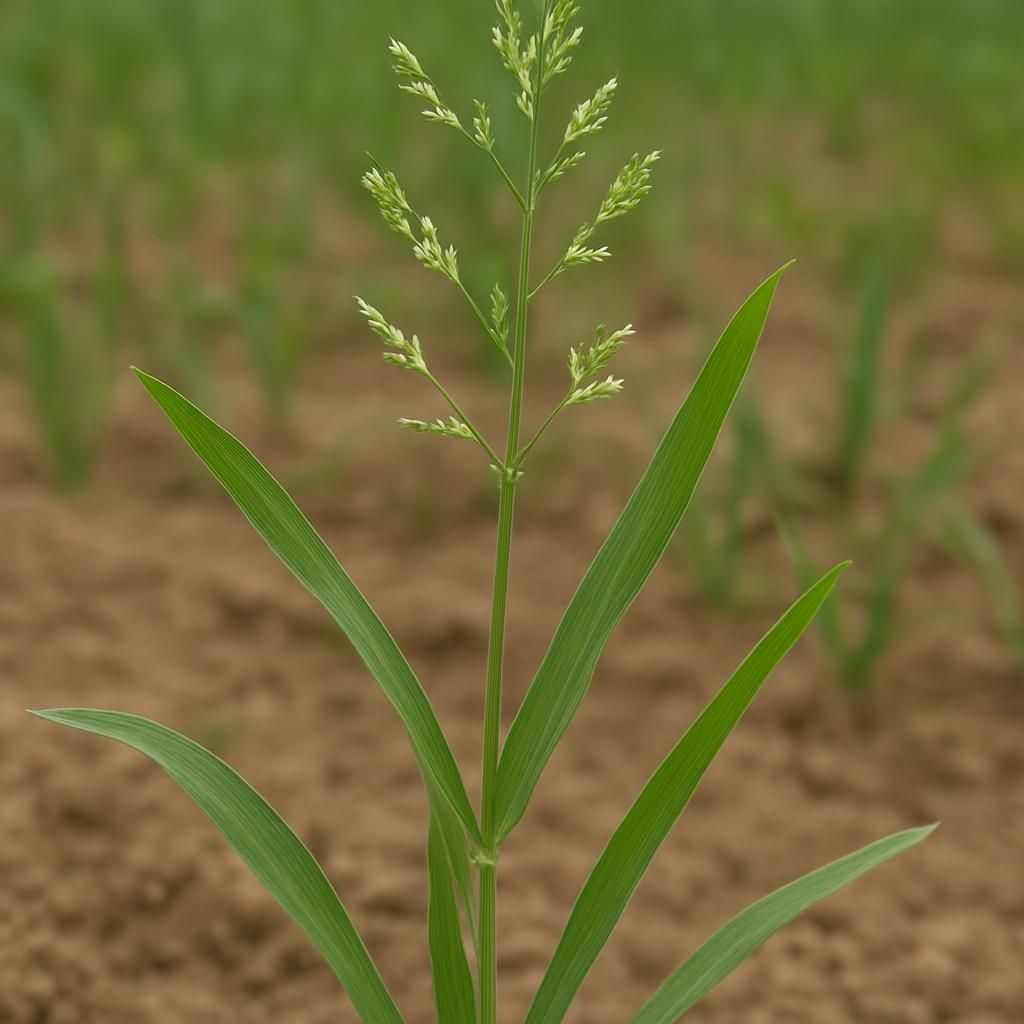
Introduction to annual meadow grass
Annual meadow grass, scientifically known as Poa annua, is one of the most persistent and widespread cool-season annual weeds affecting agricultural systems worldwide. This low-growing grass thrives in disturbed soils, compacted areas, and regions with frequent irrigation or rainfall. Its ability to produce thousands of seeds per plant allows it to rapidly colonize fields, gardens, and pastures, outcompeting desirable crops and turf species. In agricultural settings, uncontrolled infestations can reduce yields by 10-30% in sensitive crops through direct competition and by altering soil moisture dynamics.
Farmers and land managers recognize annual meadow grass as both a weed and an opportunistic species that signals underlying issues such as poor soil structure, inadequate drainage, or overgrazing. Because it completes its lifecycle quickly, often within 6-8 weeks under optimal conditions, repeated flushes of germination can occur throughout the cool season. Understanding its biology is essential for developing integrated management programs that reduce reliance on chemical inputs while maintaining productivity.
Identifying Symptoms & Damage
Early identification of annual meadow grass relies on observing both vegetative and reproductive characteristics. The plant forms small, tufted clumps with light-green, soft-textured leaves that are typically 2-5 mm wide and 5-10 cm long. A key diagnostic feature is the boat-shaped leaf tip and the presence of a prominent midrib. Stems are flattened and often spread outward from the center, creating a prostrate growth habit that allows it to tolerate frequent mowing or grazing.
Damage manifests as patchy, pale areas in fields or lawns where the weed displaces slower-growing crops. In grain crops such as Wheat and Barley, dense stands of annual meadow grass can reduce tillering and grain fill. In vegetable systems, the weed competes for nitrogen and moisture, leading to stunted growth in crops like Lettuce and Carrot. Root systems are shallow and fibrous, further exacerbating moisture stress during dry spells.
Lifecycle and Progression of annual meadow grass (MUST INCLUDE A MARKDOWN TABLE OF LIFECYCLE STAGES)
The lifecycle of annual meadow grass is characterized by rapid germination, quick vegetative growth, and prolific seed production. Seeds can remain viable in the soil seedbank for 2-4 years, allowing reinfestation even after initial control measures. Germination occurs primarily in cool temperatures between 7-18°C, with peak emergence in early spring and again in autumn.
| Stage | Description | Duration | Key Environmental Conditions |
|---|---|---|---|
| Germination | Seeds absorb moisture and radicle emerges | 3-10 days | Soil temperature 7-18°C, adequate moisture |
| Vegetative Growth | Leaf and tiller development; root establishment | 2-4 weeks | Cool temperatures, moderate fertility |
| Flowering | Panicle emergence and pollination | 1-2 weeks | Day length 12-14 hours, adequate moisture |
| Seed Set | Seed heads mature and shatter | 1-2 weeks | Warm days, cool nights |
| Seed Dispersal | Seeds released onto soil surface | Ongoing | Wind, water, equipment movement |
| Dormancy | Seeds enter soil seedbank | Variable | Dry or cold conditions |
Environmental Triggers & Risk Factors
Several environmental and management factors increase the risk of annual meadow grass establishment. Compacted soils with low organic matter favor its shallow root system, while frequent irrigation or rainfall during cool periods triggers mass germination. Overgrazing or excessive tillage disrupts desirable vegetation, creating open niches for weed invasion.
Soil pH between 5.5-7.5 and moderate fertility levels support vigorous growth. High nitrogen inputs without corresponding crop competition can stimulate weed flushes. Fields with poor drainage or waterlogged conditions also promote seed survival. Temperature fluctuations between 5-20°C combined with consistent moisture are the primary drivers of seasonal outbreaks.
Organic Control & Treatment Plans (MUST INCLUDE A MARKDOWN TABLE OF TREATMENT OPTIONS AND FREQUENCIES)
Integrated organic management focuses on disrupting the weed's lifecycle through cultural, mechanical, and biological tactics. Hand-weeding or hoeing is effective for small infestations when performed before seed set. Mulching with 5-10 cm of organic material suppresses germination by blocking light. Flame weeding or targeted hot-water applications can be used on pathways and field edges.
| Treatment Option | Method | Frequency | Notes |
|---|---|---|---|
| Hand Pulling / Hoeing | Remove plants before flowering | Every 7-14 days during active growth | Dispose of seed heads off-site |
| Mulching | Apply 5-10 cm organic mulch | Once per season, refresh as needed | Use straw, wood chips, or compost |
| Flame Weeding | Directed flame on young seedlings | 1-2 times per flush | Best on dry days, avoid crop damage |
| Mowing / Cutting | Regular defoliation before seed set | Weekly during peak growth | Prevents seed production |
| Corn Gluten Meal | Pre-emergent application | Early spring and autumn | Apply 20-40 kg/100 m² before germination |
| Cover Cropping | Dense stands of competitive species | Seasonal rotation | Use Clover or Rye to outcompete |
| Soil Solarization | Clear plastic over moist soil for 4-6 weeks | Summer fallow period | Kills surface seeds in top 5 cm |
Preventing annual meadow grass in the Future
Long-term prevention centers on maintaining vigorous crop stands and healthy soil biology. Implement crop rotation with competitive species such as Rye or Oats to reduce open niches. Improve soil structure through regular additions of organic matter and reduced tillage to minimize compaction. Ensure irrigation schedules avoid prolonged cool, moist surface conditions that favor germination.
Monitor field edges and pathways for early infestations and remove plants before seed dispersal. Use clean equipment and certified seed to prevent introduction. Establishing dense cover crops during fallow periods and maintaining optimal fertility balance further suppresses weed pressure over multiple seasons.
Crops Most Affected by annual meadow grass
Annual meadow grass poses significant challenges to a wide range of crops, particularly those with slow initial growth or shallow root systems. Grain crops including Wheat, Barley, and Oats experience reduced tillering and yield losses. Vegetable crops such as Lettuce, Carrot, Onion, and Spinach suffer from nutrient and moisture competition.
Pasture and forage systems are also heavily impacted, with reduced productivity in Clover-based swards. In orchards and vineyards, the weed competes with young trees and vines for resources while harboring pests. High-value horticultural crops including Strawberry and Blueberry require intensive management to prevent yield reductions and quality issues.