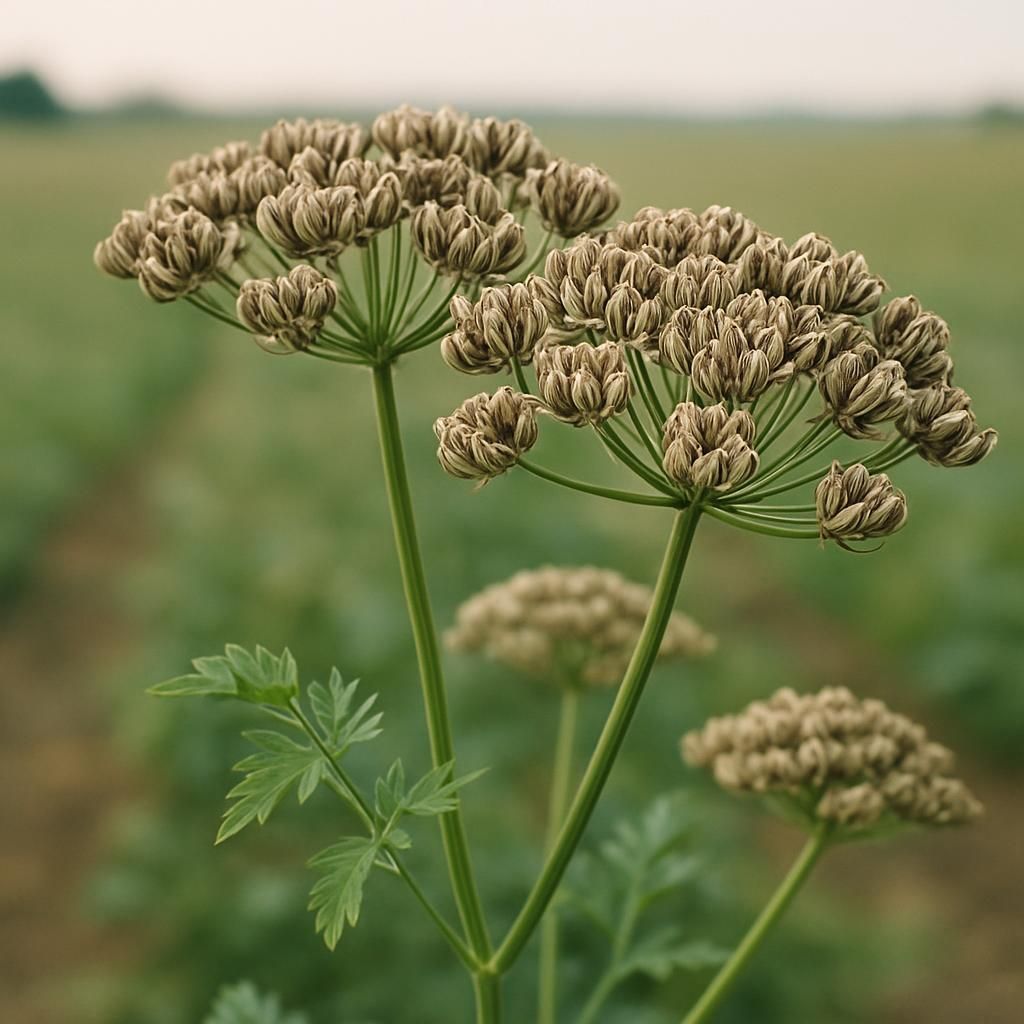
Introduction to Anise Seed
Anise (Pimpinella anisum) is a fast-maturing annual in the Apiaceae family prized for its licorice-flavored seeds. The crop thrives in Mediterranean-like climates and is harvested for culinary spice blends, distilled spirits, and essential oil production. Commercial growers value anise for its short 100–120 day cycle and strong demand in both domestic and export markets.
Botanical Profile of Anise Seed
Pimpinella anisum produces a slender, hollow stem reaching 45–75 cm with finely divided, feathery leaves. Small white flowers form compound umbels that mature into ribbed, gray-brown schizocarps (seeds) containing 1–4 % essential oil rich in anethole. The plant develops a slender taproot and is self-fertile but benefits from insect pollination.
Soil, pH, and Climate Requirements for Anise Seed
Anise demands well-drained, fertile loams with good structure. Heavy clays or waterlogged soils cause root rot and reduce germination. The crop prefers full sun and moderate temperatures; excessive heat above 30 °C during flowering lowers seed set.
| Parameter | Ideal Range | Notes |
|---|---|---|
| Soil Type | Sandy loam to loam | Avoid compacted or saline soils |
| Soil pH | 6.0–7.5 | Slightly acidic to neutral |
| Temperature (day) | 18–25 °C | Optimal vegetative growth |
| Temperature (night) | 10–15 °C | Prevents bolting stress |
| Annual Rainfall | 400–700 mm | Supplemental irrigation required if lower |
| Frost Tolerance | Light frost only (-2 °C) | Seedlings damaged below -4 °C |
| Sunlight | Full sun (≥6 h) | Essential for essential oil concentration |
Step-by-Step Planting & Propagation
- Site Selection & Preparation: Choose a south-facing field with good air drainage. Perform a soil test and incorporate 15–20 t/ha well-rotted compost or aged manure two weeks before planting.
- Seed Treatment: Use certified, disease-free seed. Optional 12-hour soak in 25 °C water improves uniformity.
- Sowing Window: Direct seed in early spring when soil temperature reaches 10 °C. In frost-free zones, fall sowing is possible.
- Seeding Rate & Depth: Broadcast or drill at 8–12 kg/ha at 1–1.5 cm depth. Row spacing 30–40 cm; plant spacing 8–10 cm after thinning.
- Germination: Expect emergence in 7–14 days. Maintain consistent moisture; avoid crusting.
- Transplant Option: For high-value seed production, start seedlings in 128-cell trays 4–5 weeks before last frost and transplant at the two-true-leaf stage.
Care & Maintenance regimes for Anise Seed
Consistent moisture during flowering and seed fill is critical. Over-fertilization produces excessive foliage at the expense of seed yield. Light cultivation controls early weeds; later canopy closure suppresses most competitors.
| Growth Stage | Water Schedule | Fertilizer Schedule | Pruning / Other Operations |
|---|---|---|---|
| Seedling (0–3 weeks) | Light daily irrigation to keep top 5 cm moist | None; residual soil fertility sufficient | Thin to 8–10 cm spacing |
| Vegetative (3–7 weeks) | 25–30 mm/week; drip or overhead | 40 kg N/ha at 4 weeks | Hoe between rows; avoid root damage |
| Flowering (7–9 weeks) | 35–40 mm/week; reduce after petal drop | 20 kg N/ha + 30 kg K2O/ha | Monitor for lodging; install stakes if needed |
| Seed Fill & Maturity | 20 mm/week until 10 % seed color change | None | Cease irrigation 10–14 days pre-harvest |
Pests, Diseases & Organic Management
Major insect pests include aphids and cutworms. Fungal threats are powdery mildew and root rot. Cultural controls such as crop rotation with onion or garlic, reflective mulches, and beneficial insect releases (lady beetles, lacewings) form the backbone of organic programs. Neem oil and Bacillus thuringiensis provide targeted rescue treatments when thresholds are exceeded.
Harvesting, Curing & Optimal Storage
Harvest when 70–80 % of seeds turn gray-brown and umbels begin to dry. Cut plants at the base early morning and bundle for shade drying 3–5 days. Thresh by hand or mechanical combine at <12 % moisture. Store cleaned seed in airtight containers at 10–15 °C and <60 % RH; viability remains above 80 % for 2–3 years.
Companion Planting for Anise Seed
Anise repels aphids and attracts beneficial pollinators when interplanted with coriander and thyme. Compatible neighbors include cabbage and lettuce; avoid proximity to carrot to prevent cross-pollination and seed-quality loss. Summer companion planting: 10 organic pairings to boost small farm resilience offers additional pairing strategies for mixed plantings.