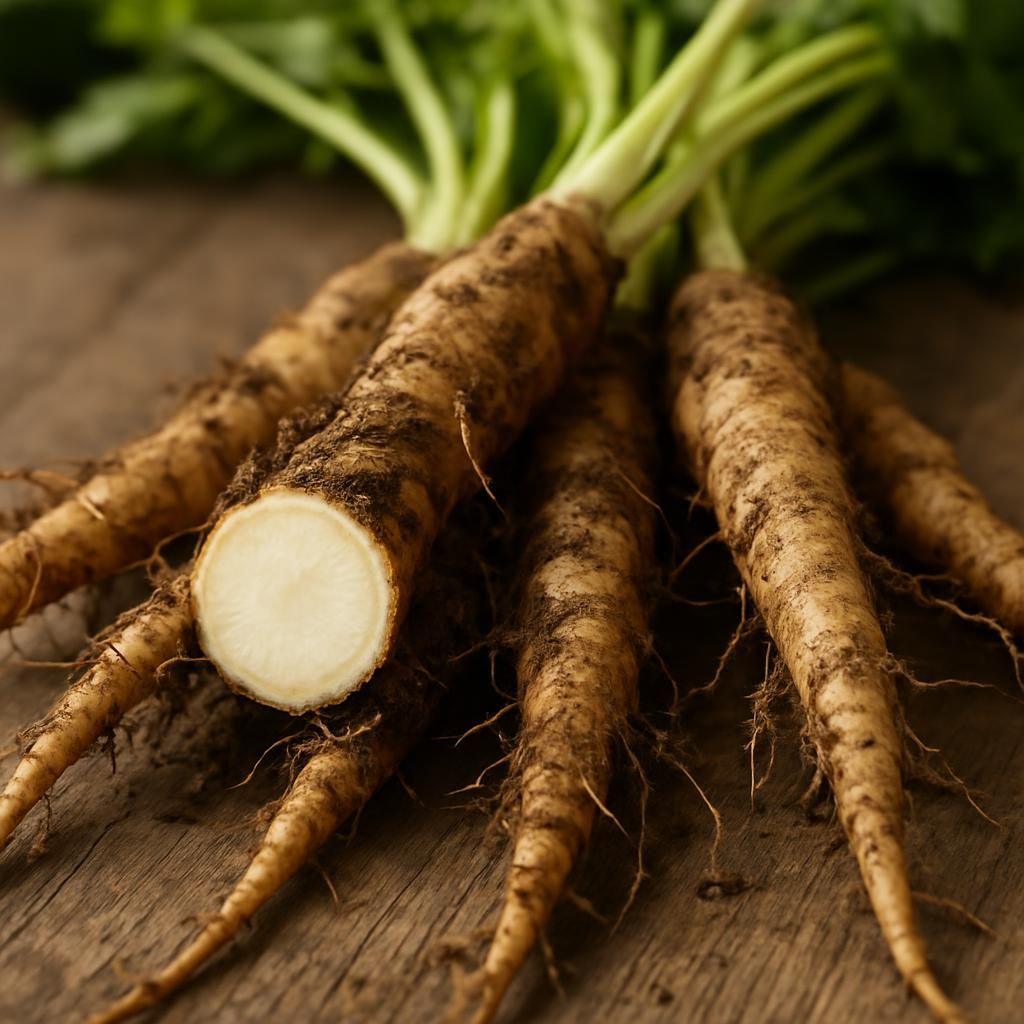
Introduction to Angelica Root
Angelica Root (Angelica archangelica) is a stately biennial or short-lived perennial herb prized for its thick, aromatic taproot used in traditional medicine, flavoring, and distillation. Native to northern Europe and parts of Asia, the plant has been cultivated for centuries in temperate regions where cool, moist conditions prevail. Commercial growers value the root for its essential oils, coumarins, and furocoumarins that command steady demand in herbal markets.
Successful production requires attention to site selection, soil fertility, and moisture management because the plant is sensitive to heat and drought. With proper planning, yields of 1.5–3 kg of dried root per plant are achievable in well-managed beds after two growing seasons. This guide delivers professional-grade, field-tested recommendations for soil, propagation, maintenance, and post-harvest handling.
Botanical Profile of Angelica Root
Angelica archangelica belongs to the Apiaceae family and produces a hollow, ribbed stem that can reach 1.5–2.5 m in height during its second year. The large, compound leaves are bright green and deeply divided, while the inflorescence consists of large, spherical umbels of greenish-white flowers. The plant develops a fleshy taproot up to 30 cm long and 5–8 cm in diameter that stores carbohydrates and aromatic compounds.
As a biennial, Angelica Root completes its life cycle in two years: vegetative growth and root enlargement occur in year one, followed by flowering, seed set, and senescence in year two. Some strains exhibit short-lived perennial behavior when flowering is prevented. The root is the primary economic product, although young petioles and seeds are occasionally harvested for culinary use.
Soil, pH, and Climate Requirements for Angelica Root
Angelica Root demands fertile, moisture-retentive soils that remain cool throughout the growing season. Heavy clay or waterlogged sites should be avoided because they promote root rot. Raised beds or well-drained loamy soils amended with 5–8 cm of well-rotted compost provide optimal structure.
| Parameter | Ideal Range | Notes |
|---|---|---|
| Soil Type | Loam to sandy loam | High organic matter content (3–5 %) |
| Soil pH | 6.0–7.0 | Slightly acidic to neutral |
| Temperature Range | 15–22 °C daytime | Cool nights essential; avoid >28 °C |
| Annual Rainfall | 800–1,200 mm | Supplemental irrigation required in dry periods |
| USDA Hardiness Zones | 4–8 | Mulch crowns in zones 4–5 for winter protection |
| Light Requirement | Full sun to partial shade | 4–6 hours direct sun; afternoon shade beneficial in warm climates |
Site selection should favor north- or east-facing slopes where soil temperatures remain moderate. Windbreaks reduce transpiration stress and protect tall flowering stems from lodging.
Step-by-Step Planting & Propagation
Propagation is achieved almost exclusively by seed because root cuttings rarely succeed. Fresh seed exhibits high dormancy; cold stratification at 4 °C for 6–8 weeks improves germination to 70–85 %. Sow stratified seed in early spring when soil reaches 10 °C.
- Prepare seedbeds by incorporating 5 cm of compost and 50 g/m² of balanced organic fertilizer (N-P-K 5-5-5).
- Sow seeds 3–5 mm deep in rows 45–60 cm apart; thin seedlings to 30 cm within rows once true leaves appear.
- Maintain consistent moisture until seedlings reach 10 cm; mulch with 5 cm of straw to conserve moisture and suppress weeds.
- In regions with mild winters, fall sowing under low tunnels produces stronger first-year plants.
- Transplant container-grown seedlings at the 4–6 leaf stage, spacing 45 cm between plants and 60 cm between rows.
Direct seeding is preferred for large plantings to avoid root disturbance; however, transplants allow earlier weed control and uniform stands.
Care & Maintenance regimes for Angelica Root
Consistent moisture and moderate fertility are critical during the first season when root expansion occurs. Over-fertilization promotes excessive foliage at the expense of root quality. Hand weeding or shallow cultivation prevents competition without damaging shallow feeder roots.
| Task | Schedule | Rate / Method |
|---|---|---|
| Watering | Weekly during active growth; reduce in dormancy | 25–40 mm per week; drip irrigation preferred |
| Fertilizer | Early spring and mid-summer (year 1) | 40 g/m² aged poultry manure or fish emulsion (5-1-1) |
| Pruning | Remove flower stalks in year 1 | Cut at base to redirect energy to root |
| Mulching | Maintain 5–8 cm organic mulch year-round | Straw, leaf mold, or wood chips |
| Weeding | Every 3–4 weeks until canopy closes | Shallow hoeing or hand pulling |
In the second year, cease nitrogen applications after flowering begins to improve root flavor and essential oil concentration. Monitor soil moisture closely during heat waves; temporary shade cloth (30 %) can prevent bolting.
Pests, Diseases & Organic Management
Angelica Root is relatively pest-resistant but can suffer from aphids, slugs and snails, and leaf miners. Root-knot nematodes may become problematic in sandy soils previously cropped with susceptible hosts. Fungal issues include powdery mildew and root rot caused by Pythium or Phytophthora species when drainage is poor.
Organic control begins with cultural practices: crop rotation on a 4-year cycle, removal of crop debris, and avoidance of overhead irrigation. Neem oil or insecticidal soap applied at first sign of aphids provides effective suppression. Copper-based fungicides or Bacillus subtilis products manage early leaf spot outbreaks. Beneficial nematodes (Steinernema feltiae) target slug eggs in mulch layers.
Harvesting, Curing & Optimal Storage
Harvest occurs in late autumn of the second year once foliage begins to senesce. Lift entire plants carefully with a garden fork to avoid breaking the taproot. Wash roots under running water, trim tops to 2 cm, and sort by size.
Dry roots in a forced-air dehydrator at 35–40 °C until brittle (8–12 % moisture). Alternatively, spread in single layers in a shaded, well-ventilated barn for 7–10 days, turning daily. Store cured roots in food-grade, airtight containers away from light and heat. Properly cured roots retain aroma and potency for 18–24 months.
Companion Planting for Angelica Root
Angelica Root pairs well with Thyme, Yarrow, and Nasturtium because these aromatic companions deter aphids and attract beneficial insects. Tall stature provides light afternoon shade for low-growing herbs such as Parsley. Avoid planting near Carrot or Parsnip families to reduce shared pest pressure. Interplanting with Clover improves soil nitrogen and suppresses weeds between rows.
Parsley and Yarrow also improve biodiversity and pollinator habitat, increasing overall farm resilience. For more detailed companion strategies, see the blog post Summer Companion Planting: 10 Organic Pairings to Boost Small Farm Resilience.