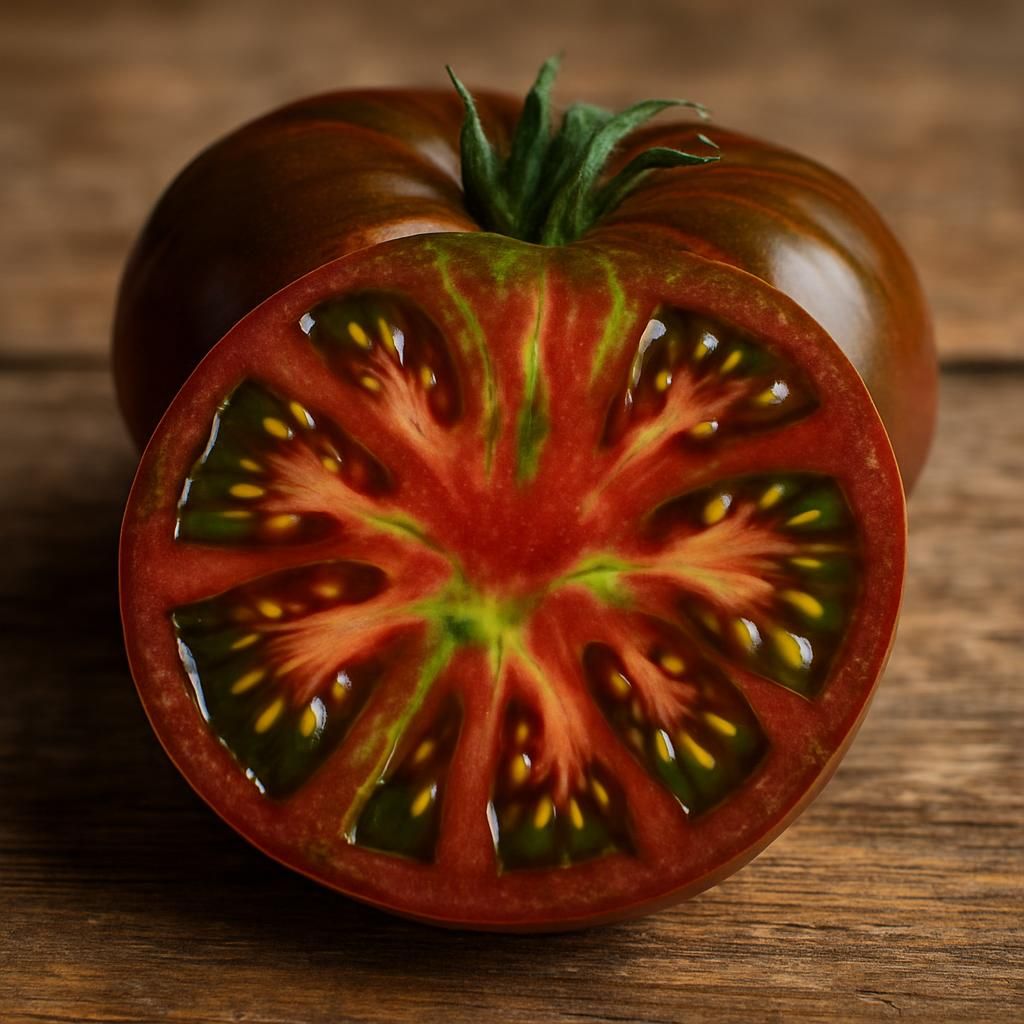
Introduction to Ananas Noire Tomato
Ananas Noire Tomato, also known as Black Pineapple Tomato, is an extraordinary indeterminate heirloom variety that delivers both striking visual drama and outstanding flavor. Originating from European breeding programs that crossed pineapple-type tomatoes with dark-skinned varieties, this cultivar produces massive, irregularly lobed fruits that can weigh up to two pounds. The exterior matures to a rich mahogany-red while the interior reveals vibrant emerald-green streaks, creating a pineapple-like appearance when sliced. Gardeners and chefs alike value Ananas Noire for its complex flavor profile—sweet, fruity, and slightly smoky with low acidity—making it ideal for fresh eating, salads, and gourmet sandwiches.
Unlike many dark tomatoes that can taste flat or metallic, Ananas Noire maintains excellent balance and juiciness even in hot climates. Its vigorous vines require sturdy support and consistent attention, rewarding growers with heavy yields throughout the season. This guide covers every stage of cultivation, from soil preparation to post-harvest handling, ensuring professional-grade results whether you grow in raised beds, containers, or open-field systems.
Botanical Profile of Ananas Noire Tomato
Ananas Noire belongs to the nightshade family (Solanaceae) and is botanically classified as Solanum lycopersicum 'Ananas Noire'. It is an indeterminate variety, meaning the plant continues to grow and produce fruit until killed by frost. Vines routinely reach 6–8 feet in height and benefit from strong trellising or caging. Leaves are typical tomato foliage—compound, dark green, and slightly hairy—with prominent veins. Flowers are yellow and self-pollinating, appearing in clusters along the stems.
Fruit shape is distinctly pineapple-like: large, oblate to heart-shaped with deep shoulders and irregular lobes. The skin is thin yet resilient, while the flesh is meaty with few seeds. Ripening occurs over 80–90 days from transplant. The striking internal coloration results from high levels of chlorophyll retained in the locules alongside anthocyanin pigments in the skin, giving the fruit its signature bicolor appearance.
Soil, pH, and Climate Requirements for Ananas Noire Tomato
Ananas Noire performs best in fertile, well-drained loam or sandy loam soils enriched with organic matter. Consistent moisture without waterlogging is critical to prevent Blossom End Rot and cracking. The variety tolerates a wide range of climates but excels in warm, sunny conditions with daytime temperatures between 70–85°F (21–29°C).
| Parameter | Ideal Range | Notes |
|---|---|---|
| Soil Type | Loam or sandy loam | High organic content improves structure |
| Soil pH | 6.2–6.8 | Slightly acidic optimizes nutrient uptake |
| Temperature (Day) | 70–85°F (21–29°C) | Optimal fruit set and flavor development |
| Temperature (Night) | 60–70°F (15–21°C) | Prevents blossom drop |
| Sunlight | Full sun (8+ hours) | Essential for deep coloration and sugars |
| Spacing | 24–36 inches between plants | 48–60 inches between rows for airflow |
| Soil Temperature | 65–75°F (18–24°C) at planting | Use black plastic mulch to warm soil |
Step-by-Step Planting & Propagation
Start seeds indoors 6–8 weeks before the last expected frost. Sow seeds ¼ inch deep in sterile seed-starting mix and maintain soil temperature at 70–80°F (21–27°C). Germination occurs in 7–14 days. Once seedlings develop two true leaves, transplant into 4-inch pots and grow under bright lights or in a sunny greenhouse.
Harden off plants for 7–10 days before transplanting outdoors. Choose a site with full sun and rich soil. Dig planting holes 18–24 inches apart and amend each hole with ½ cup of balanced organic fertilizer plus a handful of compost. Plant deeply, burying two-thirds of the stem to encourage strong root development. Install supports immediately—tomato cages, Florida weave, or vertical trellises work well for this vigorous variety.
Care & Maintenance regimes for Ananas Noire Tomato
Consistent care ensures maximum yield and fruit quality. Mulch heavily with straw or shredded leaves to retain moisture and suppress weeds. Water deeply but infrequently to encourage deep roots. Side-dress with compost tea or fish emulsion every 3–4 weeks once fruit begins to set.
| Growth Stage | Watering Schedule | Fertilizer Application | Pruning & Training |
|---|---|---|---|
| Seedling (0–4 wks) | Keep evenly moist | Light fish emulsion weekly | Pinch lower leaves if leggy |
| Vegetative (4–8 wks) | 1–1.5 inches per week | Balanced NPK (5-5-5) monthly | Remove suckers below first flower |
| Flowering/Fruit Set | 1.5–2 inches per week | High-phosphorus (2-5-3) every 3 weeks | Continue sucker removal; tie stems |
| Ripening | Reduce slightly to concentrate flavor | Potassium-rich (0-0-5) every 2 weeks | Remove lower leaves for airflow |
Pests, Diseases & Organic Management
Ananas Noire is susceptible to common tomato pests including Aphids, Hornworms, and Spider Mites. Monitor plants weekly and use insecticidal soap or neem oil at the first sign of infestation. Tomato Spotted Wilt Virus and Early Blight can affect foliage; practice crop rotation and remove infected leaves promptly.
Preventive organic strategies include planting Marigold and Nasturtium as companion plants to deter pests. Apply compost tea regularly to boost plant immunity. Copper-based sprays help control bacterial diseases during humid periods. Avoid overhead watering to reduce fungal pressure.
Harvesting, Curing & Optimal Storage
Harvest fruits when they reach full color and yield slightly to gentle pressure. For best flavor, allow fruits to ripen on the vine until the shoulders soften. Cut stems with pruners rather than pulling to avoid damaging the plant. In late season, pick mature green fruits and ripen indoors in a paper bag with a banana to accelerate ethylene exposure.
Store ripe tomatoes at room temperature away from direct sun for up to one week. For longer storage, freeze whole fruits or process into sauce. Never refrigerate, as cold temperatures degrade flavor and texture.
Companion Planting for Ananas Noire Tomato
Pair Ananas Noire with aromatic herbs such as Basil and Thyme to improve flavor and repel insects. Marigold and Nasturtium provide natural pest deterrence while Borage attracts pollinators. Avoid planting near Fennel or Walnut trees, which can inhibit tomato growth. Cucumber and Pepper make excellent neighbors in the same bed when given adequate spacing.
For additional strategies on maximizing small-farm efficiency through thoughtful planting layouts, see The Overlooked Art of Zone Mapping for Small Farm Efficiency.