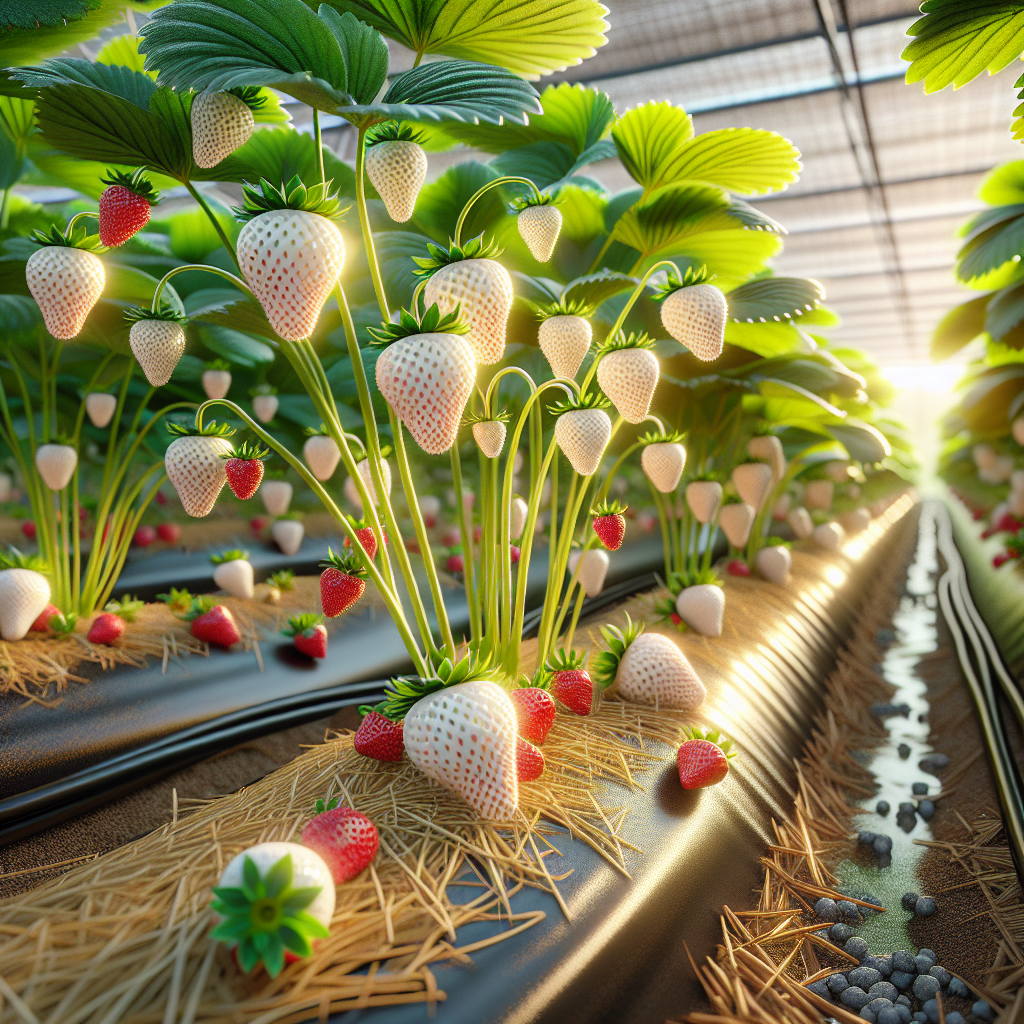
Introduction to Albino Strawberry
Albino strawberry is not a true botanical albino in the strict genetic sense, but a white- or blush-fruited selection of the cultivated garden strawberry in which red anthocyanin pigmentation is greatly reduced or absent in the mature fruit. In commercial and home-garden trade, these are often sold as “pineberries,” a name that reflects the fruit’s pale skin, red achenes, and subtle tropical aroma rather than a separate species. Most belong to the same hybrid complex as standard garden strawberries, but they behave somewhat differently in the field because fruit color is a less reliable ripeness indicator and their pale surface is more vulnerable to sunscald and cosmetic damage.
These berries are usually softer, less acidic, and more perfumed than common red market strawberries. Because of that, they are favored by specialty growers, direct-market farms, chefs, and gardeners interested in novelty fruit with strong dessert quality. Yield per plant is often lower than high-performing red commercial cultivars, and fruit can be smaller, but flavor can be excellent when plants receive steady moisture, cool-to-mild temperatures, and good pollination. For growers familiar with standard Strawberry production, the main adjustments are in harvest judgment, canopy management, and protection against stress.
Historically, white-fruited strawberries gained attention through breeding lines that drew on older pale-fruited forms and selections with aromatic profiles reminiscent of Fragaria chiloensis ancestry. Modern marketed types vary widely. Some are day-neutral, some are short-day, and some are proprietary selections sold simply under descriptive names. That means management should always be adjusted to the exact plant type you purchase, especially for flowering response and runner production.
Botanical Profile of Albino Strawberry
Albino strawberry is a low-growing herbaceous perennial in the Rosaceae family. Like all cultivated garden strawberries, it forms a compact crown from which leaves, flower trusses, and stolons emerge. Leaves are trifoliate, serrated, and moderately pubescent. The root system is shallow and fibrous, with most active feeder roots concentrated in the top 15-20 cm of soil, which explains why irrigation consistency is critical.
Flowers are typically white, five-petaled, and borne in clusters. The edible portion is an enlarged receptacle, while the true fruits are the small seed-like achenes embedded on the surface. In pale-fruited cultivars, ripe fruit usually develops a creamy white, ivory, or faint blush-pink background color while the achenes turn red to deep pink. That red-seeded contrast is often the best visual cue of maturity. Fruit aroma frequently intensifies before full softening, and well-grown berries may carry notes of pineapple, guava, or floral candy.
Albino-fruited selections are often somewhat less vigorous than mainstream commercial red cultivars and may require better pollination for symmetrical fruit. Misshapen berries are common when pollinator activity is low, temperatures fluctuate sharply during bloom, or boron and calcium nutrition are imbalanced. Plants generally produce crowns, runners, and inflorescences in the same pattern as standard garden strawberries, but many growers notice that fruit set is more variable from flush to flush.
Because these strawberries are bred for niche quality rather than shipping toughness, the fruit is usually delicate. Skin bruises easily, and flesh can become translucent if overripe or overwatered just before harvest. For fresh-market quality, growers should think of them as premium dessert berries rather than bulk processing fruit.
Soil, pH, and Climate Requirements for Albino Strawberry
Albino strawberry performs best in loose, well-aerated, organically enriched soil with excellent drainage and moderate water-holding capacity. A sandy loam or loam is ideal. Heavy clay can work only if raised beds are used and organic matter is incorporated deeply enough to improve pore space. Poor drainage is one of the fastest ways to lose plants, because shallow roots and crown tissues are highly susceptible to oxygen deprivation and root disease.
The preferred soil pH is 5.5 to 6.5, with an optimum around 5.8 to 6.2. Above pH 6.8, iron and manganese can become less available, leading to interveinal chlorosis in new leaves. Below pH 5.2, root growth may be restricted and calcium availability becomes less reliable. Before planting, test the soil and adjust several weeks or months ahead. Use finely ground limestone to raise pH or elemental sulfur to lower it. Do not guess; strawberries respond quickly to pH errors.
Organic matter should ideally be in the 3-5% range in mineral soils. Too little organic matter leads to poor moisture buffering, while excessively rich, nitrogen-heavy beds can push lush leaf growth at the expense of flavor and fruit firmness. Well-finished compost is beneficial at moderate rates, but fresh manure should never be applied before planting because it raises disease and salt risks.
Climatically, albino strawberry prefers temperate conditions with cool nights and mild days. The best fruit quality usually develops between 15-24°C. Flowering and pollination are strongest when daytime temperatures are not excessively hot and night temperatures stay above severe frost thresholds. Heat above 29-30°C can reduce pollen viability, increase fruit softness, and bleach already pale fruit to the point where sun injury becomes difficult to distinguish from normal color. In very hot regions, afternoon shade or 20-30% shade cloth can improve marketable yield.
Winter chill needs depend on the cultivar. Many white-fruited types sold to home growers are adapted to the same general conditions as standard strawberries, but some may be day-neutral and fruit over a longer season in mild climates. In cold regions, mulch is essential to protect crowns from heaving. In humid regions, wide spacing and raised beds are especially important to reduce leaf wetness and Botrytis.
For deeper site preparation concepts, see soil health strategies.
Step-by-Step Planting & Propagation
Start with certified disease-free plants. This matters more than many growers realize because strawberries readily carry viruses, crown pathogens, and latent fungal issues that reduce vigor for the entire life of the planting. Buy plugs, dormant bare-root plants, or runner plants only from reputable nurseries.
Prepare beds 2-4 weeks before planting. Form raised beds 15-25 cm high and 60-75 cm wide if drainage is questionable. Incorporate mature compost and a balanced pre-plant fertilizer based on soil test results. Avoid high ammonium nitrogen just before transplanting.
Install irrigation before planting. Drip tape under mulch is preferred. It keeps foliage dry, reduces gray mold pressure, and allows precise moisture control. One or two drip lines per bed are useful depending on bed width.
Plant at the correct depth. This is the most common mistake. Set plants so the midpoint of the crown is exactly at soil level. If planted too deep, the crown may rot. If planted too shallow, roots dry out and anchorage is poor. Spread bare roots downward in a fan shape rather than bunching them into a knot.
Space correctly. For matted-row style systems, use 30-45 cm between plants and 90-120 cm between rows. For intensive plasticulture, 25-35 cm within row and double rows on each bed are common. Wider spacing improves airflow and reduces disease, which is often worthwhile for delicate pale-fruited berries.
Water in immediately. Apply enough water after planting to fully settle soil around roots. In the first 7-14 days, keep the root zone uniformly moist but never saturated. The target is moist soil in the top 10-15 cm, not muddy conditions.
Remove early flowers if needed. In spring-planted systems, pinching first flowers for 3-6 weeks helps plants build crowns and roots, especially in everbearing or day-neutral types. For fall-planted annual systems, follow the nursery guidance for your region.
Manage runners intentionally. If your goal is fruit production, remove most runners so plant energy stays in crowns and berries. If your goal is propagation, peg healthy runners into small pots filled with sterile mix while still attached to the mother plant. Once roots fill the pot and a strong daughter crown forms, sever and transplant.
Propagation from seed is possible but not recommended for maintaining named albino types, because seedlings may segregate and lose the desired fruit color, flavor, or bearing habit. Vegetative propagation by runners is the reliable method for preserving cultivar identity.
Mulch after planting with clean straw, pine needles, or plastic film depending on system. Organic mulches moderate soil temperature and reduce fruit splash, while plasticulture improves cleanliness and earliness. In humid climates, avoid thick wet mulch packed tightly against crowns.
Care & Maintenance regimes for Albino Strawberry
Successful production depends on precise moisture, restrained nitrogen, and careful canopy observation. Albino strawberry roots occupy the upper soil profile, so drought stress appears fast. Aim to maintain evenly moist soil in the top 15 cm. As a practical field target, the soil should feel cool and cohesive when squeezed, but no free water should drip out. If the top 2-3 cm is dust-dry and plants wilt by late morning, irrigation is too infrequent. If the bed smells sour, algae forms, or lower leaves yellow while soil remains constantly wet, irrigation is excessive.
During establishment, many growers apply light irrigation daily or every other day depending on weather and soil texture. Once rooted, a common target is 25-40 mm of water per week from rain plus irrigation, adjusted upward during bloom and fruit swell. Sandy soils may need smaller, more frequent irrigations; loams can take deeper, less frequent applications. The key is consistency. Wide wet-dry swings produce small berries, hollow cores, uneven ripening, and elevated mite stress.
Fertility should be moderate, not aggressive. Overfed plants become leafy, disease-prone, and bland. A balanced fertility program often works best with total seasonal nitrogen in the range of 40-80 kg/ha for modest plantings, though exact rates should follow soil and tissue analysis. Too much nitrogen after flowering can reduce soluble solids and soften fruit. Calcium and potassium are especially important for fruit quality. Low calcium often contributes to weak skin and tip burn-like tissue collapse in fast-growing fruit, while insufficient potassium reduces sweetness and size.
Use tissue testing if growing commercially. Healthy leaves should be medium green, not dark lush green. Pale new growth may indicate iron or nitrogen shortage; scorched margins can suggest salt buildup or potassium imbalance. If fertigation is used, feed lightly and frequently rather than in large pulses.
Weed control matters because strawberry roots do not compete well. Hand weed near crowns to avoid root disturbance. Avoid deep hoeing. Landscape fabric or plastic mulch between plants helps greatly, but monitor for overheating in hot climates.
Canopy management is more nuanced with albino fruit because too much sun can cause bronzing or leathery patches, yet too much shade reduces sugar accumulation and promotes gray mold. Maintain enough leaf cover to protect fruit during hot afternoons, but remove dead, diseased, or overcrowded foliage after major harvest flushes to improve air movement. Do not strip the canopy excessively.
Pollination deserves special attention. White-fruited berries often show poor shape if pollination is incomplete. Encourage bees and other pollinators by avoiding insecticide sprays during bloom and by maintaining nearby floral resources such as Thyme and Yarrow. In protected culture or tunnels, bumblebee introduction can markedly improve fruit symmetry.
Winter care depends on region. In cold-winter climates, apply loose straw after plants are fully dormant and temperatures are consistently near freezing. This reduces crown desiccation and freeze-thaw heaving. Remove or thin the mulch in spring gradually to avoid trapping excess moisture around emerging growth.
Renovation, if practiced in perennial systems, should occur after the main harvest in June-bearing types. Mow or trim foliage only if plants are healthy enough to recover, narrow rows, feed lightly, and irrigate to stimulate new crown growth. In small specialty plantings, many growers replace beds more frequently instead of maintaining older stands, because fruit size and disease resistance decline after the first strong production cycles.
Pests, Diseases & Organic Management
Albino strawberry faces the same core pest and disease complex as conventional strawberry, but pale fruit makes cosmetic injury more visible and marketability can drop quickly.
Common insect pests include aphids, spider mites, thrips, tarnished plant bugs, slugs, and sap beetles. aphids cluster on tender growth and can vector viruses. Mites are especially problematic in hot, dusty, or drought-stressed conditions; look for bronzed leaves and fine stippling before webbing appears. thrips scar flowers and fruit, while tarnished plant bugs cause cat-faced or deformed berries by feeding on developing seeds. slugs often attack ripening fruit hidden under mulch.
Organic management begins with sanitation and monitoring. Remove overripe fruit promptly, keep aisles weed-free, and scout weekly by checking leaf undersides, blossoms, and the crown zone. Yellow or blue sticky cards can help track flying pests, but direct inspection is more useful for action decisions.
For aphids and mites, conserve beneficial insects and avoid broad-spectrum sprays that wipe out predators. Insecticidal soap can suppress soft-bodied pests if coverage is thorough and temperatures are mild during application. Horticultural oils may help in non-bloom periods but should be used carefully to avoid phytotoxicity. For slugs, reduce excess mulch humidity, hand pick at dusk, and use iron phosphate baits when necessary.
Diseases of greatest concern include Botrytis gray mold, powdery mildew, anthracnose fruit rot, leaf spot, Verticillium wilt, Phytophthora crown rot, and various root rots. Botrytis is especially important because albino fruit can appear sound until soft gray lesions develop rapidly under humid conditions. Remove infected berries immediately and avoid overhead irrigation. powdery mildew shows as upward-cupped leaves and a dusty fungal coating, often during warm days and cool nights with poor airflow.
The most effective organic disease strategy is preventive: disease-free planting stock, raised beds, drip irrigation, crop rotation, wide spacing, mulch to prevent soil splash, and fast removal of infected material. Do not plant where strawberries, tomatoes, peppers, eggplants, or potatoes have recently grown if soilborne wilt or root diseases are known problems. Good rotation breaks many pest cycles and lowers inoculum pressure.
If using organic fungicides, materials such as biological Bacillus-based products, sulfur for mildew, or copper for certain foliar diseases may have a place, but timing and coverage are everything. Always rotate modes of action allowed under your production standards and test small areas first, because fruit sensitivity varies by cultivar and weather.
Birds are often a serious "pest" in white-fruited strawberries because the unusual color may not hide fruit as much as growers expect; once birds learn the planting, losses can escalate. Netting is the most reliable defense. Install it before the first berries soften.
Harvesting, Curing & Optimal Storage
Harvest timing is the skill that separates mediocre from exceptional albino strawberry production. Because fruit does not turn fully red, you must rely on a combination of indicators: background color shifts from green-white to creamy white, achenes darken to red or pink, aroma becomes pronounced, shoulders lose green cast, and the berry softens slightly but still holds shape. Picking too early gives bland flavor and a crisp, underdeveloped texture. Picking too late results in translucency, bruising, and short shelf life.
Harvest in the cool morning after dew has dried but before field heat rises. Pick every 1-3 days in peak season. Use a gentle pinch or snip, leaving a short stem and cap attached to reduce juice leakage. Never pull berries off roughly; torn shoulders invite rot. Field crews should use shallow containers because these berries bruise under their own weight more easily than firmer commercial reds.
There is no true curing step as with onions or sweet potatoes, but there is an essential postharvest cooling step. Remove field heat immediately. The ideal sequence is harvest, shade, pre-cool, then cold storage. Forced-air cooling is best for commercial lots. Target storage temperature is 0-2°C with relative humidity around 90-95%. Lower humidity causes shriveling; free moisture on fruit surfaces encourages mold.
Even under ideal handling, shelf life is usually short: often 2-5 days for premium quality, occasionally a bit longer if fruit was harvested slightly firm and cooled fast. Wash only just before use, not before storage. Store in ventilated clamshells or shallow trays lined with absorbent material. Remove damaged berries promptly because one decaying fruit can spread Botrytis rapidly through a container.
For direct sales, educate buyers that pale berries are ripe when fragrant and creamy, not when red. This simple marketing step reduces complaints and improves repeat demand.
Companion Planting for Albino Strawberry
The best companions are those that either improve pollinator activity, help suppress pests, or occupy nearby space without aggressively competing with shallow strawberry roots. Low, aromatic herbs and insectary plants are usually more useful than tall, nutrient-hungry vegetables.
Thyme is an excellent border companion because it stays relatively compact, attracts beneficial insects when blooming, and does not cast heavy shade. Yarrow supports predatory insects and parasitic wasps that help moderate aphid pressure in diversified systems. Garlic is often used near strawberry rows for its strong scent and efficient use of vertical space, though it should not be crowded directly against crowns. Lettuce can work as a short-season intercrop in wider plantings because it has a shallow, quick growth cycle and can help shade soil early without overwhelming the berries.
Avoid companions that are tall, sprawling, or disease-sharing. Brassicas can be acceptable nearby, but dense canopies reduce airflow if packed too tightly. Solanaceous crops are poor neighbors in rotation-heavy systems because they share some soil disease concerns and can complicate pest management. Aggressive mint-family herbs should also be restrained, as they can overrun bed edges.
In practice, companion planting should never replace core strawberry management. Think of companions as support plants at row ends, bed shoulders, or adjacent strips rather than plants jammed into the strawberry crown zone. The highest returns still come from clean beds, good pollination, precise irrigation, and rapid harvest handling.