Introduction to Ajwain Seed
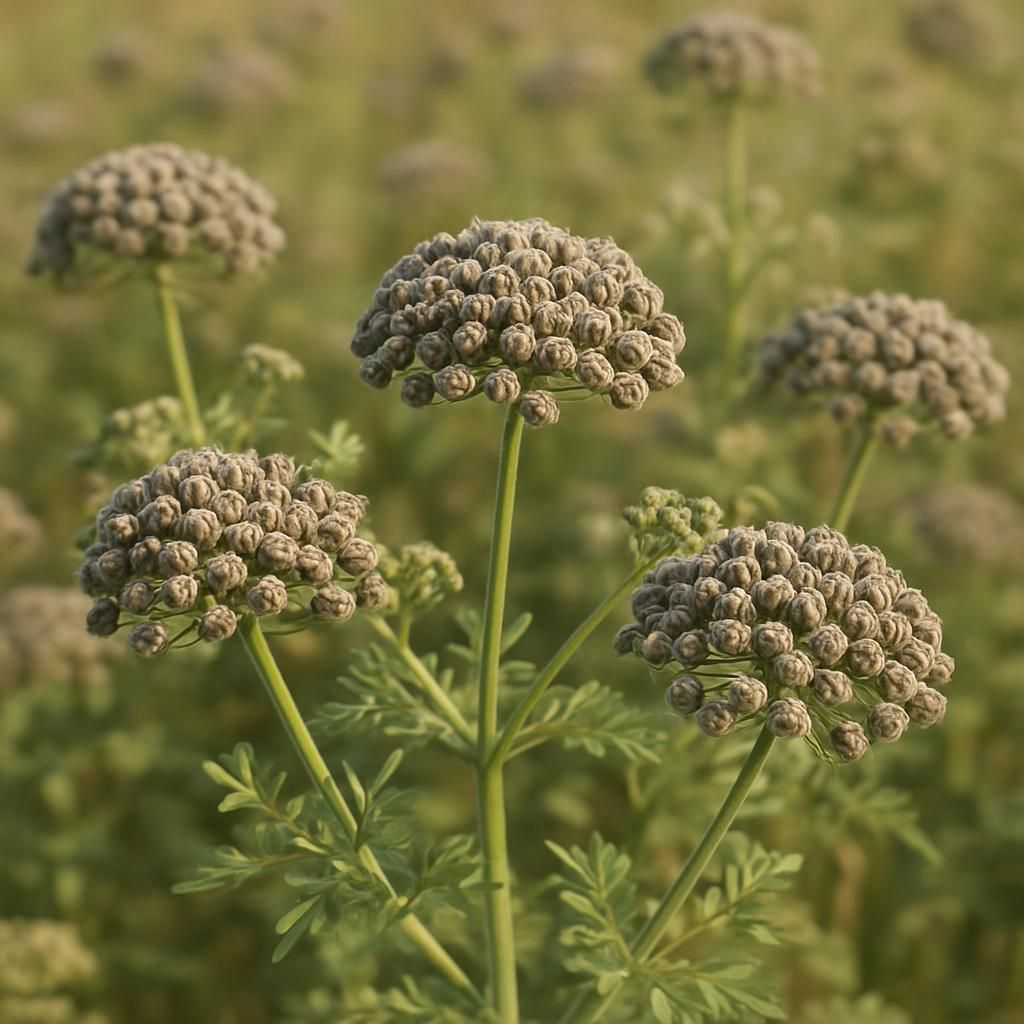
Ajwain, also known as carom seed, is a high-value annual spice crop belonging to the Apiaceae family. Native to the Indian subcontinent and parts of the Middle East, it is cultivated for its small, ridged, grayish-brown seeds that contain 2–4% essential oil dominated by thymol. The seeds are used extensively in Indian, Middle Eastern, and North African cuisines for their pungent, thyme-like flavor and digestive properties. Commercial growers value Ajwain for its relatively short 120–150 day cycle, moderate water requirement, and strong market demand in both domestic and export spice channels.
Modern production focuses on certified seed lots with high thymol content (>50% of oil) and uniform seed size. Successful cultivation requires well-drained soils, full sun, and precise irrigation scheduling to prevent both drought stress and waterlogging. This definitive guide compiles agronomic best practices drawn from research stations in Rajasthan, Gujarat, and Madhya Pradesh, the primary Ajwain belts of India.
Botanical Profile of Ajwain Seed
Trachyspermum ammi is an erect, branched annual reaching 30–90 cm in height. Leaves are pinnately divided with linear segments; flowers are small, white, and arranged in compound umbels. The fruit is a schizocarp that splits at maturity into two mericarps (commonly called seeds). Each seed is 1.5–2.5 mm long, ovoid, and marked by five longitudinal ridges. The essential oil is stored in vittae within the pericarp; thymol constitutes 40–60% of the oil, accompanied by γ-terpinene, p-cymene, and carvacrol. Genetic variability exists for seed size, oil content, and maturity duration, with improved varieties such as AA-1, AA-2, and local landraces selected for higher thymol percentages.
Soil, pH, and Climate Requirements for Ajwain Seed
Ajwain performs best on light to medium-textured soils with good drainage. Heavy clay soils increase the risk of root rot and should be avoided unless raised beds or ridges are used. The crop tolerates a wide pH range but yields optimally between 6.5 and 8.0. Ajwain is a winter-season crop in subtropical regions and requires 15–25 °C day temperatures during vegetative growth and 20–30 °C during flowering and seed set. Excessive rainfall or humidity during flowering reduces pollination and seed set.
| Parameter | Ideal Range | Notes |
|---|---|---|
| Soil Type | Sandy loam to loam | Good drainage essential |
| Soil pH | 6.5–8.0 | Slightly alkaline preferred |
| Organic Carbon | >0.6% | Incorporate 8–10 t/ha well-rotted FYM |
| Temperature (Day) | 15–30 °C | Avoid frost at flowering stage |
| Temperature (Night) | 8–15 °C | Cool nights improve oil accumulation |
| Annual Rainfall | 400–750 mm | Supplemental irrigation required |
| Altitude | 0–1500 m | Performs well in plains and lower hills |
Step-by-Step Planting & Propagation
- Land Preparation: Plough 2–3 times to a fine tilth. Incorporate 8–10 t/ha FYM or 4 t/ha vermicompost 15–20 days before sowing.
- Seed Treatment: Treat 4–5 kg seed/ha with 2 g/kg carbendazim or Trichoderma viride @ 4 g/kg to control seed-borne fungi.
- Sowing Time: In northern India, sow mid-October to mid-November. In peninsular regions, late October to early December is optimal.
- Method & Spacing: Use line sowing at 30 cm × 10 cm or 45 cm × 10 cm. Seed rate is 4–5 kg/ha for small-seeded varieties; drill seeds 1–1.5 cm deep.
- Irrigation at Sowing: Pre-sowing irrigation followed by light irrigation 3–4 days after sowing ensures uniform germination.
Care & Maintenance regimes for Ajwain Seed
Timely intercultural operations are critical. First weeding at 20–25 DAS; second at 40–45 DAS. Earthing up at 45 DAS improves plant stability. Avoid water stress during flowering (60–75 DAS) and seed development (90–110 DAS).
| Growth Stage | Water (mm/week) | Fertilizer (NPK kg/ha) | Pruning/Thinning |
|---|---|---|---|
| Germination (0–20 DAS) | 15–20 | Basal: 40 N : 40 P₂O₅ : 20 K₂O | Thin to 10 cm spacing at 15 DAS |
| Vegetative (21–50 DAS) | 20–25 | Top-dress 20 N at 30 DAS | Remove weak plants; light weeding |
| Flowering (51–80 DAS) | 25–30 | Foliar 1% KNO₃ at 60 DAS | No pruning; monitor for lodging |
| Seed Fill (81–120 DAS) | 15–20 | — | Stop irrigation 10–15 days before harvest |
Pests, Diseases & Organic Management
Major insect pests include aphids, jassids, and capsule borers. Aphids can be managed with neem oil 3% or 5% NSKE. Root rot caused by Rhizoctonia and Fusarium wilt are the primary diseases; seed treatment with Trichoderma and crop rotation with sorghum or pearl millet reduce incidence. Powdery mildew appears under cool, humid conditions; sulfur dust @ 25 kg/ha or potassium bicarbonate sprays provide control. Regular field scouting and yellow sticky traps help in early detection.
Harvesting, Curing & Optimal Storage
Harvest when 70–80% of umbels turn brown and seeds begin to shatter. Cut plants at the base and bundle for sun-drying 4–6 days. Thresh by gentle beating or mechanical thresher. Clean seeds to <8% moisture. Store in jute bags or HDPE-lined bins at 10–12% moisture in cool, dry conditions. Properly stored Ajwain retains >90% germination and thymol content for 12–18 months.
Companion Planting for Ajwain Seed
Ajwain benefits from association with coriander and cumin when grown in alternate rows, improving pollinator activity and reducing aphids. Avoid planting near fennel or dill to prevent cross-pollination and quality loss. Intercropping with short-duration chickpeas or mustard provides additional income and breaks disease cycles. Marigold borders deter nematodes and improve biodiversity.
For deeper insight into organic soil strategies that complement Ajwain cultivation, see The Forgotten Art of Fall Soil Revival: 8 Organic Strategies for Small Farm Resilience.