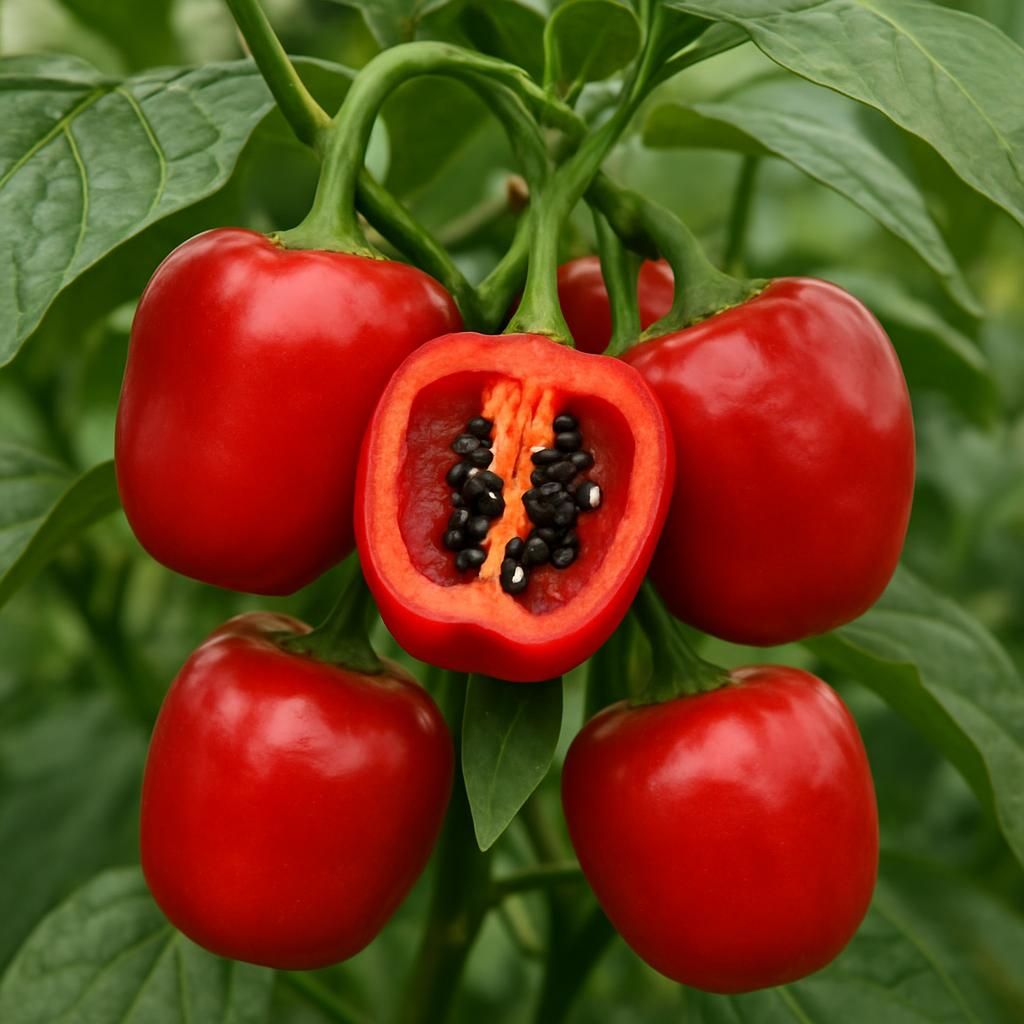
Introduction to Aji Rocoto (Red)
Aji Rocoto (Red), scientifically known as Capsicum pubescens, is one of the most distinctive chili peppers originating from the Andean highlands of South America. Unlike many common peppers, it features thick, fleshy walls, a robust apple-like shape, and striking black seeds that set it apart visually and texturally. With heat levels ranging from 50,000 to 100,000 Scoville Heat Units, it delivers intense spiciness balanced by a fruity, slightly nutty flavor profile that makes it ideal for fresh salsas, sauces, and traditional Peruvian dishes.
This variety has been cultivated for centuries in high-altitude regions where cooler temperatures prevail, making it uniquely adapted to conditions that would stress many other Capsicum species. Its perennial nature allows plants to live and produce for several years when protected from frost, providing long-term yields for dedicated growers. Home gardeners and commercial farmers alike value Aji Rocoto (Red) for its productivity, disease resistance, and market appeal in specialty pepper production.
Botanical Profile of Aji Rocoto (Red)
Aji Rocoto (Red) belongs to the species Capsicum pubescens, a member of the Solanaceae family. The plants are characterized by dense, dark green foliage and a somewhat woody stem structure that supports vigorous growth. Flowers are typically purple with distinctive white markings, and the fruit matures from green to a vibrant red, developing thick, crunchy walls that hold up well to cooking and pickling.
The black seeds are a defining trait of Capsicum pubescens and serve as a reliable identification marker. Plants can reach heights of 1.5 to 2 meters under optimal conditions and may require staking or caging due to their heavy fruit load. This species is notably more cold-tolerant than many other peppers, reflecting its highland origins, yet it remains sensitive to extreme heat and prolonged drought.
Soil, pH, and Climate Requirements for Aji Rocoto (Red)
Successful cultivation of Aji Rocoto (Red) begins with replicating the cool, fertile conditions of its Andean homeland. Well-drained, loamy soils rich in organic matter support robust root development and consistent fruit production. The ideal soil pH ranges from slightly acidic to neutral, ensuring optimal nutrient availability while minimizing the risk of common soil-borne issues.
| Parameter | Ideal Range | Notes |
|---|---|---|
| Soil Type | Loamy, well-drained | High organic matter improves structure |
| Soil pH | 6.0 – 7.0 | Slightly acidic to neutral |
| Temperature (Day) | 18–24°C (65–75°F) | Avoid prolonged exposure above 30°C |
| Temperature (Night) | 10–15°C (50–59°F) | Tolerates cooler nights better than most peppers |
| Altitude | 1,500–3,500 m | Performs best in highland or cool coastal climates |
| Sunlight | Full sun (6–8 hours) | Provide afternoon shade in hot regions |
| Frost Tolerance | Moderate | Protect from frost; perennial in mild zones |
Step-by-Step Planting & Propagation
Aji Rocoto (Red) is best started from seed indoors 8–10 weeks before the last expected frost. Sow seeds 0.5 cm deep in sterile seed-starting mix, maintaining soil temperatures of 21–24°C for optimal germination, which typically occurs in 10–21 days. Once seedlings develop two sets of true leaves, transplant them into individual pots and harden off gradually before moving outdoors.
Space plants 60–75 cm apart in rows 90–120 cm wide to allow for air circulation and ease of harvest. In cooler climates, use raised beds or black plastic mulch to warm the soil. For perennial production in frost-free zones, select a permanent location with protection from strong winds. Grafting onto vigorous rootstocks such as Tomato can improve disease resistance and yield in challenging soils.
Care & Maintenance regimes for Aji Rocoto (Red)
Consistent moisture and balanced nutrition are critical for maximizing fruit set and quality. Mulch heavily with organic materials to retain soil moisture and suppress weeds. Regular monitoring for nutrient deficiencies allows timely corrections using organic amendments.
| Growth Stage | Watering Schedule | Fertilizer Application | Pruning & Training |
|---|---|---|---|
| Seedling | Keep evenly moist; water daily if needed | Dilute fish emulsion every 10–14 days | None required |
| Vegetative | 2–3 times per week; 2.5–3.5 cm/week | High-nitrogen organic fertilizer monthly | Pinch tips at 30 cm to encourage branching |
| Flowering/Fruiting | Deep watering 1–2 times weekly | Switch to balanced or potassium-rich fertilizer every 3 weeks | Remove lower leaves; stake heavy branches |
| Perennial Overwintering | Reduce to keep soil barely moist | Light compost tea application monthly | Cut back 30–50% after final harvest |
Pests, Diseases & Organic Management
While relatively resilient, Aji Rocoto (Red) can be affected by Aphids, Spider Mites, and Whiteflies. Regular scouting and introduction of beneficial insects such as lady beetles and lacewings provide effective biological control. Neem oil or insecticidal soaps offer additional organic options when populations exceed thresholds.
Common diseases include Powdery Mildew and Phytophthora root rot in poorly drained soils. Ensure proper spacing, avoid overhead irrigation, and rotate crops to reduce disease pressure. Copper-based fungicides approved for organic use can manage early outbreaks of fungal leaf spots.
Harvesting, Curing & Optimal Storage
Harvest Aji Rocoto (Red) pods when they reach full red coloration and firm texture, typically 90–120 days after transplanting. Use clean pruners to cut stems, leaving a short peduncle attached to prolong shelf life. For fresh use, store at 7–10°C with high humidity for up to two weeks.
For long-term preservation, dry whole pods in a dehydrator at 50°C until brittle, then store in airtight containers away from light. Pickled rocoto in vinegar or brine maintains flavor and heat for several months under refrigeration. Freezing whole or chopped peppers preserves texture for cooking applications.
Companion Planting for Aji Rocoto (Red)
Strategic companion planting enhances growth, deters pests, and improves overall garden resilience. Thai Basil planted nearby repels aphids and attracts pollinators, while Marigold roots exude compounds that suppress soil nematodes. Nasturtium serves as a trap crop for aphids and provides edible flowers.
Avoid planting near Fennel or members of the Brassica family that may compete for nutrients or harbor shared pests. Interplanting with Onion or Garlic can further reduce insect pressure through natural repellent properties. These pairings align with principles discussed in Summer Companion Planting: 10 Organic Pairings to Boost Small Farm Resilience.
For additional insights on soil health strategies that support long-term pepper productivity, refer to the comprehensive guidance available at The Hidden Power of Mulching: 8 Organic Strategies to Transform Small Farm Soil.