Introduction to Ackee (Blighia sapida)
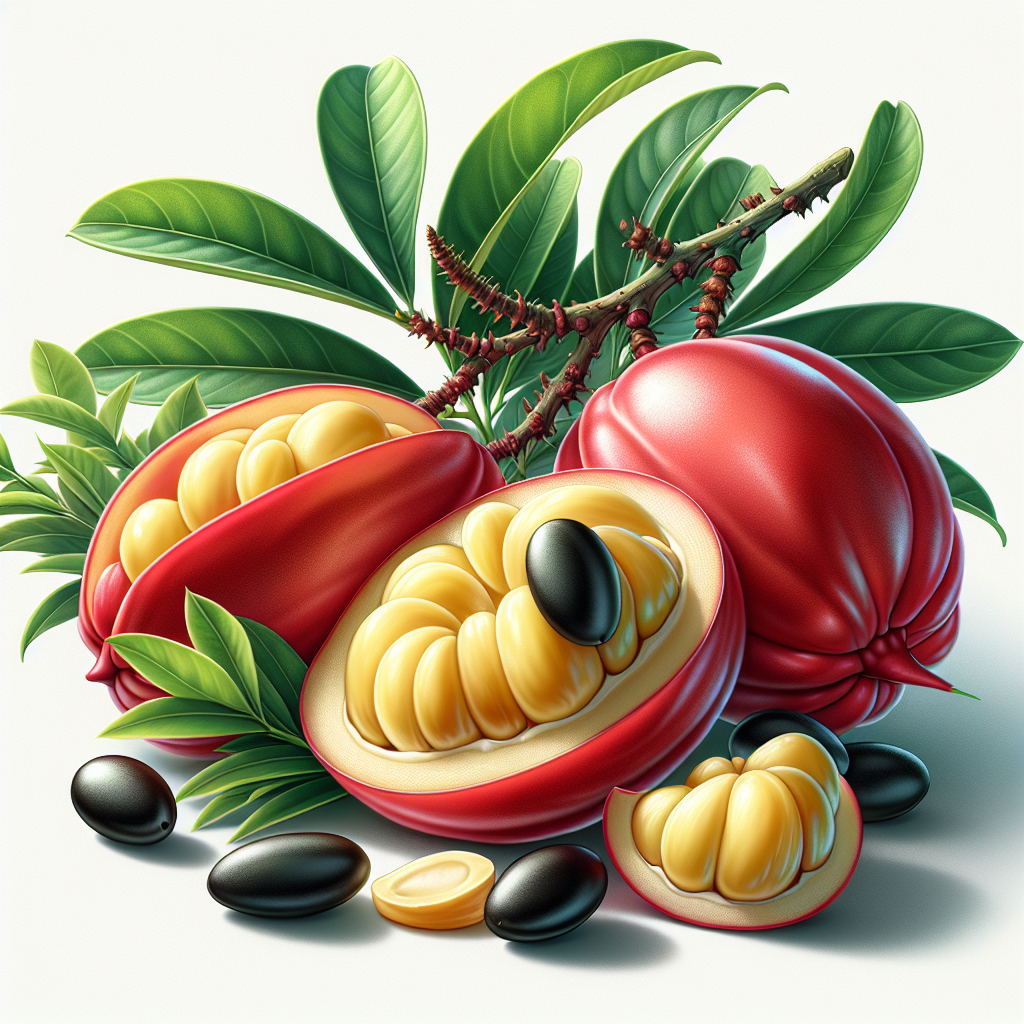
Ackee, scientifically known as Blighia sapida, stands as Jamaica's national fruit and a cornerstone of Caribbean cuisine, most famously paired with saltfish in the beloved breakfast dish ackee and saltfish. Native to West Africa, this evergreen tree was introduced to the West Indies in the late 18th century by Captain Bligh of HMS Bounty fame—hence its botanical name. The tree's vibrant red, pear-shaped fruits split open when ripe, revealing three glossy black seeds encased in creamy yellow arils that offer a delicate, buttery texture reminiscent of scrambled eggs with a subtle nutty flavor.
Growing ackee commercially or in home orchards demands expertise due to its specific tropical requirements and the fruit's toxicity when unripe—the unopened arils contain hypoglycin A, a potent toxin that can cause Jamaican vomiting sickness. However, with precise cultural practices, ackee trees can yield 200-400 fruits per season on mature specimens, making it a high-value crop for tropical farmers. This guide provides professional-grade advice on cultivation, from propagation to harvest, optimized for small farms and large plantations alike. Success hinges on climate mastery, soil optimization, and vigilant pest control, turning this finicky fruit into a profitable venture. For heat management strategies, see Why Summer Heatwaves Are Silently Killing Small Farm Yields - And 7 Organic Strategies to Fight Back.
Botanical Profile of Ackee (Blighia sapida)
Blighia sapida belongs to the Sapindaceae family, closely related to lychee and longan, sharing the characteristic compound leaves and capsular fruits. It is an evergreen tree growing 10-15 meters tall in natural settings, though dwarf varieties and pruning can limit it to 6-8 meters for easier harvesting. The tree boasts pinnate leaves 15-30 cm long with 5-11 leaflets, each 5-10 cm, glossy green above and slightly pubescent below.
Flowers are small, greenish-white, and borne in panicles up to 20 cm long, primarily dioecious (separate male and female trees), though some hermaphroditic cultivars exist. Pollination occurs via insects, with peak flowering in dry seasons. Fruits mature in 3-4 months, turning from green to bright red, splitting longitudinally into three segments to expose the edible arils and shiny black seeds. Each fruit weighs 30-100 grams, with arils comprising 30-40% of the mass.
Ackee exhibits cauliflory, producing fruit directly on older branches and trunks, a trait shared with mango trees. Root systems are deep and extensive, with a strong taproot, making transplanting challenging beyond sapling stage. Varieties include 'Blighia' (Jamaican standard), 'Cheese' (smaller fruits), and 'John Red' (prolific bearer). Nutrient-rich arils provide 155 kcal/100g, 15.5g fat, 2.5g protein, and vitamins B and C, but the seeds and pink aril base remain toxic.
Soil, pH, and Climate Requirements for Ackee (Blighia sapida)
Ackee demands well-drained, fertile loamy soils rich in organic matter, with sandy loams ideal for root penetration and aeration. Heavy clays lead to waterlogging and root rot, while poor drainage exacerbates Phytophthora infections. Optimal pH ranges 5.5-7.0; test soil annually and amend with lime for acidity below 5.5 or sulfur for alkalinity above 7.5. Incorporate 5-10 kg compost per planting hole to boost microbial activity and nutrient retention.
Climatically, ackee requires tropical lowland conditions: USDA zones 10-12, temperatures 22-32°C (72-90°F), with no frost tolerance—temps below 5°C cause leaf drop and dieback. Annual rainfall of 1200-2000 mm is essential, evenly distributed, though it withstands short dry spells via deep roots. High humidity (70-90%) aids fruit set, but prolonged drought stresses trees, reducing yields by 50%. Elevations up to 600m suit hill planting for better air circulation and reduced pest pressure. Windbreaks of guava or native shrubs protect young trees from trade winds. Mulch with 10-15 cm organic matter to conserve moisture and suppress weeds.
Step-by-Step Planting & Propagation
Propagation primarily uses fresh seeds, as ackee is recalcitrant and doesn't store well. Harvest ripe seeds from split pods, wash off aril residue, and sow within 24-48 hours in 50% sand-50% compost mix. Germination occurs in 2-4 weeks at 25-30°C; viability drops 50% after 7 days. For clonal propagation, air-layer mature branches in rainy season: girdle 5 cm wide, apply rooting hormone (IBA 5000 ppm), wrap in moist sphagnum moss and plastic, roots form in 8-12 weeks.
Planting: Select 1-2m seedlings, dig 60x60x60 cm holes, mix soil with 20 kg manure, 500g superphosphate, 200g potash. Space trees 8-10m apart (100-150 trees/ha) for canopy development. Plant at rainy season onset, stake for wind protection, irrigate deeply weekly until established (1-2 years). Grafted trees from superior cultivars like 'Negril' ensure female plants and earlier bearing (3-4 years vs. 5-7 for seedlings). Prune at planting to encourage bushy growth: remove top third, thin crowded branches annually.
Care & Maintenance regimes for Ackee (Blighia sapida)
Water young trees 50-100L weekly, reducing to biweekly for matures; deficit irrigation during flowering boosts aril quality. Fertilize 3-4 times yearly: NPK 10-20-20 at 1-2 kg/tree/year, split applications post-harvest, pre-flower, fruit set. Foliar sprays of micronutrients (Zn, B, Mn) prevent deficiencies causing leaf yellowing and poor fruit set. Mulch radially to 2m, refresh annually.
Prune post-harvest: remove deadwood, watersprouts, maintain open center for light penetration. Intercrop with legumes like pigeon pea years 1-3 for nitrogen fixation and income. Thin heavy fruit sets to 20-30 fruits/branch for larger arils. Monitor for nutrient imbalances: yellow leaves indicate N deficiency, apply urea; interveinal chlorosis signals Zn lack, use chelates.
Pests, Diseases & Organic Management
Common pests include aphids, scale insects, and fruit borers. Spray neem oil (2-5 ml/L) weekly for aphids; introduce ladybugs. For scales, prune infested branches, apply horticultural oil. Fruit flies target split pods—use protein baits and sanitation.
Diseases: Anthracnose causes fruit rot; apply copper fungicide pre-monsoon. Phytophthora root rot thrives in wet soils—improve drainage, drench with phosphonate. Powdery mildew managed with potassium bicarbonate sprays. For integrated pest management, see Why 90% of Small Farms Fail at Pest Management - And 8 Organic Fixes That Actually Work. Cultural controls: remove mummies, space properly, avoid overhead irrigation.
Harvesting, Curing & Optimal Storage
Harvest only fully split pods (90% open, arils yellow, seeds black)—unripe fruits are toxic. Pick by hand or pole, early morning to avoid heat stress. Yields peak years 7-20: 50-100 kg/tree. Process immediately: separate arils from seeds/pink membrane, blanch 2-3 min in boiling water to denature toxins, cool in ice water.
For market, pack arils in ventilated crates at 7-10°C, 90-95% RH; shelf life 7-14 days. Frozen: IQF arils last 12 months at -18°C. Curing unnecessary, but post-harvest dip in 500 ppm calcium hypochlorite extends vase life. Export standards demand <1% defectives, toxin-free certification.
Companion Planting for Ackee (Blighia sapida)
Ackee pairs well with nitrogen-fixers like cassava and pigeon pea for soil enrichment, shade-tolerant understory like ginger (ginger). Avoid water-hungry crops like banana competing for moisture. Marigolds (marigold) deter nematodes, thyme (thyme) repels aphids. Interplant yarrow (yarrow) for pollinator attraction, nasturtium (nasturtium) as trap crop. Legumes improve fertility; gliricidia (gliricidia) as green manure. Space companions 4-5m from trunk to prevent root competition.