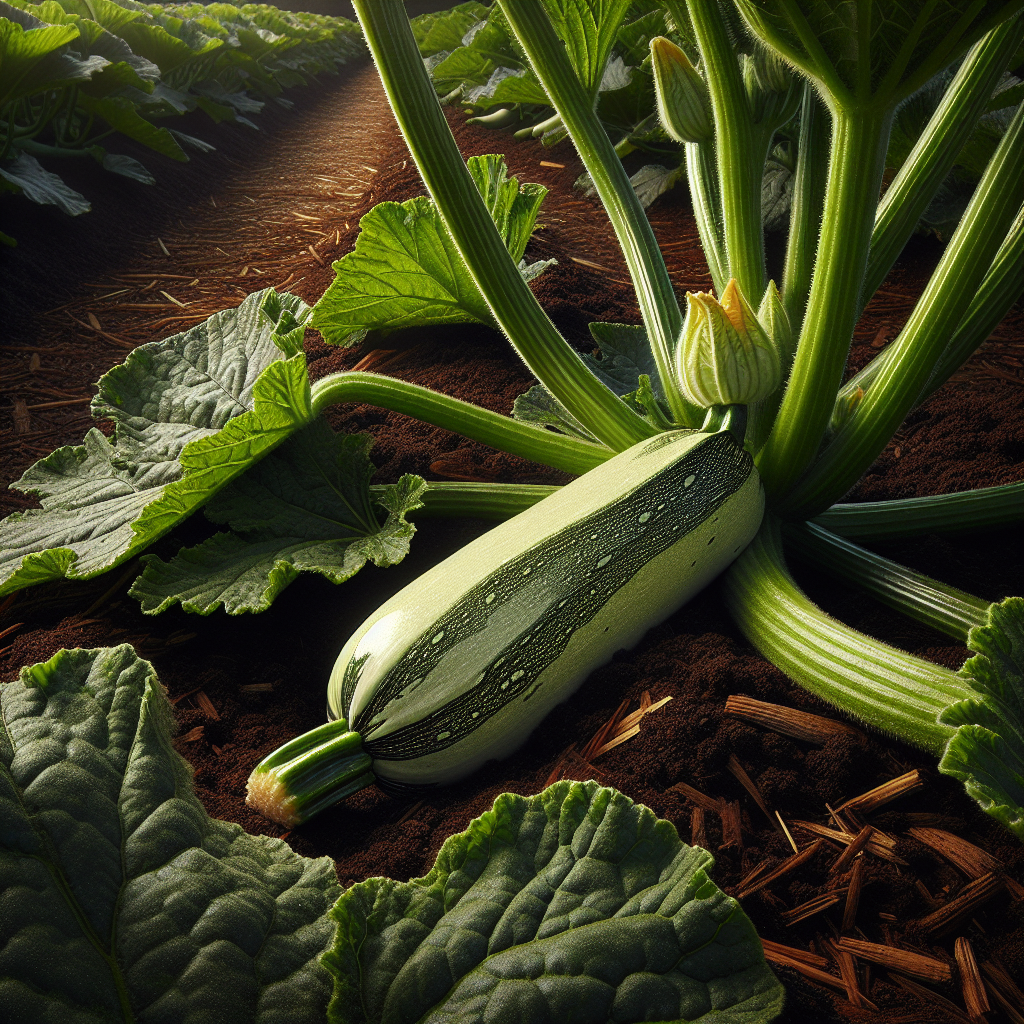
Introduction to Zucchini (Ronde de Nice)
An old Provençal heirloom from the Nice region of southern France, this variety stands apart from cylindrical zucchini because it produces small to medium round fruits with pale to medium green skin flecked or lightly mottled with lighter tones. It is often marketed as a “ball” zucchini, but its horticultural value goes beyond novelty. The plant is usually bush-forming to semi-bushy rather than aggressively vining, making it well suited to intensive kitchen gardens, raised beds, and small-scale market production where space efficiency matters.
Its best eating quality comes when fruits are harvested young, usually at tennis-ball to softball size, while the rind is still thin and the seed cavity only beginning to form. At that stage the flesh is dense yet tender, mildly sweet, and less watery than oversized standard zucchini. This makes it one of the premier stuffing squashes in Mediterranean cooking. In production terms, it behaves like other summer squashes: fast growing, heavy feeding, highly responsive to warmth, and dependent on strong pollinator activity for full fruit set.
Growers should treat it as a warm-season annual with a short path from sowing to first harvest, often 45 to 60 days under favorable conditions. Because it sets many female flowers over a long season, success depends on building vigorous early growth, avoiding transplant shock, and keeping the root zone evenly moist but never stagnant. For growers familiar with Squash, this cultivar follows many of the same principles, though its fruit form and premium culinary niche make harvest timing even more important.
Botanical Profile of Zucchini (Ronde de Nice)
This cultivar belongs to Cucurbita pepo, the highly diverse species that also includes many summer squashes, some pumpkins, vegetable marrows, and ornamental gourds. As with most zucchini types, it is frost-tender, monoecious, and insect-pollinated. Monoecious means the plant bears separate male and female flowers on the same plant. Male flowers appear first in most conditions, followed by female flowers that are recognizable by the miniature swollen ovary behind the petals.
The root system is relatively shallow but wide-spreading, with the majority of feeder roots concentrated in the top 20 to 30 cm of soil. This is one reason inconsistent irrigation quickly causes stress. Leaves are large, rough, lobed, and often prickly, with hollow petioles and a canopy broad enough to shade the soil when the plant is established. Some natural silver mottling on leaves can be mistaken for disease by inexperienced growers; this is normal in many zucchini lines and should not be confused with Powdery mildew.
Ronde de Nice typically shows a compact to open bush habit, though vigor varies by seed strain and growing conditions. Fruit shape is globular to slightly flattened, usually smooth-skinned and harvested immature. If left too long on the plant, fruits enlarge rapidly, skins harden, seeds become prominent, and the plant diverts energy away from continued flowering.
Flower biology is central to yield. Flowers open early in the morning and may remain viable for only a few hours under hot conditions. Poor pollination leads to misshapen fruit, yellowing baby fruit, or fruit abortion. Since cucurbits readily cross-pollinate within compatible C. pepo types, seed saving requires isolation if varietal purity matters.
Soil, pH, and Climate Requirements for Zucchini (Ronde de Nice)
This variety performs best in fertile, biologically active, well-drained loam with high organic matter and consistent moisture retention. Ideal pH is 6.2 to 7.0, though it will tolerate roughly 5.8 to 7.5 if fertility and drainage are otherwise strong. Below pH 5.8, nutrient availability becomes less balanced, especially calcium and magnesium, and root performance often declines. In alkaline soils above 7.5, iron and manganese deficiencies may appear as interveinal chlorosis on young leaves.
The best texture is a crumbly loam or sandy loam enriched with mature compost. Heavy clay can work if deeply amended and raised into broad beds, but cold, compacted, oxygen-poor ground greatly increases the risk of damping-off, root stress, and slow establishment. If water remains pooled longer than 12 to 24 hours after rain, drainage is inadequate for reliable production.
A target organic matter level of 4% to 6% is excellent for market-garden style production. Before planting, incorporate 5 to 8 cm of finished compost into the top 15 to 20 cm of soil. Avoid raw manure immediately before sowing because excess soluble nitrogen can cause lush, disease-prone growth and microbial instability around young roots.
Temperature is critical. Seed germinates best at 24 to 32°C soil temperature, with emergence often in 4 to 8 days in warm ground. Germination becomes slow and erratic below 18°C, and seedlings in cold soil are vulnerable to rot. Vegetative growth is strongest with daytime air temperatures around 22 to 30°C and nighttime temperatures above 13°C. Pollen viability and fruit set may drop during prolonged heat above 35°C, especially when nights remain hot.
This is fundamentally a temperate warm-season crop, though it also performs in Mediterranean and subtropical conditions during cooler warm-season windows. It needs full sun, ideally 8 or more hours daily. Partial shade reduces flowering, slows drying of foliage, and increases disease pressure.
Wind exposure matters more than many growers assume. Strong desiccating wind can shred leaves, reduce pollinator visits, and increase blossom drop. In exposed sites, low windbreaks or strategic interplanting around the patch help stabilize production.
Step-by-Step Planting & Propagation
Direct sowing is usually the best method because Cucurbita pepo dislikes root disturbance. Transplants can be used for an early start, but only if the root ball stays intact and plants are moved young.
Prepare the bed 1 to 2 weeks before planting. Remove perennial weeds, loosen soil to at least 20 cm, and incorporate compost plus a balanced organic fertility source. A pre-plant nutrient target for productive garden soil is moderate nitrogen, strong potassium, and adequate calcium.
Wait until frost danger has passed and soil temperature at 5 to 8 cm depth is consistently at least 18°C, preferably above 21°C in the morning.
For direct sowing, place seeds 2 to 3 cm deep. In row systems, space plants 75 to 100 cm apart with 120 to 180 cm between rows. In intensive beds, 90 cm between plants is usually sufficient for this round-fruited bush type, provided airflow is good.
Sow 2 to 3 seeds per station, then thin to the strongest seedling once the first true leaves expand. Thinning is better than transplanting extras because disturbed squash roots often stall.
If starting indoors, sow in 7.5 to 10 cm biodegradable or deep cell pots 2 to 3 weeks before transplanting. Maintain 24 to 29°C for germination and high light immediately after emergence. Transplant before roots circle the pot, ideally when plants have 1 to 2 true leaves.
Water the planting zone thoroughly after sowing. The soil should be moist to field capacity but not muddy. A useful practical test is that a squeezed handful of soil holds together lightly, then breaks apart with a tap.
Apply mulch once the soil has warmed and seedlings are established. Straw, shredded leaf mold, or clean untreated grass clippings can reduce splash-borne disease, suppress weeds, and stabilize moisture.
For succession planting, sow every 2 to 3 weeks through the favorable season rather than relying on one long planting. This reduces losses from pests and disease and maintains steady harvests. In regions with squash vine borer pressure, a later sowing after the first pest flight can outperform early plantings.
Growers aiming for season extension may find useful background in seed-starting timing from this winter sowing article, even though this crop itself still demands warm planting conditions.
Care & Maintenance regimes for Zucchini (Ronde de Nice)
Early vigor determines the whole crop. During the first 3 weeks after emergence or transplanting, protect plants from any growth check. Even brief cold shock, waterlogging, or root disturbance can delay flowering and reduce total yield.
Watering should be deep and even. Aim to keep the top 15 to 20 cm of soil consistently moist, not saturated. In practical terms, this means soil should feel cool and slightly damp at finger depth most days. Under active growth, plants generally need 25 to 40 mm of water per week, rising to 40 to 50 mm in hot weather or sandy soils. Drip irrigation is ideal.
Signs of underwatering include midday wilting that does not recover by evening, dull or grey-green foliage, slowed fruit expansion, and misshapen squash. Signs of overwatering include persistent morning wilt despite wet soil, yellow lower leaves, sour-smelling soil, edema-like blistering, and increased fungus gnat or disease activity. Zucchini often looks wilted in midday heat even when adequately watered; always check soil moisture before irrigating again.
Feed generously but not excessively. A side-dress of compost or a balanced organic fertilizer when plants begin vining or setting flower buds is beneficial. Once fruiting begins, potassium demand increases. If plants are dark green and leafy but produce few female flowers, nitrogen may be too high. If older leaves pale uniformly and growth is weak, a modest nitrogen side-dress may help.
Pollination management is often overlooked. Encourage bees by avoiding insecticide sprays during bloom and by planting nectar sources nearby such as Nasturtium and Sunflower. In periods of poor pollinator activity, hand-pollinate in the morning by transferring pollen from a freshly opened male flower to the center of a female flower.
Pruning is usually minimal, but strategic sanitation matters. Remove yellowing or diseased lower leaves to improve airflow, especially once the canopy closes. Never remove so many leaves that fruits become sun-scalded or the plant loses photosynthetic capacity.
Weed control should be shallow and early. Because feeder roots run near the surface, deep hoeing close to plants can do more harm than the weeds. Mulch is safer than repeated cultivation.
In containers, choose at least a 40 to 60 liter volume per plant, with excellent drainage and a nutrient-rich mix. Container-grown Ronde de Nice needs more frequent feeding and watering than in-ground plants, sometimes daily in peak summer.
Pests, Diseases & Organic Management
Common pests include Squash bugs, Cucumber beetles, Aphids, Spider mites, Slugs on young seedlings, and in some regions Squash vine borers. Cucumber beetles are particularly important because they not only feed on leaves and flowers but can vector bacterial wilt. Use row cover from planting until flowering to exclude early beetles, removing it when female flowers appear unless you plan to hand-pollinate.
Squash bugs cluster on leaf undersides and around stems. Their feeding causes stippling, yellowing, and eventual leaf collapse. Scout twice weekly, crush bronze egg masses on leaf undersides, and remove nymphs early before populations build. Clean crop residues after the season because adults overwinter in debris.
Aphids tend to colonize soft growth and undersides of leaves. Small outbreaks are often controlled by beneficial insects, but severe infestations distort leaves and promote sooty mold. A hard water spray or insecticidal soap applied in the evening can suppress them. Avoid overfertilizing with nitrogen, which encourages lush aphid-prone growth.
Powdery mildew is the most common foliar disease, especially from mid to late season when nights cool and humidity rises. It begins as white powdery patches on older leaves and can rapidly reduce vigor. Prevention includes wide spacing, watering at the base, full sun, and avoiding excess nitrogen. Sprays of potassium bicarbonate, sulfur where appropriate, or carefully used organic-approved biologicals can slow spread, but starting with good airflow is more reliable.
Downy mildew is less common but more destructive under humid, wet conditions. It typically appears as angular yellow lesions with grey-purple sporulation beneath leaves. Remove infected leaves promptly and avoid overhead irrigation.
Blossom end rot occasionally appears on zucchini, usually as a water-soaked dark patch on the blossom end. Although often associated with calcium, the root cause is usually inconsistent soil moisture reducing calcium transport. Stabilize watering rather than simply adding fertilizer.
Fruit abortion shortly after flowering is often pollination-related rather than disease-related. Tiny fruits yellowing and shriveling indicate incomplete pollination, cold weather, heat stress, or weak plant energy.
Crop rotation is essential. Do not grow cucurbits in the same soil more than once every 2 to 3 years if disease pressure is significant. This includes zucchini, pumpkins, cucumbers, melons, and many squashes.
Harvesting, Curing & Optimal Storage
Harvest begins when fruits are still immature, glossy, and tender. For the classic premium stage, pick at roughly 5 to 8 cm diameter, though some growers let them reach 8 to 12 cm for stuffing. The key is to harvest before the rind toughens and seeds enlarge. If you can easily pierce the skin with a fingernail, the fruit is at a good fresh-market stage.
Use a knife or pruners to cut fruit with a short stem attached rather than twisting aggressively, which can damage the plant. Harvest every 1 to 3 days in warm weather. Frequent picking stimulates continued flowering and prevents oversized fruit from diverting plant resources.
Male flowers are also edible and can be harvested early in the day, but do not remove too many if pollination is limited. Always leave enough male blooms to support fruit set.
Unlike winter squash, this summer squash is not cured for long-term storage. It has a thin, tender skin and high respiration rate. After harvest, field heat should be removed quickly by moving fruit into shade. Wash only if necessary; if washed, dry thoroughly before storage.
Optimal short-term storage is 7 to 10°C with 85% to 95% relative humidity. Below about 5°C, chilling injury can develop, causing pitting, watery flesh, and rapid breakdown after removal to room temperature. Under ideal conditions, expect 7 to 14 days of storage, though best eating quality is within the first week.
Do not stack deeply, because round fruits bruise easily where they contact one another. Use shallow crates with padding or smooth liners. Fruits with cuts, punctures, or blossom-end softness should be used immediately.
If the goal is seed saving, allow select fruits to mature fully on the plant until large, dull-skinned, and hard. Harvest before frost, after full physiological maturity, then extract and dry seeds thoroughly. Because of cross-pollination risk within C. pepo, isolate from other compatible squash types if purity matters.
Companion Planting for Zucchini (Ronde de Nice)
The best companions are those that either improve pollination, repel or distract pests, or make efficient use of adjacent space without smothering the zucchini canopy. Nasturtium is one of the most useful associates because it attracts pollinators, can function as a trap plant for Aphids, and sprawls in a way that shades bare soil. Sunflower helps draw pollinators and beneficial insects, though it should be placed where it will not cast excessive shade. Radish can be interplanted early as a quick crop before zucchini expands, and some growers use it as part of a strategy to confuse Cucumber beetles and other pests.
Alliums are also helpful around the perimeter. Onion does not compete heavily early on and can fit in border rows where the zucchini’s broad canopy leaves enough root-zone separation. Low-growing herbs and flowers can increase insect diversity while preserving airflow.
Avoid pairing with aggressively spreading cucurbits in the same tight bed, because overlapping canopies trap humidity and complicate scouting. Heavy feeders planted too close can also intensify nutrient and water competition. Good companion planting should make maintenance easier, not create a tangled pest reservoir.
In professional systems, companion planting is most successful when it is combined with sound spacing, crop rotation, mulch, and irrigation management rather than treated as a substitute for them.