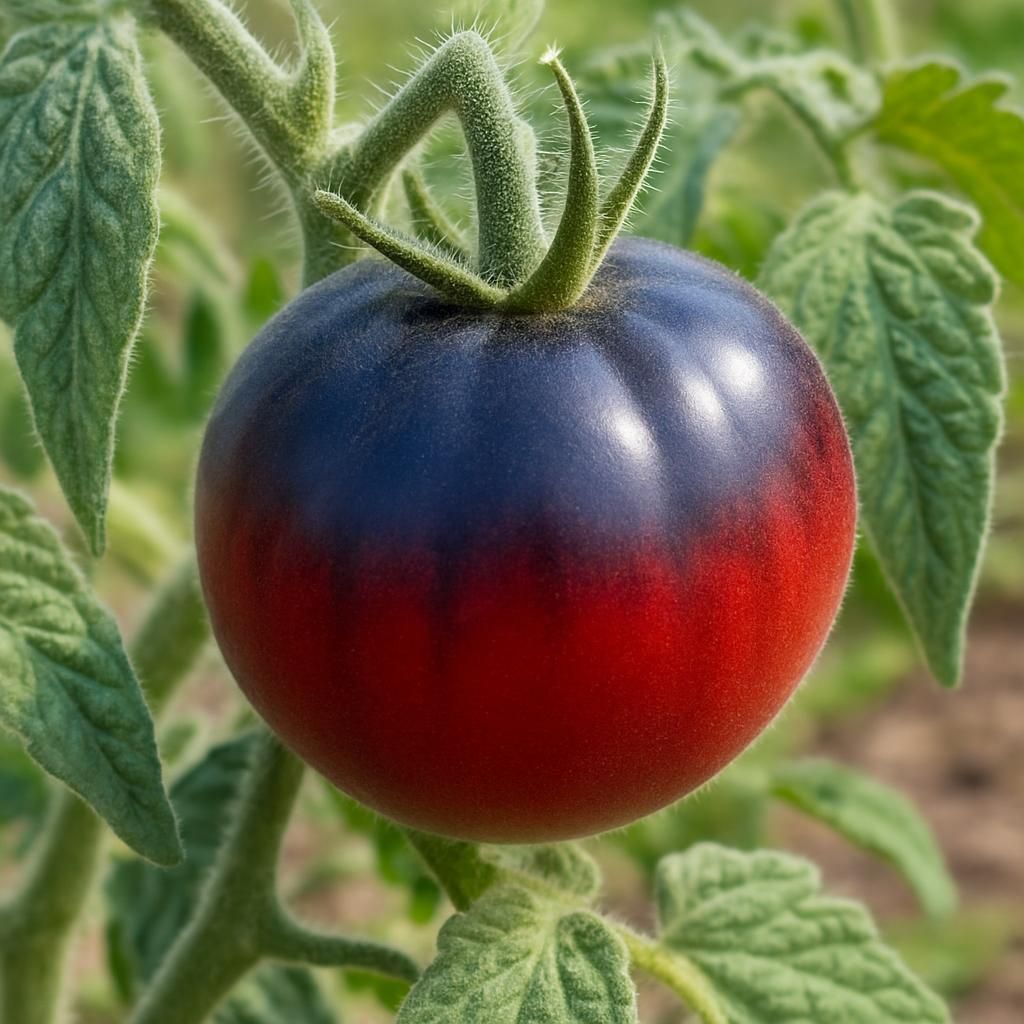
Introduction to Woolly Blue Jay Tomato
The Woolly Blue Jay Tomato stands out among modern heirloom varieties for its distinctive woolly, pubescent leaves and vibrant blue anthocyanin coloration on the shoulders of developing fruit. Originating from careful selection of anthocyanin-rich tomato lines crossed with traditional indeterminate types, this cultivar combines visual drama with reliable productivity. Gardeners seeking both ornamental interest and culinary excellence find the Woolly Blue Jay Tomato delivers firm, meaty fruits that ripen to a deep crimson with retained blue-green shoulders. Its vigorous vines perform well in both open-field and protected cultivation systems, making it suitable for a wide range of climates.
Botanical Profile of Woolly Blue Jay Tomato
The Woolly Blue Jay Tomato belongs to the nightshade family, Solanaceae, and exhibits classic indeterminate growth habit with strong apical dominance. Plants reach 5–7 feet in height when properly supported and produce compound leaves covered in dense glandular trichomes that create the signature woolly texture. Flowers are typical solanaceous yellow blooms appearing in clusters of 6–10. Fruits are oblate to slightly flattened, averaging 6–10 ounces at maturity, with thick walls and minimal locular gel. The blue coloration results from elevated anthocyanin expression triggered by light exposure, providing natural protection against sunscald and certain oxidative stresses.
Soil, pH, and Climate Requirements for Woolly Blue Jay Tomato
Successful cultivation begins with precise environmental matching. The following table summarizes the optimal growing conditions for Woolly Blue Jay Tomato production:
| Parameter | Ideal Range | Notes |
|---|---|---|
| Soil Type | Loamy, well-drained | Rich in organic matter; avoid heavy clays |
| Soil pH | 6.2–6.8 | Slightly acidic; test and amend annually |
| Temperature (Day) | 70–85°F (21–29°C) | Optimal fruit set occurs within this range |
| Temperature (Night) | 60–70°F (15–21°C) | Below 55°F reduces pollination success |
| Sunlight | Full sun, 8+ hours daily | Blue pigmentation intensifies with exposure |
| Spacing | 24–36 inches between plants | Rows 4–5 feet apart for airflow |
| Frost Sensitivity | Tender; protect below 50°F | Use row covers or high tunnels in cool seasons |
Step-by-Step Planting & Propagation
Start seeds indoors 6–8 weeks before the last expected frost date. Use sterile seed-starting mix and maintain soil temperature at 75–80°F for rapid germination (7–10 days). Transplant seedlings when they have 4–6 true leaves and outdoor soil has warmed to at least 60°F. Harden off plants over 7–10 days by gradually increasing outdoor exposure. Dig planting holes 12 inches deep and wide; incorporate 2–3 cups of well-aged compost per hole. Set transplants deep, burying the stem up to the first true leaves to encourage adventitious rooting. Install sturdy cages or trellis systems at planting time to support the vigorous indeterminate vines. Water thoroughly after transplanting and apply a light mulch layer to conserve moisture and suppress weeds.
Care & Maintenance regimes for Woolly Blue Jay Tomato
Consistent attention to water, nutrition, and canopy management ensures maximum yield and fruit quality. The following table outlines recommended schedules:
| Growth Stage | Watering Frequency | Fertilizer Application | Pruning Schedule |
|---|---|---|---|
| Seedling/Transplant | Keep evenly moist (daily light watering) | Low-nitrogen starter fertilizer at transplant | Remove lower leaves touching soil |
| Vegetative | 1–2 inches per week | Balanced 10-10-10 every 3 weeks | Suckering weekly; maintain 2–3 main stems |
| Flowering/Fruit Set | Deep watering 2–3× weekly | High-phosphorus bloom booster at first flowers | Continue suckering; thin interior foliage for light penetration |
| Ripening/Harvest | Reduce slightly to concentrate sugars | Side-dress with compost tea every 4 weeks | Remove diseased leaves promptly |
Mulch with 3–4 inches of organic material to moderate soil temperature and reduce blossom-end rot incidence. Monitor soil moisture with a simple finger test or tensiometer to avoid both drought stress and waterlogging.
Pests, Diseases & Organic Management
Woolly Blue Jay Tomato exhibits good resistance to many common tomato ailments, yet vigilance remains essential. Primary insect threats include Aphids, Spider Mites, and Hornworms. Deploy yellow sticky traps and introduce beneficial insects such as lady beetles and lacewings for biological control. For fungal concerns, practice strict crop rotation and avoid overhead irrigation to minimize Early Blight and Septoria Leaf Spot. Apply neem oil or Bacillus thuringiensis (Bt) sprays as needed for caterpillar management. Copper-based fungicides provide organic suppression of bacterial spot when applied preventively during humid periods.
Harvesting, Curing & Optimal Storage
Harvest Woolly Blue Jay Tomatoes when fruits reach full color with slight softening at the blossom end. Use pruning shears to clip stems rather than pulling to avoid plant damage. For long-term storage, pick mature-green fruits and ripen at 65–70°F in single layers. Fully ripe tomatoes store best at 55°F with 85–90% relative humidity for up to 10–14 days. Avoid refrigeration below 50°F, which causes flavor degradation and mealy texture. Excess harvest can be processed into sauces, dried, or frozen for winter use.
Companion Planting for Woolly Blue Jay Tomato
Strategic pairings enhance growth, deter pests, and improve flavor. Plant Basil nearby to repel Thrips and improve fruit taste through root exudates. Marigold and Nasturtium provide trap-crop functionality against nematodes and aphids. Carrot roots aerate soil while tomatoes offer light shade for carrot foliage. Avoid planting near Fennel or Walnut trees, whose allelopathic compounds inhibit tomato growth. Rotate tomatoes with Legumes or Brassicas in subsequent seasons to break disease cycles and replenish soil nitrogen.
For deeper guidance on harvest timing strategies that maximize market returns, consult The Overlooked Art of Seasonal Harvest Timing for Small Farm Profit.