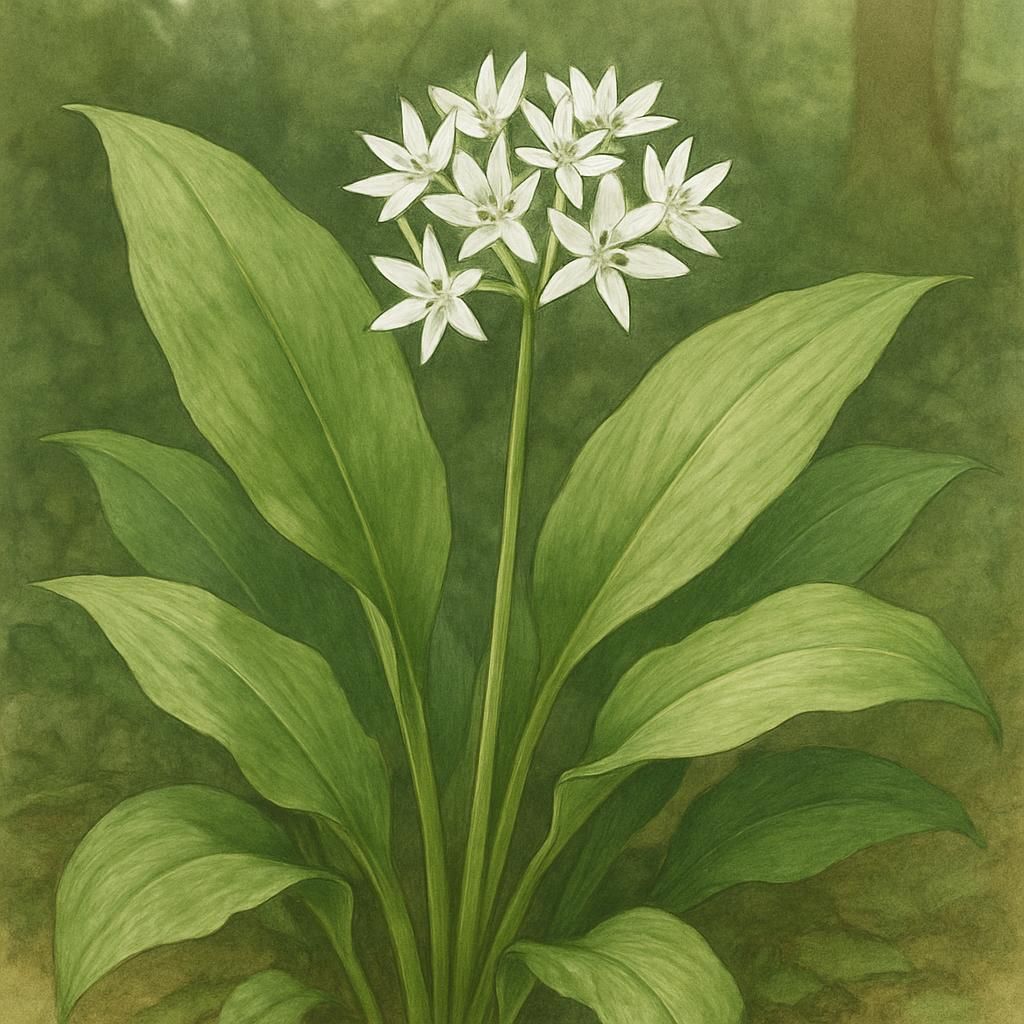
Introduction to Wild Garlic
Wild garlic (Allium ursinum) is a shade-loving perennial bulb native to European and Asian woodlands. It produces broad, lance-shaped leaves and star-shaped white flowers in spring, offering both culinary value and ornamental appeal. The plant spreads slowly via seed and underground bulbs, creating dense carpets in suitable conditions. Growers value its early harvest window and natural resistance to many common vegetable pests.
Botanical Profile of Wild Garlic
Allium ursinum belongs to the Amaryllidaceae family and is closely related to Garlic and Onion. It grows from small oval bulbs that produce a single pair of bright green leaves up to 30 cm long. In April–May the plant sends up a leafless flower stalk bearing an umbel of six-petaled white flowers. After flowering, the foliage dies back and the plant enters summer dormancy. The bulbs remain underground until the following spring.
Soil, pH, and Climate Requirements for Wild Garlic
Wild garlic thrives in moist, fertile woodland soils rich in organic matter. It prefers dappled shade to full shade and cool, humid climates. The following table summarizes ideal growing conditions:
| Parameter | Ideal Range | Notes |
|---|---|---|
| Soil Type | Loamy, humus-rich | High leaf-mould content improves drainage |
| Soil pH | 5.5 – 7.0 | Slightly acidic to neutral |
| Temperature | 5–20 °C (41–68 °F) | Cool spring growth; avoid heat stress |
| Moisture | Consistently moist | Never waterlogged; mulch retains humidity |
| Light | Partial to full shade | Mimics forest understory |
| Spacing | 10–15 cm between bulbs | Rows 20–30 cm apart |
Step-by-Step Planting & Propagation
- Choose a shaded site with deep, loose soil. Remove weeds and incorporate 5–8 cm of well-rotted leaf mould or compost.
- Plant bulbs or divide existing clumps in early autumn (September–October) or late winter (February–March) when soil is workable.
- Set bulbs 5–8 cm deep with the pointed end upward; space 10–15 cm apart.
- Water thoroughly after planting and apply a 5 cm mulch layer of shredded leaves or bark to conserve moisture.
- For seed propagation, sow fresh seed in autumn in trays or directly in situ; germination occurs the following spring. Seedlings take 2–3 years to reach flowering size.
Care & Maintenance regimes for Wild Garlic
Once established, wild garlic is low-maintenance but benefits from consistent moisture and annual organic feeding. The table below outlines seasonal care:
| Season | Watering | Fertilizer | Pruning / Other |
|---|---|---|---|
| Spring | Keep soil moist; 2–3 cm/week | Top-dress with compost or leaf mould | Remove spent flowers to limit seeding if desired |
| Summer | Minimal; allow natural dormancy | None required | Cut back yellowing foliage |
| Autumn | Light watering if dry | Apply 2–3 cm compost layer | Divide overcrowded clumps |
| Winter | Ensure drainage; avoid waterlogging | None | Mulch if severe frost expected |
Pests, Diseases & Organic Management
Wild garlic is relatively pest-resistant, but slugs, snails, and aphids may occasionally appear. Use beer traps or copper barriers for molluscs and encourage predatory beetles. Fungal leaf spots can occur in overly wet conditions; improve airflow and avoid overhead irrigation. Root rot is rare if drainage is adequate. Rotate planting sites every 4–5 years to prevent soil-borne issues.
Harvesting, Curing & Optimal Storage
Harvest leaves from March to May when they are bright green and 15–20 cm long. Cut individual leaves at the base, leaving the bulb to regrow. For bulbs, lift plants after flowering when foliage yellows; cure in a shaded, airy place for 3–5 days. Store cured bulbs in mesh bags at 5–10 °C with 60–70 % humidity for up to 4 months. Leaves can be refrigerated in damp paper for 5–7 days or frozen as pesto.
Companion Planting for Wild Garlic
Wild garlic pairs well with shade-tolerant crops such as Lettuce, Spinach, and Kale. Its sulfur compounds help deter carrot fly and other soil pests when planted near Carrot rows. Avoid planting near beans or peas, which may suffer reduced nodulation. Interplant with Thyme or Yarrow to further enhance beneficial insect habitat.