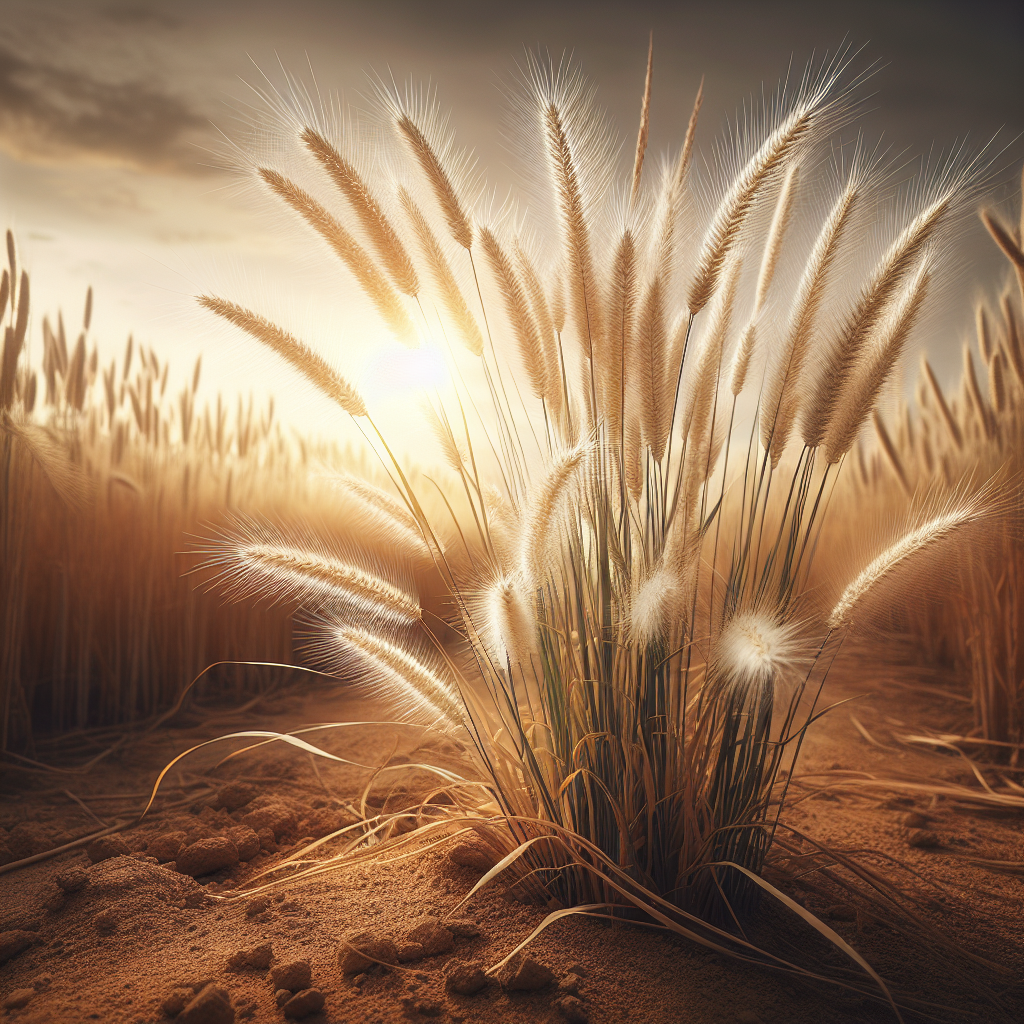
Introduction to White Fonio
Among the oldest domesticated cereals in Africa, this fine-seeded grain has been cultivated for centuries across the Sahel and surrounding regions, especially in countries such as Guinea, Mali, Senegal, and Burkina Faso. It is often prized not because it is the highest-yielding grain in absolute terms, but because it is one of the most reliable under marginal conditions: short rainy seasons, sandy soils, low fertility, and high heat.
White fonio is especially notable for its very rapid growth cycle. Depending on variety, rainfall, and management, it can mature in as little as 60 to 90 days, which gives farmers a strategic crop for hunger-gap periods, late planting windows, and regions with erratic rainfall onset. In traditional systems it is often the first grain harvested before longer-season staples are ready.
The crop is also nutritionally and culturally important. The tiny hulled grains cook quickly, are easy to digest, and are used for porridges, couscous-like dishes, steamed preparations, and flour blends. Agronomically, it fits into low-input systems and can help stabilize production in dryland rotations. For growers familiar with millet, its field behavior will feel broadly similar in terms of heat tolerance and dryland adaptation, but white fonio is even finer-seeded and generally more delicate during sowing and early stand establishment.
For a broader systems perspective on low-input cropping and building resilient ground before planting, see soil health strategies.
Botanical Profile of White Fonio
This species belongs to the Poaceae family, the grass family, and is classified botanically as Digitaria exilis. It is closely related to other Digitaria species, but unlike the common weedy crabgrasses familiar in many regions, it has been selected as a grain crop for compact maturity, seed retention sufficient for harvest, and food quality.
Plants are annual, tufted grasses with slender culms that usually reach about 30 to 80 cm tall under farm conditions, though height can vary with fertility, moisture, and sowing density. The root system is relatively shallow and fibrous, which partly explains both its ability to exploit light rainfall quickly and its sensitivity to prolonged waterlogging. Leaves are narrow, grass-like, and typically light to medium green. Tillering can be moderate to abundant when seed is not sown too densely and when early moisture is adequate.
The inflorescence consists of digitately arranged racemes, a hallmark of the genus Digitaria. These finger-like seed heads carry very small spikelets that mature into exceptionally tiny grains. White fonio grains are usually cream to pale ivory after processing, which is the source of the common name. The grain is enclosed in a hull, so post-harvest handling often includes careful threshing, winnowing, and dehusking.
Several practical crop characteristics matter to growers:
- It establishes best from a very shallow sowing depth because of its minute seed size.
- It competes poorly with weeds during its earliest stages.
- It tolerates low fertility better than many cereals, but still responds to modest nutrient improvement.
- It can lodge if heavily fertilized with nitrogen or exposed to storms late in the season.
- Grain shattering can become significant if harvest is delayed after full maturity.
Because local landraces dominate production in many areas, field populations can be variable in height, maturity date, and panicle density. Farmers selecting seed from the earliest, healthiest, least-shattering plants can gradually improve stand uniformity over time.
Soil, pH, and Climate Requirements for White Fonio
This crop performs best in warm, frost-free environments with a defined rainy season or access to light supplementary irrigation. It is fundamentally adapted to semi-arid and subhumid tropical conditions. Ideal average temperatures for establishment and active vegetative growth are roughly 25 to 32°C, although it can continue growing outside that band if moisture is available. Germination is strongest when soil temperatures are at least 20°C.
It is not a cold-season grain. Frost can kill seedlings outright, and prolonged cool conditions slow emergence, weaken tillering, and increase weed pressure. If growing outside tropical West African conditions, schedule planting only after the risk of chilling soil has passed.
Rainfall needs are modest compared with many staple cereals. In rainfed systems, about 250 to 600 mm of well-distributed seasonal rainfall can be sufficient, especially for short-duration landraces. The crop is drought tolerant in the sense that it can still set grain under lean conditions, but it is not drought-proof. The most moisture-sensitive stages are:
- Germination and emergence
- Early tillering
- Panicle initiation and grain filling
In practical terms, the soil should remain lightly moist during emergence, not saturated. A useful target is moisture comparable to a wrung-out sponge in the top 2 to 4 cm of soil. If the surface crusts hard after heavy rain, emergence may be poor because seedlings are weak and very fine. Conversely, if the seedbed stays wet enough that the topsoil smells sour, remains shiny, or forms sticky clods, oxygen stress can reduce emergence and promote Damping-off-like losses.
White fonio is famous for producing on poor soils, especially sandy, gravelly, or light loam soils with low organic matter. However, “tolerates poor soil” should not be confused with “prefers poor soil.” Best results come from well-drained, friable soils with moderate structure and low compaction. Heavy clays can work only if drainage is excellent and the field does not pond.
Recommended soil parameters:
- Texture: sandy loam to loam is ideal
- Drainage: rapid to moderate, never chronically waterlogged
- pH: about 5.0 to 6.8 preferred, though it can tolerate slightly more acidic conditions
- Organic matter: modest levels improve moisture buffering and nutrient retention
- Salinity: low; fonio is not a salt-loving cereal
Watch for these field signs of unsuitable moisture conditions:
- Overwatering or poor drainage: yellowing lower leaves, weak root anchorage, stunted tillers, algae or moss in bare patches, delayed maturity
- Underwatering at establishment: patchy emergence, red-purple stress tint in seedlings, sparse tillering, bare gaps in rows or broadcasting pattern
- Terminal drought at grain fill: shortened seed heads, low grain weight, early straw bleaching before seed is fully filled
Because the seed is tiny, a fine, level seedbed is especially important. Cloddy ground buries some seed too deeply while leaving other seed exposed, creating uneven stands and unnecessary re-seeding.
Step-by-Step Planting & Propagation
This crop is propagated by seed. Transplanting is not practical, and nursery raising is almost never justified because seedlings are too delicate and direct seeding is more efficient.
Select viable, clean seed. Use well-cleaned seed from a recent harvest with high purity and low inert material. Because seed is so small, contamination with sand, chaff, and weed seed is common. If possible, conduct a simple germination test before sowing. A germination percentage below about 75% should prompt a higher seeding rate or replacement seed.
Prepare a firm, fine seedbed. Plow or loosen compacted ground in advance, then harrow or rake until the top layer is fine and level. Avoid deep fluffy seedbeds; they dry too quickly and cause seed to sink unevenly. A lightly firmed surface is better than a loose one.
Time sowing with dependable moisture. In rainfed regions, sow at the beginning of the rainy season once enough rainfall has moistened the upper soil profile and follow-up rains are likely. Planting too early into one isolated storm can lead to germination followed by seedling death if the surface dries. Planting too late shortens the grain-filling period and may expose the crop to end-of-season drought.
Decide on broadcast or row planting. Broadcasting is common in traditional systems because the seed is tiny and quick to spread. However, row planting gives better weed control, easier field inspection, more uniform spacing, and often better yields.
Practical spacing options:
- Row spacing: 15 to 25 cm for intensive hand-weeded systems
- Wider rows: up to 30 cm where inter-row weeding tools are used
- In-row density: thin enough to avoid dense mats; exact plant spacing is less critical than even shallow distribution
Sow very shallowly. The ideal sowing depth is about 0.5 to 1 cm. Never bury deeply. Seed placed deeper than 1.5 cm often emerges poorly. After broadcasting, a very light raking, brush covering, or rolling is usually enough. The aim is seed-to-soil contact, not burial under a thick layer.
Use an appropriate seeding rate. Rates vary by seed quality and method, but typical ranges are roughly 8 to 20 kg/ha. Lower rates suit clean row sowing; higher rates are common for broadcasting or where germination is uncertain. Overly heavy seeding creates thin, weak tillers and can raise disease and lodging risks.
Protect the seedbed after sowing. Avoid heavy irrigation that puddles the surface. If irrigating, apply a gentle fine spray or light sheet flow sufficient to wet the top few centimeters without moving seed. Crusting after the first watering is one of the most common stand-establishment failures.
Inspect emergence early. Seedlings generally emerge quickly in warm soils, often within 3 to 7 days. If gaps appear, investigate whether Birds, seed wash, crusting, or deep placement caused the problem.
Care & Maintenance regimes for White Fonio
Although often described as a low-input crop, professional management can markedly improve stand uniformity, grain fill, and harvest efficiency.
Weed control is the single most important maintenance task in early growth. The crop is a weak competitor for the first few weeks, especially when broadcast. Keep the field as clean as possible during the first 20 to 35 days after emergence. One early weeding at 2 to 3 weeks and a second at 4 to 6 weeks is often enough to protect yield. After canopy closure or substantial tillering, fonio competes better.
Water management should be conservative but timely. In rainfed systems, supplemental irrigation is most valuable if dry spells occur:
- immediately after sowing until uniform emergence is secured
- during early tillering
- at panicle initiation and flowering
- during early grain fill
A practical target is to keep moisture available in the top 10 to 20 cm during establishment and the top 20 to 30 cm during active growth. Allowing the upper layer to dry slightly between irrigations is better than maintaining constant saturation. If footprints fill with water or soil remains tacky for more than a day after irrigation, the application was too heavy. Mature stands tolerate short dry intervals better than saturated roots.
Nutrient needs are modest, but balanced fertility improves performance. On very poor soils, incorporate compost or well-rotted manure before planting. As a guideline, 2 to 5 tons/ha of mature compost can improve tilth and water retention without overstimulating lush growth. If using mineral fertilizers, apply them sparingly. Excess nitrogen often causes soft, vegetative growth and lodging.
General fertility approach:
- Nitrogen: light split applications are safer than one heavy dose
- Phosphorus: useful at establishment, especially in depleted soils, because it supports root development
- Potassium: supports drought resilience and stem strength where deficient
If leaves are pale across the entire field and growth is slow despite adequate moisture, mild nitrogen deficiency may be present. If plants are dark green, tall, soft, and leaning, nitrogen is too high.
Thinning is rarely done in broad-acre systems, but in small plots or experimental production, reducing overly dense patches can improve tillering and grain head development. Dense mats tend to produce weaker stems and smaller panicles.
Lodging prevention matters most on fertile soils or after late storms. Avoid high nitrogen, do not over-irrigate after panicles emerge, and maintain moderate sowing density. Some growers lightly ridge or improve drainage channels in flat fields to prevent root-zone saturation during storms.
Because maturation can be uneven in landrace material, inspect fields frequently from heading onward. Waiting for every last panicle to dry can increase shattering losses from the earliest heads.
Pests, Diseases & Organic Management
White fonio is generally considered less disease-prone than many major cereals under low-input dryland conditions, but it is not immune to biotic stress. The most serious losses often come not from classic foliar disease epidemics but from weeds, Birds, harvest shattering, and occasional fungal problems in humid or poorly drained fields.
Common pest issues include:
Birds: Small granivorous Birds can be highly damaging as seed heads mature. Damage increases in small isolated plots where fonio is the only grain source. Use reflective tape, moving scare lines, netting for small plots, and synchronized community planting where possible to dilute pressure.
Grasshoppers and Leaf feeders: These may chew leaves during vegetative growth, but economic damage is usually limited unless infestations are severe and seedlings are small. Encourage field-edge biodiversity and avoid unmanaged weed reservoirs that shelter pests.
Storage insects: After harvest, tiny grain is vulnerable to contamination and feeding by common stored-product pests if not dried and sealed properly.
Potential disease issues include:
Seedling blights and Damping-off-like losses: Most likely in compact, crusted, overwatered, or contaminated seedbeds. Prevent with clean seed, shallow sowing, and good drainage.
Leaf spots: Usually minor in drier climates, but can appear under prolonged leaf wetness and dense stands. Improve airflow by avoiding excessive seeding rates and nitrogen excess.
Head molds or grain discoloration: More likely if rains persist close to maturity or if cut plants are left in wet windrows too long.
Organic management strategies:
- Start with clean seed and a stale seedbed if weeds are heavy.
- Rotate with legumes such as cowpea or chickpeas in suitable regions to reduce continuous cereal pressure and improve soil nitrogen.
- Maintain field sanitation by removing severe weed hosts and volunteer grasses around field margins.
- Use compost that is fully matured; immature manure can introduce weed seeds and create excess humidity at the soil surface.
- Encourage natural predators with field borders containing flowering plants such as sunflower when appropriate for the system.
- Harvest promptly to reduce bird and mold risk.
For small-scale organic systems, the most effective “pest management” for fonio is often agronomic precision rather than sprays: timely sowing, clean early weeding, proper density, and prompt harvest.
Harvesting, Curing & Optimal Storage
Harvest timing is critical because the grain is tiny and can shatter easily. The crop is typically ready when seed heads turn straw-colored to light brown, stems begin drying, and grains are firm rather than milky when pressed. However, waiting for absolute field uniformity can be costly. In many fields, the best compromise is to harvest when the majority of panicles are mature and before the earliest heads begin heavy shattering.
Signs of correct harvest stage:
- Most panicles have lost their green cast
- Seeds feel hard and formed
- Plants are drying but not yet so brittle that shaking causes major grain loss
- Morning dew reduces shattering during cutting
Harvest is usually done by sickle, knife, or careful hand cutting in smallholder systems. Early morning cutting is preferred because dew slightly dampens the heads and reduces grain drop. Plants may be tied in small bundles and stood upright or placed on clean tarps, mats, or raised drying surfaces.
Curing and drying must be done carefully. Do not heap green-cut material too thickly, as trapped heat and moisture can cause molding or discoloration. Instead:
- Spread thinly in a well-ventilated, sunny place
- Turn gently to ensure even drying
- Protect from unexpected rain and direct contact with bare soil
Threshing can be difficult because the grain is so small. Traditional methods include gentle beating, trampling on clean surfaces, or rubbing dried heads, followed by repeated winnowing. Mechanical threshing is possible, but equipment must be adjusted to avoid excessive grain loss.
Target moisture for storage is ideally around 10 to 12% or lower. If you bite a grain and it still dents easily, it is likely too moist. Properly dried grain should be hard, free-flowing, and not clump in the hand. Any warm, musty, or sour odor in stored grain suggests unsafe moisture.
For storage:
- Clean grain thoroughly after threshing and winnowing
- Remove chaff, weed seed, and broken material
- Use dry, insect-resistant containers such as sealed bins, lined sacks, or food-safe drums
- Store off the floor on pallets in a cool, dry, well-ventilated room
- Check monthly for condensation, insect dust, webbing, or off-odors
Because fonio grains are so small, even minor contamination reduces market value and processing efficiency. Clean handling surfaces and careful sieving greatly improve final quality.
Companion Planting for White Fonio
In traditional dryland systems, this grain is often grown in mixed or rotational fields rather than in intensive garden-style companion layouts. The best companions are usually plants that either improve soil fertility, occupy a different canopy layer, or help suppress erosion and weed pressure without overwhelming the young fonio stand.
The most practical companions are low- to medium-competition legumes. Black Eyed Peas are an especially useful partner in warm climates because they fix nitrogen, tolerate similar heat, and can be arranged on borders or in alternating strips rather than directly crowding the cereal. Peanuts are another strong option on sandy soils, where they share similar drainage preferences and contribute to diversified harvests. In some systems, Sunflower can be used sparingly on field edges as a windbreak marker and beneficial insect support plant, though it should not be planted densely within the stand because shading can reduce fonio performance. Chickpeas can fit in rotations or cooler shoulder seasons in suitable dry regions, but they are more often rotational companions than same-time intercrops.
Companion design principles for fonio:
- Keep tall companions on borders or in wide strips to prevent shading.
- Avoid aggressive spreading plants during the first month, when fonio seedlings are least competitive.
- Favor legumes that improve nitrogen economy without producing dense vine cover over the young crop.
- Use intercropping more cautiously in high-weed fields; pure stands are easier to weed during establishment.
Poor companion choices include heavy feeders, tall dense cereals planted too closely, and sprawling vines that smother seedlings. If intercropping, reduce fonio seeding density slightly and maintain clear planting geometry so weeding and harvest remain practical.
In professional dryland systems, rotation is often more beneficial than intimate interplanting. A sequence of fonio after a legume crop or after a weed-suppressive cover phase often produces cleaner stands and more efficient nutrient use than dense mixed sowings.