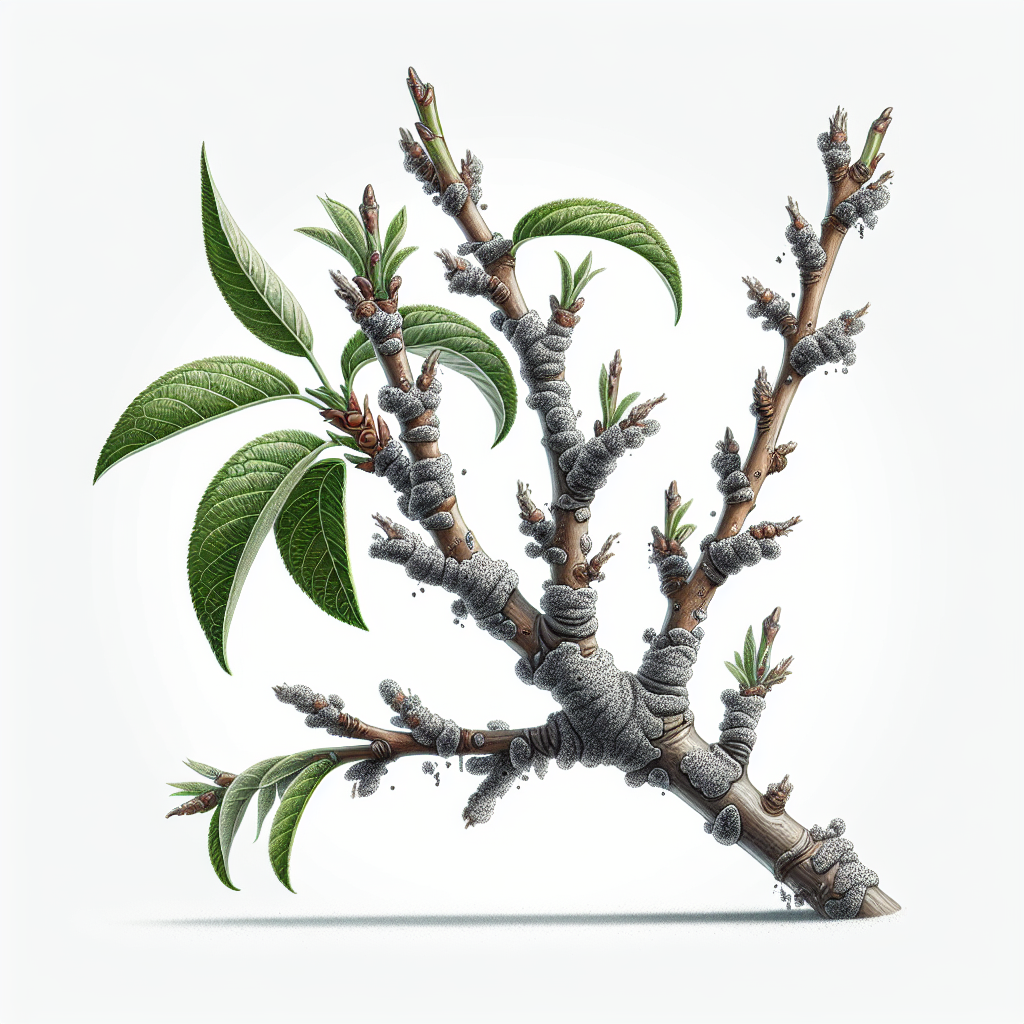
Introduction to Twig blights
Twig blights represent a group of destructive fungal diseases affecting the young shoots, buds, and twigs of fruit trees, shrubs, and woody ornamentals. Caused primarily by pathogens like Botrytis cinerea (gray mold), Phomopsis species, Sclerotinia sclerotiorum, and Monilinia spp., these diseases manifest as rapid blighting and canker formation, leading to twig dieback and reduced yields. In commercial orchards, twig blights can cause 20-50% losses in susceptible crops during favorable conditions, making them a critical concern for apple, peach, and cherry growers.
These blights often coincide with bloom or early fruit set, exacerbating damage by killing flower clusters and young shoots. Unlike leaf spots or root rots, twig blights target vascular tissues, girdling branches and interrupting nutrient flow. Understanding their pathology is essential for timely intervention. This guide provides diagnostic criteria, lifecycle insights, and proven organic strategies to protect your crops. For more on related fungal issues, see fungal blights.
Identifying Symptoms & Damage
Accurate identification is crucial for distinguishing twig blights from other issues like fire blight or mechanical injury. Initial symptoms appear as small, water-soaked lesions on young twigs, buds, or leaves, often following rain or dew periods. Within 24-48 hours, these lesions expand into brown to black necrotic areas with a blighted appearance, as if scorched by fire.
Key diagnostic features include:
- Twig discoloration: Twigs turn dark brown to black, starting at tips and progressing downward. Cankers form at the base of blighted sections, often with sunken, discolored bark.
- Bud and flower blight: Affected buds fail to open, turning black and shriveling. Blossoms wilt and hang limp, covered in fuzzy gray mycelium (especially Botrytis).
- Shoot dieback: Tips of new growth wilt, curl, and die, with leaves remaining attached (flag symptom). In advanced stages, entire branches girdle and die.
- Sporulation: Under humid conditions, white to gray powdery spores appear on blighted tissues, confirming fungal activity.
Damage assessment reveals yield impacts: blighted spurs reduce fruit set by up to 30% in peach orchards. Differentiate from bacterial blights by the absence of oozing gum or systemic wilting. Use a hand lens to spot mycelium or pycnidia (fruiting bodies). Early symptoms mimic frost damage, but progression during wet weather confirms twig blight. Photograph suspicious twigs for lab confirmation if needed.
Lifecycle and Progression of Twig blights
Twig blight pathogens are polycyclic, completing multiple infection cycles per season. Primary inoculum overwinters in mummified fruit, cankers, or infected debris as sclerotia, mycelium, or conidia. In spring, as temperatures rise above 10°C (50°F) with moisture, spores release and splash onto new growth.
Lifecycle stages:
- Dormancy: Pathogens survive winter in blighted twigs, fallen leaves, or soil.
- Spore production: Wet springs trigger conidia formation on old lesions.
- Infection: Spores germinate on wounds, buds, or succulent tissues in 6-12 hours at 15-25°C (59-77°F).
- Colonization: Mycelium invades vascular tissues, causing girdling.
- Secondary spread: New lesions produce spores, repeating cycles every 7-14 days during wet periods.
Progression accelerates post-bloom: infections start at tips, advance 5-10 cm/week. By summer, cankers harden, serving as future inoculum. In cherry trees, Monilinia progresses from blossoms to twigs, causing shot-hole symptoms from fungal enzymes dissolving tissues. Lifecycle ties to host phenology—pruning wounds are prime entry points.
Environmental Triggers & Risk Factors
Twig blights flourish in cool, humid climates with prolonged leaf wetness (>12 hours). Optimal conditions: 15-22°C (59-72°F), relative humidity >90%, and rainfall >25 mm/week. Overhead irrigation or dense canopies exacerbate issues by extending wetness periods.
Key risk factors:
- Prolonged moisture: Foggy valleys or coastal areas see epidemics.
- Susceptible varieties: Thin-barked cultivars like young peach or plum trees.
- Poor air circulation: Crowded plantings trap humidity.
- Wound entry: Pruning, frost cracks, or aphids damage invite infection.
- Weed cover: Increases humidity and harbors inoculum.
Soil type influences indirectly—poor drainage stresses trees, reducing resistance. Monitor with weather stations; disease models predict outbreaks when wetness hours accumulate. Regions like the Pacific Northwest report annual outbreaks in pear due to these triggers. For prevention tips, check this Spring Pest Patrol blog.
Organic Control & Treatment Plans
Organic management emphasizes sanitation, cultural practices, and biocontrols over synthetic fungicides. Integrated plans yield 80-90% control in orchards.
Immediate response:
- Prune infected parts: Remove blighted twigs 10-15 cm below symptoms during dry weather; destroy debris.
- Improve airflow: Thin canopy to 50-70% light penetration.
Organic treatments:
- Copper-based sprays: Apply Bordeaux mixture or fixed copper at bud swell and pre-bloom (OMRI-listed). Limit to 3 apps/season to avoid phytotoxicity.
- Bicarbonates: Potassium bicarbonate (e.g., MilStop) suppresses sporulation; apply every 7-10 days during high risk.
- Bacillus subtilis: Biofungicide (Serenade) competes with pathogens; tank-mix with hort oil for efficacy.
- Neem oil: Disrupts spore germination; foliar spray post-rain.
- Compost teas: Aerated compost extracts boost plant immunity.
Monitoring & timing: Scout weekly; use sticky traps for spore counts. Rotate products to prevent resistance. In cherry trials, copper + sanitation reduced blight by 75%. Avoid late-season sprays to protect pollinators.
Preventing Twig blights in the Future
Prevention focuses on reducing inoculum and host susceptibility. Start with resistant rootstocks and certified disease-free nursery stock for apple and stone fruits.
Long-term strategies:
- Sanitation: Rake and destroy debris annually; mulch to bury sclerotia.
- Resistant varieties: Plant blight-tolerant cultivars like 'Honeycrisp' apple.
- Cultural practices: Space trees 4-6 m apart; avoid excess nitrogen.
- Irrigation: Drip systems minimize wetting.
- Biologicals: Trichoderma applications to soil suppress soilborne phases.
- Timing prunes: Late winter/early spring when dry.
Annual programs include dormant copper sprays and summer monitoring. Crop rotation isn't feasible for perennials, but cover crops like clover improve soil health. Track via apps for hyper-local forecasts. Consistent prevention cuts outbreaks by 90%.
Crops Most Affected by Twig blights
Twig blights strike woody perennials worldwide, with stone fruits most vulnerable. Top affected:
| Crop | Key Pathogen | Impact |
|---|---|---|
| Peach | Monilinia spp. | 30-50% yield loss |
| Cherry | Botrytis, Monilinia | Blossom/twig death |
| Apple | Phomopsis | Spur blight |
| Plum | Sclerotinia | Canker formation |
| Pear | Botrytis | Shoot dieback |
Other hosts: blueberry, raspberry, grapes. Young orchards suffer most; mature trees gain resistance via callusing. Global losses exceed $100M yearly. See Phomopsis blight and fruit rot for specifics.