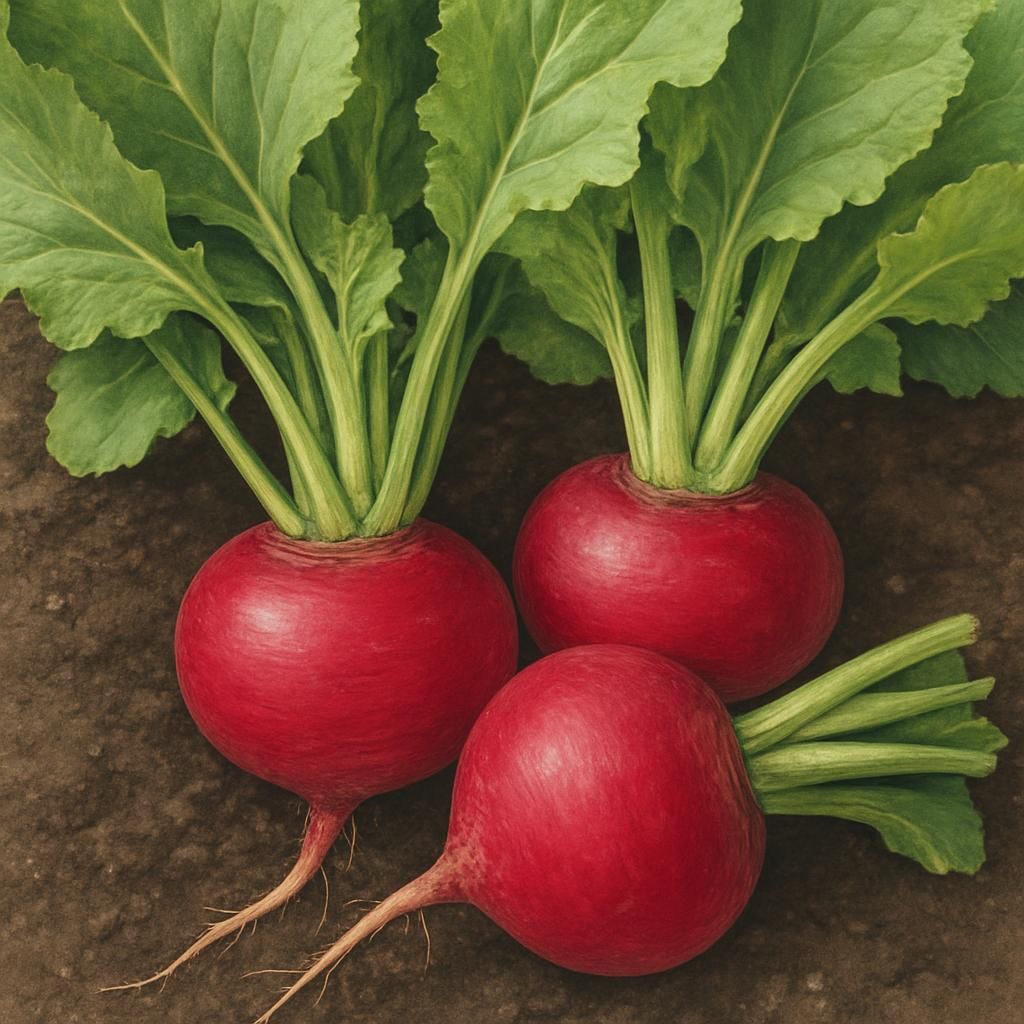
Introduction to Turnip (Scarlet Ohno)
Turnip (Scarlet Ohno) is a fast-maturing, cool-season root vegetable belonging to the Brassicaceae family. Its brilliant scarlet-red skin contrasts beautifully with its crisp white interior, delivering a mildly sweet flavor that intensifies when grown in cooler temperatures. Both the roots and the leafy tops are edible, making this variety a dual-purpose crop valued by home gardeners and market farmers alike.
This heirloom-type turnip is particularly popular among organic growers because of its reliable performance in diverse soil types and its resistance to many common brassica pests when grown with proper cultural practices. Scarlet Ohno typically reaches harvestable size in 45–60 days, allowing for multiple successions in a single season. Its compact growth habit also suits raised beds and container culture.
Botanical Profile of Turnip (Scarlet Ohno)
Turnip (Scarlet Ohno) produces a swollen hypocotyl-root that develops just below the soil surface. The skin is smooth and thin with a vivid scarlet hue, while the flesh remains firm, white, and low in fiber when harvested at peak maturity. The plant forms a rosette of deeply lobed, glaucous green leaves that can reach 12–18 inches in height.
As a biennial, Turnip (Scarlet Ohno) normally flowers in its second year, producing yellow, four-petaled blossoms typical of the mustard family. Seed production requires vernalization and isolation from other brassicas to maintain varietal purity. The crop is self-incompatible and requires insect pollinators for good seed set.
Soil, pH, and Climate Requirements for Turnip (Scarlet Ohno)
Turnip (Scarlet Ohno) thrives in fertile, well-drained loam or sandy loam soils. Heavy clay soils should be amended with organic matter to improve drainage and prevent root forking. Consistent moisture and cool temperatures between 50–65 °F (10–18 °C) produce the sweetest, most tender roots.
| Parameter | Ideal Range | Notes |
|---|---|---|
| Soil Type | Loam, sandy loam | Avoid compacted or waterlogged soils |
| Soil pH | 6.0–7.0 | Slightly acidic to neutral |
| Temperature (Day) | 55–65 °F (13–18 °C) | Optimal for root sweetness |
| Temperature (Night) | 45–55 °F (7–13 °C) | Prevents bolting |
| Spacing (In-row) | 2–4 inches | Thinning improves root size |
| Spacing (Between Rows) | 12–18 inches | Allows air circulation |
| Sun Exposure | Full sun (6+ hours) | Partial shade acceptable in warm climates |
Step-by-Step Planting & Propagation
- Sow seeds directly outdoors 2–4 weeks before the last spring frost or 6–8 weeks before the first fall frost. Soil temperature should be at least 45 °F (7 °C).
- Prepare beds by incorporating 2–3 inches of well-rotted compost or aged manure. Rake to a fine tilth.
- Sow seeds ½ inch deep and 1 inch apart in rows 12–18 inches apart. Keep soil evenly moist until germination (5–10 days).
- Thin seedlings to 2–4 inches apart once they reach 2 inches tall. Use thinnings as microgreens or in salads.
- For continuous harvest, sow every 2–3 weeks until 6 weeks before the first hard frost.
Care & Maintenance regimes for Turnip (Scarlet Ohno)
Consistent moisture and balanced nutrition are critical for crisp, non-bitter roots. Mulch with 2–3 inches of straw or shredded leaves to retain moisture and suppress weeds. Avoid high-nitrogen fertilizers after root formation begins.
| Task | Schedule | Details |
|---|---|---|
| Watering | 1 inch per week; more in heat | Keep soil evenly moist; avoid water stress |
| Fertilizer | Pre-plant: 5-10-10 at 2 lbs/100 ft² | Side-dress with compost tea at 3 weeks |
| Pruning | Remove lower leaves if diseased | Improves airflow; do not remove >25% foliage |
Pests, Diseases & Organic Management
Common pests include flea beetles, cutworms, and root-knot nematodes. Row covers deployed at planting provide excellent protection against flea beetles. Handpick cutworms at dusk and apply beneficial nematodes for soil-dwelling larvae.
Diseases such as clubroot, Alternaria leaf spot, and downy mildew can affect turnips. Practice 3–4 year crop rotations, maintain soil pH above 6.8 to suppress clubroot, and remove infected foliage promptly. Copper-based sprays offer limited organic control for bacterial and fungal leaf spots.
Harvesting, Curing & Optimal Storage
Harvest Scarlet Ohno turnips when roots reach 2–3 inches in diameter for best flavor and texture. Pull gently or use a garden fork to loosen soil. Cut tops 1 inch above the crown and rinse soil from roots.
Store unwashed roots in perforated plastic bags in the refrigerator crisper for up to 3 weeks. For longer storage, pack in damp sand or sawdust in a root cellar at 32–40 °F (0–4 °C) with 90–95% humidity. Greens may be stored separately for 4–5 days.
Companion Planting for Turnip (Scarlet Ohno)
Turnip (Scarlet Ohno) benefits from companions such as onion, garlic, and nasturtium which deter flea beetles and aphids. Avoid planting near other brassicas to reduce shared pest and disease pressure. Interplant with lettuce or radish for efficient space use and staggered harvests.