Introduction to Turnip (Gilfeather)
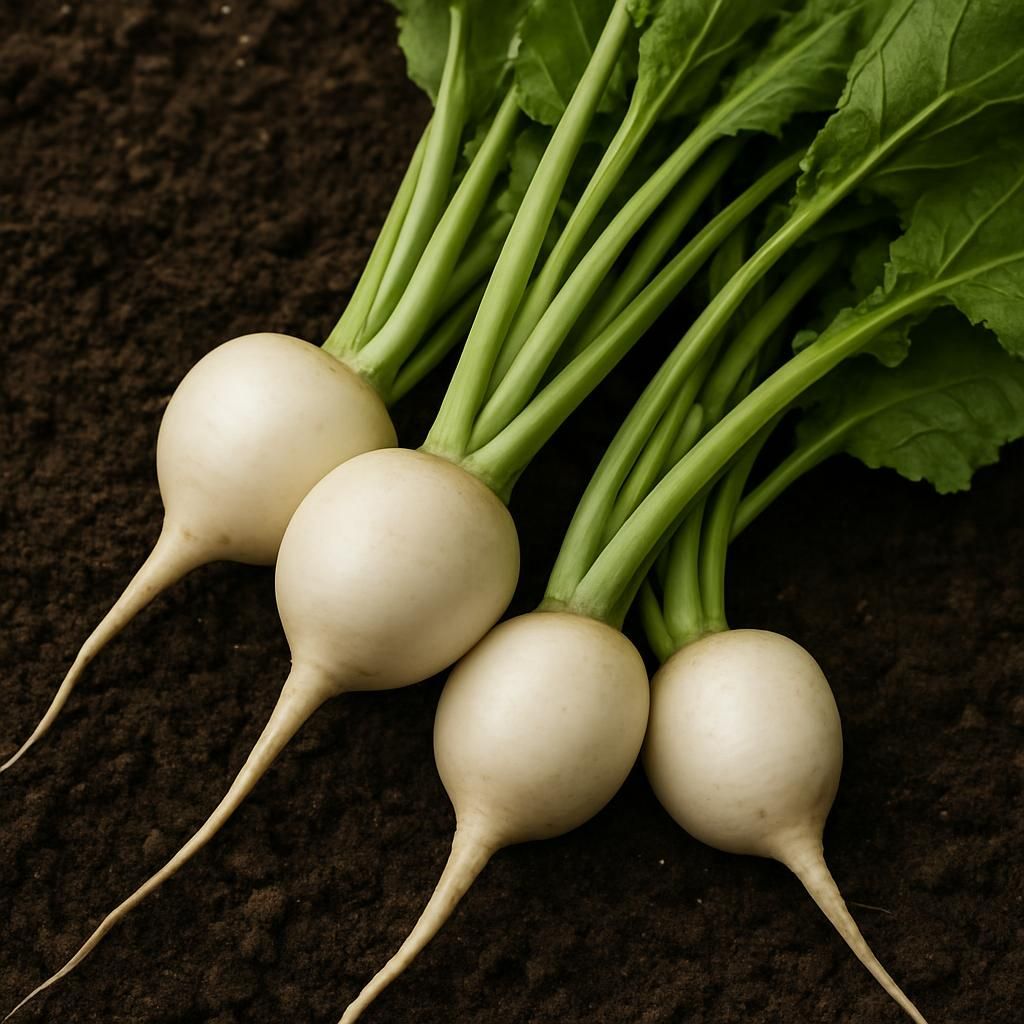
Gilfeather turnip is a rare, open-pollinated heirloom variety developed in the late 19th century in Wardsboro, Vermont. Known for its creamy white, globe-shaped roots that remain mild and sweet even after frost, this variety stands out among other Turnip (crop) types. Growers value both the crisp roots and the nutrient-dense greens, making it a dual-purpose crop for home gardens and small farms.
The variety gained recognition for its cold hardiness and ability to store well through winter. Unlike many turnips that develop a strong bite when mature, Gilfeather maintains a delicate flavor profile, earning it a place in Slow Food’s Ark of Taste. Its popularity has grown among organic farmers seeking resilient, regionally adapted brassicas.
This comprehensive guide covers every stage of production, from soil preparation to post-harvest handling, with data-driven recommendations for maximizing quality and yield.
Botanical Profile of Turnip (Gilfeather)
Gilfeather turnip belongs to the Brassicaceae family. It forms a swollen hypocotyl that develops into a smooth, white, globe-shaped root typically reaching 3–5 inches in diameter. The skin is thin and parchment-like, while the flesh is dense, juicy, and low in fiber.
Above ground, the plant produces a rosette of deeply lobed, dark green leaves that are tender enough for fresh salads when young. Flowering occurs in the second year if plants are overwintered; the yellow, four-petaled flowers are attractive to pollinators.
The root’s high sugar content increases after exposure to temperatures below 50°F (10°C), a physiological response that improves eating quality. This makes Gilfeather particularly suited to northern climates with distinct seasonal temperature swings.
Soil, pH, and Climate Requirements for Turnip (Gilfeather) (MUST INCLUDE A MARKDOWN TABLE OF IDEAL CONDITIONS)
Gilfeather turnip performs best in loose, fertile, well-drained soils. Heavy clay or compacted ground leads to misshapen roots and increased disease pressure. Organic matter content should be maintained at 3–5% for optimal moisture retention and nutrient availability.
The crop prefers a cool-season climate with daytime temperatures of 55–70°F (13–21°C). It tolerates light frosts and can be grown as a spring or fall crop. Excessive heat causes bolting and pithy roots.
| Parameter | Ideal Range | Notes |
|---|---|---|
| Soil pH | 6.0–7.0 | Slightly acidic to neutral; avoid below 5.8 |
| Soil Type | Loamy, well-drained | Sandy loam preferred; incorporate compost |
| Organic Matter | 3–5% | Maintain with annual additions of compost |
| Temperature (Day) | 55–70°F (13–21°C) | Optimal for root development |
| Temperature (Night) | 40–55°F (4–13°C) | Promotes sweetness after frost |
| Spacing (In-row) | 4–6 inches | Allows room for globe development |
| Row Spacing | 12–18 inches | Facilitates air circulation |
| Full Sun Requirement | 6–8 hours daily | Essential for rapid vegetative growth |
Step-by-Step Planting & Propagation
Gilfeather turnip is direct-seeded. Begin by preparing a fine seedbed free of large clods. Sow seeds ¼–½ inch deep in moist soil. For spring crops, plant 2–4 weeks before the last frost; for fall crops, sow 60–70 days before the first expected frost.
Thin seedlings to 4–6 inches apart once they reach 2 inches tall. Overcrowding leads to small or deformed roots. Maintain consistent moisture during germination—typically 5–10 days at 55–65°F (13–18°C).
Succession planting every 2–3 weeks extends the harvest window. In warmer regions, use shade cloth during peak summer to prevent bolting. Seed can be saved from plants allowed to flower in year two, though isolation from other brassicas is required to maintain purity.
Care & Maintenance regimes for Turnip (Gilfeather) (MUST INCLUDE A MARKDOWN TABLE OF WATER, FERTILIZER, AND PRUNING SCHEDULES)
Consistent moisture and balanced fertility are critical. Gilfeather responds well to side-dressing with nitrogen early in growth, followed by potassium-rich amendments as roots swell. Avoid excess nitrogen after root initiation to prevent leafy growth at the expense of storage organs.
Weed control is essential during the first 30 days. Use shallow cultivation or mulch to suppress competition. Hand-weeding near plants prevents root damage.
| Growth Stage | Water Schedule | Fertilizer Application | Pruning/Thinning Notes |
|---|---|---|---|
| Germination (0–14 days) | Keep top 1 inch moist; light daily watering | None; rely on pre-plant compost | Thin to 2 inches when 2 true leaves appear |
| Vegetative (15–35 days) | 1–1.5 inches per week; even moisture | Side-dress with ½ cup blood meal per 10 ft row | Thin to final 4–6 inch spacing |
| Root Bulking (36–60 days) | 1 inch per week; reduce slightly 2 weeks before harvest | Apply ½ cup sulfate of potash per 10 ft row | Remove any yellowing lower leaves |
| Pre-Harvest (last 10 days) | Maintain light moisture; avoid waterlogging | No additional fertilizer | No pruning required |
Pests, Diseases & Organic Management
Common pests include flea beetles, cutworms, and aphids. Floating row covers provide excellent protection during early growth. For flea beetles, interplant with Nasturtium (crop) or apply kaolin clay as a deterrent.
Diseases such as clubroot, downy mildew, and Alternaria leaf spot can affect brassicas. Practice 3–4 year crop rotations and maintain soil pH above 6.8 to suppress clubroot. Remove and destroy infected foliage promptly.
Organic controls include neem oil for aphids, Bacillus thuringiensis for caterpillars, and beneficial nematodes for soil-dwelling larvae. Companion planting with Garlic (crop) and Onion (crop) helps repel pests naturally.
Harvesting, Curing & Optimal Storage
Gilfeather turnips reach maturity in 55–70 days. Harvest when roots are 3–5 inches in diameter for peak sweetness and tenderness. Pull gently or use a digging fork to avoid bruising.
Remove tops, leaving ½ inch of stem, and brush off soil. Roots store best at 32–38°F (0–3°C) with 90–95% relative humidity. In root cellars, layer in damp sand or sawdust for winter storage up to 4–6 months.
Greens can be harvested separately throughout the season or at final root harvest. Young leaves are excellent raw; mature greens benefit from light steaming or sautéing.
Companion Planting for Turnip (Gilfeather)
Gilfeather turnip grows well alongside Peas (crop), Lettuce (crop), and Onion (crop). These companions improve soil nitrogen, provide shade, or deter pests. Avoid planting near other brassicas to reduce disease buildup.
Marigold (crop) and Nasturtium (crop) serve as trap crops for aphids and flea beetles. Aromatic herbs such as Rosemary (crop) and Thyme (crop) further discourage insect pressure.
For fall plantings, pair with Clover (crop) as a living mulch to protect soil structure and suppress weeds. Rotate away from brassica beds for at least three seasons to maintain long-term soil health.