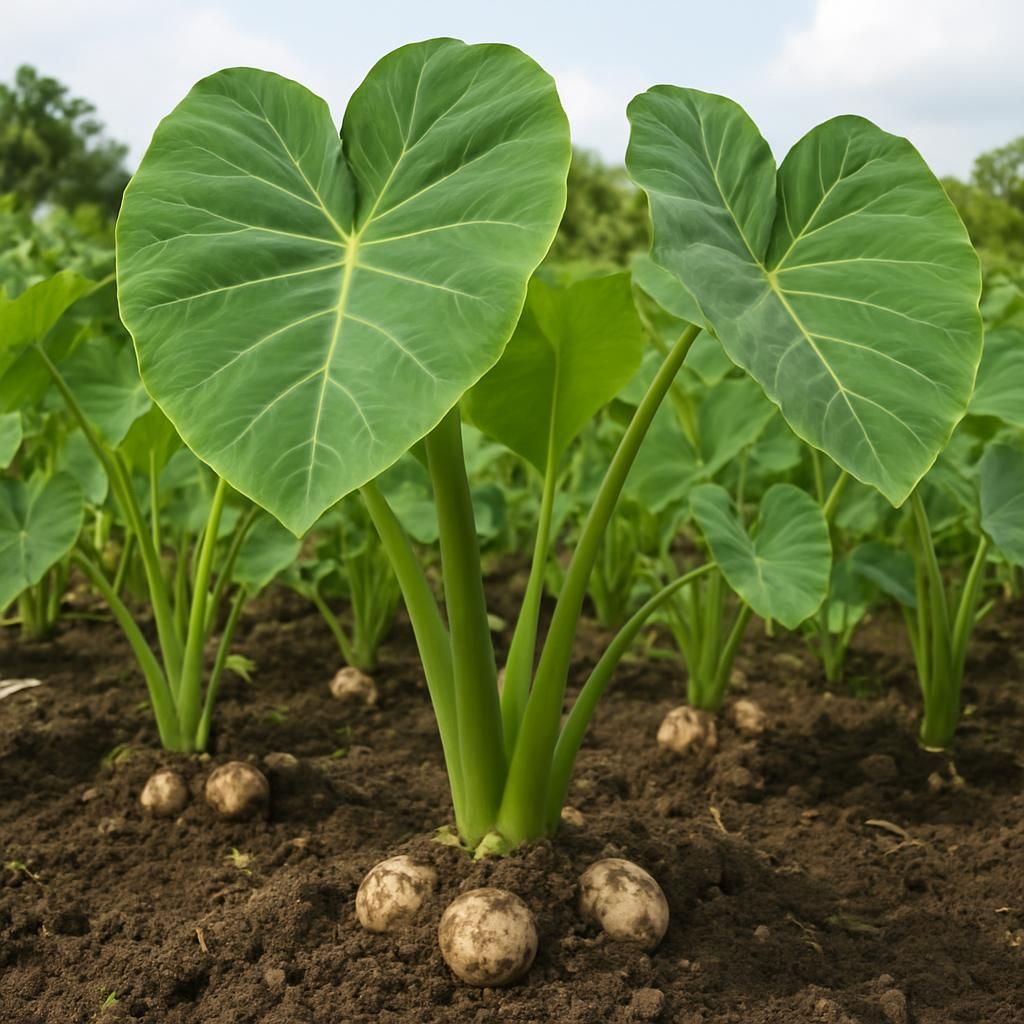
Introduction to Taro (Eddoe)
Taro (Eddoe), scientifically known as Colocasia esculenta var. antiquorum, is a staple root crop prized across tropical and subtropical regions for its starchy corms and nutritious leaves. Unlike the larger dasheen varieties, eddoe produces multiple smaller, rounded corms that mature faster and store well. Its adaptability to wetland and upland systems makes it valuable for smallholder farmers seeking resilient carbohydrate sources.
The plant's large, heart-shaped leaves and upright petioles give it an ornamental quality while providing shade and humidity retention in mixed cropping systems. Eddoe taro is especially valued in regions where seasonal flooding or heavy rainfall limits other root crops. Its mild, nutty flavor when cooked makes it a versatile ingredient in traditional cuisines worldwide.
Botanical Profile of Taro (Eddoe)
Eddoe taro belongs to the Araceae family and exhibits a clumping growth habit with multiple cormels forming around a central mother corm. The leaves emerge from long petioles and feature prominent veins with a slightly matte texture. Flowers are rare in cultivation but consist of a spathe and spadix when they appear.
The root system is shallow and fibrous, with the edible corms developing just below the soil surface. Corm skin is typically brown with concentric rings, while the flesh ranges from white to pale yellow or pink depending on cultivar. The plant reaches 60–120 cm in height with a spread of 60–90 cm at maturity.
Soil, pH, and Climate Requirements for Taro (Eddoe)
Successful eddoe taro cultivation begins with matching site conditions to the crop's preferences for consistent moisture and warmth.
| Parameter | Ideal Range | Notes |
|---|---|---|
| Soil Type | Loamy to clay loam, high in organic matter | Avoid compacted or saline soils |
| Soil pH | 5.5–6.5 | Slightly acidic conditions optimize uptake |
| Temperature | 20–30 °C daytime | Minimum 15 °C; frost causes severe damage |
| Annual Rainfall | 1500–2500 mm or equivalent irrigation | Consistent moisture essential during growth |
| Relative Humidity | 70–90 % | High humidity reduces leaf transpiration |
| Elevation | 0–1500 m | Performs well in lowland tropics |
Step-by-Step Planting & Propagation
- Select healthy, disease-free cormels or setts weighing 50–80 g each with at least one viable bud.
- Prepare the field by incorporating 10–15 cm of well-rotted compost or manure into raised beds or furrows spaced 75–90 cm apart.
- Plant setts 5–8 cm deep with the bud facing upward; space plants 30–45 cm within rows.
- Water thoroughly immediately after planting to settle soil around the corm.
- Apply a 5 cm layer of organic mulch such as rice straw or dried leaves to conserve moisture and suppress weeds.
- In wetland systems, maintain 2–5 cm of standing water once shoots emerge.
Care & Maintenance regimes for Taro (Eddoe)
Consistent attention to water, nutrition, and canopy management ensures vigorous growth and high-quality corms.
| Growth Stage | Water Schedule | Fertilizer Schedule | Pruning/Maintenance Schedule |
|---|---|---|---|
| Planting to 4 weeks | Keep soil moist; light daily irrigation if no rain | 20 g NPK 10-10-10 per plant at week 2 | Remove weeds; no pruning required |
| 5–12 weeks | 25–30 mm per week; maintain shallow flooding in paddies | Side-dress 15 g potassium-rich fertilizer at week 6 | Remove lower yellowing leaves to improve airflow |
| 13 weeks to harvest | Reduce frequency; allow slight drying between irrigations | Optional compost tea application every 3 weeks | Cut back dead foliage; monitor for lodging |
Pests, Diseases & Organic Management
Eddoe taro faces pressure from several common tropical pests and diseases. Aphids and mealybugs colonize leaf undersides and petioles, secreting honeydew that encourages sooty mold. Root-knot nematodes distort corms and reduce marketability.
Fungal issues include leaf spot diseases caused by Phyllosticta and Colletotrichum species, while Pythium and Phytophthora can trigger corm and root rots in poorly drained soils. Organic control begins with crop rotation, removal of crop residues, and use of neem oil or insecticidal soaps for soft-bodied insects. Copper-based fungicides and improved drainage help manage rots.
Harvesting, Curing & Optimal Storage
Eddoe taro reaches maturity 6–9 months after planting when leaves begin to yellow and cormels detach easily. Harvest by loosening soil around the clump and lifting entire plants by hand or with a fork. Separate cormels from the mother plant and trim petioles to 2 cm.
Cure harvested corms in a shaded, well-ventilated area at 25–28 °C for 3–5 days to heal minor wounds. Store at 10–15 °C with 80–85 % relative humidity; avoid temperatures below 7 °C which cause chilling injury. Properly cured corms remain marketable for 4–6 weeks.
Companion Planting for Taro (Eddoe)
Eddoe taro benefits from strategic pairings that enhance soil fertility, provide shade, or deter pests. Ginger and turmeric grow well in the same moist conditions and do not compete heavily for nutrients. Thai Basil and marigold repel aphids and nematodes when planted along bed edges.
Leguminous cover crops such as cowpea or pigeon pea fix nitrogen and improve soil structure when grown in rotation. Avoid planting near potato or sweet potato to reduce shared nematode pressure. Interplanting with banana provides partial shade and wind protection in exposed fields.