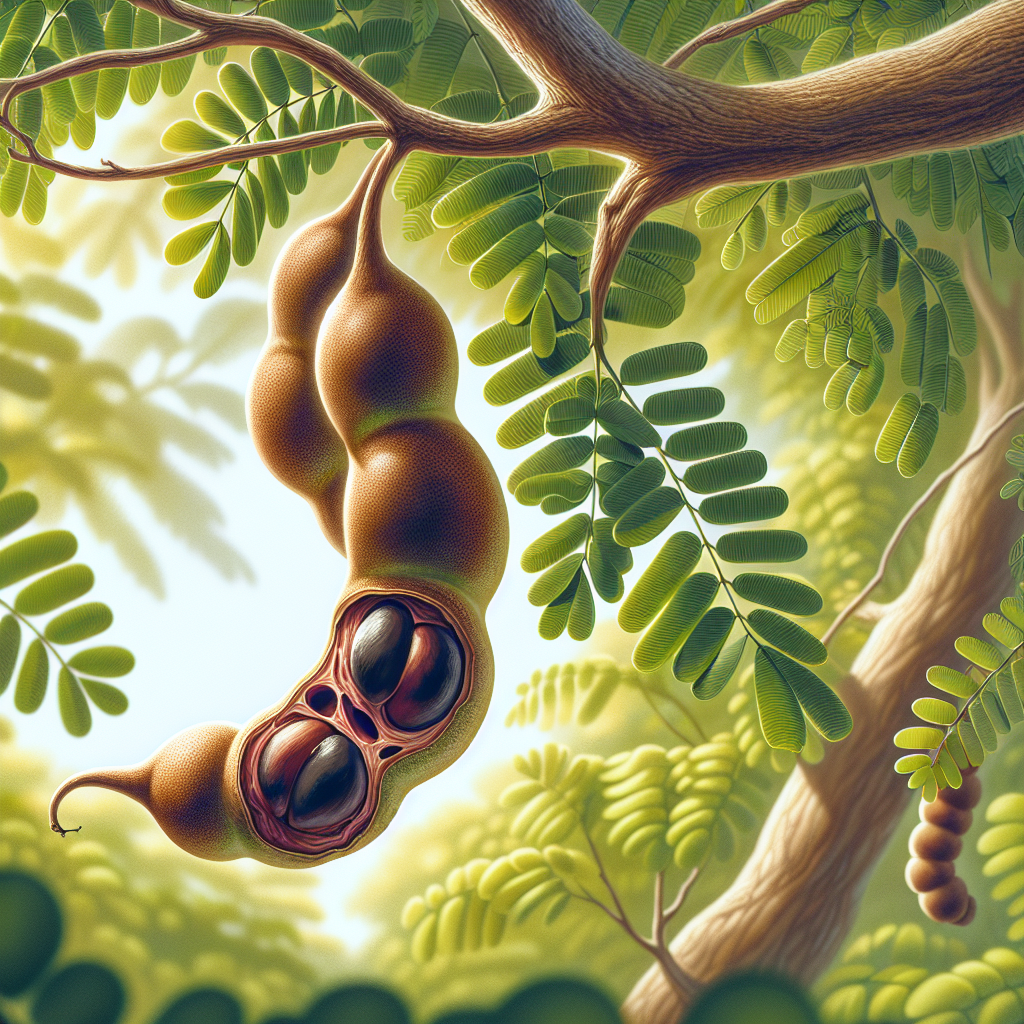
Introduction to Tamarind (Makham Wan)
Tamarind, locally revered as Makham Wan in Thailand, stands as one of the most versatile and economically valuable tropical fruit trees. Native to Africa but now a staple across Asia, India, and Latin America, this slow-growing evergreen can reach heights of 20-30 meters, producing pendulous pods filled with a sweet-sour pulp that's indispensable in chutneys, curries, beverages, and candies. Beyond its culinary prowess, Tamarind (Makham Wan) pulp is packed with tartaric acid, potassium, magnesium, and vitamin C, making it a nutritional powerhouse for health-conscious markets.
For small-scale farmers, Tamarind offers unparalleled longevity—trees bear fruit for over 60 years after a 7-10 year wait for first harvest. Yields can hit 200-500 kg per mature tree annually, with global demand driving prices up to $2-5 per kg for premium pulp. Its drought tolerance and low input needs make it a smart hedge against climate volatility, especially in Why Summer Heatwaves Are Silently Killing Small Farm Yields - And 7 Organic Strategies to Fight Back. Whether you're establishing an orchard or intercropping, this guide delivers professional-grade protocols for maximizing Tamarind (Makham Wan) productivity.
Botanical Profile of Tamarind (Makham Wan)
Tamarindus indica belongs to the Fabaceae family, subfamily Caesalpinioideae, distinguishing it from typical legumes by its pinnate leaves and indehiscent pods. The tree features a stout trunk with rough, gray-brown bark, dense canopy of feathery, evergreen leaves (10-20 cm long, with 10-20 pairs of oblong leaflets), and small, fragrant yellow flowers streaked with red veins. Pollination occurs via bees and wind, leading to 5-10 cm long, brown pods that curve like a sickle, containing 1-12 seeds embedded in fibrous, acidic pulp.
Root systems are deep taproots with extensive laterals, enabling survival in poor soils. Varieties range from sweet (e.g., Thai Makham Wan types) to more acidic strains like PKM-1 (India), with dwarf cultivars like Pratisthan suited for high-density planting. Trees exhibit cauliflory—flowers and fruits directly on trunks and branches—facilitating easy harvesting. In optimal conditions, Tamarind (Makham Wan) achieves 1-2 m annual growth, with wood valued for furniture due to its durability.
Soil, pH, and Climate Requirements for Tamarind (Makham Wan)
Tamarind (Makham Wan) flourishes in well-drained, sandy loam or lateritic soils but tolerates clay loams and even saline conditions (up to 8 dS/m EC). Optimal pH ranges from 5.5-7.5, though it endures 4.5-8.5 extremes; avoid waterlogged or highly alkaline sites (>8.5 pH) prone to chlorosis. Soil depth should exceed 1.5 m for taproot development, with organic matter >1% enhancing nutrient uptake.
Climatically, it's a tropical champion: thrives at 20-40°C (optimum 25-35°C), rainfall 500-1500 mm/year (drought-resistant once established, surviving <300 mm), and altitudes up to 1000 m. Frost intolerance limits it below 10°C; humidity 50-80% favors pod set. In marginal zones, mulching and windbreaks mitigate stress. Test soils pre-planting: amend with gypsum for sodic soils, lime for acidity below 5.5, and ensure 30-50 cm tillage for aeration.
Step-by-Step Planting & Propagation
Propagation Methods
Seed propagation dominates for affordability: select fresh, plump seeds from ripe pods (viability 70-90% for 6 months). Soak in water 24-48 hours, sow 2-3 cm deep in polybags with 3:1:1 soil:sand:FYM mix. Germination takes 7-15 days at 28-32°C; transplant at 30-45 cm height (4-6 months). For uniformity, use grafted saplings (veneer/stone grafting on 1-2 year rootstocks, 80% success in monsoon).
Site Preparation & Planting
Clear land, plow 2-3 times, level, and form basins (1x1x0.5 m) spaced 8-10 m apart (100 trees/ha; 6x6 m high-density yields 20% more). Dig pits 60x60x60 cm, fill with 20 kg FYM + 1 kg SSP + 100 g FeSO4. Plant in late monsoon (June-July), aligning taproot vertically; stake young trees. Irrigate immediately; survival >95% with biweekly watering first year.
Care & Maintenance regimes for Tamarind (Makham Wan)
Irrigation: Critical first 3 years (monthly 50-100 L/tree); mature trees rainfed but benefit from basin irrigation during pod swell (Feb-April). Drip systems (4-8 L/hour/tree) boost yields 30-50%.
Fertilization: Year 1-3: 100:50:50 g NPK/tree annually, split doses. Mature: 1-2 kg N + 1 kg P + 1 kg K/tree, plus 20 kg FYM. Foliar micronutrients (Zn, Fe, B) post-monsoon prevent deficiencies.
Pruning: Annual shaping first 5 years (remove dead/crossing branches); mature trees: desuckering, topping at 5-7 m for canopy management. Basin mulching (10 cm organic) conserves moisture.
Weed Control: Manual/slashing first 3 years; mulch suppresses 80%. Intercrop with legumes like pigeon pea or groundnut years 1-4 for income.
Pests, Diseases & Organic Management
Pests: Monitor for mealybugs (cluster on shoots—neem oil 5 ml/L sprays, 3x at 15-day intervals), scale insects (trunk infestations—scrape + soap solution), and pod borers (Virachola isocrates—pheromone traps + Bt 2 g/L). Fruit flies deterred by basil interplants.
Diseases: Root rot (Phytophthora) in wet soils—improve drainage, Trichoderma 10 g/pit. Anthracnose (Colletotrichum)—copper oxychloride pre-monsoon. Powdery mildew: sulfur sprays.
Organic IPM: Release Chrysoperla carnea predators, yellow sticky traps for flies, and companion marigold borders. See Why 90% of Small Farms Fail at Pest Management - And 8 Organic Fixes That Actually Work for protocols. Early detection via scouting prevents 70% losses.
Harvesting, Curing & Optimal Storage
Pods mature 6-8 months post-flowering (Feb-May in tropics); harvest when brown, rattling (20-30° Brix). Use poles/pruners for clusters; yield peaks years 15-40. Dry in sun 3-5 days (pods <15% moisture), beat to extract pulp/seeds.
Curing: Sun-dry pulp 4-7 days to 10% moisture; press into blocks. Seeds separate via winnowing.
Storage: Pulp in jute bags (cool, dry; 12-18 months shelf life); seeds at 8-10% moisture (viable 5+ years). Refrigerated pulp (5°C) lasts 2 years. Market fresh, paste, or powder—value-add concentrates fetch 2x price.
Companion Planting for Tamarind (Makham Wan)
Tamarind's nitrogen-fixing roots pair excellently with understory crops. Early years: ginger, turmeric, or sweet potato for shade tolerance and soil cover. Legumes like peanuts or [cowpeas](/wiki/cowpeas—not listed, avoid) fix N, suppress weeds. Avoid water-hungry mango nearby due to competition.
Repellents: Thyme and basil deter borers; yarrow attracts beneficials. Alley cropping with gliricidia provides green manure/shade. Mature orchards: papaya or guava fillers yield interim income. For strategies, explore Why Companion Planting Feels Like Guesswork for Small Farms - And How AI Makes It Foolproof—boosts biodiversity, cuts inputs 25%.