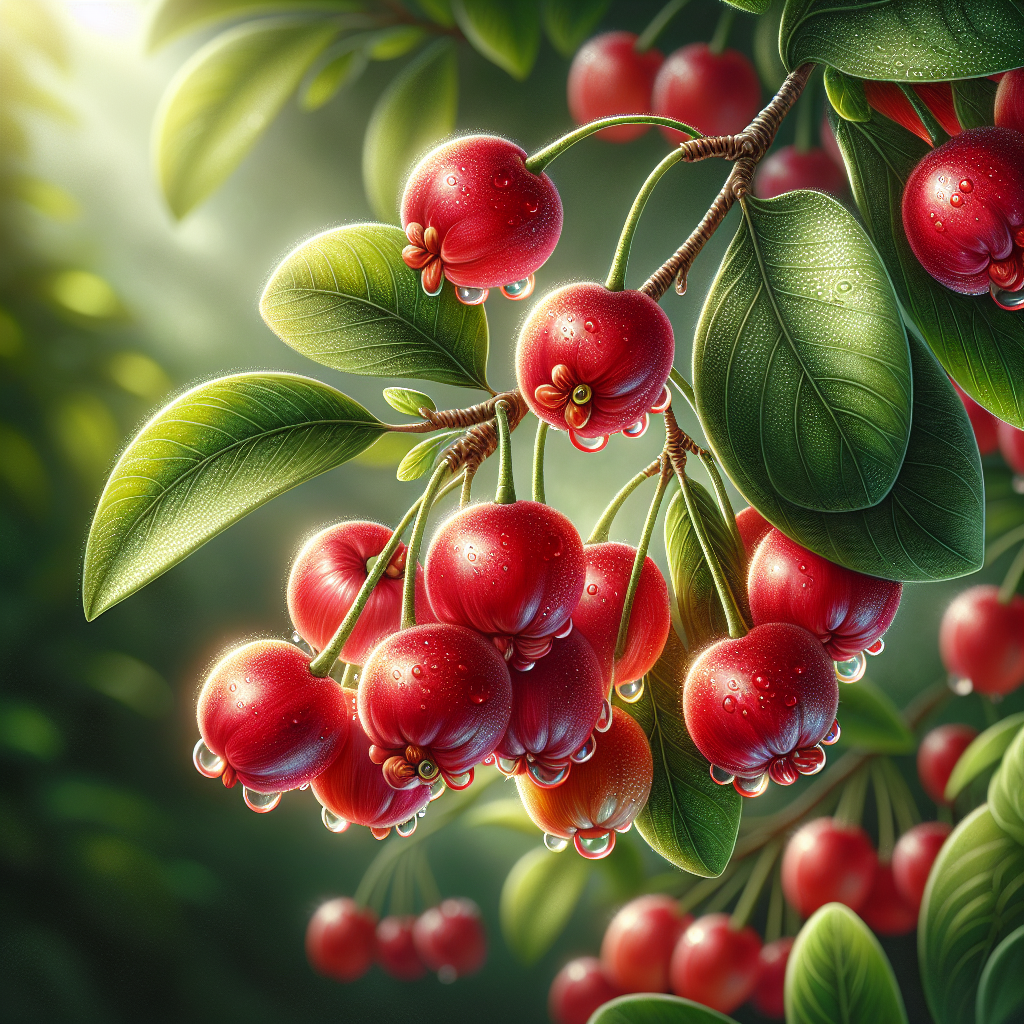
Introduction to Surinam Cherry (Vermilion)
Surinam Cherry (Vermilion), scientifically known as Eugenia uniflora 'Vermilion', is a striking tropical evergreen shrub native to eastern Brazil, Paraguay, Uruguay, and Argentina. This cultivar stands out for its brilliant vermilion-red fruits, which ripen to a glowing scarlet hue, distinguishing it from the more common dark purple-black varieties. Growing 6-15 feet tall with a dense, bushy habit, it produces clusters of small, cherry-like berries year-round in frost-free climates, making it a favorite for permaculture designs, privacy hedges, and backyard orchards.
The fruits are 1-2 inches in diameter, with a thin, glossy skin enclosing juicy, aromatic flesh surrounding a single large seed. Flavor profiles range from sweet-tart to mildly resinous, reminiscent of guava with hints of pine. Nutritionally, Vermilion Surinam Cherries are powerhouse superfruits, boasting high levels of vitamin C (up to 50 times that of oranges per gram), antioxidants like anthocyanins, and fiber. They're traditionally used in juices, liqueurs, jellies, and fresh salads across South America and have gained popularity in Florida, Hawaii, and California for their ornamental appeal and low upkeep.
Ideal for small-scale farmers, this crop tolerates container growing, making it accessible for urban homesteaders. Yields can reach 20-50 pounds per mature bush annually, with fruits ripening sporadically for continuous harvest. Despite its tropical origins, Vermilion Surinam Cherry shows surprising cold hardiness down to 22°F (-6°C) for short periods, broadening its cultivation range. For more on Why Companion Planting Feels Like Guesswork for Small Farms - And How AI Makes It Foolproof, explore synergistic pairings in this guide.
Botanical Profile of Surinam Cherry (Vermilion)
Belonging to the Myrtaceae family (shared with eucalyptus and clove), Eugenia uniflora 'Vermilion' is a perennial woody shrub or small tree. Leaves are opposite, lanceolate, 1-2 inches long, leathery, and glossy dark green, turning bronze on new growth. The plant's attractive features include fragrant white flowers in spring-summer, with four petals and numerous stamens, attracting bees and butterflies.
Fruits develop rapidly, maturing in 3-4 weeks post-pollination. The Vermilion variety is self-fertile, though cross-pollination boosts yields. Roots are shallow and fibrous, spreading widely, which suits it for topsoil-rich sites but requires caution near structures. Growth rate is moderate, reaching maturity in 3-5 years. It's dioecious in some populations but typically hermaphroditic in cultivated Vermilion strains.
Propagation is straightforward via seeds (viable for months if dried), air-layering, or semi-hardwood cuttings. Seeds germinate in 2-4 weeks at 75-85°F, producing true-to-type plants unlike many grafted fruit trees. This crop's resilience to salt spray makes it excellent for coastal gardens, and its dense canopy provides light shade for underplantings.
Soil, pH, and Climate Requirements for Surinam Cherry (Vermilion)
Surinam Cherry (Vermilion) excels in well-draining, fertile soils like sandy loam or clay loam amended with organic matter. Avoid heavy clays prone to waterlogging, as they invite root rot. Optimal pH is 5.5-7.0, slightly acidic to neutral; test soil and amend with lime if below 5.5 or sulfur if overly alkaline. Incorporate 2-4 inches of compost annually to maintain tilth and nutrient levels.
Climatically, USDA zones 9b-11 are ideal, thriving in full sun (6+ hours daily) for maximum fruiting. It handles partial shade but yields less. Temperature preferences: 60-90°F daytime, no frost tolerance below 22°F—protect young plants with frost cloth. High humidity (60%+) mimics native habitats, but it adapts to drier conditions with consistent moisture. Rainfall of 40-60 inches/year suffices, supplemented by deep watering during dry spells. Drought tolerance increases with maturity, but fruit quality suffers without irrigation. For heatwave strategies, see Why Summer Heatwaves Are Silently Killing Small Farm Yields - And 7 Organic Strategies to Fight Back. Wind protection benefits young plants, preventing leaf scorch.
Mulch with 3-4 inches of organic material (bark, pine needles) to retain moisture, suppress weeds, and regulate soil temperature. In containers, use a mix of 40% pine bark, 30% peat, 20% perlite, 10% compost.
Step-by-Step Planting & Propagation
Propagation Methods:
- Seeds: Extract from ripe fruit, wash, dry 1-2 days. Sow 1/4-inch deep in seed trays with sterile mix. Keep at 80°F under mist; germinate in 20-30 days. Transplant at 6-8 inches.
- Cuttings: Take 4-6 inch semi-hardwood tips in summer, dip in rooting hormone, plant in perlite-sand. Root in 4-8 weeks under humidity dome.
- Air-layering: Ideal for mature plants—girdle branch, apply hormone, wrap in moist sphagnum, roots form in 6-8 weeks.
Planting Steps:
- Select site with full sun, well-drained soil. Dig hole 2x wider than root ball, same depth.
- Space plants 8-12 feet apart for hedges, 15 feet for trees.
- Plant in spring/fall, water deeply post-planting.
- Stake if needed; apply slow-release fertilizer (10-10-10).
- Mulch immediately. Water weekly first year, establishing deep roots.
Container planting: Use 15-25 gallon pots, repot every 2-3 years.
Care & Maintenance regimes for Surinam Cherry (Vermilion)
Watering: Deep soak weekly first 2 years; mature plants need 1 inch/week. Avoid overhead to prevent fungal issues. Fertilizing: Spring/summer: balanced NPK (8-3-9) or citrus formula, 1 lb per year age. Micronutrients like iron, zinc via foliar sprays if chlorosis appears. Pruning: Annual after harvest—remove dead/crossing branches, shape for air flow. Hedge trim lightly. Weed Control: Mulch suppresses; hand-pull around base. Winter Care: Zones 9-10: minimal. Zone 8b: heap mulch, cover during freezes.
Pollination is wind/insect-aided; thin heavy fruit sets for larger berries. Monitor for nutrient deficiencies: yellow leaves indicate iron lack in high pH soils.
Pests, Diseases & Organic Management
Common pests: Aphids, scale insects, mealybugs, fruit flies. Manage with neem oil sprays, ladybugs, or insecticidal soap weekly.
Diseases: Anthracnose causes fruit rot—improve air circulation, copper fungicide. Powdery mildew in humid areas: baking soda spray (1 tbsp/gallon water). Root rot from overwatering: solarize soil, use biofungicides like Trichoderma.
Organic IPM: Companion plant with marigolds for nematodes, encourage birds for caterpillars. For detailed fixes, reference Why 90% of Small Farms Fail at Pest Management - And 8 Organic Fixes That Actually Work. Scout weekly; remove infested parts promptly.
Harvesting, Curing & Optimal Storage
Harvest when fruits fully color (vermilion-red), firm but yielding slightly—twist or clip clusters. Peak seasons: summer-fall, with spot-ripening year-round. Yields increase with age; pick every 3-5 days to avoid bird damage.
No curing needed; rinse, air-dry. Fresh storage: refrigerate 1-2 weeks in ventilated bags. Freeze whole (up to 6 months), or process into puree/jams (add lemon for pectin). Dried: low oven 4-6 hours. Excellent for sauces, wines—high pectin suits jellies without additives.
Companion Planting for Surinam Cherry (Vermilion)
Benefits from nitrogen-fixers like pigeon pea, deterring root-knot nematodes. Pair with Thai basil for pest repulsion, nasturtiums as trap crops for aphids. Underplant with strawberry guava for shade tolerance synergy. Avoid nightshades like tomato to prevent shared pests. Legumes improve soil; alliums like garlic repel borers. See Fall Companion Planting Guide: Boost Yields and Soil Health for Small Farms and Gardens for seasonal tips.