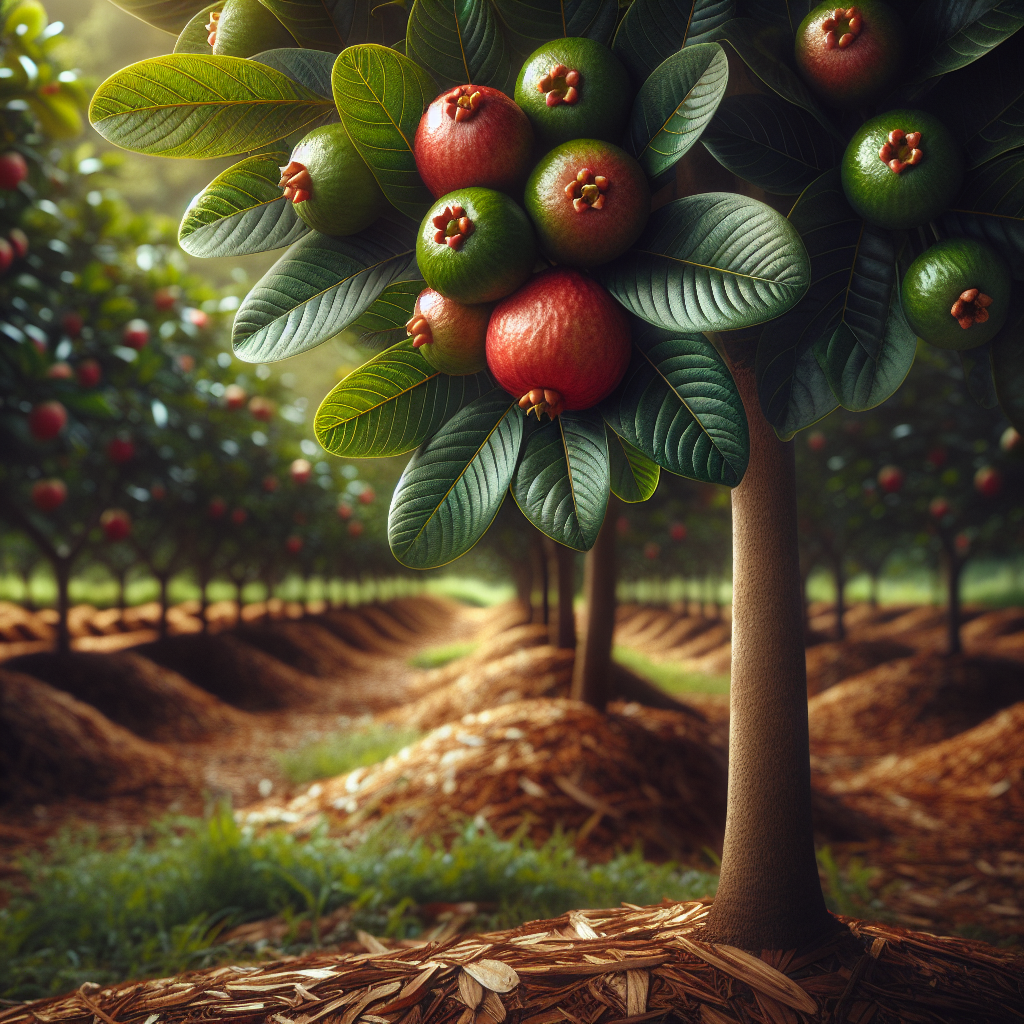
Introduction to Strawberry Guava
Native to coastal and upland regions of southeastern Brazil, this species has spread widely through tropical, subtropical, and mild frost-free regions because of its ornamental appeal and dependable fruiting. It is sometimes called cattley guava, cherry guava, or purple guava, though the fruits are usually red-skinned in the common form and yellow in the lemon guava type.
Compared with common guava, strawberry guava is typically smaller in stature, denser in canopy, and more tolerant of partial shade and wind exposure once established. The fruit has a distinctive perfume combining notes of strawberry, rose, and guava, with translucent pulp and numerous small seeds. Commercially it is less common than larger guavas, but it is prized for fresh eating, jellies, syrups, wine, vinegar, and small-batch preserves.
It is important to note that in some island and humid subtropical ecosystems, strawberry guava has become invasive because Birds and feral animals distribute the seed readily. Growers should check local regulations before planting, especially in ecologically sensitive areas. Where permitted, careful harvest discipline and pruning can minimize volunteer spread.
From a grower’s perspective, the plant’s greatest strengths are compact size, relatively low chill requirement, adaptability to container culture when young, and the ability to fruit reliably with modest inputs. For orchardists familiar with Guava, strawberry guava often behaves as a smaller, denser, and more ornamental relative, though fruit size and postharvest life are typically shorter.
For broader orchard planning and fertility strategy, see soil health strategies.
Botanical Profile of Strawberry Guava
This evergreen member of the Myrtaceae family usually grows as a many-branched shrub or small tree 2 to 6 meters tall, though unmanaged plants in favorable climates may exceed that. Young stems are smooth and somewhat angular, gradually becoming gray-brown with age. The bark may exfoliate lightly on mature wood.
Leaves are opposite, leathery, glossy, and elliptic to obovate, commonly 3 to 8 centimeters long. They are thicker and more polished than those of many common guava selections, an adaptation that contributes to reduced water loss and better tolerance of bright light and coastal conditions. Crushing the leaves releases the characteristic resinous, spicy aroma typical of many myrtaceous plants.
Flowers are solitary or borne in small clusters in leaf axils. Each flower is white with a mass of showy stamens, and pollination is commonly aided by bees and other insects. The species is often self-fertile, but cross-pollination between genetically different plants can improve fruit set and sometimes fruit size.
Fruit is typically round, 2 to 4 centimeters in diameter, with smooth skin. The red-fruited type is most associated with the name strawberry guava; the yellow-fruited form is frequently marketed as lemon guava, yet both belong to the same species complex or are treated as close botanical variants. Flesh color ranges from white to pinkish and is juicy, sweet-tart, and highly aromatic.
Botanically, the species has been listed under the synonym Psidium littorale in older literature. Growers sourcing planting material should verify identity carefully because nurseries sometimes confuse it with apple guava, pineapple guava, or seedling common guava. Accurate identification matters because vigor, fruit size, chill tolerance, and tree architecture differ substantially among these crops.
Soil, pH, and Climate Requirements for Strawberry Guava
This crop performs best in well-drained loam or sandy loam rich in organic matter, but one reason it is widely adapted is its capacity to grow in lighter sands, volcanic soils, and moderately heavy soils if drainage is adequate. Ideal root-zone conditions combine moisture retention with fast gas exchange. In practical terms, that means soil should stay evenly moist but never remain saturated for long periods after rain or irrigation.
The preferred pH range is about 5.0 to 6.8, with peak nutrient availability and healthiest leaf color often seen around 5.5 to 6.5. It will tolerate slightly alkaline conditions up to around 7.2, but iron, manganese, and zinc deficiencies become more likely there, especially on calcareous soils. In high-pH sites, leaves may show interveinal chlorosis on new growth first. Corrective measures include incorporating compost, using acid-forming mulches, and applying chelated micronutrients as needed.
Excellent drainage is more important than perfect texture. If water stands in the planting zone for more than 24 hours after heavy rain, root health will decline. Chronic saturation predisposes plants to root rot, poor nutrient uptake, sparse flowering, and premature leaf yellowing. In marginal ground, establish raised mounds 30 to 50 centimeters high and 1 to 1.5 meters wide.
Temperature-wise, strawberry guava thrives in tropical and warm subtropical regions. The ideal annual growing range is roughly 18 to 30°C. Mature plants can survive brief dips near -2 to -3°C with leaf burn and twig injury, but young plants are more tender and may be severely damaged below 0°C. Flowering and fruit development are strongest where winters are mild and summers are warm without prolonged extreme heat.
Rainfall of 1000 to 2000 millimeters annually is suitable if drainage is good. Once established, the plant is moderately drought tolerant, but water stress during flowering and fruit swell reduces yield, fruit size, and sugar accumulation. In arid climates, irrigation is essential for commercial-quality production.
Full sun gives the highest flowering density and best fruit sweetness. That said, this species tolerates partial shade better than many fruit trees. Under 30 to 40% shade, vegetative growth may remain attractive, but fruit set and color intensity usually decline. In very hot inland sites, light afternoon shade can reduce leaf scorch on young transplants.
Wind tolerance is moderate to good because of the tough foliage and flexible branching, but persistent hot dry wind can desiccate flowers and young fruit. Windbreaks or mixed plantings help stabilize yield in exposed sites.
Step-by-Step Planting & Propagation
Propagation may be done by seed, air layering, cuttings, or grafting, though seed is the most common route for small growers. Seedlings are often reasonably true to type in fruit quality, but variability still occurs in vigor, productivity, and flavor balance. Vegetative propagation is preferred when preserving a superior mother plant.
For seed propagation, harvest fully ripe fruit, crush gently, and separate seed from pulp by washing through a fine sieve. Dry the cleaned seed on paper for 24 hours in shade, not direct sun. Sow fresh seed in a sterile, well-aerated medium such as 50% coco coir or peat substitute and 50% coarse sand or perlite. Cover lightly, maintain temperatures around 22 to 28°C, and keep the medium uniformly moist, not wet. Germination usually occurs in 4 to 8 weeks, sometimes longer.
For cuttings, select semi-hardwood shoots 10 to 15 centimeters long with 2 to 4 nodes. Remove lower leaves, wound the base lightly, and treat with rooting hormone. Root in a high-humidity environment using a sharply drained medium. Success rates are variable, so mist propagation or a propagation chamber improves results.
Air layering works well on pencil-thick, healthy branches. Girdle a 2-centimeter section, apply moist sphagnum or similar material, wrap securely, and keep shaded. Roots often form in 6 to 12 weeks depending on temperature and shoot maturity.
When planting in the field, choose the warmest, frost-safest period of the year, usually early spring in subtropical zones or the beginning of the rainy season in tropical climates. Dig a hole only as deep as the root ball and two to three times as wide. Avoid burying the stem deeper than it stood in the nursery container. Deep planting encourages collar stress and poor oxygen exchange.
Backfill primarily with native soil rather than creating a radically different pocket. Mix in modest amounts of well-finished compost if native soil is low in organic matter, but avoid high rates of manure or strong fertilizer in the hole. Water thoroughly after planting to settle soil around roots.
Spacing depends on management style. For backyard or low-input plantings, 3 to 5 meters between trees is common. For hedgerow-style intensive systems with regular pruning, 2.5 to 3 meters within row and 4 to 5 meters between rows can work. Container-grown plants should begin in a pot at least 25 to 35 liters, then be upsized as needed with aggressive root and canopy management.
After planting, apply 5 to 10 centimeters of mulch over the root zone, keeping it 10 to 15 centimeters away from direct contact with the trunk. Good mulches include shredded leaves, aged wood chips, coarse compost, or mixed orchard litter. Mulch moderates soil temperature, reduces evaporation, and supports fine feeder roots near the surface.
Care & Maintenance regimes for Strawberry Guava
Irrigation should be managed by growth stage rather than a fixed calendar alone. Newly planted trees need consistently moist soil in the upper 20 to 30 centimeters until roots move outward. In practice, water deeply enough that moisture penetrates beyond the original root ball, then allow the top few centimeters to dry slightly before watering again. In warm weather on sandy soil, this may mean 2 to 3 irrigations per week during establishment; on heavier soil, once weekly may be enough.
Established plants prefer deep, infrequent watering over shallow daily sprinkling. A useful target is to maintain soil moisture at roughly 60 to 80% of field capacity during active flowering and fruit fill. If you do not use moisture sensors, monitor by hand: soil at 10 to 15 centimeters depth should feel cool and slightly damp, forming a weak ball when squeezed, but should not release water or feel greasy. Drought stress shows first as dull foliage, slight leaf folding, flower drop, and smaller fruit. Overwatering shows as persistent yellowing, soft weak shoots, little new root growth, sour-smelling soil, and in severe cases blackened feeder roots.
Fertilization should be moderate and balanced. Excess nitrogen drives lush canopy growth at the expense of flowering and can make the plant more attractive to sap-sucking pests. For young trees, apply small split doses of a balanced fertilizer 3 to 4 times during the warm growing season. Mature trees benefit from 2 to 4 annual feedings depending on soil fertility. A practical organic program is compost plus a fruit-tree blend emphasizing potassium, calcium, magnesium, and trace elements. Potassium is especially important for fruit flavor, firmness, and consistent cropping.
Leaf analysis, where available, is better than guesswork. In the absence of testing, watch canopy cues closely. Nitrogen deficiency shows as overall pale older leaves and slow extension growth. Iron or manganese deficiency appears as chlorotic young leaves, especially in alkaline soils. Boron deficiency may reduce flowering and cause distorted growing points, though it should be corrected carefully because excess boron can injure roots.
Pruning is essential if you want high-quality fruit and manageable harvest. Strawberry guava fruits on new growth arising from mature wood, so light annual structural pruning encourages productive shoots. Remove dead, crossing, congested, and inward-growing branches. Open the center enough to admit dappled light and airflow, but avoid over-thinning, which can cause sunburn on suddenly exposed limbs.
For small-tree management, head back vigorous vertical shoots after harvest and maintain a canopy height of about 2 to 3 meters. This keeps fruit within reach and simplifies netting, pest scouting, and harvest. Suckers from the base should be removed unless you are intentionally training a multi-stem form.
Mulch should be replenished annually as it decomposes. Keep weeds and turf at least 0.6 to 1 meter away from the trunk in young plantings because grass competition can cut establishment speed dramatically. Hand weeding, sheet mulching, and organic surface mulches are preferable to cultivation that disturbs shallow feeder roots.
In cooler subtropical climates, protect young plants from frost with covers, trunk wraps, and heavy mulching before cold events. Avoid late-season nitrogen applications that push tender growth into cold weather.
Pests, Diseases & Organic Management
Fruit flies are among the most important pests in warm climates. Adults lay eggs in ripening fruit, and larvae feed internally, causing breakdown and premature drop. Sanitation is the first line of defense: collect fallen fruit every 1 to 2 days, destroy infested fruit, and harvest promptly as fruit colors. Fine mesh exclusion bags or tree netting are highly effective for small plantings.
Birds also target ripe fruit aggressively. Early netting before color change is more effective than trying to react after feeding starts. In mixed orchards, synchronized harvest and sanitation reduce the time fruit remains exposed.
Scale insects, Mealybugs, Aphids, and Whiteflies can colonize shoots and leaf undersides, especially where canopies are dense and nitrogen is high. These pests excrete honeydew that encourages Sooty mold. Organic management includes pruning for airflow, controlling ants that protect sap-feeders, washing populations off with water where practical, and applying horticultural oil or insecticidal soap thoroughly to contact colonies. Spray in cooler parts of the day and avoid use during heat stress.
Root rot pathogens such as Phytophthora become a threat in poorly drained soils. Symptoms include gradual decline, sparse leaves, branch dieback, and roots that are dark, soft, and lacking healthy white tips. Prevention is far more effective than rescue: use raised planting sites, avoid overirrigation, and never let mulch trap moisture against the trunk.
Anthracnose and Leaf spot diseases may appear during humid weather, causing blemishes on leaves and fruit. Good airflow, pruning, mulching to reduce soil splash, and avoiding overhead irrigation late in the day help limit spread. Remove heavily infected debris from beneath the canopy. Copper-based products may be used in some organic systems, but repeated use should be restrained because copper accumulates in soil.
Nematodes can stress plants in sandy soils, especially where sites have hosted susceptible crops repeatedly. Incorporating organic matter, maintaining living soil cover between rows, and avoiding root injury improve tolerance.
Integrated organic management works best as a system: healthy soil, moderated nitrogen, open canopy, fruit sanitation, monitoring traps where relevant, and timely harvest. Plants grown under chronic stress are consistently more vulnerable than those kept in balanced growth.
Harvesting, Curing & Optimal Storage
Fruit is usually harvested when fully colored and slightly soft to the touch, but before it becomes mushy. The skin should develop its mature red or yellow coloration evenly, and the fruit should release a strong fragrance. Unlike some larger guavas, strawberry guava is often best when tree-ripened close to peak maturity because its flavor develops rapidly in the final stages.
Harvest gently by hand, twisting or clipping with a short piece of stem attached if possible. Bruising shortens shelf life dramatically. Do not pile fruit deeply in harvest containers; use shallow crates or single-layer trays for premium quality.
There is no true curing phase as used for onions, sweet potatoes, or winter squash. Instead, postharvest handling should focus on field heat removal and moisture retention without condensation. Move harvested fruit into shade immediately. Pre-cool as soon as possible if harvesting in hot weather.
At room temperature, fruit often keeps only 2 to 4 days at best, depending on ripeness at harvest. Under refrigeration around 5 to 8°C with high relative humidity of 85 to 95%, storage may extend to about 1 to 2 weeks, though aroma can flatten and chilling injury may occur if temperatures are pushed too low or fruit stays too long in storage. Avoid sealing fruit in non-ventilated plastic, which promotes condensation and fungal decay.
For processing, this crop excels in preserves because the high aroma survives cooking better than many delicate fruits. Pulp can be frozen, strained for jelly, or cooked into syrup. If seed removal is desired, warm fruit slightly and pass through a food mill or sieve.
Frequent harvest, every 2 to 3 days during peak season, is ideal. Overripe fruit left on the tree attracts pests and increases self-seeding around the orchard.
Companion Planting for Strawberry Guava
A productive understory should support pollinators, reduce weed pressure, improve soil structure, and avoid strong competition with shallow feeder roots. Low-growing, non-invasive companions are generally better than aggressive vines or thirsty grasses.
Clover is one of the best options in orchard alleys or around the dripline edge because it helps protect soil, adds organic matter, and contributes biologically fixed nitrogen when managed properly. Keep it cut short around young trunks so it does not compete heavily for moisture.
Thyme works well close to the sunny perimeter of the root zone, especially in drier subtropical sites. Its low habit reduces weed emergence, and its flowers attract beneficial insects. It prefers excellent drainage, so it is most useful where irrigation is not excessive.
Nasturtium can function as a seasonal living mulch and beneficial-insect attractor. It also helps occupy bare soil and may divert some pest pressure away from more valuable crops nearby, though it should not be allowed to smother young trees.
Yarrow is valuable in diversified systems because it attracts predatory insects and pollinators while tolerating repeated cutting. Plant it just outside the immediate trunk zone and divide clumps when they become dense.
Avoid heavy-feeding annual vegetables directly beneath mature canopies. The tree’s feeder roots occupy the topsoil, and frequent digging or irrigation fluctuations can disrupt both the tree and the companion crop. The best arrangement is usually a mulch ring near the trunk, low-growing companions at the outer root zone, and wider alley species between rows.
In wetter climates, prioritize open spacing and airflow over dense companion plantings, since excessive humidity under the canopy can favor fungal problems.