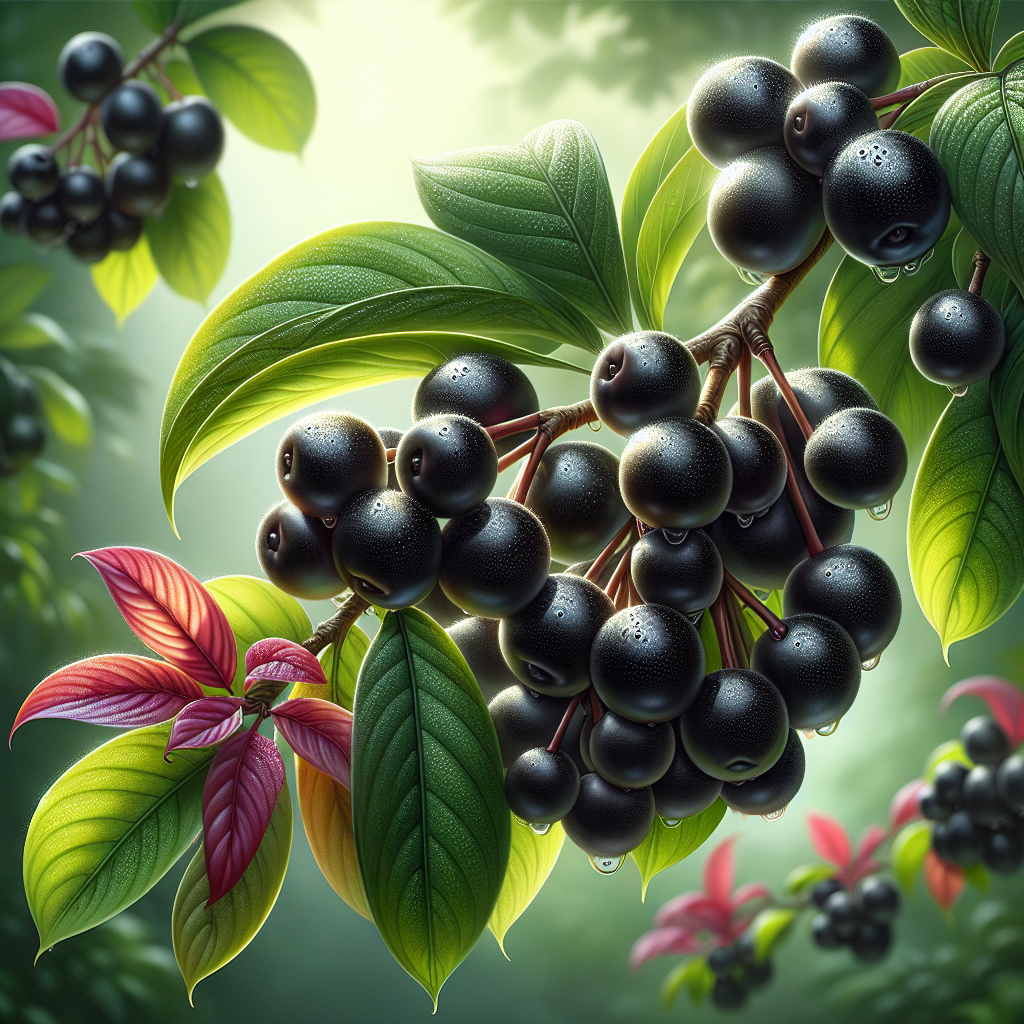
Introduction to Surinam Cherry (Black Star)
Surinam Cherry (Black Star), known scientifically as Eugenia uniflora 'Black Star', stands out as a premium cultivar of the Surinam cherry, prized for its striking jet-black fruits that mature to a glossy, deep purple-black hue. Native to tropical South America, particularly Brazil, Uruguay, and surrounding regions, this evergreen shrub has gained global popularity for its dual role as a productive fruit bearer and ornamental hedge plant. The 'Black Star' variety is distinguished by its larger fruit size—up to 2.5 cm in diameter—compared to the standard red Surinam cherry, along with superior flavor profiles featuring sweet-tart notes reminiscent of guava crossed with wild blackberry.
This guide provides professional-grade, step-by-step cultivation advice tailored for small farms, home orchards, and container growers. With proper site selection and care, Black Star Surinam cherries can yield 10-20 kg of fruit per mature bush annually, starting production as early as 1-2 years after planting. Its compact growth habit (typically 2-4 meters tall and wide) makes it exceptionally suited for urban gardens, privacy screens, or espalier training against walls. Nutritionally, the fruits are packed with vitamin C (over 30 mg per 100g), anthocyanins for antioxidant power, and dietary fiber, making them ideal for fresh eating, jams, juices, or drying into leathers. For small-scale farmers, integrating Black Star into polycultures enhances biodiversity and provides a reliable, low-input cash crop resistant to many common subtropical pests.
Beyond yield, Black Star's glossy dark green foliage, attractive red new growth, and fragrant white spring flowers add year-round aesthetic value. Birds adore the fruits, aiding natural seed dispersal, while humans appreciate the bounty. Whether you're combating Why Summer Heatwaves Are Silently Killing Small Farm Yields - And 7 Organic Strategies to Fight Back in warmer zones or seeking a resilient hedge, this crop delivers exceptional ROI with minimal intervention.
Botanical Profile of Surinam Cherry (Black Star)
Belonging to the Myrtaceae family, alongside mango and guava, Eugenia uniflora 'Black Star' is a woody perennial shrub or small tree. It features opposite, lanceolate leaves (5-10 cm long) that emerge vibrant red before maturing to lustrous dark green, providing a tropical flair. Flowers are small (1-1.5 cm), white to creamy, with four petals and numerous stamens, blooming in clusters primarily in spring but capable of sporadic flowering year-round in frost-free climates.
Fruits develop rapidly (30-45 days post-bloom), forming dense clusters resembling cherries but botanically classified as berries (drupes). 'Black Star' fruits ripen from green to maroon, then to glossy black, with thin, edible skins enclosing juicy, aromatic flesh surrounding a single hard seed. Seed size is moderate (1-1.5 cm), and pulp yield is high (70-80% of fruit weight). The plant's growth is bushy and self-shaping, rarely exceeding 4m without pruning, with a shallow, fibrous root system ideal for containers or raised beds.
Genetically, 'Black Star' is a selected clone propagated for its darker pigmentation, larger berry size, and improved cold tolerance over wild types (down to 28°F/-2°C briefly). Lifespan exceeds 20-30 years with proper care, and it self-pollinates reliably, though cross-pollination boosts yields by 20-30%. Phenologically, it's a C3 plant with CAM-like drought tolerance, making it adaptable from USDA zones 9b-11.
Soil, pH, and Climate Requirements for Surinam Cherry (Black Star)
Surinam Cherry (Black Star) excels in well-drained, fertile soils with pH 5.5-7.0, tolerating sandy loams to clay loams but abhorring waterlogging. Incorporate 20-30% organic matter (compost or aged manure) at planting to enhance tilth and microbial activity. Avoid heavy clays without raised beds; amend with perlite or pine bark for containers (use 5-10 gallon pots minimum for maturity).
Optimal climate is subtropical: 70-90°F (21-32°C) daytime averages, with humidity 60-80%. It withstands brief dips to 25°F (-4°C) once established but suffers leaf drop below 30°F (-1°C). Full sun (6-8+ hours) is mandatory for fruiting; partial shade reduces yields by 50%. Annual rainfall of 1000-1500mm suits it naturally, supplemented by 1-2 inches weekly in dry spells via drip irrigation. Wind protection is crucial for young plants; mulch heavily (4-6 inches organic) to retain moisture and suppress weeds. In marginal zones, microclimates near south-facing walls mimic tropics effectively.
Soil testing is essential—correct deficiencies with micronutrient blends (Fe, Zn, Mn via chelates). Salinity tolerance is moderate (EC <4 dS/m); flush soils in coastal areas. For Soil Health Mastery: 5 Proven Strategies for Small Farms to Build Fertile Ground Without Breaking the Bank, integrate cover crops like clover pre-planting.
Step-by-Step Planting & Propagation
Propagation: Seeds germinate in 20-40 days at 75-85°F (24-29°C) in moist seed trays (70% success); scarify by nicking and soak 24 hours. Air-layering yields 90% rooted plants in 6-8 weeks—girdle 4-6 inch branches in spring, wrap sphagnum/neem mix. Cuttings (semi-hardwood, 6 inches) root in 4-6 weeks under mist with 3000 ppm IBA. Grafted 'Black Star' on E. uniflora rootstock ensures dwarfing and vigor.
Planting: Select 12-18 month nursery stock (24-36 inches tall). Dig holes 2x root ball width, 12 inches deep; plant at soil grade in early spring/fall. Space 6-8 feet for hedges, 10-12 for specimens. Water deeply post-plant (5 gallons), mulch 3-4 inches. Stake if windy. For containers, use well-draining mix (40% pine bark, 30% peat, 20% perlite, 10% compost); repot every 2-3 years.
Establishment: Irrigate every 3-5 days first year, fertilize monthly (balanced 10-10-10 at 1 tsp/gallon). Prune lightly to shape. Expect flowers year 1-2.
Care & Maintenance regimes for Surinam Cherry (Black Star)
Water established plants deeply but infrequently (1 inch/week), allowing top 2 inches soil to dry. Fertilize 3x/year: spring (high N), summer (balanced), fall (high K); use citrus/myrtle formula (6-4-6) at 1 lb/mature bush. Mulch annually to 4 inches, refresh.
Prune post-harvest: remove 20-30% dead/crossing wood, thin canopy for light penetration. Tip prune for bushiness. Thin fruits if overloaded (leave 4-6 inches spacing) for larger berries. Protect from frost with covers; overwinter indoors in pots north of zone 9.
Weed manually; avoid herbicides. Monitor for nutrient lockout in high pH—foliar spray micronutrients. Yields peak years 5-15; renovate old plants by hard pruning to 2 feet.
Pests, Diseases & Organic Management
Common pests: Aphids (neem oil 2% weekly), scale insects (hort oil dormant spray), mealybugs (alcohol swab/rubbing alcohol), fruit flies (GF-120 bait), birds (netting). See Why 90% of Small Farms Fail at Pest Management - And 8 Organic Fixes That Actually Work.
Diseases: Root rot (improve drainage, Trichoderma drench), anthracnose (copper fungicide, prune air flow), powdery mildew (potassium bicarb spray), leaf spots (baking soda + neem). Avoid overhead water; sanitize tools. Organic IPM: companion marigold, beneficials (ladybugs, Bacillus thuringiensis for caterpillars). Resistant cultivar; scout weekly.
Harvesting, Curing & Optimal Storage
Harvest when fully black, slightly soft (detach easily); pick clusters to avoid skin tears. Yield seasons: main spring-summer, flushes fall. Use shears for volume; handle gently. Fruits store 1-2 weeks fridge (32-36°F, 90% RH), 3-5 days room temp.
For processing: wash, destem; freeze whole (up to 12 months), dehydrate (135°F 8-12 hrs), juice (yield 60%), or jam (pectin low, add apple). Market fresh in punnets; birds hit ripe fruit first—harvest proactively. Postharvest dip in 100 ppm chlorine for rot prevention.
Companion Planting for Surinam Cherry (Black Star)
Pair with Thai basil (repels aphids, attracts pollinators), nasturtium (trap crop for beetles), yarrow (beneficial insect magnet). Avoid potato (nematode risk). Underplant with strawberry guava dwarfs or lemongrass for mulch/soil health. Nitrogen-fixers like pigeon pea enhance fertility. For mastery, see Why Companion Planting Feels Like Guesswork for Small Farms - And How AI Makes It Foolproof. Benefits: pest diversion, pollination boost, microclimate moderation, 15-25% yield increase.