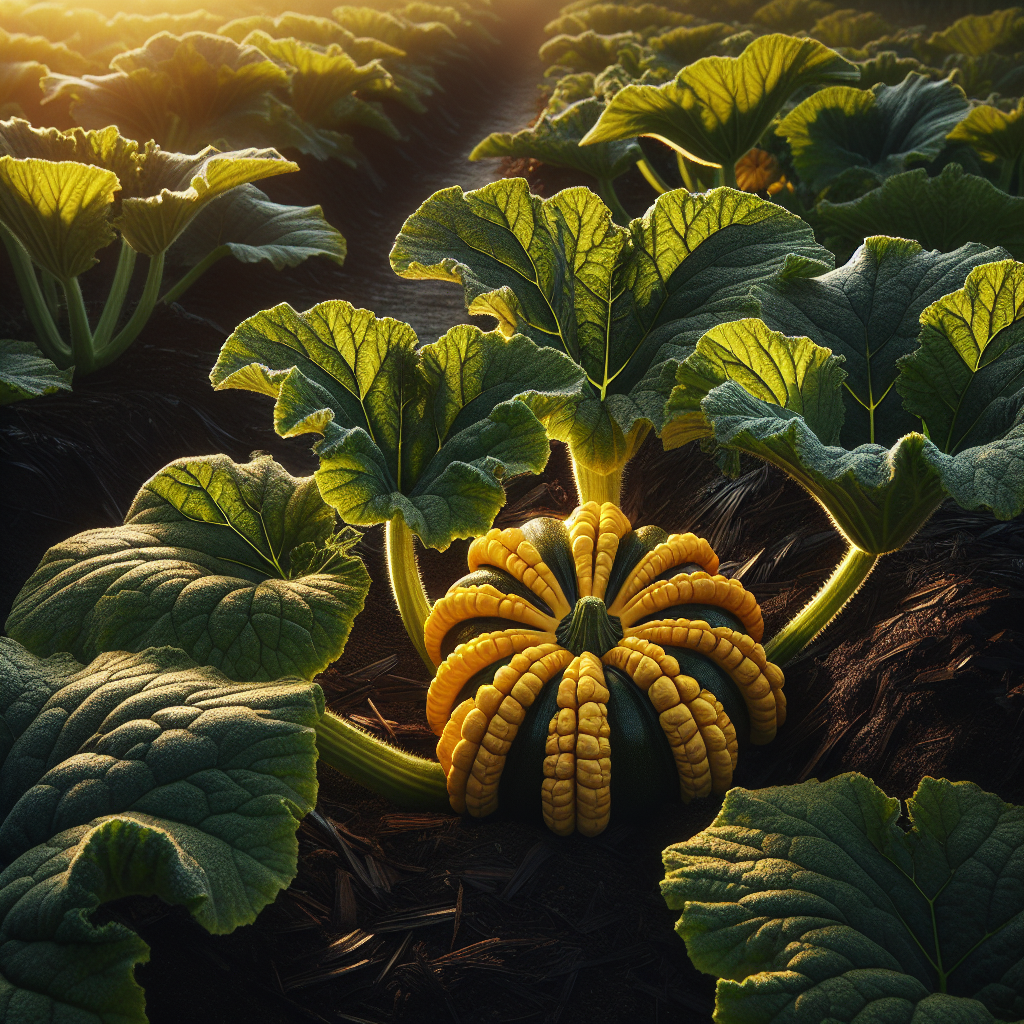
Introduction to Sunburst Squash
A classic scallop-type summer squash, this cultivar is best known for its vivid golden-yellow skin, flattened saucer shape, and fast maturity. It is generally grown as a warm-season annual and harvested immature, when the rind is still tender and the flavor is mild, buttery, and slightly nutty. In market gardening, it is valued for visual appeal as much as yield; the bright fruits stand out in mixed squash displays and command premium attention at farm stands.
Unlike winter squash, which are left to fully mature and harden, this type is produced for repeated harvest over a relatively short but intense season. Plants are typically bush-forming rather than long-vining, making them easier to fit into smaller plots, raised beds, and diversified vegetable fields. Even so, they are vigorous feeders and need consistent water, warmth, and pollinator activity to sustain heavy fruit set.
Historically, pattypan or scallop squash types descend from old forms of Cucurbita pepo cultivated for centuries in the Americas. Sunburst represents modern breeding directed toward uniformity, earliness, bright color, and strong garden performance. Many growers consider it one of the most attractive summer squash varieties, especially when harvested at 5-8 cm across for baby squash or 8-15 cm across for standard table use.
Botanical Profile of Sunburst Squash
This crop belongs to the species Cucurbita pepo, the same highly variable species that also includes zucchini, many pumpkins, and some ornamental gourds. Within that species, Sunburst is grouped with scallop or pattypan summer squash types. As a hybrid cultivar, it is usually selected for uniform fruit shape, earlier maturity, and reliable production rather than seed-saving stability.
Plants are monoecious, meaning each plant carries separate male and female flowers. Male flowers usually appear first, borne on long slender stalks, while female flowers develop later and can be identified by the miniature squash-like ovary directly behind the petals. Poor fruit set early in the season is often not a fertility problem at all, but simply a phase where male blooms outnumber female blooms.
Leaves are large, rough-textured, and broad, with the coarse pubescence typical of squash. The canopy can range from open to moderately dense depending on fertility and spacing. Stems are angular, succulent, and somewhat brittle, so cultivation around the root zone should be shallow. The root system is relatively extensive in warm, friable soil, with most feeder roots concentrated in the top 20-30 cm, which explains why drought stress appears quickly during hot weather.
Fruit are flattened and scalloped, with a glossy deep yellow to golden skin when harvested young. Flesh is cream to pale yellow, tender, and fine-textured. If left too long on the plant, the skin thickens, seeds enlarge, and eating quality declines rapidly. For broader context on species behavior and related forms, see Squash.
Soil, pH, and Climate Requirements for Sunburst Squash
This crop performs best in deep, fertile, well-drained loam or sandy loam with high organic matter and strong biological activity. Ideal soil pH is 6.0-6.8, though acceptable production can occur from about 5.8 to 7.2 if nutrient availability is balanced. Below pH 5.8, calcium and magnesium imbalances become more likely, and above about 7.2, micronutrient issues such as iron chlorosis may appear in alkaline soils.
Good drainage is non-negotiable. Although squash likes steady moisture, it does not tolerate waterlogged root zones. Saturated soil for even 24-48 hours in warm weather can predispose plants to root dysfunction, reduced oxygen exchange, and opportunistic pathogens. If your soil forms standing water after rain, use raised beds 15-25 cm high or mound rows to improve aeration.
Before planting, incorporate 5-8 cm of well-finished compost or a similar volume of decomposed organic matter into the top 20-25 cm of soil. This improves cation exchange, water-holding capacity, and microbial function. Avoid fresh manure immediately before planting; it can drive excessive leafy growth, increase disease pressure, and sometimes contribute to salt injury or nutrient imbalance.
Sunburst squash is distinctly frost-sensitive. Soil temperature should be at least 18°C for dependable germination, and 21-32°C air temperatures support the strongest growth. Below 10°C, plants stall and may show chlorosis or misshapen new growth. Prolonged days above 35°C can reduce pollen viability, stress pollinators, and impair fruit set, especially if soil moisture fluctuates.
Aim for a site with full sun, meaning at least 8 hours of direct light daily. Lower light reduces flowering, encourages mildew, and weakens fruit color. In humid climates, spacing and airflow matter even more than in arid regions because foliage that remains wet overnight invites fungal disease.
A professionally managed moisture target is roughly 60-80% of field capacity in the active root zone. In practical terms, soil should feel evenly moist but never sticky or sour-smelling. If a squeezed handful from 10 cm deep forms a ball that lightly crumbles when pressed, moisture is usually near ideal. If it shines with free water or stays tightly compacted, it is too wet. If it will not cohere at all and feels dusty 5-8 cm down, plants are already under moisture stress.
Step-by-Step Planting & Propagation
This cultivar is almost always propagated by seed. Because it is a hybrid, saved seed will not reliably reproduce true-to-type plants, so fresh purchased seed is preferred for uniform yield and fruit quality.
Prepare the bed 1-2 weeks before sowing. Remove perennial weeds, loosen the topsoil, and blend in mature compost. If soil tests show low phosphorus or potassium, correct those before planting because these nutrients are most effective when incorporated rather than surface-applied later.
Wait for warm soil. Direct seed only after danger of frost has passed and the soil is truly warm. Cold planting often causes seed rot, uneven emergence, and weak seedlings that never fully catch up.
Form rows or hills. For bush summer squash, space rows 90-120 cm apart and plants 45-60 cm apart within the row. If sowing in hills, place hills 90-120 cm apart and thin to 2 healthy plants per hill.
Sow seed 2-3 cm deep. In lighter sandy soils, slightly deeper sowing is acceptable; in heavier soils, stay shallower to avoid crusting problems.
Over-seed and thin. Plant 2-3 seeds per station, then thin to the strongest seedling once the first true leaves appear. Cut extras at soil level rather than pulling them, which can disturb neighboring roots.
For transplanting, start seeds indoors 2-3 weeks before field planting in biodegradable pots or deep cell trays. Squash dislike root disturbance, so avoid overholding transplants. Set them out when they have 1-2 true leaves, not when rootbound. If you want more seed-starting context, read winter sowing tips.
Water immediately after sowing or transplanting. Moisten the entire planting zone to encourage even germination and root extension. Initial watering should wet the top 10-15 cm of soil without puddling.
Protect young plants if pest pressure is expected. Floating row cover can exclude Cucumber Beetles and accelerate early growth, but it must be removed at flowering unless hand pollination is planned.
Under favorable conditions, seedlings emerge in 5-10 days. Early growth should be steady, with dark green cotyledons followed by broad true leaves. Pale seedlings often indicate cold soil, poor fertility, or excess moisture.
Care & Maintenance regimes for Sunburst Squash
This is a high-demand crop once it enters rapid vegetative growth and flowering. Consistency matters more than occasional heavy intervention. Irregular watering, feast-and-famine fertility, or delayed harvest can all reduce total marketable yield.
Water management should be deliberate. Mature plants generally need about 25-40 mm of water per week, but in sandy soils or during hot windy weather they may require more frequent irrigation. The goal is deep, even moisture in the top 20-30 cm of soil, where the majority of feeding roots are active. Drip irrigation is strongly preferred over overhead watering because it keeps foliage dry and lowers disease pressure.
A useful field rule is to irrigate when the top 3-5 cm begin to dry but before leaves show midday stress that persists into evening. Temporary midday wilting on extreme hot days can be normal, but if leaves remain limp after sunset or appear dull blue-green, the plant is under meaningful drought stress. Chronic under-watering leads to blossom drop, misshapen fruit, tough texture, and reduced yield.
Overwatering has its own signature. Watch for yellowing lower leaves despite wet soil, soft stem bases, slowed growth, algae on the soil surface, fungus gnat activity in containers, or a sour anaerobic smell. Fruits from chronically overwatered plants may be paler, less flavorful, and more vulnerable to rot due to weak root function.
Mulch once the soil has warmed. Apply 5-8 cm of clean straw, shredded leaves, or weed-free organic mulch around plants, leaving a small gap around the crown. Mulch moderates soil temperature, suppresses weeds, and reduces splash-borne disease.
Nutrient management should favor balanced growth. Excess nitrogen produces large leaves at the expense of flowering and may make plants more attractive to Aphids. A practical fertility program is to apply a balanced preplant amendment, then side-dress when vines begin active expansion and again at first harvest. If using organic fertilizers, materials such as composted poultry manure blends, feather meal in moderation, or balanced granular organic vegetable fertilizers can work well. Tissue or visual deficiency symptoms to monitor include pale older leaves for nitrogen shortage, marginal scorching for potassium deficiency, and poor flowering under generally weak growth when phosphorus is limiting.
Weed control is most important in the first 4-6 weeks. Once plants canopy over, they compete well. Cultivate very shallowly because roots are near the surface. Hand weeding is safer than deep hoeing close to the plant base.
Pollination is crucial for symmetrical fruits. Female flowers must receive adequate pollen, usually via bees, early in the day. Poor pollination causes small fruits to yellow, shrivel, and abort, or results in lopsided squash. In low-pollinator settings, hand pollination can markedly improve set: collect a freshly opened male flower in the morning, remove petals, and brush its anthers onto the stigma in the center of a female flower.
Harvest frequency is itself a maintenance practice. Picking every 2-3 days keeps the plant in reproductive mode. If oversized fruit are left on the plant, the plant diverts energy toward seed maturation and slows new flowering.
Pests, Diseases & Organic Management
The most common insect threats are Cucumber Beetles, Squash Bugs, Aphids, and Vine Borers in regions where they are prevalent. Cucumber Beetles are especially serious because they feed on seedlings, scar fruit, and can spread Bacterial Wilt. Early exclusion with row cover is one of the most effective organic tools. Once covers come off, maintain weed control and remove crop debris that shelters adults.
Squash Bugs lay bronze or copper-colored egg clusters, usually on leaf undersides. Nymphs and adults suck sap, causing stippling, wilting, and eventual leaf collapse. Scout twice weekly, crush eggs by hand, and remove heavily infested leaves only if doing so does not overly expose the plant. Boards laid near plants can serve as overnight traps; adults shelter beneath them and can be destroyed in the morning.
Squash Vine Borer pressure varies by region. Although bush summer squash can sometimes continue producing after minor attack, severe infestations cause sudden wilting. Look for frass-like sawdust at the stem base. Exclusion netting before flowering, stem-base monitoring, and crop rotation help. Some growers mound soil lightly over lower stems to encourage auxiliary rooting, which may help plants survive partial damage.
Aphids colonize new growth and flower stalks, producing sticky honeydew and leaf curling. Strong water sprays, conservation of lady beetles and lacewings, and insecticidal soap can suppress populations. Avoid excess nitrogen, which stimulates the lush growth Aphids prefer.
On the disease side, Powdery Mildew is the most frequent late-season issue. It appears as white talc-like patches on upper leaf surfaces and can rapidly reduce photosynthetic area. Good spacing, morning irrigation, balanced fertility, and prompt removal of badly infected leaves slow spread. Organic sprays such as potassium bicarbonate, sulfur products, or labeled biological fungicides can help when started early; they are less effective once the canopy is heavily infected.
Downy Mildew may appear in humid regions as angular yellow lesions with grayish sporulation on leaf undersides. It progresses faster than Powdery Mildew and often follows prolonged leaf wetness and moderate temperatures. Drip irrigation, airflow, and removal of crop residues are central preventive practices.
Bacterial Wilt, transmitted by Cucumber Beetles, causes rapid collapse of vines despite adequate soil moisture. A cut stem may show sticky bacterial strands when separated slowly. There is no curative treatment; infected plants should be removed promptly to reduce beetle attraction and conserve space.
Blossom End Rot is less common than in tomatoes but can occur under erratic moisture and calcium transport stress. Maintain even watering and avoid root damage. Misshapen or aborted fruit are more often caused by incomplete pollination than by nutrient deficiency.
Crop rotation is essential. Do not plant squash or related cucurbits in the same bed more than once every 2-3 years if disease has been present. Sanitation matters: remove spent plants promptly, compost only healthy residues in well-managed hot compost, and never leave infested stems in the field.
Harvesting, Curing & Optimal Storage
This crop is harvested young, before seeds harden and while the rind is still easy to pierce with a fingernail. The premium stage depends on market preference, but most growers target fruits 5-10 cm across for tender gourmet use and 10-15 cm across for standard kitchen use. At this stage, skin is glossy and flesh is moist, delicate, and flavorful.
Harvest every 2-3 days in peak season. Use a sharp knife or pruners to cut the stem cleanly, leaving a short handle attached. Pulling by hand can tear the plant and create entry points for disease. Wear gloves if needed; stems and leaves can be prickly and may irritate sensitive skin.
Do not wait for full color alone as your indicator. Sunburst can become oversized quickly, especially in warm weather. Large fruits are still edible, but their skin toughens, seeds enlarge, and culinary quality declines. Regular harvesting also stimulates continued flowering.
Unlike winter squash, this type does not require curing for long-term storage because it is not intended for months of holding. Instead, focus on gentle handling and rapid cooling after harvest. Keep fruit dry, unwashed if possible until use, and store at 7-10°C with 85-95% relative humidity. Under those conditions, quality typically holds for 1-2 weeks. Colder refrigeration can cause chilling injury, pitting, and water-soaked areas, especially below about 5°C.
For best postharvest performance, harvest in the cool part of the day, shade fruit immediately, and avoid stacking so deeply that lower layers bruise. Damaged skin shortens shelf life and increases decay risk. Fruits with stem scars, insect feeding, or soft spots should be sold first or used promptly.
Companion Planting for Sunburst Squash
The most useful companions are those that improve pollination, suppress pests, or share space without heavy competition. Nasturtium is one of the best living companions because it can act as a trap plant for Aphids and helps diversify the insect community around the squash patch. Thyme works well along bed edges where its low growth does not compete with the squash canopy and its flowers support beneficial insects.
Traditional mixed planting with Corn can also be effective when spacing is generous and light is not blocked; the vertical structure diversifies the habitat and reflects old intercropping systems used across the Americas. In larger gardens, Sunflower may help attract pollinators and beneficial predators, though it should be placed where it will not shade the crop during peak flowering.
Keep companion plantings strategic rather than crowded. Sunburst squash still needs airflow, easy harvest access, and unobstructed root space. Avoid pairing it closely with other heavy feeders that compete for moisture in the same root zone. The best results come from companion plants placed at bed margins, row ends, or nearby strips rather than directly tangled into the crown of the squash plants.