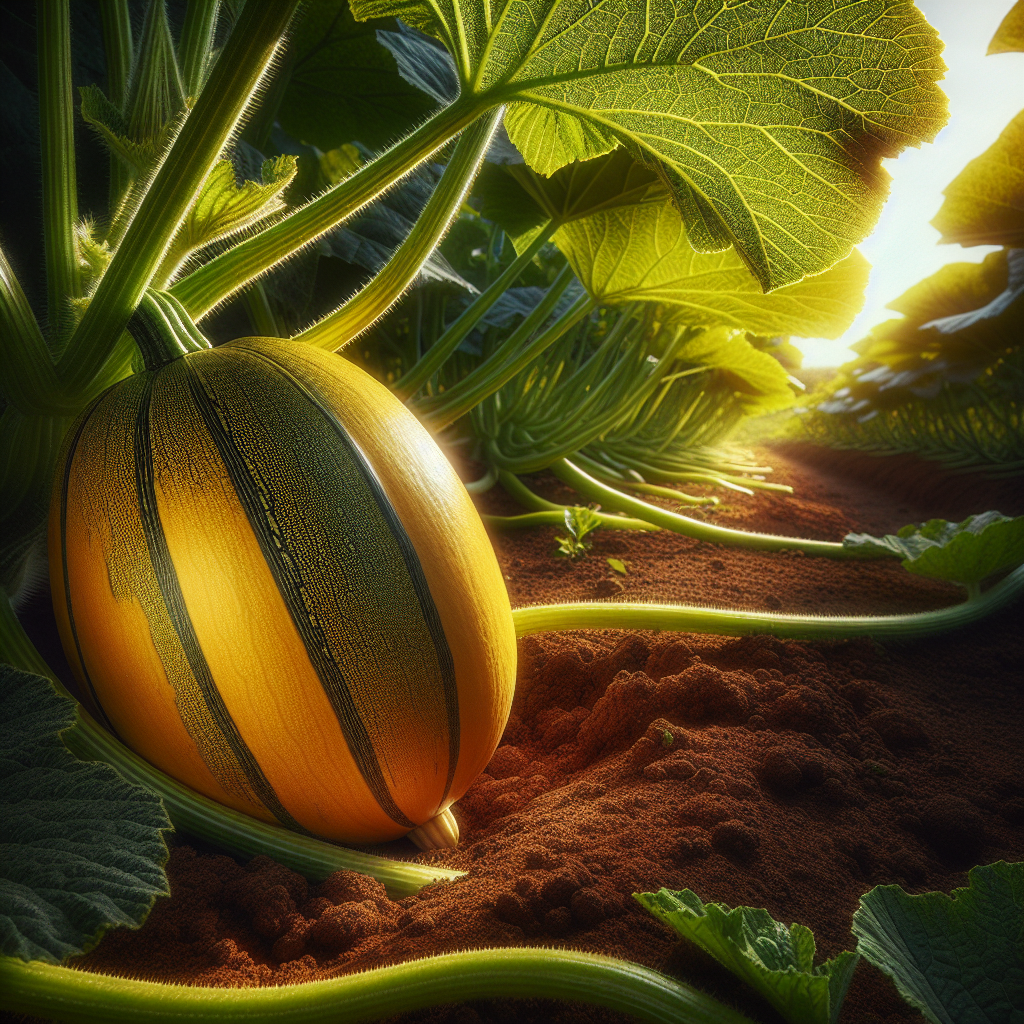
Introduction to Spaghetti Squash
A classic winter squash in the species Cucurbita pepo, this crop is prized less for sweetness than for texture: once cooked, the flesh pulls into long, firm strands that resemble pasta. That culinary novelty helped popularize it in North America in the 20th century, though squash domestication itself traces back thousands of years to the Americas, where indigenous peoples selected diverse forms of Cucurbita for food, storage, and seed use.
Despite the common name, it is botanically a winter squash, meaning it is harvested mature with a hardened rind and stored after curing. Fruits are typically oblong, cream to bright yellow at maturity, and usually weigh 2 to 5 pounds depending on cultivar and growing conditions. Common named cultivars include 'Vegetable Spaghetti', 'Tivoli' F1, 'Hasta La Pasta', and more compact bush selections suited to smaller plots.
For growers, the crop sits somewhere between forgiving and demanding. It germinates readily in warm soil and grows vigorously, but yield and fruit quality depend on precise timing, steady moisture, adequate potassium and calcium availability, strong pollinator activity, and careful disease management. If you are already familiar with the broader Squash guide, many principles apply, but spaghetti squash deserves its own management approach because growers want full physiological maturity, dense shell development, and dry matter accumulation rather than immature tender fruit.
Botanical Profile of Spaghetti Squash
This plant belongs to the family Cucurbitaceae, alongside pumpkins, cucumbers, melons, and gourds. Within Cucurbita pepo, it shares species status with zucchini, some pumpkins, delicata types, and certain ornamental gourds, which is important for seed saving and crop isolation because cross-pollination can occur within the species.
Growth habit is typically vining, although some bush and semi-bush hybrids exist. Standard vines may run 8 to 15 feet or more under fertile conditions. The plant produces large, rough, palmately lobed leaves borne on hollow petioles. Stems and leaves often carry stiff trichomes that can irritate skin slightly during field work.
Like most cucurbits, it is monoecious: separate male and female flowers occur on the same plant. Male blossoms appear first, often 1 to 2 weeks before female blossoms, and are borne on long slender stalks. Female flowers have a visible swollen ovary behind the petals that already resembles a miniature fruit. Pollination is primarily carried out by bees, especially squash bees, bumblebees, and honeybees. Poor pollination leads to misshapen fruit, fruit abortion, or reduced seed set, which can indirectly reduce size and uniformity.
Roots are relatively shallow but wide-spreading. Most feeder roots occupy the top 12 to 18 inches of soil, which explains why moisture fluctuation quickly affects plant stress. However, in deep loose soils the plant can extend farther, improving drought resilience somewhat.
Fruit anatomy is distinct. The mature exocarp becomes hard and protective, while the mesocarp develops a fibrous, strand-forming interior. Those strands align with vascular bundles and flesh structure, giving the cooked product its characteristic spaghetti-like texture. Seed cavity size varies by cultivar and irrigation regime; excess nitrogen or uneven water can increase vegetative growth at the expense of dense fruit development.
Soil, pH, and Climate Requirements for Spaghetti Squash
This crop performs best in fertile, well-drained loam or sandy loam with high organic matter and excellent aeration. Heavy clay is workable only if drainage is improved because prolonged root-zone saturation sharply increases the risk of damping-off, root decline, and fruit rot. An ideal soil texture holds moisture evenly but drains quickly after rain or irrigation.
The preferred pH range is 6.0 to 6.8, with 6.2 to 6.5 especially reliable for balanced nutrient uptake. Below pH 5.8, calcium, magnesium, and phosphorus availability may become limiting while manganese toxicity risk increases. Above pH 7.2, micronutrients such as iron, zinc, and manganese can become less available, causing chlorosis in new growth. A pre-plant soil test is strongly recommended. If lime is needed, apply it several months before planting so pH adjusts gradually. Where magnesium is low, dolomitic lime is preferable.
Spaghetti squash is a frost-sensitive warm-season crop that needs sustained warmth from emergence through fruit maturity. Optimal air temperatures are roughly 70 to 85°F (21 to 29°C) during the day and above 55°F (13°C) at night. Seed germination is best when soil temperatures are 70 to 95°F (21 to 35°C), with rapid emergence near 85 to 90°F. Below 60°F (16°C), germination becomes slow and erratic, and seeds are vulnerable to rotting.
The crop generally requires 90 to 110 frost-free days depending on cultivar. Cool summers delay flowering and ripening. Very high temperatures above 95°F (35°C), especially with dry winds, can reduce pollen viability, increase blossom drop, and stress vines unless irrigation is excellent.
Choose a site with full sun, meaning at least 8 hours of direct light daily. Six hours may support vine growth, but fruit set, sugar accumulation, rind hardening, and disease resistance all improve with stronger light. Good air movement is also important because dense foliage plus stagnant humidity creates ideal conditions for Powdery mildew.
Moisture management is critical. Aim to keep the top 6 to 8 inches of soil consistently moist but never waterlogged. In practical terms, this means soil at root depth should feel cool and slightly damp, forming a weak ball in the hand that breaks apart with light pressure. If the soil feels slick, shiny, or smells sour, it is too wet. If it is powdery and cannot hold shape at all, the plant is under drought stress. Tensiometer targets around 20 to 30 centibars in loam soils are generally favorable during vegetative growth and flowering; prolonged readings above 40 to 50 centibars can reduce fruit size and increase blossom-end issues related to erratic calcium movement.
Step-by-Step Planting & Propagation
Direct seeding is the preferred method in most climates because cucurbits dislike root disturbance. Sow only after all frost danger has passed and soil temperature at 2 inches deep is reliably above 65°F (18°C), preferably above 70°F (21°C).
- Prepare beds 2 to 3 weeks before planting. Incorporate 2 to 4 inches of finished compost and correct pH based on a soil test. Avoid fresh manure immediately before planting because excess soluble nitrogen can push vine growth and increase disease susceptibility.
- Form raised rows or low hills if drainage is marginal. Hills warm faster and improve runoff, especially in spring.
- Sow 1 to 1.5 inches deep in moist soil. In hills, place 3 to 4 seeds per hill and thin to the strongest 1 to 2 plants. In row culture, space plants 24 to 36 inches apart with 6 to 10 feet between rows depending on cultivar vigor.
- Water immediately after sowing to settle the seed zone, then keep the seed bed evenly moist until emergence, which usually occurs in 5 to 10 days under warm conditions.
- Thin once seedlings have 1 to 2 true leaves. Cut extra seedlings at the base rather than pulling to avoid disturbing roots.
For short-season regions, transplants can provide a 2- to 3-week head start. Start seeds indoors 2 to 3 weeks before transplanting in 3- to 4-inch biodegradable pots or deep cells. Maintain 80 to 90°F soil temperature for germination and very bright light after emergence. Transplant only when plants have 1 to 2 true leaves and are not root-bound. Harden them off gradually over 5 to 7 days. Set out after frost, taking care not to bury stems too deeply or break roots. This is one crop where oversized transplants often underperform smaller, younger ones.
Black plastic mulch or biodegradable film can be very effective in cool climates by warming the soil, suppressing weeds, and reducing fruit-soil contact. Drip irrigation under mulch is ideal. In windy sites, use row covers immediately after planting to exclude Cucumber beetles and accelerate growth, but remove them when female flowers appear so pollinators can enter.
If saving seed, isolate from other Cucurbita pepo types by substantial distance or hand-pollinate and bag flowers. Otherwise, varietal purity will not be maintained.
Care & Maintenance regimes for Spaghetti Squash
After establishment, steady growth depends on balanced fertility and disciplined irrigation. The crop is a moderate to heavy feeder, but too much nitrogen is one of the most common management errors. Excess nitrogen creates oversized vines, delayed flowering, softer tissues, and greater mildew pressure. A practical target for fertile garden soils is modest nitrogen upfront, followed by side-dressing once vines begin to run and again at early fruit set if leaves are pale or growth slows. Prioritize phosphorus and especially potassium where soil tests indicate deficiency, because potassium supports water regulation, disease tolerance, and fruit quality.
Mulch with clean straw or leaf mulch once soil has warmed. This helps stabilize moisture, suppress weeds, and reduce fruit rot. Keep mulch a few inches away from the crown to avoid excessive humidity at the stem base.
Irrigation should be deep and infrequent rather than shallow and frequent. Most plantings need about 1 to 1.5 inches of water per week from rainfall plus irrigation, increasing to nearly 2 inches during heat waves on sandy soils. During flowering and fruit bulking, drought stress causes fruit abortion and reduced size. During ripening, slightly reducing water can help rind hardening, but do not allow vines to wilt repeatedly. Morning wilt that recovers by evening can indicate root stress or vascular disease; midday wilt on very hot days may be normal if recovery is rapid after temperatures drop.
Signs of underwatering include dull gray-green leaves, leaf margins that crisp, fruits that stop enlarging, and repeated afternoon wilting. Signs of overwatering include uniformly yellow lower leaves, soft lush growth, algae on soil surface, edema-like blistering, and fruit rot where fruit rests on wet ground.
Weed control is most important during the first 4 to 6 weeks. Once vines cover the ground, they suppress many later weeds. Cultivate shallowly to avoid root damage. Hand weeding is often safer than aggressive hoeing near crowns.
Pollination is a yield-limiting factor in many plantings. Encourage bees by avoiding insecticide sprays during bloom and by including flowering companion species nearby. Each female flower is receptive for a short window, usually early in the day. Poor fruit set in otherwise healthy vines often points to low pollinator activity or excessive heat. In small plantings, hand pollination can dramatically improve early set.
Pruning is generally unnecessary, but in very small spaces you can redirect vines or lightly remove excessively tangled laterals after several fruits have set. Do not over-prune; leaves are the factory that matures the crop.
For trellising, compact cultivars can be trained upward with strong support and slings for developing fruit. Standard large-fruited types are usually easier on the ground. Rotate away from cucurbits for at least 3 years where disease pressure is high.
For broader fertility planning, the principles in soil health strategies are especially useful for maintaining the organic matter and biological activity this crop prefers.
Pests, Diseases & Organic Management
Cucumber beetles are among the most serious early threats. They chew cotyledons and young leaves, scar stems, and can transmit Bacterial wilt. Protect seedlings with row cover until flowering, use yellow sticky traps for monitoring, and remove covers promptly for pollination. Kaolin clay can deter feeding in some systems. Severe early feeding on small plants can reduce stand vigor permanently.
Squash vine borer is regionally devastating, especially in areas with warm summers and repeated moth flights. Adults lay eggs near stems; larvae bore into vines, causing sudden wilt despite moist soil. Look for sawdust-like frass at the stem base. Organic tactics include floating row covers before flowering, wrapping lower stems with foil or fabric, mounding soil over nodes so plants can root along vines, destroying infested vines after harvest, and timing plantings to avoid peak flights where local patterns are known.
Squash bugs feed on sap, causing stippling, yellowing, and eventual leaf collapse. Eggs are often laid in bronze clusters on leaf undersides. Hand removal of eggs, boards used as overnight traps, and early intervention on nymphs are much more effective than trying to control adults late in the season.
Aphids can colonize growing tips and spread viruses. Strong water sprays, insecticidal soap, reflective mulch, and habitat for beneficial insects help keep populations below damaging levels.
Powdery mildew is the most common late-season disease. It appears as white powdery patches on leaves, reducing photosynthesis and shortening fruit fill. Prevention includes full sun, spacing for airflow, avoiding excessive nitrogen, and watering at the base rather than overhead late in the day. Organic treatments such as potassium bicarbonate, sulfur products, or biological fungicides can suppress spread when started early.
Downy mildew causes angular yellow lesions and gray-purple sporulation on leaf undersides under humid conditions. It spreads quickly in warm, wet weather. Rapid sanitation, airflow, and approved protectant sprays are important once regional alerts begin.
Bacterial wilt, spread by Cucumber beetles, causes irreversible vine collapse. A quick diagnostic field sign is a sticky bacterial strand that stretches when a cut stem is pulled apart, though this is not always reliable. Prevention focuses on beetle management because there is no cure.
Mosaic viruses produce mottled leaves, distorted growth, and malformed fruit. Rogue badly infected plants and control aphid vectors as early as possible. Sanitize tools if handling suspect plants.
Fruit rots increase where fruit sits on wet soil or dense mulch in humid weather. Use straw, tiles, or mesh supports under fruits, especially as they begin coloring.
Harvesting, Curing & Optimal Storage
Harvest when fruits are fully mature, not when they merely look large enough. The rind should be hard enough that a fingernail cannot easily puncture it. Color typically shifts from pale cream to a richer yellow or golden yellow, depending on cultivar. The stem should begin to dry and cork slightly, though do not wait for vines to fully collapse if frost or disease is imminent.
Use pruners or a sharp knife to cut fruits with 2 to 3 inches of stem attached. Never lift by the stem alone; stem breakage shortens storage life. Handle gently because bruises become storage rot entry points.
If frost threatens, harvest all marketable fruit beforehand. Light frost can damage vines; hard frost can injure rinds and ruin storage potential.
Curing improves rind hardness and extends keeping quality. Cure fruits for 10 to 14 days at 80 to 85°F (27 to 29°C) with good airflow if possible. In home-scale settings, a warm dry porch, greenhouse bench out of direct intense sun, or airy shed can work. If such warmth is unavailable, even a week in a dry, well-ventilated location helps. Do not cure in damp basements.
After curing, store at 50 to 55°F (10 to 13°C) with relative humidity around 50 to 70%. This balance is important: too dry and fruits shrivel; too humid and molds proliferate. Avoid refrigeration, which can cause chilling injury below about 50°F. Under good conditions, many fruits keep 1 to 3 months, and some cultivars store longer, but spaghetti squash usually has a somewhat shorter storage life than dense-fleshed butternut types.
Inspect stored fruits every 1 to 2 weeks. Remove any with soft spots, leaking stem ends, or mold. Flavor often improves after a short post-harvest rest of a couple of weeks as texture stabilizes, though very long storage can reduce quality.
Companion Planting for Spaghetti Squash
Traditional companion systems work best when they solve real agronomic problems: pollination support, pest confusion, shade moderation, or space use. One classic approach is pairing with Corn at the field margin or in a nearby block rather than forcing dense interplanting that makes harvest difficult. Corn can provide a light windbreak and ecological diversity, though it should not overly shade vines.
Nasturtium is a useful companion around bed edges because it attracts pollinators and beneficial insects while acting as a visual trap plant for some pests in mixed gardens. Radish can be sown early around young hills as a quick crop before vines spread, helping occupy bare soil and sometimes distracting flea-feeding pressure in diversified beds. Clover used in paths or between widely spaced rows can reduce erosion, support pollinators when managed low, and contribute nitrogen biologically, though it must be prevented from competing strongly with young squash plants.
Avoid close association with other sprawling cucurbits when space is limited, because dense canopy overlap traps humidity and accelerates disease. Also avoid planting in the same ground after cucumbers, pumpkins, melons, or zucchini without rotation, since pests and pathogens accumulate quickly.
In professional or intensive garden systems, companion planting should remain subordinate to spacing, airflow, irrigation access, and ease of scouting. Good companions help, but correct crop density and sanitation matter far more than folklore.