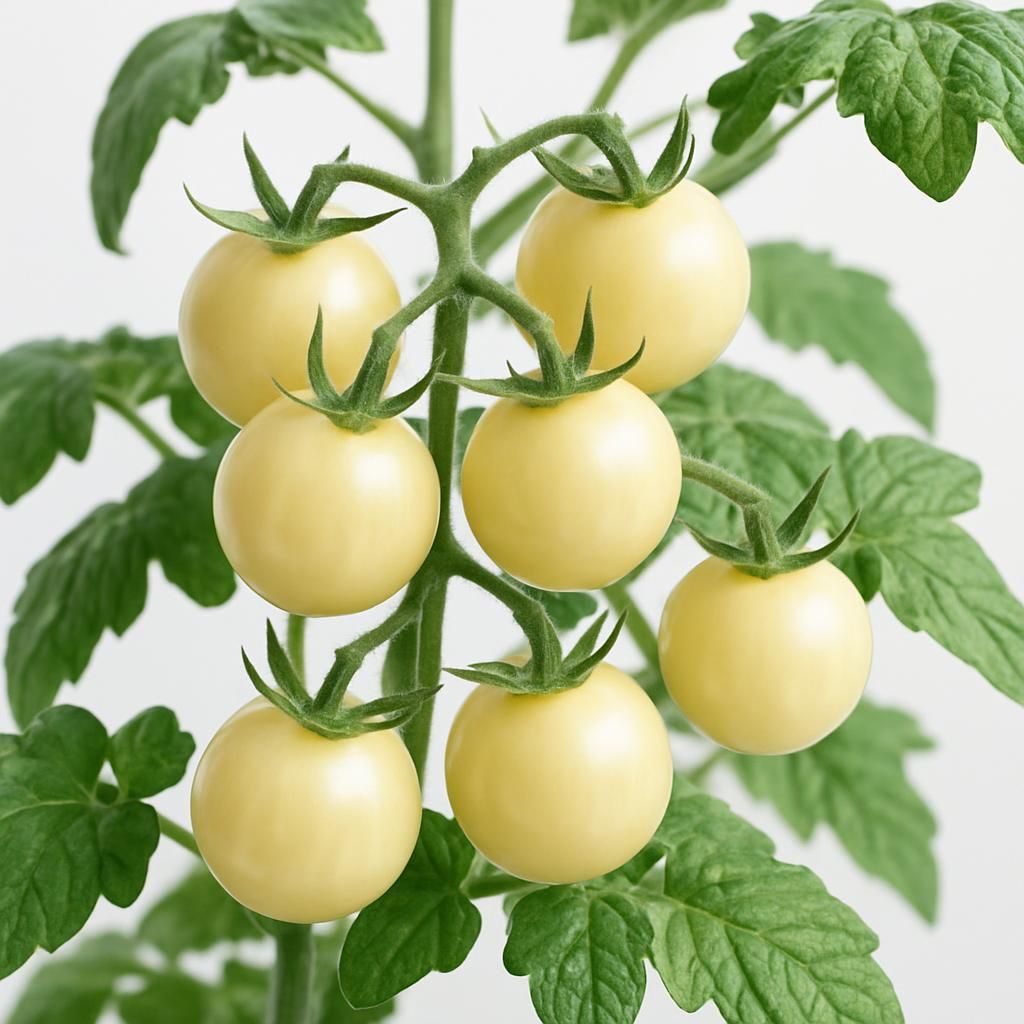
Introduction to Snow White Cherry Tomato
Snow White Cherry Tomato is an indeterminate heirloom variety that produces clusters of small, ivory to pale-yellow fruit with a remarkably sweet, low-acid flavor. Developed for both home gardeners and market growers, the plants reach 4–6 feet in height and continue setting fruit until frost when provided with proper support and nutrition. The variety is valued for its high yield, ornamental appeal, and versatility in fresh eating, salads, and preserves.
Because it is indeterminate, Snow White requires staking, caging, or trellising and benefits from consistent pruning to maintain airflow and light penetration. The fruit ripens from creamy white to soft yellow, signaling peak sweetness when fully colored. Growers appreciate its resistance to cracking and its ability to produce reliable harvests in both greenhouse and open-field systems.
Botanical Profile of Snow White Cherry Tomato
Snow White Cherry Tomato belongs to the nightshade family (Solanaceae) and shares the same species as larger tomato cultivars. It exhibits the typical compound leaves, yellow star-shaped flowers, and fleshy berry fruit characteristic of Tomato. The plants are vigorous, with strong lateral branching and the capacity to set dozens of fruit clusters per stem under optimal conditions.
Individual fruits average 0.5–0.75 inches in diameter and contain two to three locules with minimal gel. The pale coloration results from reduced lycopene expression while retaining high sugar content. Flowers are self-pollinating but benefit from gentle shaking or pollinator activity to improve fruit set in protected environments.
Soil, pH, and Climate Requirements for Snow White Cherry Tomato
Snow White Cherry Tomato performs best in fertile, well-drained loam with consistent moisture and full sun exposure. The variety tolerates a range of climates but produces highest yields when daytime temperatures remain between 70–85°F (21–29°C) and nighttime lows stay above 55°F (13°C).
| Parameter | Ideal Range | Notes |
|---|---|---|
| Soil Type | Loamy, well-drained | Avoid heavy clay; amend with compost |
| Soil pH | 6.2–6.8 | Test annually; adjust with lime or sulfur |
| Temperature (Day) | 70–85°F (21–29°C) | Optimal fruit set and flavor development |
| Temperature (Night) | 55–65°F (13–18°C) | Below 55°F reduces pollination |
| Sunlight | 8+ hours direct | South-facing exposure preferred |
| Spacing (In-ground) | 18–24 inches between plants | Rows 36–48 inches apart |
| Container Size | Minimum 5 gallons | Use well-aerated potting mix |
Step-by-Step Planting & Propagation
Start seeds indoors 6–8 weeks before the last expected frost. Sow ¼ inch deep in sterile seed-starting mix and maintain soil temperature at 75–80°F (24–27°C) for rapid germination. Provide 14–16 hours of supplemental light daily to prevent leggy seedlings.
Harden off transplants for 7–10 days before planting outdoors once soil has warmed to at least 60°F (16°C). Dig planting holes twice the width of the root ball and amend with aged compost. Bury the stem up to the first true leaves to encourage adventitious root development. Install stakes or cages at planting time to avoid root disturbance later.
Care & Maintenance regimes for Snow White Cherry Tomato
Consistent moisture, balanced fertility, and regular pruning are essential for high-quality fruit. Mulch with 2–3 inches of organic material to conserve moisture and suppress weeds. Monitor plants weekly for nutrient deficiencies and adjust feeding accordingly.
| Task | Frequency | Details |
|---|---|---|
| Watering | 1–1.5 inches/week | Deep watering at base; avoid foliage wetting |
| Fertilizer | Every 2–3 weeks | Balanced NPK 5-5-5 or fish emulsion; switch to high-potassium formula at flowering |
| Pruning | Weekly | Remove suckers below first flower cluster; thin dense foliage for airflow |
| Mulching | At planting + top-up | Straw, shredded leaves, or untreated wood chips |
| Support | At planting | Stake, cage, or Florida weave system |
Pests, Diseases & Organic Management
Common challenges include Aphids, Spider Mites, Whiteflies, and fungal issues such as Early Blight and Septoria Leaf Spot. Implement integrated pest management beginning with cultural practices: crop rotation, proper spacing, and removal of infected debris.
Encourage beneficial insects by planting flowering herbs nearby. Apply insecticidal soap or neem oil for soft-bodied pests at the first sign of infestation. For fungal diseases, use copper-based fungicides or Bacillus subtilis sprays on a preventive schedule, especially during humid periods. Remove lower leaves that contact soil to reduce splash-borne pathogens.
Harvesting, Curing & Optimal Storage
Harvest Snow White Cherry Tomato when fruit reaches full creamy-yellow color and yields slightly to gentle pressure. Pick clusters by cutting the stem above the first fruit to avoid damaging the plant. Regular harvesting encourages continued production.
Store ripe fruit at room temperature for up to one week. For longer storage, refrigerate at 50–55°F (10–13°C) but return to room temperature before serving to restore flavor. Excess fruit can be dehydrated, frozen, or made into preserves. Avoid stacking fruit more than two layers deep to prevent bruising.
Companion Planting for Snow White Cherry Tomato
Pair Snow White Cherry Tomato with aromatic herbs and flowers that deter pests and attract beneficial insects. Basil planted nearby improves flavor and repels Whiteflies and Hornworms. Marigolds provide nematode suppression and visual appeal.
Avoid planting near Fennel or walnuts, which release allelopathic compounds. Good companions include Garlic, Onion, and Nasturtium for aphid control. Rotate tomatoes with Legumes or Cover Crops to restore soil nitrogen and break disease cycles.
For additional strategies on timing and resilience, see The Overlooked Art of Seasonal Harvest Timing for Small Farm Profit.