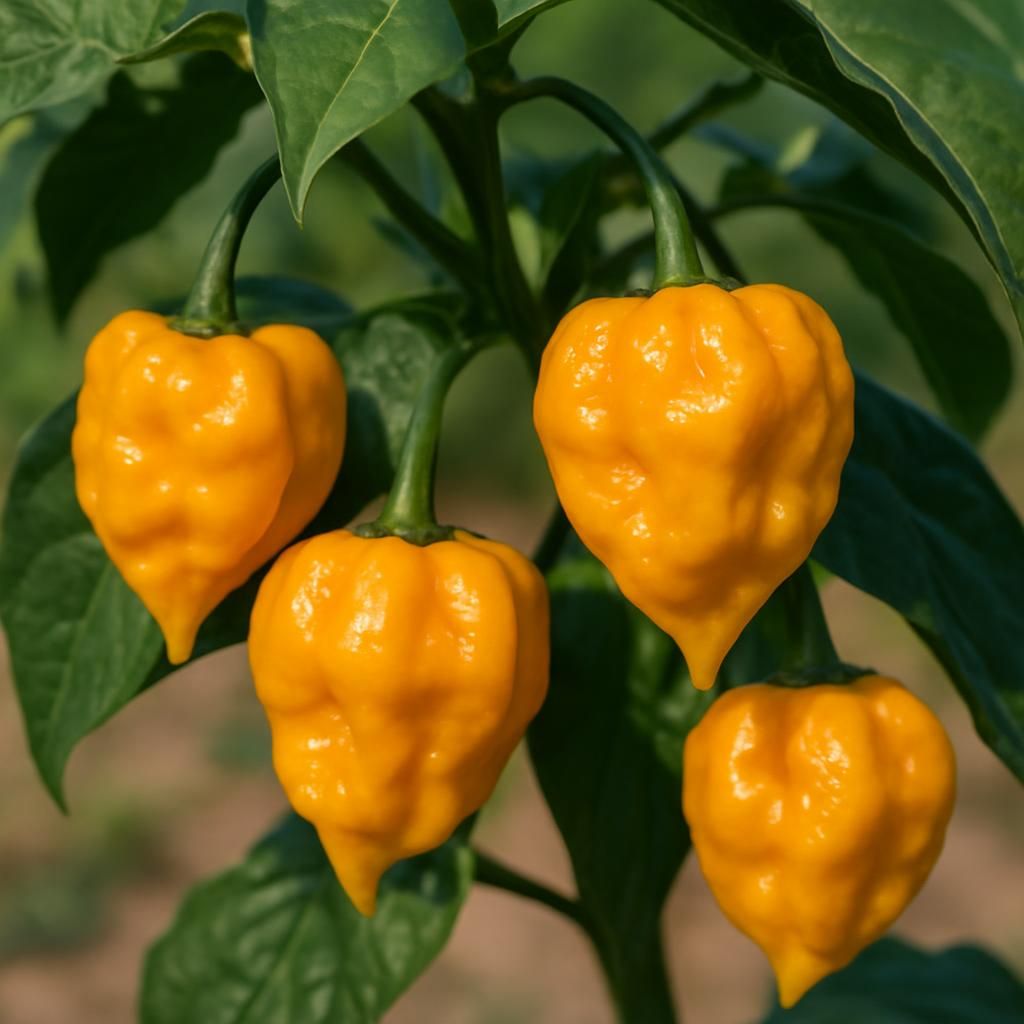
Introduction to Scotch Bonnet Papa Joe's
Scotch Bonnet Papa Joe's is a rare, high-performing heirloom cultivar of Chili Pepper prized by professional growers and home gardeners alike. Its distinctive lantern shape, intense fruity aroma, and heat level between 100,000–350,000 Scoville Heat Units make it a standout among hot peppers. This variety is favored for both fresh market sales and value-added products such as hot sauces and Caribbean jerk seasonings.
The plant produces heavy yields of medium-sized, wrinkled pods that transition from green to a brilliant golden-yellow at maturity. Its compact yet productive habit allows successful cultivation in containers, raised beds, or open-field systems. With proper care, Scotch Bonnet Papa Joe's offers both exceptional flavor and reliable market returns.
Botanical Profile of Scotch Bonnet Papa Joe's
Scotch Bonnet Papa Joe's belongs to the species Capsicum chinense, a group known for complex capsaicinoid profiles and aromatic fruit. The plant exhibits a semi-determinate growth habit reaching 60–90 cm in height with a bushy structure and dark green, ovate leaves. Flowers are small, white, and self-pollinating, though insect activity increases fruit set.
The fruit displays the classic Scotch bonnet shape with a distinct flattened, wrinkled appearance. Mature pods measure 3–5 cm in length and 4–6 cm in width. The thick-walled flesh delivers a sharp, fruity heat followed by sweet undertones, making it ideal for both fresh consumption and processing.
Soil, pH, and Climate Requirements for Scotch Bonnet Papa Joe's
Successful cultivation begins with optimal soil and climate conditions. Scotch Bonnet Papa Joe's thrives in well-drained, fertile loam with consistent moisture and full sun exposure. The table below outlines ideal parameters.
| Parameter | Ideal Range | Notes |
|---|---|---|
| Soil Type | Sandy loam to loam | Excellent drainage essential |
| Soil pH | 6.0–6.8 | Slightly acidic to neutral |
| Temperature (Day) | 24–32 °C | Optimal fruit set and flavor development |
| Temperature (Night) | 18–22 °C | Avoid prolonged exposure below 15 °C |
| Sunlight | Full sun (minimum 8 hours) | South-facing aspect preferred |
| Soil Organic Matter | 3–5% | Incorporate compost or aged manure |
| EC (Electrical Conductivity) | 1.5–2.5 mS/cm | Monitor to prevent salt stress |
Step-by-Step Planting & Propagation
- Seed Selection & Timing: Source certified disease-free seed. Start seeds indoors 8–10 weeks before the last expected frost.
- Germination: Maintain soil temperature of 26–30 °C. Expect germination in 7–14 days. Use a sterile seed-starting mix.
- Transplanting: Harden off seedlings for 7–10 days. Transplant outdoors when soil reaches 18 °C and all frost risk has passed.
- Spacing: Space plants 45–60 cm apart in rows 75–90 cm apart. Raised beds improve drainage and root health.
- Container Growing: Use 20–30 L containers with drainage holes and high-quality potting mix amended with compost.
Care & Maintenance regimes for Scotch Bonnet Papa Joe's
Consistent care ensures high yields and fruit quality. The following table summarizes recommended schedules.
| Growth Stage | Watering Schedule | Fertilizer Application | Pruning & Training |
|---|---|---|---|
| Seedling (0–4 wks) | Keep evenly moist; water lightly daily | Dilute fish emulsion (1:10) weekly | Pinch growing tip at 4–6 true leaves |
| Vegetative (4–8 wks) | 2–3 times per week; 2–3 cm per session | High-nitrogen (NPK 10-5-5) every 10–14 days | Remove lower leaves; stake if needed |
| Flowering (8–12 wks) | Deep watering 2× weekly; avoid overhead | Balanced (NPK 5-10-10) every 14 days | Remove first flowers to promote branching |
| Fruiting (12+ wks) | 2–3 cm every 3–4 days; mulch to retain moisture | Potassium-rich (NPK 5-5-10) bi-weekly | Remove diseased foliage; thin interior for airflow |
Mulch with organic straw or wood chips to suppress weeds and maintain soil moisture. Monitor for nutrient deficiencies and adjust feeding accordingly.
Pests, Diseases & Organic Management
Scotch Bonnet Papa Joe's can be affected by common pepper pests and diseases. Early detection and organic interventions are critical.
Major Pests
- Aphids: Spray with insecticidal soap or neem oil. Encourage beneficial insects such as lady beetles.
- Spider mites: Increase humidity and apply horticultural oil. Avoid broad-spectrum insecticides.
- Thrips: Use blue sticky traps and release predatory mites.
- Whiteflies: Vacuum adults and apply neem or insecticidal soap.
Common Diseases
- Powdery mildew: Improve airflow and apply potassium bicarbonate sprays.
- Phytophthora: Ensure excellent drainage; rotate crops every 3–4 years.
- Bacterial spot: Use copper-based sprays and avoid overhead irrigation.
- Fusarium wilt: Plant resistant rootstocks or rotate with non-host crops.
Regular scouting, crop rotation, and sanitation remain the foundation of organic management.
Harvesting, Curing & Optimal Storage
Harvest Scotch Bonnet Papa Joe's when pods reach full color and desired heat level. Wear gloves during harvest to avoid skin irritation. Cut stems with clean shears rather than pulling.
For fresh market sales, store at 7–10 °C with 85–90% relative humidity for up to two weeks. For drying, place pods in a single layer in a well-ventilated area or dehydrator at 50–55 °C until brittle. Store dried peppers in airtight containers away from light.
Proper post-harvest handling preserves both flavor and pungency. See The Overlooked Art of Seasonal Harvest Timing for Small Farm Profit for advanced timing strategies.
Companion Planting for Scotch Bonnet Papa Joe's
Strategic companions improve yields, deter pests, and enhance soil health:
- Tomato: Provides shared microclimate and attracts pollinators.
- Basil: Repels aphids and improves flavor perception.
- Marigold: Suppresses nematodes and attracts beneficial insects.
- Onion: Masks pepper scent from pests.
- Cucumber: Benefits from vertical support while peppers deter cucumber beetles.
Avoid planting near Fennel or members of the Brassica family, which may compete for nutrients or attract shared pests.
With attention to soil health, consistent irrigation, and proactive pest management, Scotch Bonnet Papa Joe's delivers outstanding returns for both commercial and home growers.