Introduction to Sarpo Mira
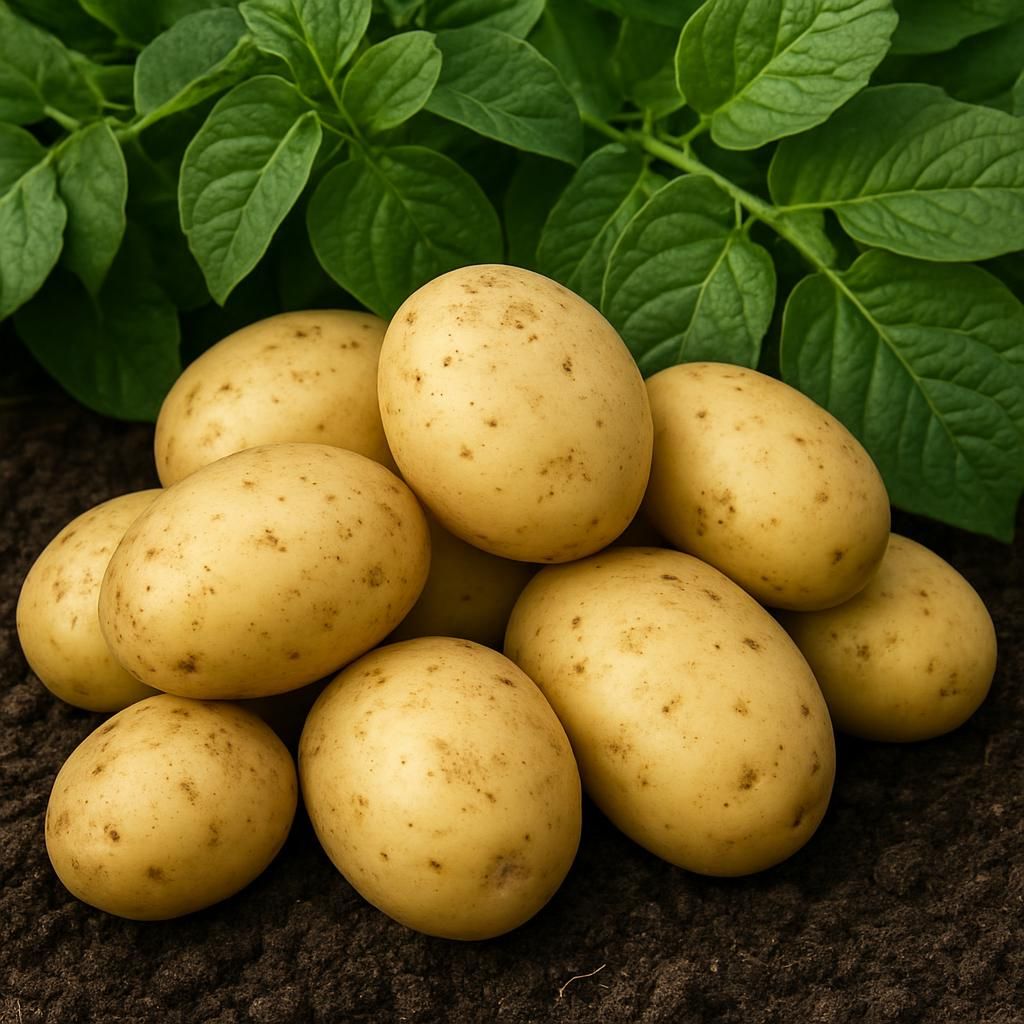
Sarpo Mira is a late-season potato variety developed in Hungary and widely adopted by organic and conventional growers seeking robust resistance to Potato late blight. Released in the early 2000s, it quickly gained recognition for delivering consistent yields even when other varieties succumb to disease pressure. Its tubers are large, oval to long-oval, with light-yellow flesh and a floury texture that suits baking, roasting, and mashing. Because of its strong skin set and low susceptibility to common scab and other storage rots, Sarpo Mira is favored by small farms and market gardeners who prioritize reduced chemical inputs and long-term storability.
Botanical Profile of Sarpo Mira
Sarpo Mira belongs to the species Solanum tuberosum and exhibits typical potato morphology: compound leaves with 7–9 leaflets, white to pale-lilac flowers, and stolons that terminate in tubers. The variety is tetraploid and displays vigorous haulm growth that reaches 60–80 cm. Its foliage remains green late into the season, contributing to high photosynthetic capacity and tuber bulking. Tuber skin is smooth, pale buff with shallow eyes; flesh color ranges from pale yellow to cream. Dry matter content averages 20–22 %, giving the variety its characteristic floury eating quality.
Soil, pH, and Climate Requirements for Sarpo Mira
Sarpo Mira performs best on well-drained, fertile loams or sandy loams. Heavy clays should be avoided or improved with organic matter to prevent waterlogging and tuber deformation. The variety tolerates a broad pH range but yields optimally between 5.5 and 6.5. It thrives in cool temperate climates with daytime temperatures of 15–20 °C during tuber initiation and bulking.
| Parameter | Ideal Range/Value | Notes |
|---|---|---|
| Soil Type | Loam to sandy loam | Good drainage essential |
| Soil pH | 5.5–6.5 | Below 5.0 increases scab risk |
| Temperature (day) | 15–20 °C | Optimal for tuber set |
| Temperature (night) | 10–12 °C | Promotes starch accumulation |
| Growing Season | 120–140 days | Late maturing |
| Frost Tolerance | Light frost (-2 °C) | Protect young shoots |
| Annual Rainfall | 600–900 mm | Supplemental irrigation if dry spells occur |
Step-by-Step Planting & Propagation
- Source certified seed tubers free of virus and bacterial diseases.
- Pre-sprout (chit) tubers 4–6 weeks before planting at 10–15 °C in bright, frost-free conditions.
- Prepare beds by incorporating 5–7 cm of well-rotted compost or manure.
- Plant whole or cut seed pieces (50–70 g) 10–15 cm deep with 30 cm in-row spacing and 75–90 cm between rows.
- Plant when soil temperature at 10 cm depth reaches 8 °C; late April to early May in temperate zones.
- Ridge soil over emerging shoots when plants reach 15–20 cm to protect tubers from light and support haulm.
Care & Maintenance regimes for Sarpo Mira
Consistent moisture and balanced nutrition are critical during tuber bulking. Avoid excessive nitrogen after flowering to prevent delayed maturity. Earthing-up twice during the season improves tuber quality and reduces greening.
| Growth Stage | Water Schedule | Fertilizer Schedule | Pruning / Cultural Task |
|---|---|---|---|
| Planting to Emergence | Keep soil moist, 25 mm/week | Incorporate 40 kg N/ha at planting | None |
| Vegetative (4–8 wks) | 25–30 mm/week | Side-dress 30 kg N/ha at 4 weeks | First earthing-up at 15 cm height |
| Flowering to Bulking | 30–35 mm/week | Apply 60 kg K₂O/ha; reduce N | Second earthing-up; remove weeds |
| Maturity (senescence) | Reduce to 15 mm/week | No further N; K only if deficiency visible | Allow natural die-back; avoid irrigation |
Pests, Diseases & Organic Management
Sarpo Mira’s standout trait is its polygenic resistance to Phytophthora infestans, the causal agent of late blight. Nevertheless, monitor for early blight (Alternaria), common scab, and Colorado potato beetle. Use 3–4 year rotations with non-host crops such as Wheat or Clover. Apply copper-based fungicides only as a last resort when disease pressure is extreme. Hand-pick beetle adults and larvae; row covers during early growth deter flea beetles. Encourage beneficial insects by planting flowering strips of Thyme or Yarrow.
Harvesting, Curing & Optimal Storage
Harvest when haulm has died back naturally or after 120–140 days. Lift tubers carefully to avoid skinning. Cure at 12–15 °C and 85–90 % RH for 10–14 days to harden skins. Store at 4–6 °C in darkness with good ventilation. Under optimal conditions Sarpo Mira retains quality for 6–8 months with minimal sprouting or rot.
Companion Planting for Sarpo Mira
Interplant with nitrogen-fixing Peas or Beans to improve soil fertility. Aromatic herbs such as Rosemary and Marigold help repel aphids and Colorado potato beetle. Avoid planting near Tomato or Eggplant to reduce shared disease risk. After harvest, sow a green manure of Hairy vetch to rebuild organic matter and suppress weeds.