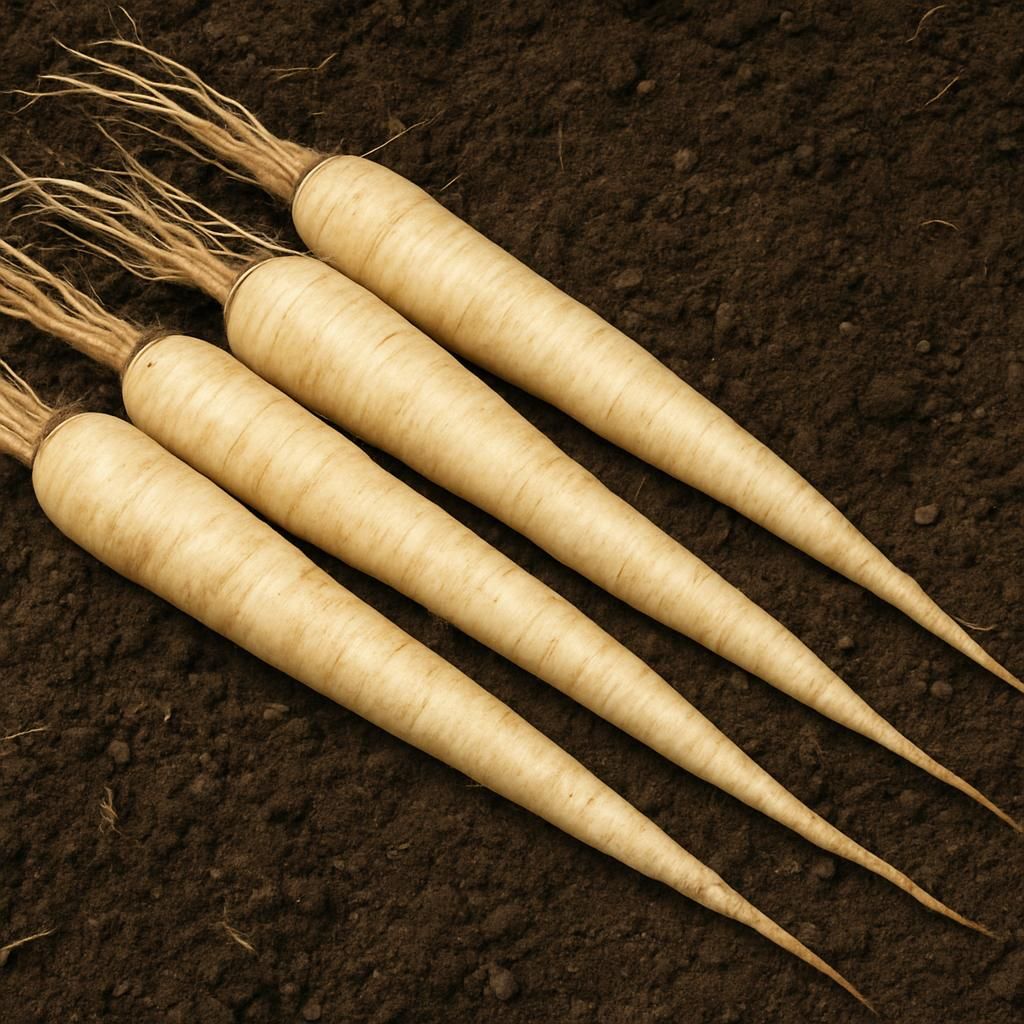
Introduction to Salsify (Mammoth Sandwich Island)
Salsify, often called the oyster plant, is an ancient Mediterranean crop that has experienced a quiet resurgence among chefs and home growers seeking distinctive root vegetables. The Mammoth Sandwich Island cultivar stands out for its extra-long, smooth white roots that can reach 12–18 inches, delivering superior yields compared with standard varieties. Its mild, slightly sweet flavor with hints of artichoke and oyster makes it a versatile ingredient for roasting, soups, and gratins. Because it tolerates light frosts and stores well in the ground, salsify provides a dependable winter harvest that extends the fresh-produce season on small farms.
Botanical Profile of Salsify (Mammoth Sandwich Island)
Tragopogon porrifolius belongs to the Asteraceae family and behaves as a biennial, forming a fleshy taproot the first year and tall flower stalks the second. The cultivar Mammoth Sandwich Island was selected for its uniform, tapered roots that resist forking and reach impressive lengths when grown in deeply worked soil. Leaves are long, narrow, and grass-like, emerging in a basal rosette before bolting. Pale purple, dandelion-like flowers appear in the second season, producing wind-dispersed seeds with feathery pappus. The plant’s deep root system improves subsoil structure, making it a useful component in soil-building rotations.
Soil, pH, and Climate Requirements for Salsify (Mammoth Sandwich Island)
Salsify performs best in cool climates with moderate rainfall or irrigation. It prefers deep, friable, stone-free loam that allows straight root development. Heavy clay or compacted soils cause forking and stunted growth. The crop tolerates a broad pH range but achieves optimal nutrient uptake between 6.0 and 7.5.
| Parameter | Ideal Range | Notes |
|---|---|---|
| Soil Type | Deep sandy loam to loam | Stone-free to 18 inches for straight roots |
| Soil pH | 6.0 – 7.5 | Slightly acidic to neutral |
| Temperature (Day) | 15–20 °C (59–68 °F) | Cool-season growth; tolerates light frost |
| Temperature (Night) | 5–10 °C (41–50 °F) | Prevents bolting in first year |
| USDA Zones | 3–9 | Best sown in early spring or late summer |
| Soil Moisture | Consistent, moderate | Avoid waterlogging; mulch helps retention |
Step-by-Step Planting & Propagation
- Site Preparation: Loosen soil to at least 18 inches deep, removing rocks and breaking up clods. Incorporate 2–3 inches of well-rotted compost or aged manure.
- Sowing Window: Direct-seed 2–3 weeks before last spring frost or 8–10 weeks before first fall frost. Soil temperature should be 10–15 °C (50–59 °F).
- Spacing: Sow seeds ½ inch deep in rows 12–18 inches apart. Thin seedlings to 3–4 inches within the row once true leaves appear.
- Succession: Stagger plantings every 3 weeks for continuous harvest. Avoid transplanting, as taproots resent disturbance.
- Germination: Expect 7–14 days. Keep seedbed evenly moist until seedlings emerge.
Care & Maintenance regimes for Salsify (Mammoth Sandwich Island)
Consistent moisture and weed control are essential for straight, high-quality roots. Mulching conserves water and suppresses weeds while protecting roots from temperature swings. Side-dress with a balanced organic fertilizer once seedlings are 4 inches tall; avoid excess nitrogen that promotes foliage at the expense of roots.
| Growth Stage | Watering Schedule | Fertilizer Application | Pruning/Thinning |
|---|---|---|---|
| Seedling (0–4 wks) | ½–¾ inch per week; keep evenly moist | None; rely on pre-plant compost | Thin to 3–4 inches when 2–3 true leaves appear |
| Vegetative (4–10 wks) | ¾–1 inch per week; mulch to retain moisture | Side-dress ½ cup balanced organic (5-5-5) per 10 ft row | Remove weeds; do not cultivate deeply |
| Root Bulking (10+ wks) | 1 inch per week if rainfall insufficient | Light compost tea every 4 weeks | No pruning needed; remove flower stalks if bolting occurs |
Pests, Diseases & Organic Management
Salsify is relatively pest-resistant but can be affected by Aphids, cutworms, and Slugs. Practice crop rotation and remove crop debris to reduce overwintering sites. Floating row covers deter cutworms and aphids during early growth. For slugs, apply iron-phosphate baits or beer traps around the perimeter. Root-knot nematodes may cause galls; solarize soil or plant resistant Tomato varieties in preceding seasons. Fungal issues such as Powdery mildew are rare but can appear in humid conditions—improve airflow and avoid overhead irrigation.
Harvesting, Curing & Optimal Storage
Harvest roots when they reach 1–1½ inches in diameter, typically 100–120 days after sowing. Loosen soil with a fork and lift carefully to avoid breakage. In mild climates, roots may remain in the ground through winter; mulch heavily for protection. For storage, trim tops to 1 inch, brush off soil, and keep at 0–2 °C (32–36 °F) with 90–95 % humidity. Roots store 4–6 months under these conditions. Lightly cured roots can also be packed in damp sand in a cool cellar.
Companion Planting for Salsify (Mammoth Sandwich Island)
Salsify benefits from association with nitrogen-fixing Peas and Beans that improve soil fertility without competing for nutrients. Aromatic herbs such as Thyme and Rosemary help repel aphids. Avoid planting near Potato or Carrot to reduce shared pest pressure. Interplanting with shallow-rooted Lettuce or Radish maximizes bed space while the deep salsify roots improve subsoil drainage for subsequent crops.