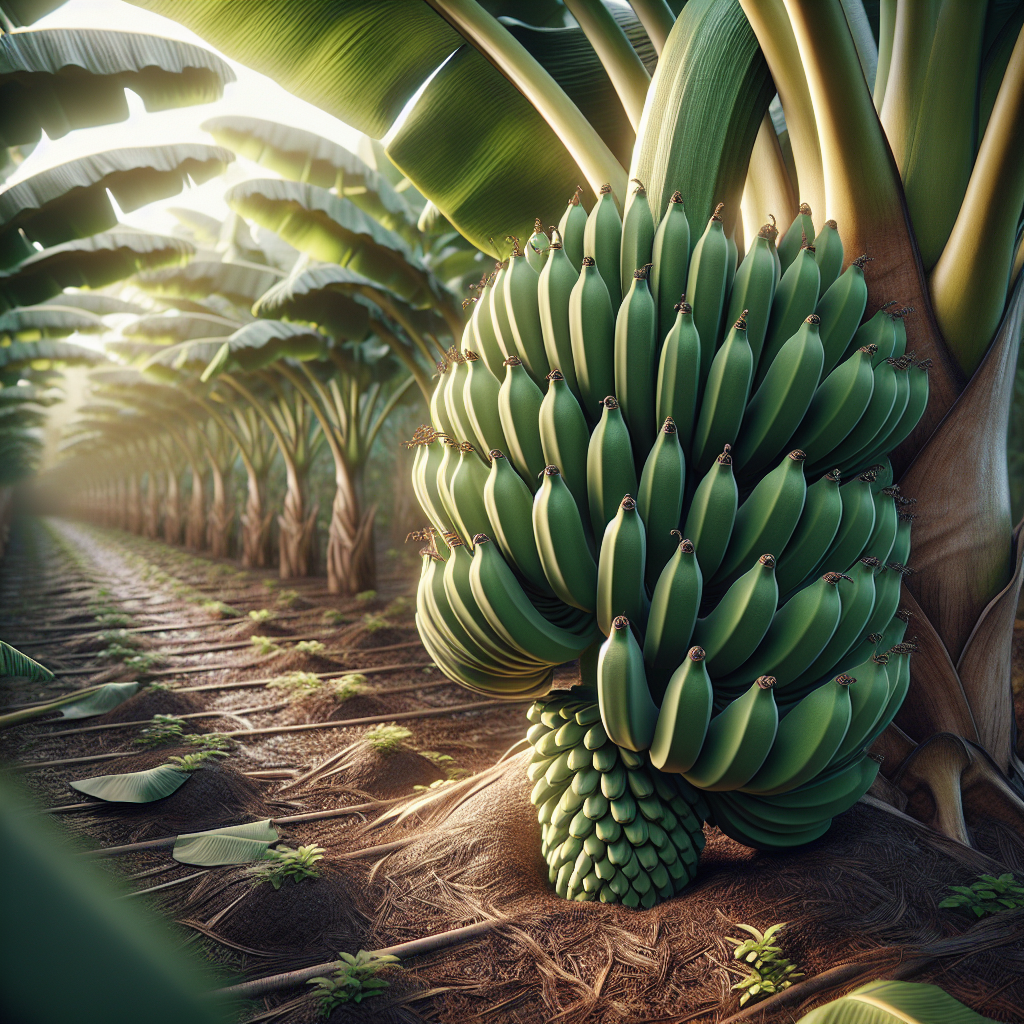
Introduction to Saba Banana
A cornerstone of tropical food systems, this cultivar is one of the most important cooking bananas in Southeast Asia, especially in the Philippines where it is used for boiling, frying, chips, sweets, ketchup production, and flour. It is often grouped with plantain-type bananas because of its starchy texture and culinary use, but it has a distinctive morphology: thick angular fruits, a robust pseudostem, and strong productivity under warm, wet conditions.
For growers, its commercial value lies in resilience and utility. Plants are typically taller and sturdier than many dessert bananas, with a better ability to tolerate wind and periodic stress than softer-fruited types. Compared with dessert types such as Dwarf Cavendish Banana, Saba is less about sweetness at the green stage and more about dry matter, cooking quality, and postharvest versatility. That high dry matter content also means careful water and nutrient management are essential if you want large, well-filled fingers rather than short, misshapen fruit.
Saba is best treated as a perennial mat-forming crop rather than a single plant. Each pseudostem fruits once, then is cut back and replaced by selected suckers arising from the underground corm. Professional production depends on mat management, drainage, potassium-rich fertility, wind planning, and strict sanitation. If those foundations are right, Saba can remain productive for years.
Botanical Profile of Saba Banana
This cultivar belongs to the genus Musa and is generally classified among cooking bananas with ABB genomic background, reflecting significant contribution from Musa balbisiana. That ancestry helps explain its comparatively firm fruit, tolerance of variable field conditions, and sturdy plant architecture. Fruits are short to medium in length, broad, and distinctly angular when immature. The peel is thick, which helps reduce handling damage but also means the fruit should be harvested at the correct maturity to avoid latex staining and quality loss.
Plants form a false trunk, or pseudostem, made of tightly wrapped leaf sheaths. True stems remain underground as a corm that produces roots and suckers. Leaves are large, oblong, and easily shredded by wind, but the plant continues functioning well as long as enough green leaf area remains. A healthy fruiting stem should carry a substantial canopy through bunch filling; severe leaf loss during this period reduces finger size and starch accumulation.
The inflorescence emerges from the center of the pseudostem and develops into hands of fruit under protective bracts. Depending on environment and management, bunches may carry many hands and reach substantial weight. Saba is typically slower to mature than small dessert bananas, especially in marginal temperatures. Cooler nights prolong crop duration, while strong heat and adequate moisture accelerate growth.
A key production trait is ratooning ability. After harvest, replacement suckers continue the cycle. The most productive mats are not the ones with the most shoots, but the ones with the best shoot hierarchy: one bearing stem, one follower, and one peeper or juvenile sucker. Excess suckers compete for nitrogen, potassium, water, and light, resulting in smaller bunches.
Soil, pH, and Climate Requirements for Saba Banana
Deep, friable, well-drained soil is the single most important factor after temperature. Saba performs best in loam to clay loam rich in organic matter, with effective rooting depth of at least 60-100 cm. The crop can tolerate heavier soils better than some dessert bananas, but only if internal drainage is good. Standing water around the corm for more than 48 hours sharply raises the risk of root suffocation, corm rot, and weak anchorage.
Ideal soil pH is 5.5-7.0, with best nutrient balance often seen around 6.0-6.8. Below pH 5.2, phosphorus becomes less available and aluminum or manganese toxicity may suppress roots. Above pH 7.3, micronutrients such as zinc and iron become less available, often showing up as pale, narrow young leaves. Before planting, a full soil test is strongly advised. If pH is low, incorporate agricultural lime several weeks to months before planting. If the site is alkaline, large additions of compost and localized sulfur-based acidification may help, but site selection is usually more effective than correction.
This is a true tropical crop. Optimal temperatures are 26-30°C, with active growth beginning around 18°C and slowing dramatically below that. Chilling injury may occur with prolonged exposure below 12-14°C, especially in young plants. Frost is fatal. High humidity supports vigorous leaf production, but persistent leaf wetness without airflow can intensify foliar disease pressure.
Rainfall of 1,500-2,500 mm annually, well distributed, is excellent. Where dry seasons occur, irrigation is necessary to maintain steady vegetative growth and bunch filling. Soil should remain consistently moist but never saturated. In practical terms, the root zone should feel cool and slightly damp at 15-20 cm depth, not muddy or foul-smelling. When squeezed, soil should hold together lightly but not release free water. Repeated cycles of drought followed by flooding cause split peels, poor finger fill, and unstable mats.
Wind exposure matters. Saba is sturdier than many bananas, yet strong storms can still shred leaves, twist bunches, or uproot waterlogged mats. Windbreaks, proper spacing, and drainage channels are essential in cyclone- or typhoon-prone areas. Full sun is ideal for maximum carbohydrate production. Light shade is tolerated, but bunch weight and fruit dry matter usually decline.
If you are building field fertility long-term, principles from soil health strategies apply especially well to banana systems because the crop responds strongly to improved organic matter, moisture buffering, and biological activity.
Step-by-Step Planting & Propagation
Propagation is almost always vegetative. Use sword suckers rather than water suckers whenever possible. Sword suckers have narrow, upright juvenile leaves and a larger, more vigorous connection to the mother corm. Water suckers, with broad leaves early on, usually establish weaker root systems and often underperform.
Choose planting material from disease-free, high-yielding mats with no signs of bunchy top, severe virus symptoms, corm weevil tunneling, or wilt. Ideal suckers are 1-1.5 m tall with a firm base. Pare away outer tissues until the corm surface is clean and white to pale cream, removing any discolored or tunneled tissue. Trim roots and dip the corm in hot water treatment or an approved biological/organic protectant where available. Air-dry briefly in shade before planting.
For tissue-cultured plants, harden them properly before field establishment. They must be gradually adapted to outdoor light, wind, and lower humidity for 2-4 weeks. Tissue-cultured plants give uniformity and cleaner planting stock, but their early field management must be gentler than with large sword suckers.
Site preparation should include deep cultivation only where it will not destroy soil structure. In many tropical soils, broad pit planting works well: holes about 45-60 cm wide and deep, refilled with topsoil mixed with 10-20 kg well-rotted compost. In heavier or flood-prone soils, raised mounds or ridges are better than pits. The corm should never sit in a sump that collects water.
Spacing depends on fertility, rainfall, and management intensity. Common commercial spacing is about 3 m x 3 m, giving roughly 1,100 plants per hectare, though wider spacing may be preferable where mats become very large or intercrops are planned. High-density systems are possible but require aggressive nutrient supply, irrigation precision, and desuckering.
Plant so that the corm is fully covered and the growing point is just above the final soil line. Firm the soil well to eliminate air pockets, then mulch immediately with straw, chopped leaves, or shredded crop residue, keeping mulch 10-15 cm away from direct contact with the pseudostem to reduce rot. Water thoroughly after planting so moisture penetrates the entire root zone.
In the first 8-12 weeks, remove weak suckers and keep only the mother plant plus one preferred follower if growth is strong. Weed carefully because young banana roots are shallow and easily damaged by hoeing. If intercropping, low, non-competitive species are best during establishment.
Care & Maintenance regimes for Saba Banana
Irrigation should be steady and deep rather than shallow and frequent. Young plantings need moist soil throughout the top 30 cm while roots establish. Mature mats with bunches require moisture extending deeper, ideally through 40-60 cm of soil. As a practical target, avoid allowing more than the upper few centimeters to dry completely during active growth. Leaf folding during midday, dull bluish foliage, and slowed leaf emergence suggest water deficit. In contrast, yellowing lower leaves, sour-smelling soil, persistent mossy wetness, and soft corm tissue indicate overwatering or poor drainage.
Bananas are heavy feeders, and Saba especially removes large amounts of potassium because of its big bunches and high dry matter fruit. A professional nutrient program should be built from soil and leaf analysis, but a general approach is: high nitrogen early for canopy development, then sustained potassium and adequate magnesium through bunch development. Excess nitrogen without enough potassium produces lush, weak growth, delayed maturity, and softer tissue more attractive to pests.
Organic systems often do well with split applications of composted manure, vermicompost, ash where appropriate and safe, banana residue recycling, and mulches supplemented by mineral sources allowed under local standards. Apply nutrients in a broad ring 30-60 cm from the pseudostem on young plants and farther out on mature mats, where feeder roots are active. Never pile concentrated fertilizer directly against the stem.
Desuckering is central to yield. Maintain a three-generation system: one bearing stem, one follower about half to two-thirds its size, and one small peeper. Remove all other suckers regularly by cutting them at ground level and destroying the growing point. This concentrates resources and simplifies field hygiene.
Old leaves should be removed conservatively. Strip only dead or badly diseased leaves; overpruning reduces photosynthesis. After bunch emergence, some growers remove the male bud if it persists below the final hand and is not needed, particularly where insect pressure or disease risk is high. This can improve sanitation, though benefits vary by environment.
Propping may be required when bunches become heavy or when storms are likely. Use forked bamboo or treated poles placed carefully to avoid root injury. Tie bunches loosely if needed to reduce snapping. Mulching should be continuous and renewed often; a 5-10 cm layer helps conserve moisture, moderate soil temperature, suppress weeds, and feed soil biology.
After harvest, cut the spent pseudostem in stages. First remove the bunch, then cut the stem to about chest height, later chopping the remainder and laying it as mulch if disease-free. This returns water and nutrients to the mat. Keep the follower intact and healthy so ratoon cropping proceeds without delay.
Pests, Diseases & Organic Management
The most important pest complex includes Banana weevil, Nematodes, Aphids, and occasionally Fruit-scarring insects or Leaf-feeding caterpillars. Banana weevil larvae tunnel into the corm, weakening anchorage and reducing nutrient flow. Adults hide in crop debris and moist trash. The best organic control is sanitation: use clean planting material, pare corms before planting, destroy infested residues, and place pseudostem traps to monitor and capture adults.
Plant-parasitic Nematodes such as burrowing and lesion Nematodes damage roots, causing poor growth, toppling, and weak bunch fill. Their effect is often mistaken for drought because damaged roots cannot absorb water properly. Use clean propagation material, rotate with non-host or suppressive crops before establishment when possible, and maintain high organic matter to support antagonistic soil life. Healthy mulched soils frequently show better root recovery than bare, compacted systems.
Aphids are important not only for sap feeding but because they can transmit Bunchy top virus in affected regions. Any plant showing severe bunching, narrow upright leaves, dark green streaking, and distorted growth should be rogued immediately and destroyed according to local phytosanitary guidance. Never propagate from suspect mats.
Fungal and bacterial diseases vary by region. Sigatoka leaf spot reduces functional leaf area; symptoms begin as narrow streaks that enlarge into necrotic lesions. Good airflow, proper spacing, removal of badly infected leaves, and balanced nutrition help reduce severity. Panama disease and Bacterial wilts are more serious because they affect the vascular system and may persist in soil or residues. Plants with unilateral yellowing, vascular discoloration, wilt, or bacterial ooze require fast isolation and strict tool sanitation.
Organic management depends on prevention more than cure. Core practices include:
- clean suckers or tissue-cultured plants
- field drainage and raised beds where needed
- regular desuckering and trash management
- disinfecting knives after each mat
- immediate removal of diseased plants and residues
- avoiding movement of contaminated soil on tools, boots, or machinery
- maintaining potassium, calcium, and silicon where available to strengthen tissue
For broader Musa crop background, see the general Banana guide.
Harvesting, Curing & Optimal Storage
Harvest stage depends on intended use. For cooking, chips, and boiling, fruits are generally cut mature-green when fingers are full, angularity has reduced somewhat, and the bunch has reached expected size for the cultivar and season. Waiting too long may lead to uneven ripening, peel cracking, and transport damage. For fresh ripe consumption, fruit can be harvested mature and ripened off-plant.
Typical field maturity indicators include: well-developed fingers on the middle hands, reduced sharpness of fruit angles, a more rounded shoulder near the pedicel, and attainment of the usual harvest age for your climate. In warm lowland conditions, bunches may be ready roughly 80-150 days after flowering, but local observation is more reliable than calendar days alone.
Harvest in the cool part of the day. One worker should support the bunch while another cuts the pseudostem partway to bend it, then severs the bunch cleanly. Avoid dropping; thick peel does not make the fruit bruise-proof. Keep latex from staining fruit by orienting cut surfaces away from the hands and washing or wiping promptly if needed.
Curing in the strict sense is limited for bananas, but postharvest conditioning is important. Rest bunches or hands in shade to drain latex and field heat. Wash in clean water if market standards require it, sanitize according to local postharvest regulations, and dry before packing. Green cooking fruit stores best at about 13-15°C with high relative humidity around 85-95%. Below about 12°C, chilling injury can cause peel browning, poor ripening, and dull flesh quality. At higher temperatures, respiration rises and ripening accelerates.
Do not store with ethylene-producing fruits if you need to keep Saba green. If ripening is desired, hold at warm room temperatures with ventilation. Ripe fruits should be used quickly because starch conversion proceeds fast and texture softens substantially. For processing, harvest uniform lots and grade by hand size and maturity for more consistent cooking performance.
Companion Planting for Saba Banana
The best companions are those that suppress weeds, protect soil, improve nutrient cycling, and avoid direct competition with the banana mat. Shallow-rooted, low-growing, or partial-shade-tolerant companions are preferable to tall aggressive species that rob light and water.
Clover can be useful as a living groundcover in well-managed systems where moisture is adequate. It helps reduce bare soil, softens raindrop impact, and contributes biologically fixed nitrogen over time. Keep it trimmed and prevent dense growth right against young pseudostems.
Ginger and Turmeric are excellent tropical intercrops in wider-spaced plantings because they appreciate filtered light, benefit from mulched fertile soil, and occupy a different canopy layer. They also help make better use of space during the early years of plantation establishment or in lower-density backyard systems.
Peanuts can function as a low leguminous cover in lighter soils, helping reduce erosion and weed pressure. In all cases, companions should be kept outside the immediate high-feeding ring of young bananas, and irrigation should be increased to account for the extra root demand.
Avoid heavy feeders such as maize in tight banana spacing, and avoid deep cultivation around mats once the system is established. The most successful companion strategy is not crowding the crop, but building a stable, mulched, biologically active understory that preserves root health and field access.