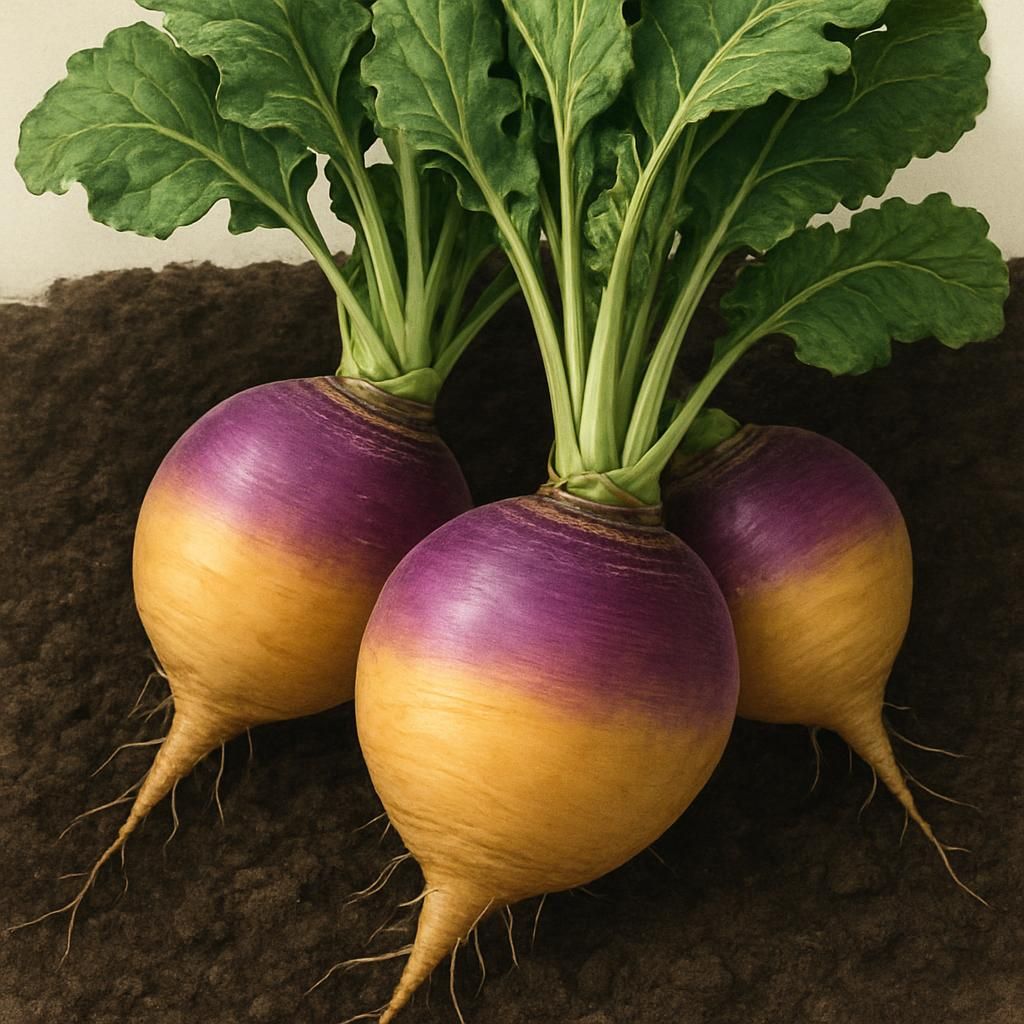
Introduction to Rutabaga (Laurentian)
Rutabaga (Laurentian), also known as swede or Swedish turnip, is a biennial root vegetable belonging to the Brassicaceae family. The Laurentian cultivar is favored by commercial growers and home gardeners alike for its uniform globe shape, purple crown, and exceptionally sweet flavor after frost exposure. Its ability to store for months makes it a staple in northern climates where fresh produce is limited during winter.
This comprehensive guide delivers precise, actionable information on growing Rutabaga (Laurentian) successfully at any scale. Every recommendation is grounded in current agronomic research and field-tested practices that maximize both yield and storage quality.
Botanical Profile of Rutabaga (Laurentian)
Rutabaga is a hybrid between turnip and cabbage, resulting in a swollen hypocotyl that forms the edible root. The Laurentian variety produces medium-to-large roots weighing 1–3 kg with smooth, thin skin that requires minimal peeling. The flesh is firm, yellow-orange, and low in fiber when harvested at peak maturity.
The plant forms a rosette of waxy, glaucous leaves that are deeply lobed. Flowers are typical of the mustard family—four-petaled, bright yellow, and attractive to pollinators. Roots develop best when daytime temperatures remain between 15–20 °C; higher temperatures cause pithiness and bitterness.
Soil, pH, and Climate Requirements for Rutabaga (Laurentian)
Rutabaga (Laurentian) performs best in deep, well-drained loamy soils with high organic matter. Heavy clay soils should be amended with compost and coarse sand to prevent root forking and cracking. Avoid planting in recently manured ground, as excess nitrogen promotes leafy growth at the expense of root development.
| Parameter | Ideal Range | Notes |
|---|---|---|
| Soil Type | Sandy loam to loam | Deep, friable, stone-free |
| Soil pH | 6.0–6.8 | Slightly acidic to neutral |
| Organic Matter | 3–5 % | Well-rotted compost or aged manure |
| Soil Temperature | 10–20 °C at 10 cm depth | Germination halts below 5 °C |
| Air Temperature | 15–20 °C daytime, 5–10 °C night | Tolerates light frost down to –6 °C |
| Annual Rainfall | 500–750 mm | Supplemental irrigation required in dry periods |
| Frost Tolerance | Hardy to –10 °C once established | Sweetens flavor after first frost |
Step-by-Step Planting & Propagation
Site Selection & Preparation — Choose a sunny location with at least 6 hours of direct light. Perform a soil test 4–6 weeks before planting and adjust pH with agricultural lime if below 6.0.
Seed Starting — Sow seeds directly 1–2 cm deep in rows 45–60 cm apart. Thin seedlings to 20–25 cm within the row once they have two true leaves. For earlier harvest, start seeds indoors 4–5 weeks before last frost and transplant at the same spacing.
Succession Planting — In cool climates sow every 3 weeks from early spring until 90 days before first expected hard frost. In warmer regions, plant in late summer for winter harvest.
Germination — Seeds germinate in 5–10 days at 15–20 °C. Keep soil consistently moist but never waterlogged during this period.
Care & Maintenance regimes for Rutabaga (Laurentian)
Consistent moisture and balanced nutrition are critical. Water stress causes woody, bitter roots while excess nitrogen produces oversized tops.
| Growth Stage | Water Schedule | Fertilizer Schedule | Pruning/Thinning Schedule |
|---|---|---|---|
| Germination (0–14 days) | Keep top 2 cm moist; light daily watering | None; seed contains sufficient nutrients | Thin to 20–25 cm spacing at 2-leaf stage |
| Vegetative (2–6 weeks) | 25–30 mm/week; maintain even moisture | Side-dress with 5-10-10 at 3 weeks (30 g/m row) | Remove weeds; cultivate shallowly |
| Bulking (6–12 weeks) | 30–40 mm/week; avoid fluctuations | Apply boron foliar spray (1–2 ppm) at 8 weeks | Remove yellowing leaves to improve airflow |
| Pre-harvest (last 3 weeks) | Reduce to 20 mm/week to firm roots | No additional fertilizer | None |
Mulch with 5–7 cm of straw or shredded leaves after thinning to suppress weeds and stabilize soil temperature. Hand-weed or use shallow cultivation to avoid damaging shallow feeder roots.
Pests, Diseases & Organic Management
Rutabaga (Laurentian) is susceptible to several brassica-specific pests and diseases. Early detection and integrated management are essential.
Common pests include cabbage loopers, flea beetles, and cutworms. Use floating row covers from emergence until bulking begins. For organic control, apply Bacillus thuringiensis (Bt) for caterpillars and spinosad for flea beetles when thresholds are exceeded.
Major diseases are clubroot, Alternaria leaf spot, and downy mildew. Practice a minimum 3-year rotation away from all brassicas. Maintain soil pH above 6.8 and improve drainage to reduce clubroot incidence. Remove and destroy infected foliage promptly.
Harvesting, Curing & Optimal Storage
Harvest when roots reach 8–12 cm in diameter, typically 90–110 days after sowing. Pull gently or use a garden fork to avoid bruising. Tops can be left on for immediate use or trimmed to 2–3 cm for storage.
Cure roots for 3–5 days in a cool (10–15 °C), shaded, well-ventilated area. Store at 0–2 °C and 90–95 % relative humidity. Properly cured Laurentian rutabagas remain marketable for 4–6 months. Check monthly and remove any showing soft rot.
Companion Planting for Rutabaga (Laurentian)
Rutabaga (Laurentian) benefits from strategic companions that deter pests or improve soil. Plant with onion, garlic, and leeks to repel aphids and root maggots. Dill and coriander attract beneficial insects that prey on caterpillars.
Avoid planting near other brassicas to reduce shared pest and disease pressure. Nasturtium serves as a trap crop for aphids and flea beetles. Clover sown between rows fixes nitrogen and provides living mulch that suppresses weeds.
For more detail on timing fall transitions and soil health, see The Truth About Fall Garden Transitions for Small Farm Resilience.