Introduction to roselle
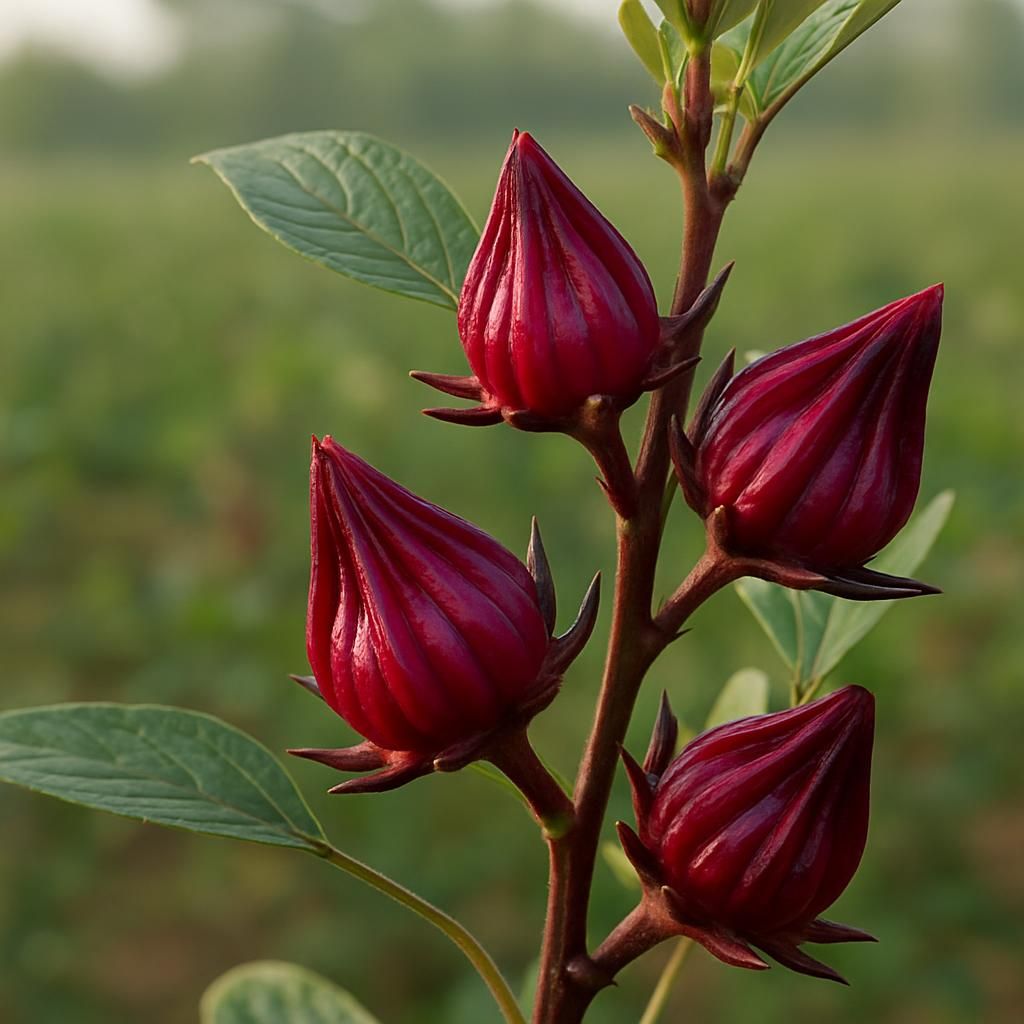
Roselle (Hibiscus sabdariffa) is a tropical annual in the Malvaceae family prized for its bright red, fleshy calyces. These calyces are harvested to produce a tart, cranberry-like tea rich in vitamin C, anthocyanins, and natural pectin. The plant also yields strong bast fiber historically used for cordage and paper. Because it matures in 5–7 months and tolerates poor soils, roselle is an excellent cash crop for smallholder farmers in USDA zones 9–11 and equivalent tropical regions.
Commercial production is concentrated in Sudan, Egypt, Mexico, Thailand, and parts of West Africa and India. Home gardeners appreciate its ornamental value—large, creamy-yellow flowers with crimson centers—while homesteaders use the dried calyces for refreshing summer drinks and winter preserves. The crop is relatively drought-tolerant once established yet responds well to consistent moisture and organic fertility programs.
Botanical Profile of roselle
Roselle grows as an erect, sparsely branched shrub reaching 1.5–2.5 m tall. Stems are reddish-purple and become woody at the base. Leaves are deeply lobed, alternate, and palmate with serrated margins; young leaves often display a bronze-red flush. The showy flowers appear in leaf axils and consist of five yellow petals surrounding a prominent crimson staminal column. After pollination, the petals drop and the calyx swells into the fleshy, bright-red harvest structure.
Each calyx contains five valves that enclose the developing seed capsule. Seeds are small, kidney-shaped, and dark brown. The plant is photoperiod-sensitive; shorter days trigger flowering, so sowing dates must be timed to ensure adequate vegetative growth before the onset of autumn.
Soil, pH, and Climate Requirements for roselle
Roselle prefers well-drained, fertile loams but tolerates sandy or clay soils provided drainage is adequate. It grows best in full sun with at least 8 hours of direct light. The crop is frost-sensitive and requires minimum temperatures above 15 °C for active growth.
| Parameter | Ideal Range | Notes |
|---|---|---|
| Soil Type | Sandy loam to clay loam | Avoid waterlogged sites |
| Soil pH | 5.5–7.0 | Slightly acidic to neutral |
| Temperature (day) | 25–35 °C | Optimal photosynthesis range |
| Temperature (night) | 15–22 °C | Below 10 °C slows growth |
| Annual Rainfall | 600–2000 mm | Supplemental irrigation in dry spells |
| Altitude | 0–1500 m a.s.l. | Higher elevations extend vegetative phase |
Step-by-Step Planting & Propagation
- Site Preparation: Clear weeds and incorporate 5–8 cm of well-rotted compost or aged manure. Form raised beds 20–30 cm high to improve drainage.
- Seed Treatment: Soak seeds in warm water for 12 hours to improve germination. Optional scarification with fine sand increases uniformity.
- Sowing Window: Direct-seed 2–3 weeks after last frost when soil temperature exceeds 20 °C. In the tropics, sow at the start of the rainy season.
- Spacing: Plant in rows 75–90 cm apart with 45–60 cm between plants. This density balances airflow and light penetration.
- Transplant Option: Start seedlings in 128-cell trays 4–5 weeks before field transplanting. Harden off for 7 days prior to planting.
- Mulching: Apply 5–7 cm of organic mulch immediately after sowing to suppress weeds and conserve moisture.
Care & Maintenance regimes for roselle
Roselle requires moderate fertility; excess nitrogen promotes lush foliage at the expense of calyx production. Drip irrigation or soaker hoses maintain even moisture without wetting foliage. Pruning the apical meristem at 60–75 cm encourages lateral branching and higher calyx yields.
| Growth Stage | Irrigation Frequency | Fertilizer (NPK) | Pruning & Training |
|---|---|---|---|
| Seedling (0–4 wks) | Light daily mist or 2×/week | 5-10-5 at 50 kg/ha | None |
| Vegetative (4–10 wks) | 25–30 mm/week | Side-dress 10-5-10 at 100 kg/ha | Pinch apex at 60 cm |
| Flowering (10–16 wks) | 20 mm/week | 5-10-15 at 80 kg/ha | Remove lower leaves for airflow |
| Calyx Development | 15 mm/week | Optional foliar K at 1% | None; support tall stems if windy |
Pests, Diseases & Organic Management
Major insect pests include Aphids, Spider mites, and Whiteflies. Monitor weekly and release beneficial insects such as lady beetles and lacewings. Neem oil or insecticidal soap provides effective knockdown. Fungal issues such as Powdery mildew and Root rot are mitigated by proper spacing, drip irrigation, and rotation with non-host crops such as Corn or Sorghum. Root-knot nematodes are suppressed with marigold cover crops and solarization.
Harvesting, Curing & Optimal Storage
Calyces reach harvest readiness 15–20 days after flowering when fully swollen and deep red. Pick in the cool morning hours, leaving 1 cm of stem attached. Fresh calyces can be processed immediately or dried in a solar dryer at 40–45 °C for 3–5 days until crisp. Store dried product in airtight containers away from light and moisture; shelf life exceeds 18 months. Seeds are collected from fully mature capsules for next season’s planting.
Companion Planting for roselle
Roselle benefits from association with nitrogen-fixing legumes such as Cowpea and Pigeon pea. Aromatic herbs including Thai Basil and Rosemary deter aphids and whiteflies. Tall Sorghum or Maize rows provide windbreaks. Avoid planting near Okra or other Malvaceae to reduce shared pest pressure. Interplanting with Marigold further suppresses nematodes and enhances biodiversity.
For additional guidance on building resilient farming systems, see The Truth About Weather Patterns and Small Farm Resilience.