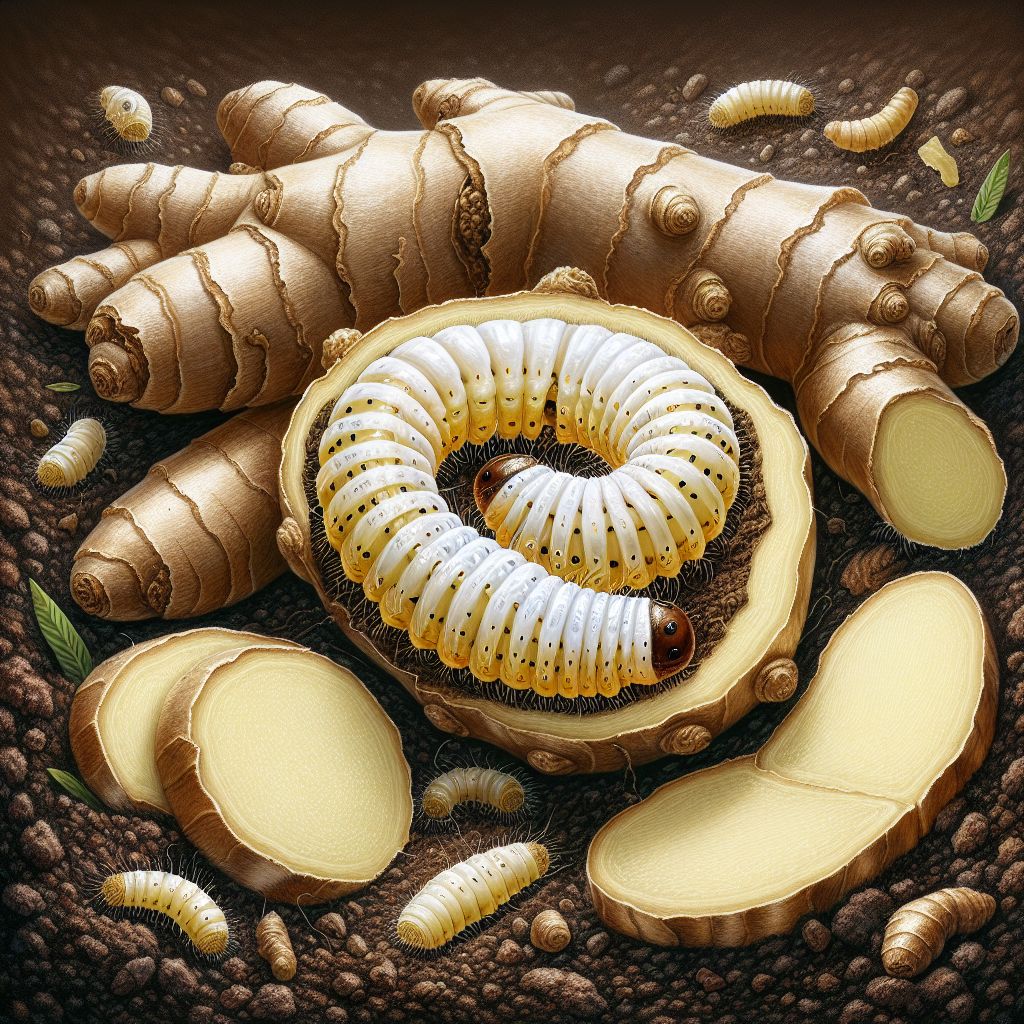
Introduction to rhizome-boring larvae
Rhizome-boring larvae represent a critical threat to rhizomatous crops worldwide, particularly in tropical and subtropical agriculture. These are the immature stages (grubs) of various beetle (Coleoptera) and moth (Lepidoptera) species that specialize in burrowing into underground rhizomes, corms, and tubers. Common culprits include the larvae of the ginger beetle (Ophideres fullonica), white grubs from scarab beetles like Holotrichia serrata, and click beetle larvae (Melanotus spp.), among others. By feeding internally on vital storage tissues, they disrupt nutrient and water transport, often resulting in sudden plant collapse.
Farmers growing ginger, turmeric, banana, and similar crops face annual losses exceeding 30-50% in heavily infested fields without intervention. These pests thrive in warm, humid soils with high organic matter, making them a persistent issue in organic and conventional systems alike. Early detection is key, as surface symptoms mimic drought or root rot. This guide equips growers with professional diagnostics, lifecycle insights, organic treatments, and prevention protocols to safeguard yields. For more on integrated pest management, check out Spring Pest Patrol: Organic AI Strategies to Shield Your Crops from Common Invaders.
Understanding rhizome-boring larvae requires recognizing their cryptic nature—damage occurs below ground, invisible until too late. Infestations often start from soil-dwelling eggs laid near host plants, with larvae persisting for months or years. Economic impacts are severe: in ginger alone, global losses reach millions annually. Proactive soil monitoring and cultural practices form the backbone of control, supplemented by biological agents for sustainable management.
Identifying Symptoms & Damage
Diagnosing rhizome-boring larvae begins with observant field scouting. Above-ground signs include sudden wilting of mature leaves, starting from the outer edges and progressing inward, even under adequate irrigation. Plants appear stunted, with yellowing foliage and reduced tillering. In severe cases, entire clumps collapse, leaving gaps in rows.
Excavate affected plants carefully to reveal the hallmark damage: clean, tunnel-like galleries within rhizomes, filled with frass (larval excrement) resembling fine sawdust. Larvae are creamy-white, legless grubs, often C- or comma-shaped, with distinct brown heads. Sizes vary from 1-5 cm long, depending on species and instar. Rhizomes show girdling scars, hollowed sections, and secondary rot from fungal entry points like Fusarium.
Differentiate from similar issues: root-knot nematodes cause galls, not tunnels; wireworms leave irregular chew marks. Cut rhizomes lengthwise to spot live larvae or pupae. Damage thresholds: 5-10% infested plants warrant action; over 20% signals crisis. Use a trowel for soil sampling at 15-30 cm depth around wilting plants, especially post-rainy season.
Secondary effects include stunted rhizome development, reduced finger size in ginger, and bitter taste from toxin injection. Harvest losses can hit 40-70%. Monitor for adult beetles (shiny, elongated) at dusk, as they indicate egg-laying risk.
Lifecycle and Progression of rhizome-boring larvae
The lifecycle of rhizome-boring larvae spans 6-24 months, varying by species and climate. Adults emerge at soil surface during warm, humid nights, mating and laying 50-200 eggs singly or in clusters near host rhizomes. Eggs hatch in 7-14 days into tiny larvae that bore directly into rhizomes.
Larval stage dominates (3-7 instars), lasting 3-18 months. Grubs feed voraciously, molting as they grow, creating extensive tunnels. They overwinter deep in soil (30-50 cm), resuming activity in spring. Pupation occurs in earthen cells, producing adults in 2-4 weeks. One to two generations per year in tropics; one in subtropics.
Progression aligns with crop cycles: eggs laid at planting, early larvae damage seedlings, mature grubs peak during vegetative growth. Peak activity: rainy season for most species. Adults live 1-2 weeks, focused on reproduction. Understanding this allows timed interventions, like soil treatments pre-egg hatch.
Environmental Triggers & Risk Factors
Rhizome-boring larvae flourish in temperatures of 25-35°C, soil moisture 20-30%, and pH 5.5-7.0. Heavy rains trigger adult emergence and egg-laying by softening soil for burrowing. Poor drainage, compacted soils, and excessive organic mulch (>10 cm) provide ideal habitat.
Risk factors include monocropping, late planting (overlapping with adult flight), and weedy fields attracting beetles. Virgin soils often harbor high grub populations from wild hosts. Drought stress weakens plants, increasing susceptibility. Overuse of nitrogen promotes lush growth, a beetle magnet. Proximity to infested fields or grassy borders amplifies migration.
Climate change exacerbates issues with warmer soils extending generations. Monitor via pheromone traps for adults; soil temps >28°C signal risk.
Organic Control & Treatment Plans
Organic management emphasizes integrated approaches: cultural, biological, and mechanical. Cultural: Rotate with non-hosts like grains or legumes for 2-3 years. Plant resistant varieties, e.g., IISR Varada ginger. Hill soil around plants to deter egg-laying. Remove and destroy infested rhizomes.
Biological: Introduce entomopathogenic nematodes (Heterorhabditis indica) at 10^9 IJ/ha during larval stages—irrigate post-application. Apply Metarhizium anisopliae or Beauveria bassiana fungal biopesticides (5-10 kg/ha). Encourage natural predators like ground beetles and birds via hedgerows.
Mechanical: Soil solarization (clear plastic, 4-6 weeks pre-planting) kills eggs/larvae via heat (>45°C). Hand-pick grubs during tillage; flood fields briefly to force larvae up. Neem cake (250 kg/ha) at planting repels oviposition.
Treatment Plan: Scout weekly. At 5% infestation, apply nematodes + neem oil drench (3% solution). Reapply biweekly. For heavy outbreaks, rogue plants + solarize patches. Combine with companion plants like marigold for nematode suppression. Expect 70-90% control with consistency.
Preventing rhizome-boring larvae in the Future
Prevention hinges on farm hygiene and monitoring. Use disease-free seed rhizomes, hot-water treated (50°C, 10 min). Practice 3-year rotations with cassava or cover crops. Maintain soil drainage with raised beds (30 cm high). Apply chitin-rich amendments to boost predator populations.
Install yellow sticky traps (20/ha) for adults; destroy nightly. Border crops like mustard deter migration. Mulch with sharp sand or ash to physically block larvae. Regular soil sampling (pitfall traps) every 15 days. Quarantine new plantings. Long-term: breed resistant cultivars and promote biodiversity.
Annual plans: Pre-plant soil test for grubs; if >2/m², treat. Track via field maps for hot spots.
Crops Most Affected by rhizome-boring larvae
Rhizomatous perennials suffer most. Ginger (ginger): 40% losses in India/China; tunnels cause finger rot. Turmeric (turmeric): Similar damage, yield drops 50%. Banana (banana, esp. Dwarf Cavendish): Corm boring leads to toppling. Taro (taro): Corms hollowed. Others: sweet potato, cassava, yam, arrowroot. Tropical staples like these face chronic threats; diversify to mitigate.