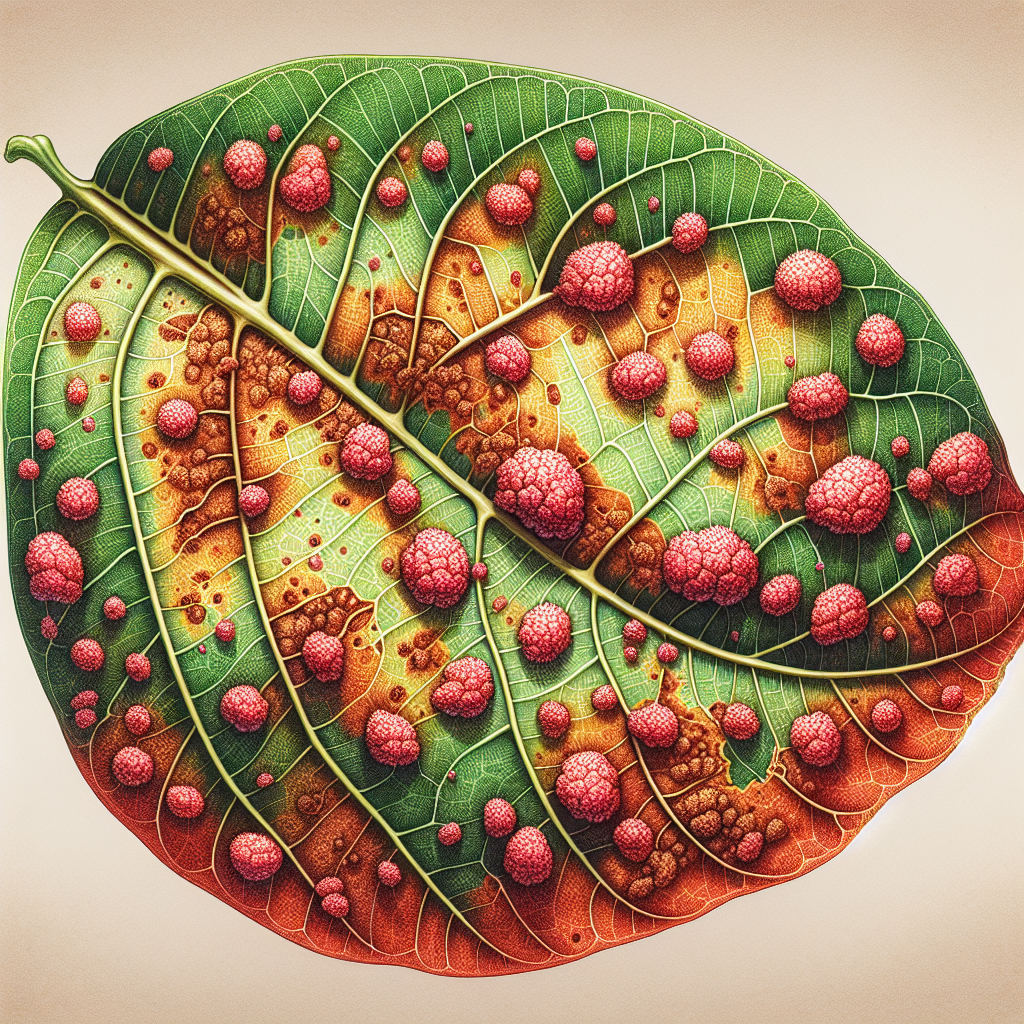
Definitive Diagnostic and Management Guide for Red Rust
Introduction to Red rust
Red rust is a unique algal disease caused by Cephaleuros virescens, an obligate parasite that infects a broad range of crops, particularly in humid tropical and subtropical regions. Unlike typical fungal rusts such as common rust or southern rust, red rust is algal, producing distinctive reddish spore masses on leaf undersides, stems, and fruits. First identified in the early 19th century, it has become a significant concern for growers of tea, mango, guava, and citrus due to its ability to weaken plants and diminish marketable yields.
This guide provides professional-grade diagnostic criteria, lifecycle insights, and proven organic management strategies tailored for small farms and commercial operations. Early detection is crucial, as untreated infections can spread rapidly via windblown spores during rainy seasons, leading to defoliation and dieback. For small farms struggling with disease identification, tools like those in Why Misidentifying Plants Costs Small Farms Thousands - And How AI Camera Diagnosis Fixes It Fast can revolutionize your approach to spotting red rust before it escalates.
Understanding red rust's biology empowers growers to implement targeted interventions, minimizing losses without synthetic chemicals. This disease persists in warm, wet climates (20-30°C, >80% humidity), making it a staple challenge in Southeast Asia, Africa, and parts of the Americas. Annual global impacts include millions in lost revenue from reduced fruit quality and quantity, underscoring the need for proactive strategies.
Identifying Symptoms & Damage
Red rust manifests as raised, velvety, rust-colored pustules (sporangia) primarily on the lower leaf surfaces, measuring 0.5-1 mm in diameter. These spots start olive-green before turning reddish-brown, often with a chlorotic halo on the upper surface. Heavily infected leaves develop shot-hole symptoms as necrotic tissue sloughs off, impairing photosynthesis by 20-50%.
On stems and twigs, lesions appear as corky, reddish-brown cankers that girdle branches, causing dieback. Fruits show superficial reddish-brown spots that crack open, inviting secondary infections like anthracnose. Severe cases lead to premature leaf drop, stunted growth, and yield reductions of 10-30% in crops like mango and guava.
Differentiate red rust from fungal rusts by its algal nature—no powdery spores, but moist, filament-like growth under magnification. Damage is cosmetic on fruits but devastating on foliage, where it blocks stomata and reduces vigor. Scout weekly during wet seasons, focusing on lower canopies where humidity lingers. Infected mango leaves yellow prematurely, while guava fruits become unmarketable due to blemishes.
Economic thresholds vary: remove plants with >20% leaf coverage. Young flushes are most susceptible, showing stunted expansion and bronzing. Associated pests like aphids exacerbate spread by carrying algal fragments.
Lifecycle and Progression of Red rust
Cephaleuros virescens has a complex lifecycle alternating between sexual and asexual phases, thriving in humid environments. It begins with biflagellate zoospores released from sporangia on infected tissues, splashing or blowing onto susceptible hosts. These settle, germinate, and form a discoid thallus that produces erect filaments bearing sporangia.
The asexual cycle dominates in wet conditions, with sporangiophores releasing flagellated gametes that fuse to form zygospores, surviving dry periods as dormant structures. Full progression from infection to sporulation takes 10-14 days at 25°C and 90% RH. Wind and rain disseminate spores up to 50 meters, with peak activity during monsoon seasons.
Progression stages: 1) Zoospore germination (24-48 hours); 2) Thallus development (3-5 days); 3) Sporangia formation (7-10 days); 4) Secondary spread. Overwinters on fallen leaves or bark. Multiple cycles per season amplify epidemics, especially if downy mildew or injuries predispose tissues.
Environmental Triggers & Risk Factors
Red rust epidemics correlate with prolonged leaf wetness (>48 hours), temperatures of 22-28°C, and relative humidity >85%. Overhead irrigation, dense canopies, and poor airflow in orchards heighten risk. Susceptibility increases post-pruning or after powdery mildew outbreaks, as wounds provide entry points.
Soil factors include high organic matter and neutral pH (6.5-7.5), favoring algal growth. Monocultures of susceptible crops like tea or guava amplify spread. Climate change extends wet seasons, boosting incidence by 15-20% in marginal areas. Risk is highest in lowland tropics during la Niña years with excess rain.
Organic Control & Treatment Plans
Integrated organic management emphasizes sanitation, cultural controls, and biopesticides. Prune infected branches (sterilize tools with 10% bleach), removing >90% inoculum. Apply copper-based fungicides (e.g., Bordeaux mixture, 1-2% weekly during rain) targeting sporangia; safe for organics with 0-day PHI.
Neem oil (2-3 ml/L) disrupts zoospore motility, applied at 7-10 day intervals. Potassium phosphite (2-3 g/L foliar) boosts systemic resistance, reducing severity by 40-60%. Beneficial microbes like Trichoderma harzianum (5 g/kg compost) suppress thalli via antagonism.
Treatment plan: 1) Scout and remove 100% infected material; 2) Improve airflow via selective thinning; 3) Foliar spray copper + neem at first signs; 4) Alternate with phosphite every 14 days; 5) Mulch to regulate soil moisture. Efficacy reaches 80% with consistent application. Avoid overhead watering; use drip irrigation.
For severe cases, interplant with marigold as trap crops. Monitor with sticky traps for spore dispersal.
Preventing Red rust in the Future
Prevention hinges on resistant varieties (e.g., hybrid mangos with low susceptibility), certified disease-free nursery stock, and 3-year crop rotations avoiding hosts. Site selection: elevate orchards, ensure >50% canopy openness. Balanced nutrition—avoid excess N, emphasize K and Ca—hardens tissues.
Sanitation protocols: destroy debris post-harvest, deep plow to bury inoculum. Barrier sprays of lime sulfur pre-monsoon reduce initial inoculum by 70%. Scout grids (1 scout/5 ha weekly) enable early intervention. Integrate with IPM, targeting vectors like thrips.
Long-term: Breed for resistance, use windbreaks to cut spore drift. Climate-resilient practices like raised beds mitigate wet feet. Annual audits track progress.
Crops Most Affected by Red rust
Red rust strikes over 200 species, but key economic hosts include mango (kulfi mango), guava, tea, coffee (arabica coffee (Typica)), citrus (orange, lemon), and avocado (hass avocado). Tropical fruits suffer most: papaya shows fruit spotting, pineapple leaf necrosis. Legumes like chickpeas and ornamentals are occasional hosts. Tea plantations report 15-25% yield loss; mango orchards up to 30% cull rates. Prioritize monitoring in these high-value crops.