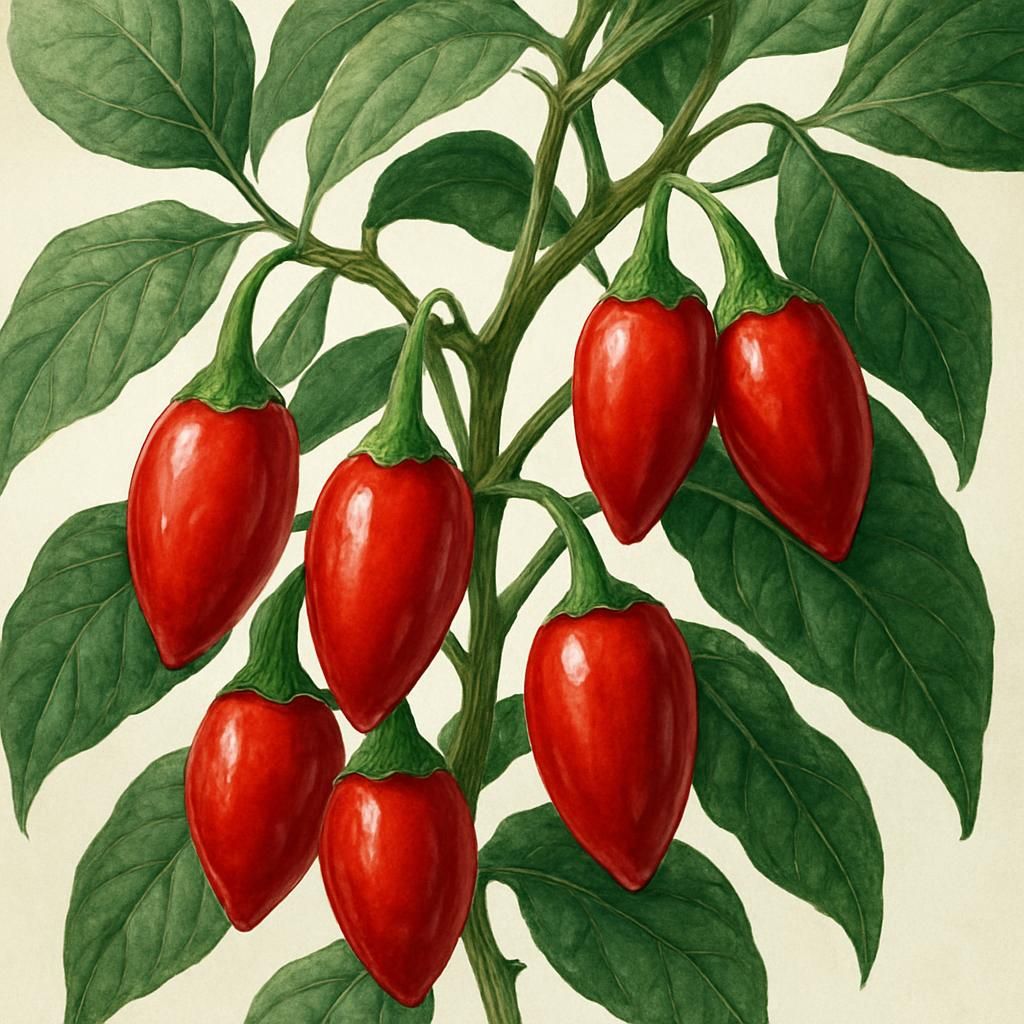
Introduction to Red Pepper (Kampot)
Kampot red pepper is a distinguished heirloom cultivar of Capsicum annuum celebrated for its exceptional flavor profile and deep scarlet hue at full maturity. Originating from the Kampot region of Cambodia, this variety has gained international acclaim for its complex fruity and mildly spicy notes that distinguish it from standard chili or bell peppers. Growers prize it for both fresh market sales and high-value dried spice production.
The crop offers strong commercial potential due to consistent demand in gourmet and export markets. Its relatively compact plant habit and high fruit set per plant make it suitable for intensive small-farm systems when managed with proper spacing and nutrition. With a growing cycle of approximately 90–110 days from transplant to first red harvest, it fits well into tropical and subtropical rotations.
Successful cultivation requires attention to soil fertility, consistent moisture without waterlogging, and vigilant pest monitoring. When grown under optimal conditions, yields can reach 1.5–2.5 kg of fresh red fruit per plant over a 6–8 week harvest window.
Botanical Profile of Red Pepper (Kampot)
Kampot red pepper belongs to the Solanaceae family and shares the same species as many common sweet and hot peppers. Plants typically reach 60–80 cm in height with a bushy, semi-determinate growth habit. Leaves are ovate to lanceolate, dark green, and slightly glossy.
Flowers are small, white, and self-pollinating, appearing singly or in small clusters at stem nodes. Fruit transitions from green to a brilliant, glossy red at physiological maturity, averaging 8–12 cm in length and 3–4 cm in diameter with thick, crisp walls. The variety is noted for elevated sugar content and low to moderate capsaicin levels (typically 1,000–3,000 Scoville Heat Units).
Seeds are cream-colored, flattened, and approximately 3–4 mm long. Each fruit contains 80–120 viable seeds. The plant exhibits moderate branching and responds well to pruning for improved air circulation and light penetration.
Soil, pH, and Climate Requirements for Red Pepper (Kampot)
Kampot red pepper performs best in fertile, well-drained loamy soils with high organic matter content. It prefers slightly acidic to neutral conditions and cannot tolerate waterlogged or saline soils.
| Parameter | Ideal Range | Notes |
|---|---|---|
| Soil Type | Sandy loam to loam | Excellent drainage essential |
| Soil pH | 6.0–6.8 | Below 5.5 increases blossom-end rot risk |
| Organic Matter | 3–5% | Incorporate well-rotted compost |
| Temperature (Day) | 24–32°C | Optimal fruit set occurs in this range |
| Temperature (Night) | 18–22°C | Below 15°C reduces pollination success |
| Annual Rainfall | 1,200–1,800 mm | Supplemental irrigation required in dry periods |
| Relative Humidity | 60–75% | Higher humidity increases disease pressure |
| Altitude | 0–600 m | Performs well in lowland tropical zones |
Full sun exposure of at least 6–8 hours daily is required for maximum fruit coloration and sugar development.
Step-by-Step Planting & Propagation
- Start seeds indoors or in a protected nursery 6–8 weeks before the last expected frost or at the beginning of the rainy season.
- Sow seeds 0.5 cm deep in sterile seed-starting mix; maintain soil temperature at 25–28°C for rapid germination (7–10 days).
- Transplant seedlings when they have 4–6 true leaves and nighttime temperatures remain above 18°C.
- Harden off plants for 7–10 days by gradually increasing outdoor exposure.
- Space plants 45–60 cm apart in rows 75–90 cm wide to allow good airflow and ease of harvest.
- Plant in raised beds or ridges 15–20 cm high if soil drainage is marginal.
- Apply a starter solution of balanced organic fertilizer (e.g., 5-5-5) at transplanting to reduce transplant shock.
Direct seeding is possible in warm climates but increases weed pressure and uneven emergence.
Care & Maintenance regimes for Red Pepper (Kampot)
Consistent moisture, balanced nutrition, and timely pruning are critical for high-quality red fruit. Over-fertilization with nitrogen promotes excessive vegetative growth at the expense of fruit set.
| Growth Stage | Watering Schedule | Fertilizer Application | Pruning & Training |
|---|---|---|---|
| Transplant to Flowering | 2–3 times/week; keep soil evenly moist | 10-10-10 or equivalent organic blend every 2 weeks | Remove lower leaves and suckers below first fork |
| Flowering to Fruit Set | Daily light irrigation if rainfall <15 mm | Switch to high-potassium formula (5-10-15) weekly | Pinch growing tips at 60 cm height to encourage branching |
| Fruit Development to Harvest | Maintain consistent moisture; avoid fluctuations | Side-dress with compost tea or fish emulsion every 10–14 days | Remove diseased or damaged branches; thin interior for airflow |
Mulch with 5–7 cm of organic material to conserve moisture and suppress weeds. Monitor leaf color weekly for nutrient deficiency signs.
Pests, Diseases & Organic Management
Common insect challenges include Aphids, Thrips, and Spider Mites. Disease pressure is highest during periods of high humidity and includes Anthracnose, Bacterial spot, and Phytophthora blight.
Implement an integrated pest management (IPM) approach: scout twice weekly, use yellow sticky traps for early detection, and release beneficial insects such as lady beetles and lacewings. Neem oil and insecticidal soaps provide effective organic knockdown for soft-bodied pests.
For fungal and bacterial diseases, improve air circulation through proper spacing and pruning, rotate crops on a 3-year cycle, and apply copper-based sprays or Bacillus subtilis products at the first sign of infection. Remove and destroy infected plant material promptly.
Harvesting, Curing & Optimal Storage
Harvest red fruit when fully colored and firm, typically 75–90 days after transplanting. Use clean shears to cut stems, leaving 1–2 cm of peduncle attached to reduce rot. Pick every 3–4 days during peak production.
For fresh market sales, cool fruit rapidly to 10–12°C and maintain 85–90% relative humidity. For dried spice production, sun-dry or use a dehydrator at 45–50°C until moisture content reaches 10–12%. Store dried peppers in airtight containers away from light and heat; properly dried product retains quality for 12–18 months.
Companion Planting for Red Pepper (Kampot)
Pair Kampot red pepper with Tomato and Basil to improve pest deterrence and flavor. Marigold and nasturtium repel nematodes and aphids while attracting pollinators. Avoid planting near Eggplant and Potato to reduce shared disease risk. Cucumber and Lettuce make excellent border crops that do not compete heavily for nutrients.